





Your Garage Door Is Stuck Halfway: An Emergency Action Plan
Published: Jul 20, 2026
There’s a unique, sinking feeling that comes with the sound of your garage door grinding to a halt midway. It’s more than just an inconvenience; it’s a sudden breach in your home’s security and a potential safety hazard sitting right above your car. You’re not alone in this moment of frustration. Many homeowners face this exact problem, caught between the urge to fix it themselves and the uncertainty of what’s truly wrong.
Before you touch anything, take a breath. The most important first step isn’t about fixing the door—it’s about ensuring the safety of you and your family. Forcing the door up or down can cause it to crash, leading to serious injury or property damage. This guide is your emergency action plan. We’ll walk you through a safety-first diagnostic process to help you understand the problem, identify what you can safely check, and know precisely when to call a professional.
Your 5-Minute Safe Inspection
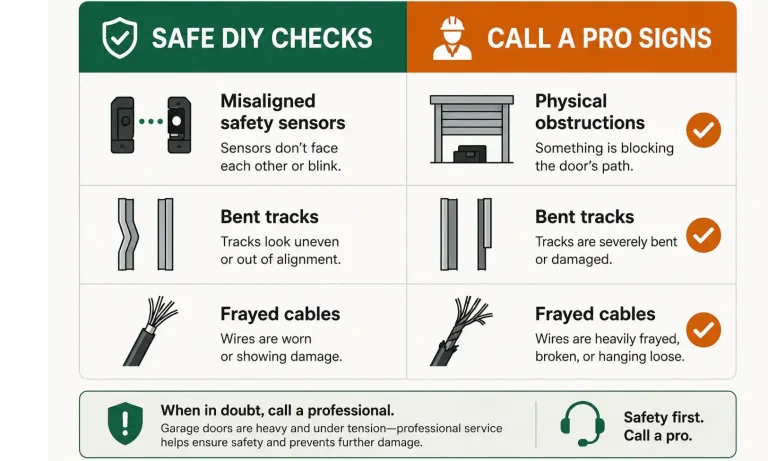
In a high-stress situation, it’s easy to overlook simple solutions. Before assuming the worst, run through this quick, 5-minute inspection of things you can safely check yourself. This process helps you rule out common, minor issues without putting yourself in danger.
The 5-Minute Safe Inspection Checklist:
1. Look for Physical Obstructions: Is there a stray shovel, bicycle, or storage bin blocking the door’s path? Sometimes the simplest answer is the right one. Check the entire width of the door’s path on the ground.
2. Inspect the Safety Sensors: At the bottom of your garage door tracks are two small electronic “eyes.” These sensors project an infrared beam across the opening. If this beam is broken, the door will stop and reverse. Look for a solid light on both sensors (usually green). If a sensor light is blinking or dark, the units may be misaligned or dirty — learn how to clean garage door sensors by simply wiping the lenses with a soft cloth.
3. Check the Tracks: Visually inspect the metal tracks on both sides of the door. Do you see any obvious bends, dents, or debris? A significant bend can stop the rollers in their tracks, preventing the door from moving.
4. Test the Power and Remotes: Does the opener light turn on? Try using both your remote and the wall-mounted switch. If one works and the other doesn’t, you might just need to replace the batteries in your remote. If you’ve completed this inspection and the door is still immobile, the issue is likely with the door’s mechanical systems. It’s time to move from inspecting to understanding.
Why Is Your Garage Door Stuck? Common Culprits and Their Symptoms
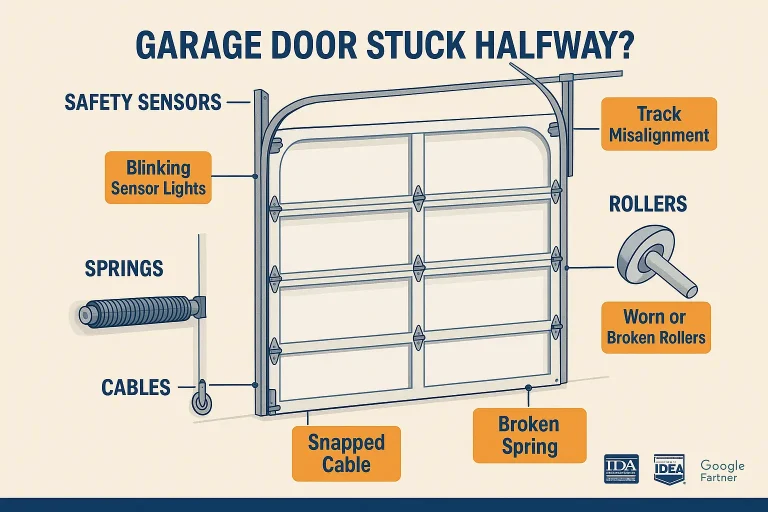
Your garage door is a complex system of interconnected parts, and when one fails, it can bring the whole operation to a halt. Understanding what each part does can help you identify the symptom and its likely cause. A garage door stuck in one position is often a clear signal of a specific part failure.
- Torsion or Extension Springs: These are the muscular core of the system. The springs—not the opener—do the heavy lifting.
- Symptom: You hear a loud “bang,” and now the door won’t open at all or feels incredibly heavy when you try to lift it manually. This almost always indicates a broken spring.
- Lift Cables: These steel cables connect the springs to the bottom of the door, transferring the lifting force.
- Symptom: The door looks crooked or lopsided in the opening. You might see a cable hanging loose or wrapped around the torsion bar. This is a high-tension situation that needs immediate professional attention.
- Rollers and Tracks: The rollers guide the door along the tracks as it opens and closes.
- Symptom: The door makes scraping or grinding noises, or it has visibly popped out of the track. If you’re struggling with garage door sticking when opening, a damaged roller or bent track is a common cause. Figuring out how to put a garage door back on track is a job best left to experts to avoid further damage.
- Garage Door Opener: The opener is the motorized unit that automates the lifting process.
- Symptom: You hear the motor humming, but the door doesn’t move. The chain or belt might be moving, but the door stays put. This could indicate a stripped gear inside the opener.
The Critical Line Between DIY and Danger
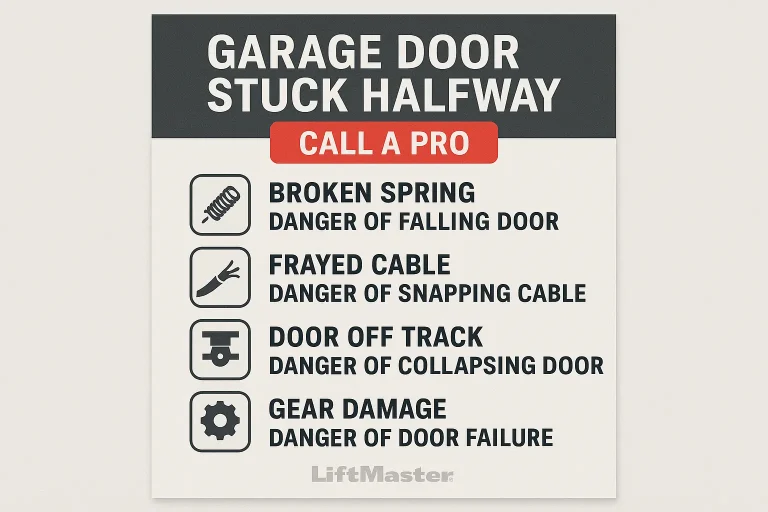
Recognizing the problem is one thing; trying to fix it is another. Some issues, like cleaning sensors, are safe for homeowners. Others carry a significant risk of injury. The springs and cables are under extreme tension—enough to lift a 400-pound door. A sudden release of this energy can be destructive and dangerous.
WARNING: Do Not Attempt to Repair or Adjust Springs or Cables Yourself.
Due to the extreme physical danger and mechanical tension involved, garage door spring replacement is a complex task that should always be left to professionals. Technicians use specialized tools and training to safely manage the tension. Similarly, a snapped cable can cause the door to fall without warning. Attempting a garage door cable replacement without proper training and specialized tools is a major safety hazard. If you see any of the signs in the checklist above, your next step is not to find a bigger wrench. It’s to secure the area and call for professional help.
Securing Your Home and Getting Emergency Help
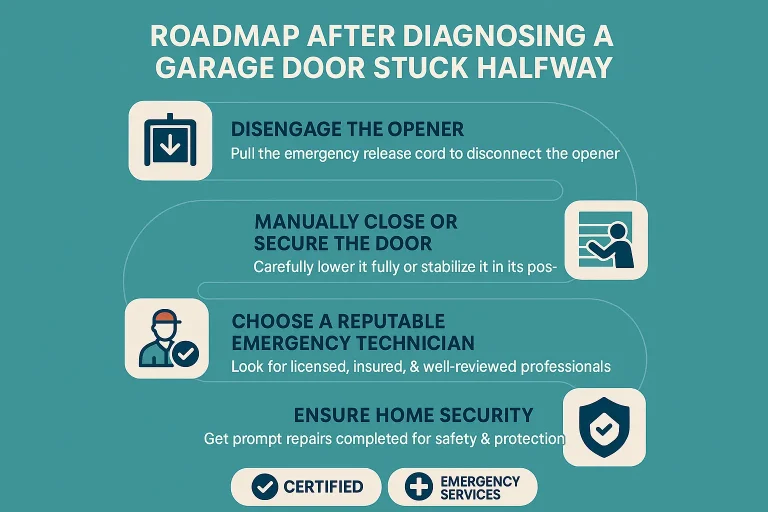
A garage door stuck halfway open is a security vulnerability. Your priority is to secure your home while you wait for a technician. Here’s a clear roadmap to follow.
- Secure the Area: Keep pets and children away from the garage door. Don’t park your car underneath it.
- Disconnect the Opener: Pull the red emergency release cord hanging from the garage door opener. This will disengage the motor, preventing anyone from accidentally trying to operate it. This also allows you to see if you can manually move the door.
- Attempt to Manually Close the Door (With Extreme Caution):
- If you suspect a broken garage door spring, never attempt to lift or force the door open yourself. It will be incredibly heavy and can crash down.
- If the springs seem intact and the tracks are clear, ask for a second person to help you. Lift or lower the door slowly and evenly. If you feel any resistance or hear grinding noises, stop immediately.
- Secure the Door: If you successfully close the door, lock it from the inside by sliding the manual lock bar into the track. If you can’t close it, make sure the interior door leading into your home is locked.
- Call for Professional Service: Don’t wait. A stuck door is a problem that needs to be solved quickly. Look for a company that offers emergency garage door repair to ensure a prompt response. A reputable technician can diagnose the problem accurately, perform the repair safely, and get your life back to normal.
Frequently Asked Questions (FAQ)
Why does my garage door only open a few inches and then stop?
This is a classic symptom of a safety sensor issue. The sensors are likely misaligned or blocked. When the door starts to close, it senses an “obstruction” (the broken beam) and immediately reverses to prevent an accident. Check for anything blocking the sensors and ensure both have a solid indicator light.
Is it safe to leave my garage door stuck halfway overnight?
Absolutely not. A partially open garage door is an open invitation for intruders and pests. It compromises the security of your entire home. Follow the steps above to try and manually close and lock the door. If you cannot, secure the entry point from your garage into your house and call for emergency service immediately.
How can I manually close a stuck garage door?
After pulling the red emergency release cord, you can try to move the door by hand. However, this is ONLY safe if the springs are intact and the door is not off its track. A door with a broken spring will be dangerously heavy. Always have a second person to help you, and if it doesn’t move smoothly, stop and wait for a professional.
What’s the difference between a torsion spring and an extension spring?
A torsion spring is a large, coiled spring mounted on a metal bar directly above the garage door opening. It winds and unwinds to lift the door. Extension springs are smaller springs located on either side of the door, running parallel to the horizontal tracks. They stretch and contract to provide lifting power. Both are under high tension and should only be handled by trained technicians.
Your Path to a Secure and Functional Garage
A garage door that’s stuck halfway is a disruptive and stressful event, but it doesn’t have to be a disaster. By following a safety-first approach, you can correctly assess the situation, handle the minor issues you’re equipped for, and know exactly when it’s time to bring in an expert. The most important takeaway is to respect the power of the system—especially the springs and cables—and prioritize your safety above all else.
When you’re facing a problem that goes beyond a simple fix, reliable help is crucial. Professional garage door repair ensures the job is done correctly and safely, restoring your home’s security and your peace of mind.
You May Also Like
Garage Door Noise And Vibration Troubleshooting: The Expert Diagnostic Guide
When your garage door begins to squeak, rattle, or emit a harsh metallic grinding sound, it is doing more than just disrupting your home's peace. It is communicating. A noisy garage door is often the primary warning…
Published Date: Jul 16, 2026
Chamberlain Battery Backup: Your Guide to a Quiet, Reliable Garage Door
You're not alone in your frustration. Many homeowners are surprised to find their main-powered garage door opener suddenly stops working, all because of a small backup battery. This guide is here to decode the…
Published Date: Jul 15, 2026
Specifier’s Guide: Types of Commercial And Industrial Garage Door Systems
For any warehouse, logistics hub, or retail facility, the garage door is the single largest structural opening in the building envelope. This entry point directly influences energy expenses, logistical workflow, and…
Published Date: Jul 14, 2026