




Oil-Tempered vs. Galvanized Torsion Springs: What Changes
Published: Oct 19, 2026
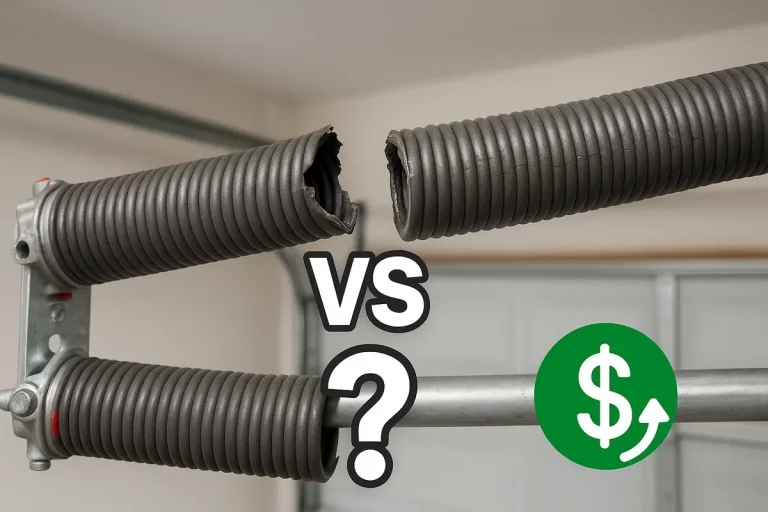
Evaluating garage door torsion springs comes down to a critical balance between mechanical stability, environmental durability, and long-term operating costs. Homeowners and property managers comparing replacement options are often caught between sleek, silver galvanized springs and industrial, dark oil-tempered steel. While galvanized springs offer immediate aesthetic appeal and rust prevention, underlying metallurgical trade-offs significantly affect operational performance over time.
The Core Dilemma: Silver Aesthetics vs. Black Torque Strength
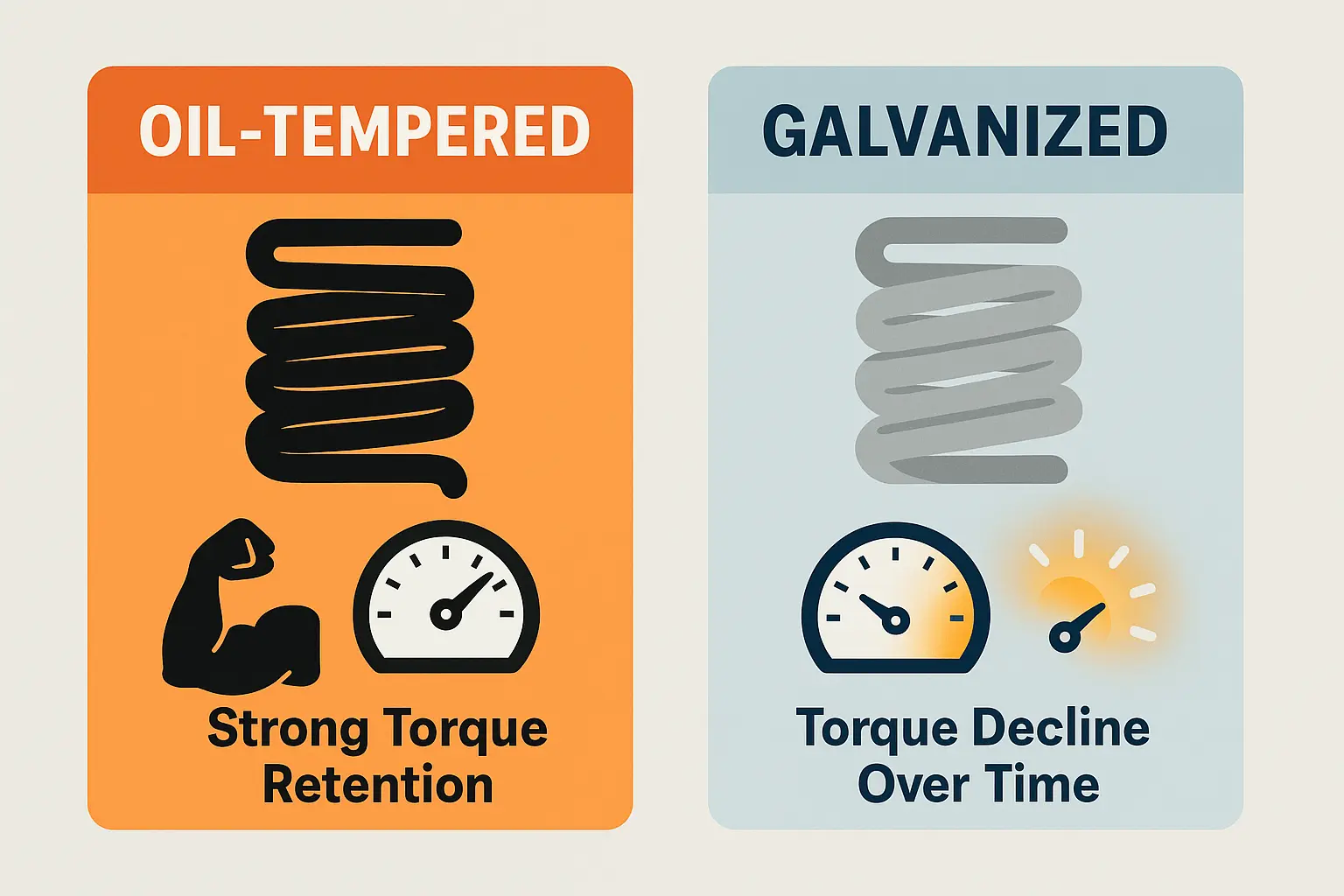
The choice between oil-tempered and galvanized springs hinges on prioritizing visual cleanliness versus consistent torque retention. Galvanized options resist surface oxidation, making them visually appealing in residential setups. However, oil-tempered steel delivers superior elastic torque retention under daily stress cycles, remaining the preferred mechanical choice for garage door professionals.
Metallurgy and Torque Relaxation: Why Galvanized Springs Sag
The primary functional difference stems from manufacturing heat treatment. Oil-tempered springs (ASTM A229 carbon steel) undergo high-temperature oil quenching and tempering. This creates an exceptionally resilient core with a high elastic limit, ensuring uniform stress distribution across every coil without structural stretch.
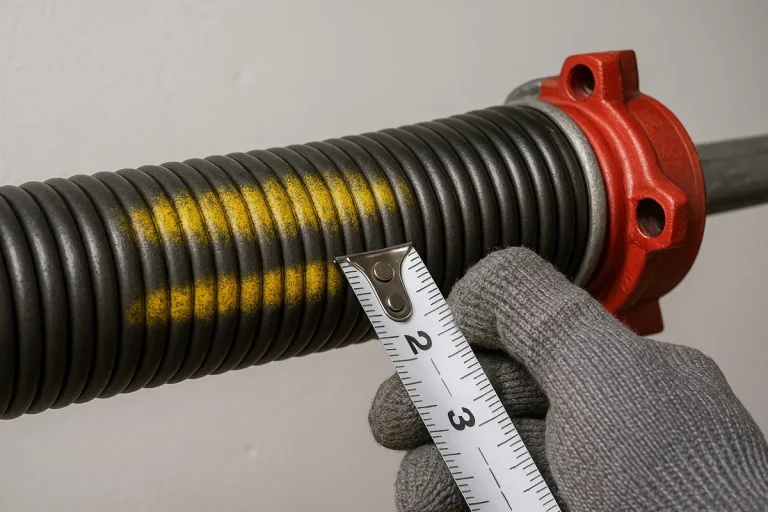
Conversely, galvanized wire is cold-drawn and electro-plated with zinc. Cold-drawing introduces internal stress relaxation points. Field data reveals that galvanized springs lose 5% to 10% of their initial lifting force within the first 6 to 12 months. This tension loss causes garage doors to feel heavy, often tripping automatic opener safety reverse mechanisms or throwing cables off drums. Proper spring selection requires knowing how to measure garage door torsion springs accurately and checking the official garage door extension springs color code before specifying wire sizing.
The Critical Distinction: Cycle Rating vs. Corrosion Resistance
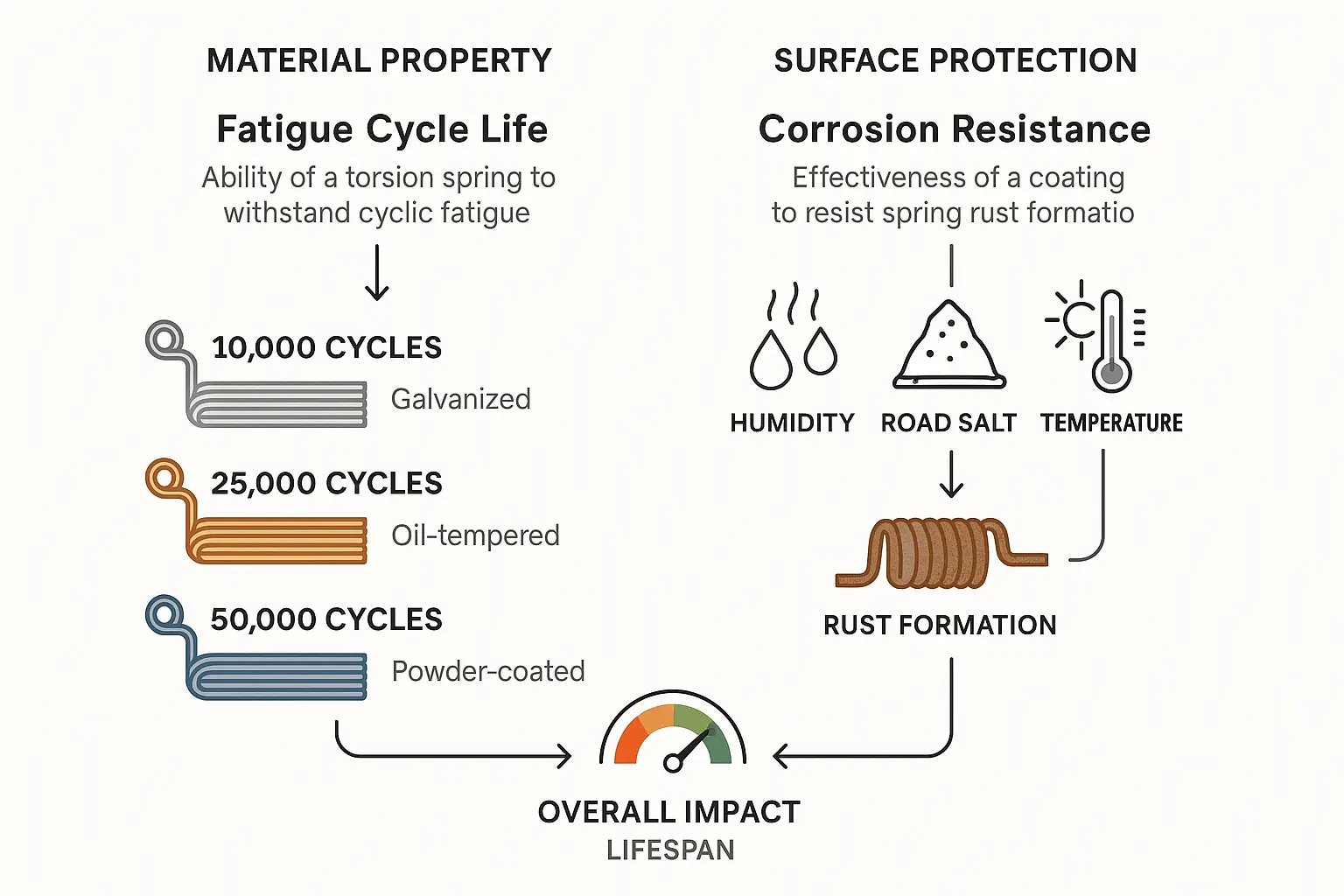
Under ANSI/DASMA 102 standards, baseline residential torsion springs are rated for 10,000 open/close cycles, representing about 7 years of standard use at 4 cycles per day. However, fatigue cycle rating and environmental corrosion resistance are completely separate metrics.
Upgrading wire diameter (for example, moving from .218 to .234 wire) extends total garage door lifespan to 25,000 cycles—a 150% increase in service life for a minimal 20% to 30% material cost increase. However, in high-humidity environments exceeding 70% RH, micro-pitting from rust on unlubricated bare steel creates tensile stress points, reducing spring fatigue life by up to 40%. Galvanized or powder-coated springs solve this environmental problem, making them crucial in coastal areas or demanding commercial high cycle doors.
Acoustics, Friction, and Maintenance Myths
A common industry myth is that galvanized springs require no maintenance. In reality, cold-galvanized zinc lacks the factory oil residue present on oil-tempered steel. Direct zinc-on-zinc coil contact creates severe inter-coil friction during door movement. Without routine lubrication, galvanized coils bind, causing a noticeable garage door grinding noise. Understanding how often should you lubricate your garage door with non-tacky silicone spray ensures whisper-quiet operation and prevents premature wear on both spring types.
Total Cost of Ownership (TCO) & Decision Framework
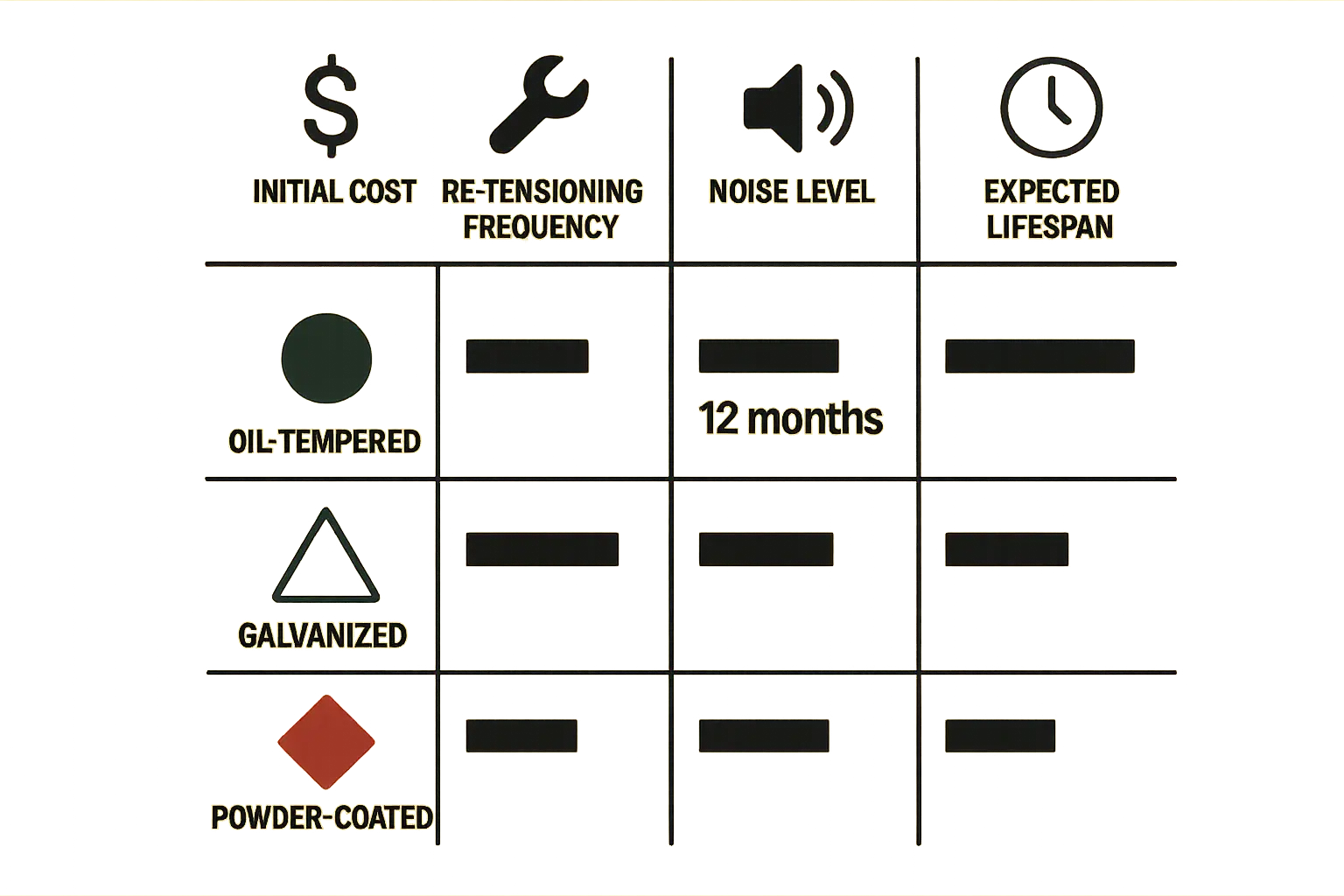
While galvanized springs prevent unsightly surface rust, their physical torque relaxation leads to hidden operational expenses. When galvanized springs sag within their first year, correcting door balance requires a technician callout ranging from $250 to $450. When evaluating overall broken garage door spring repair cost, oil-tempered steel—or modern powder-coated hybrid springs that enclose oil-tempered steel in a protective clean layer—offers maximum long-term value.
For expert guidance or professional balance adjustments, scheduling a certified service call for replace garage door spring near me ensures your high-tension system operates safely and reliably for years to come.
Frequently Asked Questions
Do galvanized torsion springs require lubrication?
Yes. Galvanized springs require regular lubrication to eliminate inter-coil friction and zinc-on-zinc binding, which otherwise generates squeaking, operational noise, and premature wear.
Why does my garage door feel heavy six months after installing galvanized springs?
Galvanized wire undergoes rapid torque relaxation, losing 5% to 10% of its initial lifting tension within 6 to 12 months. This stress relaxation reduces lifting torque, making the garage door out of balance and heavier to operate.
What is the best alternative for clean aesthetics and maximum torque performance?
Powder-coated oil-tempered springs represent the ideal compromise. They enclose high-torque ASTM A229 oil-tempered core steel inside a clean, corrosion-resistant enamel coating that eliminates rust without suffering torque loss.
You May Also Like