





Extend Garage Door Lifespan with High-Cycle Hardware
Published: Sep 4, 2026
Many homeowners fall into the “Tune-Up Trap,” lured by ultra-low-cost promotional coupons. Historically, these cheap specials serve as loss-leaders for high-pressure on-site upsells. A genuine, professional annual garage door tune up is not a superficial spray-and-go service. It is a comprehensive mechanical audit designed to identify fatigued components before a sudden failure traps your car inside.
Garage Door Spring Cost Per Cycle Guide
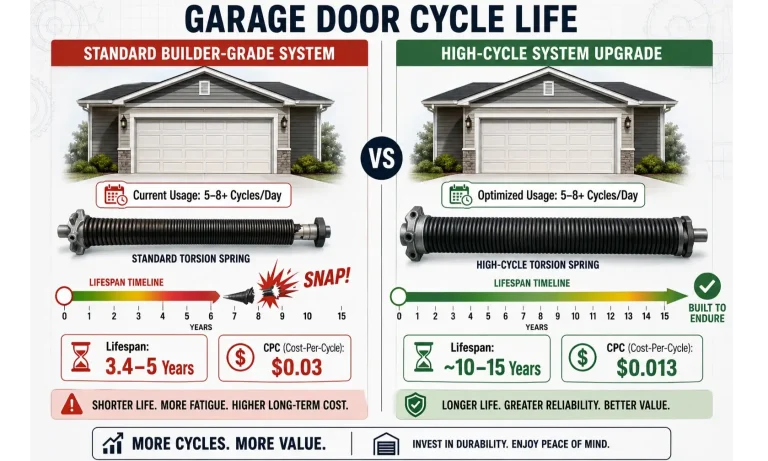
Every time your garage door opens and closes completely, it completes one cycle. Builder-grade garage systems typically feature torsion springs rated for 10,000 cycles. When this standard was established, the average household opened their door three times a day, yielding a lifespan of about 10 years.
- Standard Spring System: $300 installation cost / 10,000 cycles = $0.03 per cycle
- High-Cycle Spring Upgrade: $400 installation cost / 30,000 cycles = $0.013 per cycle
Today, attached garages serve as the primary home entryway. Modern usage averages 5 to 8+ cycles per day, meaning those standard builder-grade springs can fatigue and snap in just 3 to 5 years.
By opting for a high-cycle upgrade, you achieve a dramatic reduction in CPC. Over a 30-year span, investing in heavy-duty components saves homeowners upwards of $800 in labor fees and emergency service calls by eliminating repeated failure cycles. Understanding how to extend the lifespan of your garage door protects both your schedule and your budget.
High-Cycle Upgrades: Springs, Rollers, and Stays
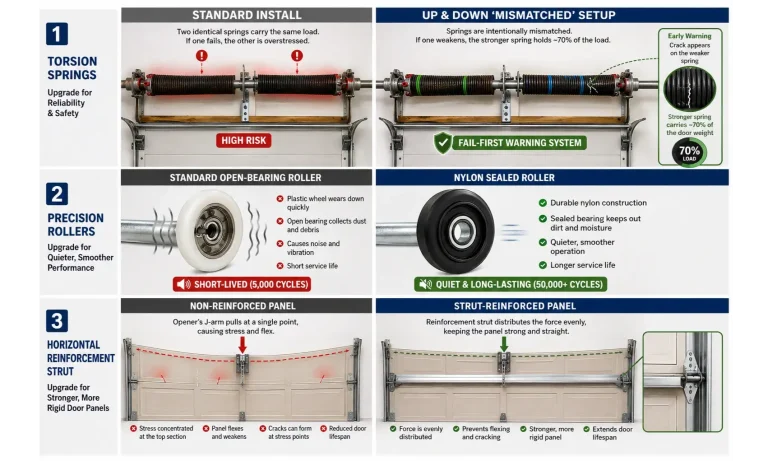
When upgrading your system, focus on three heavy-duty components:
High-Cycle Torsion Springs & The “Mismatched” Secret
High-cycle springs are 10% to 20% longer and thicker than standard springs to distribute mechanical stress. However, residential shafts face physical limits and cannot exceed a 2 1/4″ inside diameter without requiring commercial-grade center plates.
Additionally, standard companies often install identical twin springs. When identical springs are installed simultaneously, they fatigue at the exact same rate and snap within days of each other. At Up & Down Garage Doors, we utilize a specialized engineering trick: installing slightly mismatched torsion springs. This ensures one spring fails first, giving you a physical warning sign while the second spring holds enough tension to let you safely open the door manually. Learn more about how does a garage door spring work to understand this balance.
Precision Sealed Rollers
Cheap steel or unsealed plastic rollers have a lifespan of only 5,000 cycles and create significant track noise. Upgrading to nylon vs steel garage door rollers ensures a quieter, smoother operation rated for 20,000 to 100,000 cycles.
Horizontal Reinforcement Struts
Over time, the pulling force of an automatic opener can cause your top panel to flex and crack. Installing heavy-duty horizontal struts will reinforce garage door panels, preserving the structural integrity of your sections.
The "WD-40 Warning" & DIY vs. Pro Safety Protocol
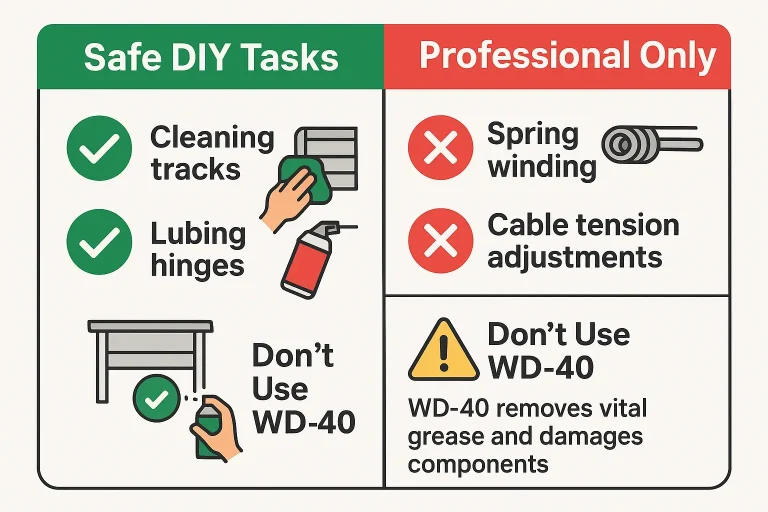
One of the most common DIY mistakes is spraying WD-40 on garage door tracks and rollers. WD-40 is a solvent and degreaser, not a true lubricant. It strips away vital factory grease, attracts abrasive environmental dust, and eventually destroys sealed bearings. Instead, always use a high-grade silicone or lithium spray.
To keep your home safe, refer to this basic maintenance protocol to understand what parts of the garage door should you lubricate and what requires professional attention:
- Green Light (Safe DIY): Cleaning tracks, lubricating hinges with silicone spray, checking safety sensor alignment, and reviewing your garage door safety checklist.
- Red Light (Professional Only): Winding torsion springs, adjusting bottom brackets, and performing garage door cable replacement. High-tension components carry severe risk of injury if handled without proper tools.
Frequently Asked Questions
Can I upgrade only one of my dual springs?
We always advise replacing both springs simultaneously. Because they experience the same daily wear, the surviving spring has likely neared its fatigue limit and will fail shortly after the first.
How do I know if my door is balanced?
Pull the manual release cord while the door is closed, then lift the door halfway. A balanced door will remain in place. If it falls or rides up rapidly, your spring tension requires professional adjustment.
Are high-cycle springs worth the upfront cost?
Yes. Mathematically, high-cycle springs cost only marginally more upfront but lower your Cost-Per-Cycle by over 50%, saving hundreds in repeat labor costs.
Take the Next Step Toward Ultimate Reliability
Protect your home and ensure your garage door operates quietly and reliably for years to come. Contact Up & Down Garage Doors today to book a comprehensive 25-point safety inspection and tune-up.
You May Also Like
Why We Recommend To Update to Heavy Duty Garage Hardware
Your garage door is likely the largest and heaviest moving object in your home. For many, it's also the primary entrance. Yet, when we think about home security, we often focus on the front door lock or the alarm…
Published Date: Aug 27, 2026
Smart Upgrades for Heavy And Multi-Door Openers: DIY vs Pro
You’ve seen the ads and read the articles. A smart garage door opener seems like the perfect weekend project—a simple upgrade for modern convenience. You envision opening your garage from your phone, getting delivery…
Published Date: Jul 27, 2026
High-Cycle Commercial Doors for Distribution Centers and Warehouses
That sound you hear isn’t just a truck backing up to the dock. It’s the rhythm of your entire operation. Every time a loading dock door groans open and slowly closes, it’s a beat in that rhythm. But what if that beat…
Published Date: Jun 8, 2026