




Replacing One Torsion Spring on a Two-Spring Door: Why Pros Replace Both
Published: Oct 12, 2026
When a garage door torsion spring snaps, it instantly immobilizes your car and disrupts your home’s main entry point. When a technician recommends replacing both springs—even though only one is visibly broken—it is natural to wonder: Is this a legitimate necessity or a contractor upsell?
Understanding how does a garage door spring work clarifies why dual spring replacement is an engineering necessity, not an unnecessary upcharge.
The Science of Twin Fatigue: Why Springs Fail in Pairs
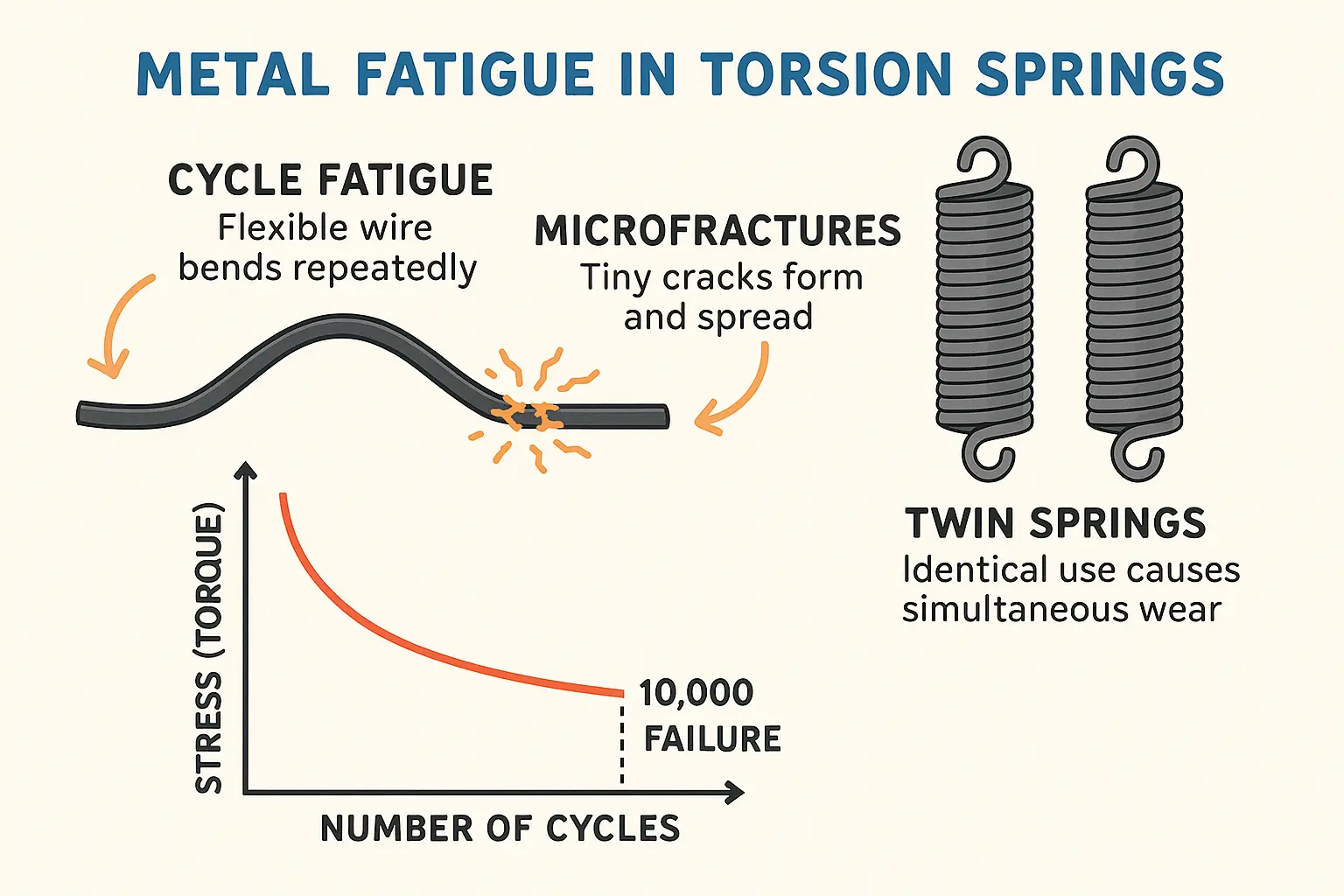
Standard residential torsion springs are manufactured to the Door & Access Systems Manufacturers Association (DASMA 102) standard for 10,000 cycles (where one cycle equals a single complete open and close). For an average household operating a garage door 4 to 6 times per day, spring failure typically occurs between 4.5 to 6.8 years of service.
Because paired springs are installed together, manufactured from identical wire stock, and subjected to the exact same daily cycle count, their metallurgical wear is synchronized. Industry data shows that when one spring breaks, the surviving spring has an 85%+ probability of failing within 1 to 6 months due to shared cycle fatigue and stress transferred during the initial break.
Operating a system with one new spring and one fatigued spring creates asymmetrical torque across the torsion shaft. This force imbalance places 2x to 3x nominal torque loads on your automatic garage door opener, often stripping internal nylon drive gears and causing an additional $150 to $300 repair bill. Taking steps to repair garage door opener mechanics before this extra strain occurs protects your motor system.
Consumer Protection Guide: How to Audit Your Garage Door Technician
Recognizing how to tell if your garage door spring is broken allows you to address door issues promptly, but verifying proper service execution ensures you receive lasting value.
Follow this quality checklist when your technician completes the job:
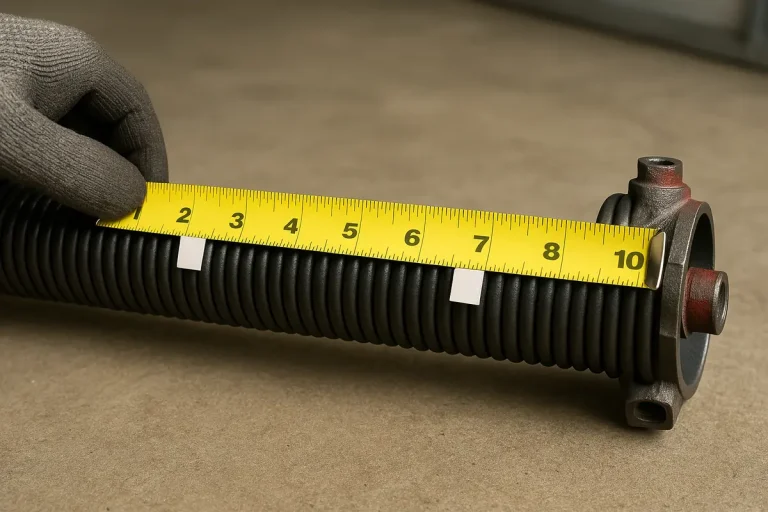
- Wire Gauge Verification: Confirm that both replacement springs are calibrated precisely for your door’s weight and height specifications using wire calipers.
- Winding Balance Check: Ensure equal winding turns are applied across both springs to maintain level shaft rotation.
- The Door Float Test: Disconnect the opener trolley and manually raise the door to waist height (about 3 to 4 feet off the ground). A balanced door should remain suspended in place without drifting down or snapping upward.
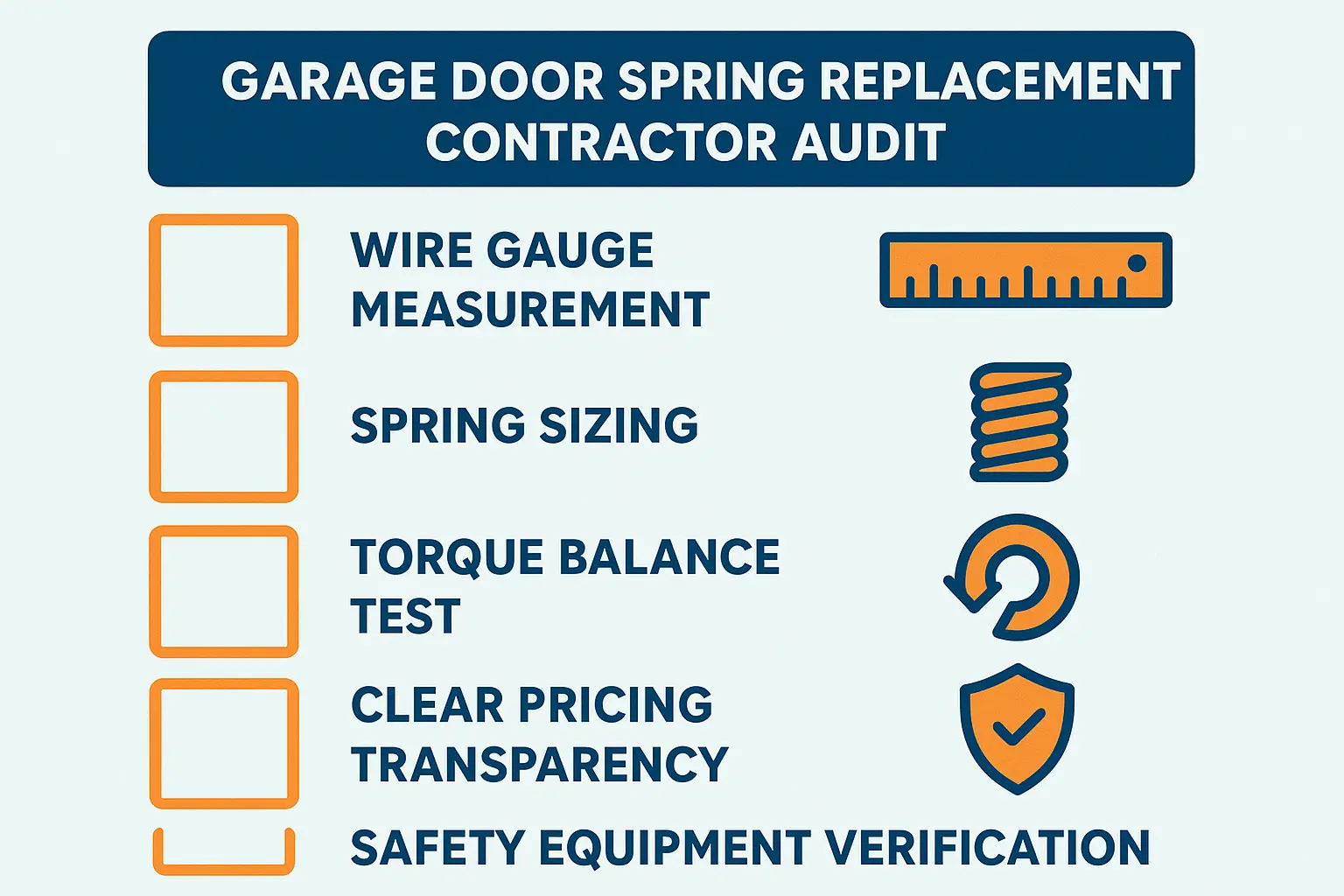
If you have a broken garage door spring, opting for simultaneous dual spring replacement remains the most reliable path to avoid unexpected secondary breakdowns and secure your system’s long-term performance.
Frequently Asked Questions
Can you replace just one spring on a two-spring garage door?
While replacing a single spring is technically possible, it is not recommended by garage door professionals. The older, surviving spring has completed the same number of cycles and carries an 85% probability of snapping shortly after. Furthermore, pairing an old spring with a new spring creates uneven shaft torque that accelerates wear on cables, tracks, and opener gears.
How much does it cost to replace two garage door springs?
Replacing a dual torsion spring assembly typically ranges between $260 and $510, covering parts, labor, and dispatch fees. Replacing both springs during a single service visit saves $120 to $200 by eliminating a second service call and labor charge in the near future.
How long do garage door springs last after one breaks?
When one torsion spring snaps in a dual system, the remaining spring usually fails within 1 to 6 months. The surviving spring experiences extreme momentary stress during the initial break, accelerating its remaining metal fatigue and hastening breakdown.
You May Also Like