




Burning Smell From a Garage Door Opener: What It Means
Published: Oct 14, 2026
Noticing a burning smell coming from your overhead powerhead is alarming. Whether it smells like burnt plastic, electrical ozone, or fishy chemicals, your garage door opener is signaling severe thermal or electrical stress.
Before assuming the worst, understanding what caused the odor will help you safely diagnose the problem, evaluate repair costs, and prevent home fire hazards.
Emergency Triage Protocol: Immediate Safety Steps
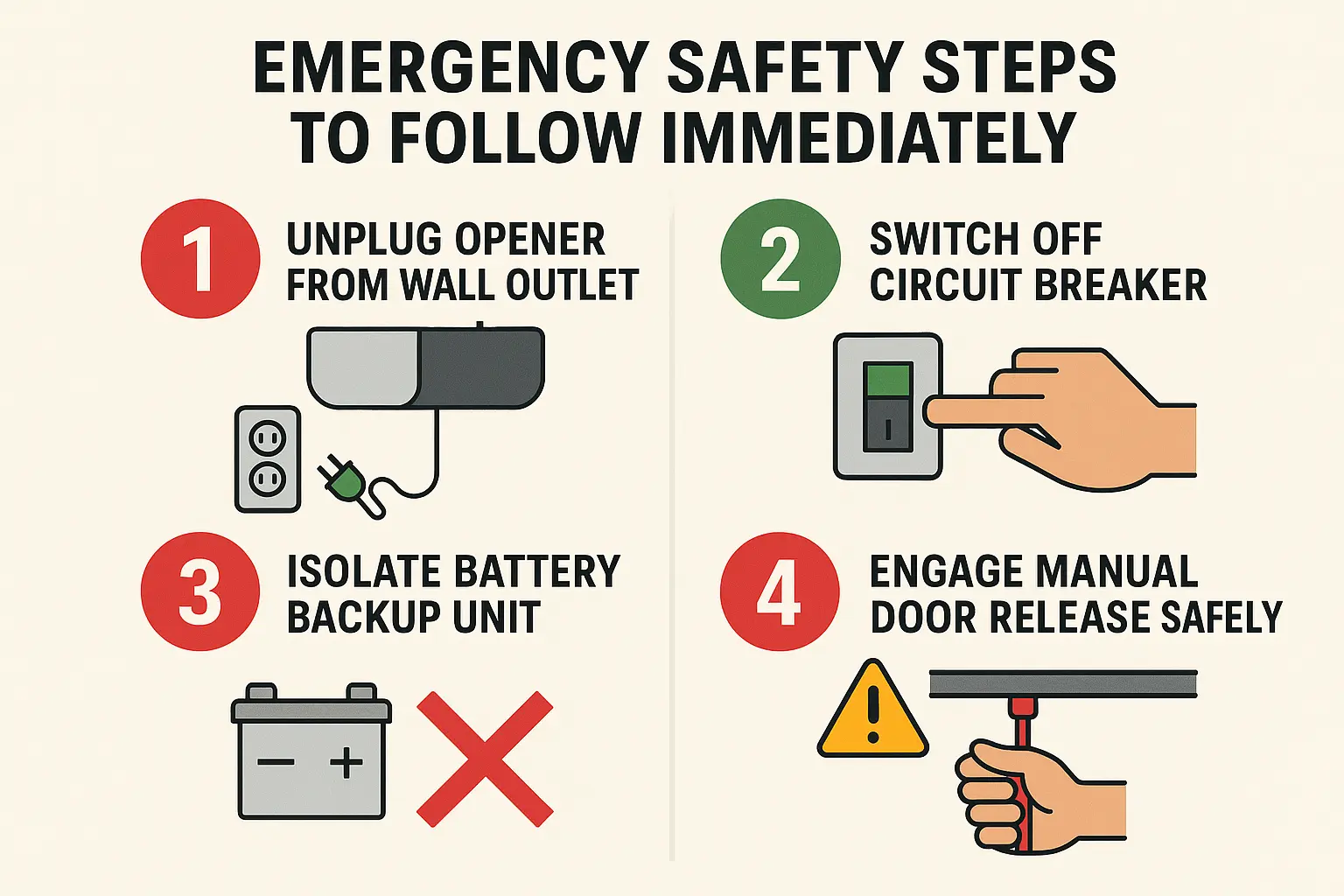
When you detect smoke or a harsh electrical scent, act immediately to prevent electrical fires or shock. According to Consumer Product Safety Commission (CPSC) guidelines, overheated conductor insulation can lead directly to short circuits.
- Disconnect Primary Power: Unplug the opener from its ceiling outlet. If the cord is hot or inaccessible, flip the dedicated circuit breaker at your main panel.
- Isolate Battery Backup Units (BBU): Modern openers often feature internal battery backups that remain energized even after pulling the wall plug. Disconnect the backup battery harness inside the housing.
- Engage Manual Disconnect: Pull the red emergency release cord down and toward the opener to disengage the trolley, allowing you to operate the door manually if needed.
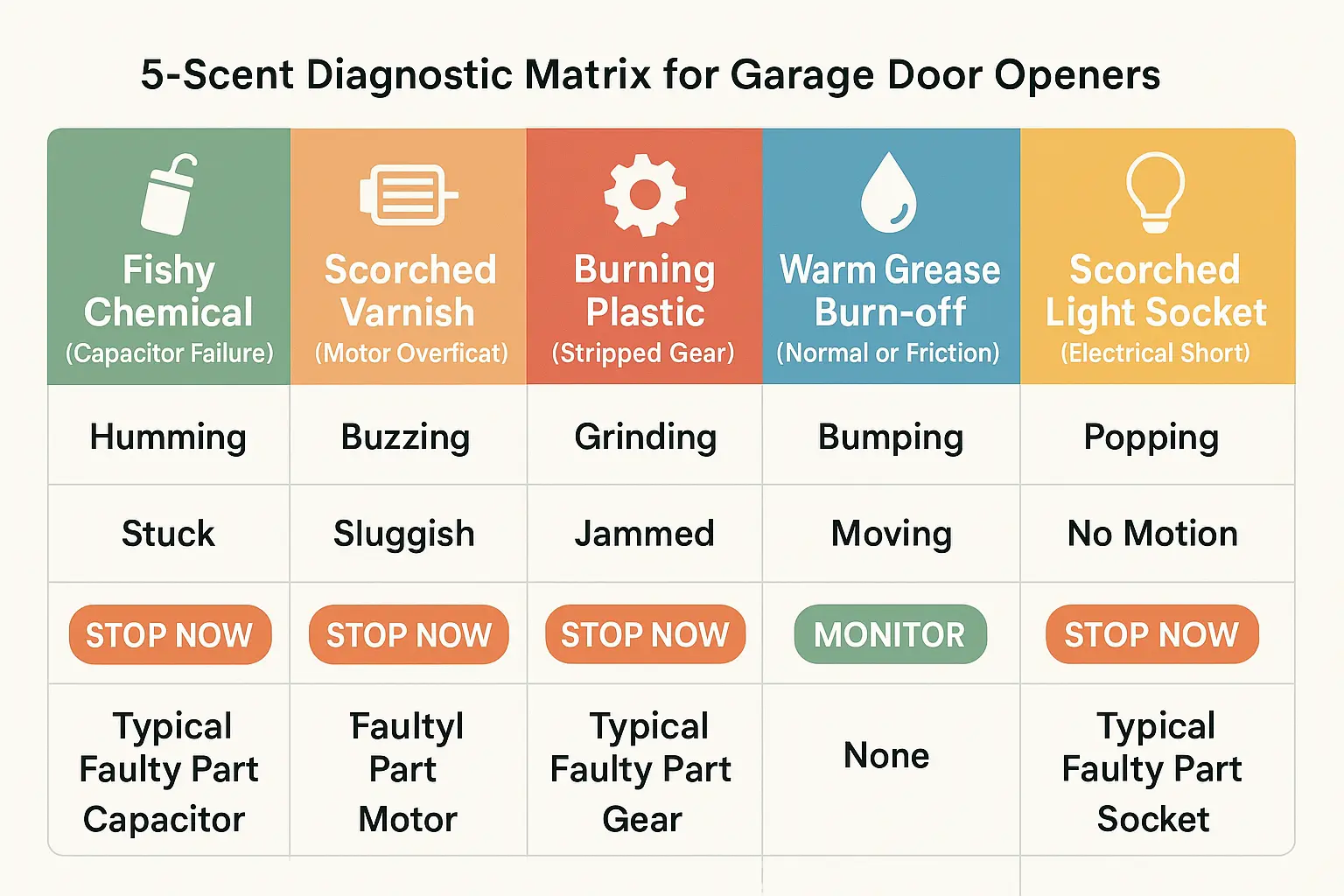
The 5-Scent Diagnostic Matrix
Different smells point directly to specific component failures within your powerhead.
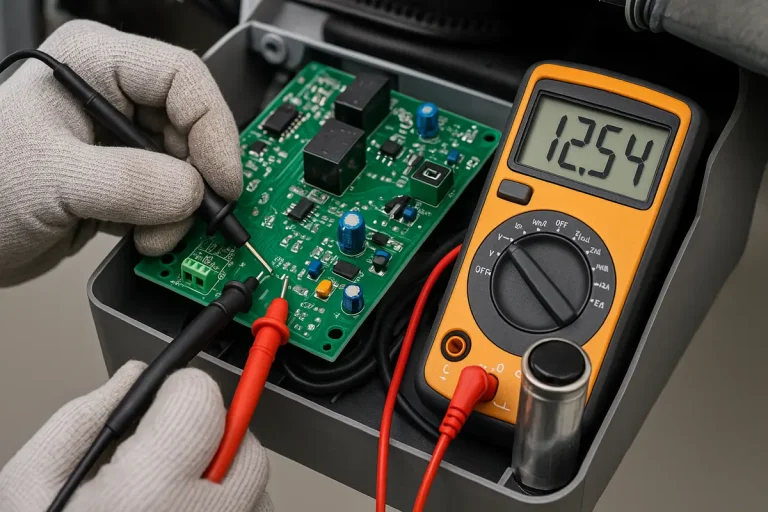
- Fishy or Sharp Chemical Smell: Indicates a ruptured start capacitor (typically rated 50–70 MFD). When electrolyte fluid leaks and vaporizes, it creates a pungent chemical odor. If you notice a garage door tripping breaker, a shorted capacitor is often the culprit.
- Scorched Varnish or Hot Metal: Signals an overheating motor stator coil. Extreme strain causes protective copper wire coatings to melt.
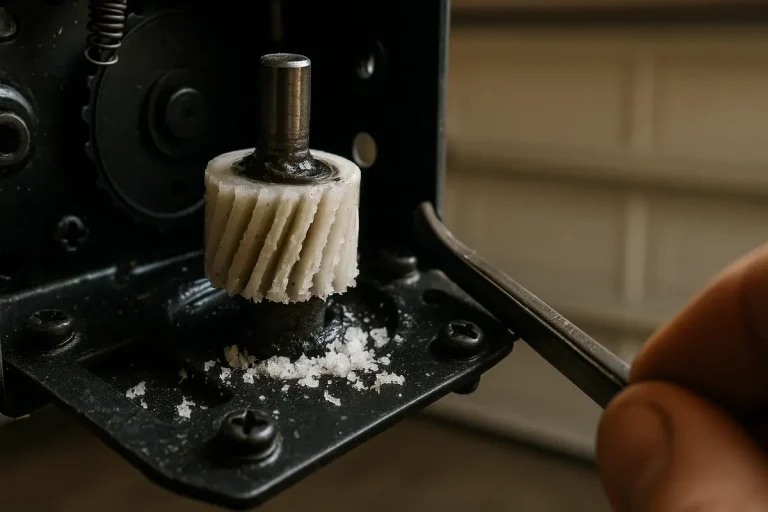
- Burning Plastic with Grinding: Points to a stripped nylon drive gear friction-melting against the motor worm gear, often causing a scenario where you hear the motor running but the door won’t move.
- Hot Dust or Burning Oil: Often benign, caused by dust settling on warm internal components after long idle periods, or over-lubricated motor bearings burning off excess oil.
- Scorched Plastic Near Light Sockets: Caused by using incorrect wattage incandescent bulbs that melt surrounding light covers or short circuit the logic board.
For step-by-step physical inspection routines, review our comprehensive garage door motor troubleshooting guide.
Overheating vs. Motor Failure: Identifying the Hidden Culprit
Modern residential openers feature a bimetallic thermal overload switch that trips when internal temps exceed safe limits, locking power out for a 15- to 30-minute cooling window.
However, 80% of premature motor burns aren’t caused by opener age—they stem from garage door imbalance. Per DASMA standards, a properly balanced door should require under 15 lbs of force to lift manually. Broken springs, worn rollers, or binding tracks increase motor amperage draw by over 200%, forcing internal temps past thermal thresholds.
Performing periodic garage door roller replacement and knowing how to lubricate garage door hardware protects your opener motor from catastrophic heat failure.
Frequently Asked Questions
Why does my garage door opener smell like fish?
A distinct fishy or chemical odor is caused by a failing start capacitor. When high voltage or heat ruptures the capacitor’s fluid seal, the chemical liquid leaks out and evaporates, releasing a sharp odor that resembles spoiled fish.
Can a garage door opener motor catch fire?
Yes. Overheated motor windings or shorted circuit boards can melt internal plastic components and ignite electrical insulation. If you see smoke or smell strong burning, immediately disconnect power to eliminate fire hazards.
How long does an overheated garage door opener take to cool down?
Built-in thermal overload switches usually reset automatically after 15 to 30 minutes of idle cooling. If the unit does not function after 30 minutes, internal components or thermal fuses may be permanently fried.
Need expert help evaluating your opener? Up & Down Garage Doors brings over 15 years of family-owned expertise and 24/7 emergency response to restore safe operation to your home. Contact our certified technicians today for transparent pricing and reliable service.
You May Also Like