





Beyond the Dents: Your Post-Storm Garage Door Damage Checklist
Published: Jul 29, 2026
The storm has passed. The wind has died down, the rain has stopped, and an uneasy quiet has settled over the neighborhood. You step outside to survey the yard, picking up stray branches and checking the roof. Then you look at your garage door. Maybe you see a few dings from hail, or maybe it looks perfectly fine.
But here’s something most homeowners don’t realize: the most dangerous storm damage isn’t always the kind you can see. Hidden issues can compromise your home’s safety and lead to a cascade of expensive problems down the road. This guide will walk you through a complete post-storm inspection, helping you understand what to look for beyond the obvious dents.
Why a 5-Minute Check Can Save You Money
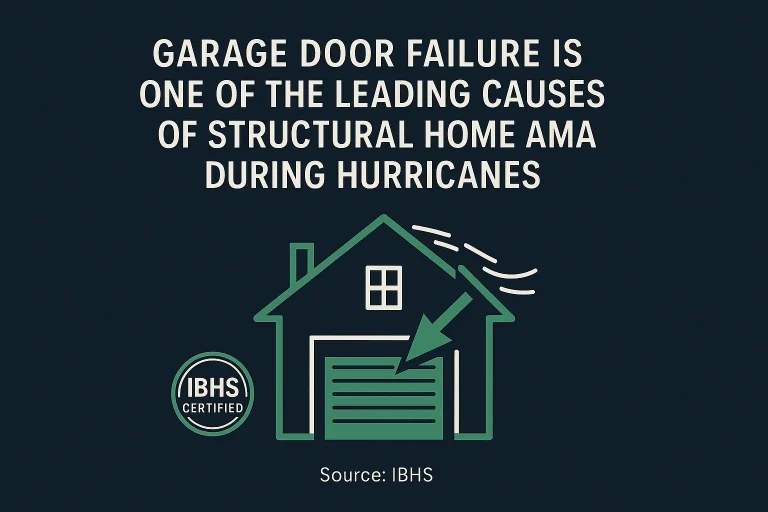
It’s easy to dismiss the garage door as just a large slab of metal. But according to research from the Insurance Institute for Business & Home Safety (IBHS), the failure of a garage door is one of the leading causes of catastrophic structural damage to a home during a hurricane or high-wind event.
When a powerful storm breaches a garage door, the immense pressure that floods the garage can blow the roof right off the house. That’s why a quick, five-minute inspection isn’t just about checking for dings; it’s one of the most important steps you can take to protect your biggest investment.
The Two Types of Storm Damage (And Only One Matters)
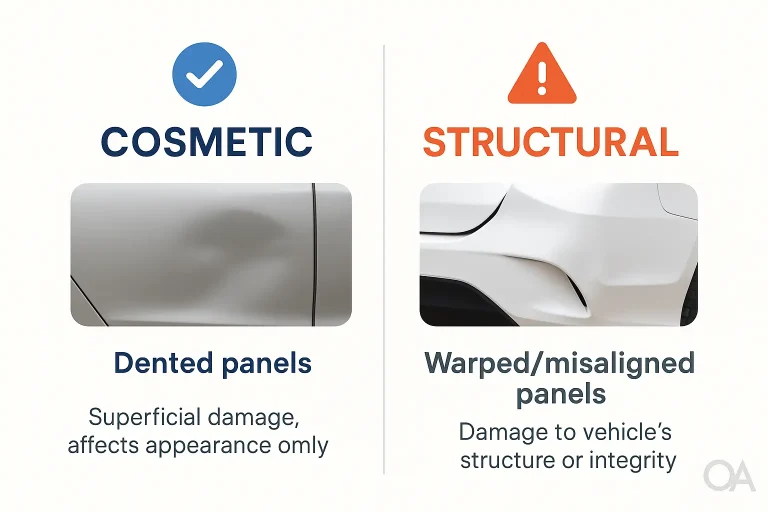
After a storm, every dent and scratch can feel alarming. The first step to making a clear-headed decision is to understand the crucial difference between two types of damage. This simple framework will guide your entire inspection.
- Cosmetic Damage: This is what you see first—dents from hail, chipped paint from flying debris, or surface-level scratches. While it might be an eyesore, cosmetic damage typically doesn’t affect the door’s function or safety.
- Structural Damage: This is the hidden danger. It includes warping or bending of the panels, misalignment of the door in its tracks, broken seals, and damage to the lifting mechanism. Structural damage compromises the integrity of the entire system and can lead to serious safety risks and mechanical failures.
Your goal is to determine if the damage you see is purely cosmetic or a symptom of a deeper, structural problem.
Your 7-Point Garage Door Inspection Checklist
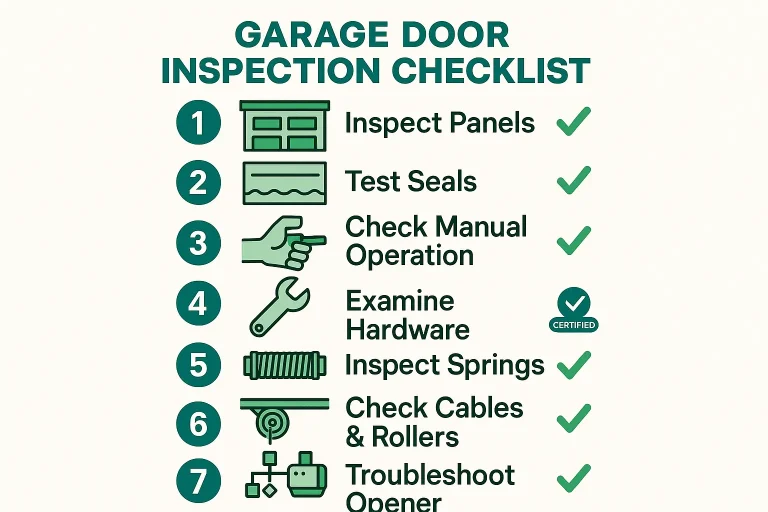
Work through this checklist methodically to get a complete picture of your garage door’s health. For safety, perform the initial visual checks with the garage door closed.
Step 1: The Visual Panel Check (Beyond Dents)
Stand back and look at the door from a distance. Are the horizontal and vertical lines straight? High winds don’t just dent; they can create pressure that causes panels to warp or bow. Look for:
- Warping: A slight curve or bow in a panel that should be flat.
- Misalignment: Do the sections line up perfectly, or are there uneven gaps?
- Cracks or Splits: Check panel corners and edges, especially on wooden doors.
Step 2: The Weather Seal Inspection
The weatherstripping at the bottom and sides of your door is your first line of defense against the elements. A storm can tear it, dislodge it, or pack it with debris. Kneel down and check if the bottom seal is intact and creates a solid barrier with the floor. A compromised seal can let in water, pests, and drafts, and it may signal the door was shifted by the storm. If you find significant damage, a proper garage door seal installation is key to restoring its protective function.
Step 3: The Manual Operation Test (The Most Important Step)
This step reveals if there’s hidden structural damage. Safety First: Make sure the door is fully closed. Pull the red emergency release cord to disconnect the garage door opener. Now, try to lift the door by hand. It should:
- Lift smoothly without grinding or catching.
- Feel relatively lightweight (around 10-15 lbs of force).
- Stay in place when you let go halfway up (this is called the “balance test”).
If the door feels heavy, sticks, or slams shut when you let go, the springs, cables, or tracks have likely been damaged. Warning: Do not try to re-engage the opener if the door fails this test. Forcing it can burn out the motor.
Step 4: The Hardware and Track Check
With the door open (and secured or held by another person if it failed the balance test), look at the metal tracks, rollers, and hinges.
- Tracks: Are they perfectly straight, or are there any bends or dents?
- Rollers: Are they all securely in the track? Do any look cracked or worn?
- Hinges & Brackets: Are all bolts tight? Is anything loose or bent?
Step 5: The Opener Troubleshooting Flow
If the door works perfectly by hand but not with the remote, the issue is likely electrical.
- Check the Power: A storm could have tripped a circuit breaker or GFCI outlet.
- Check the Safety Sensors: The small boxes near the floor on either side of the door can get knocked out of alignment. Ensure their lights are solid (usually green and amber).
- Check the Remote: If your wall button works but the remote doesn’t, it could be a simple issue. Sometimes power surges can affect the opener’s logic board, causing it to lose connection. If you find your garage door remote not working, a simple reprogram might be all that’s needed. However, a direct lightning strike or major surge can fry the unit’s logic board, requiring professional repair.
Step 6: Listen for Unusual Noises
If the door passes the manual test, reconnect the opener and run it once while listening carefully. Grinding, popping, or scraping sounds are clear indicators that something is wrong—a roller is failing, a track is bent, or the opener is straining.
Step 7: Understand the “Chain Reaction” of Damage
A “minor” structural issue is rarely minor for long. A slightly warped panel puts uneven stress on the rollers. These stressed rollers then start to wear down and damage the metal tracks. The damaged tracks force the garage door opener to work harder to lift the unbalanced load, which ultimately leads to a burned-out motor. What started as a small warp becomes a full system failure.
The Big Decision: Repair, Replace, or Call Your Insurer?
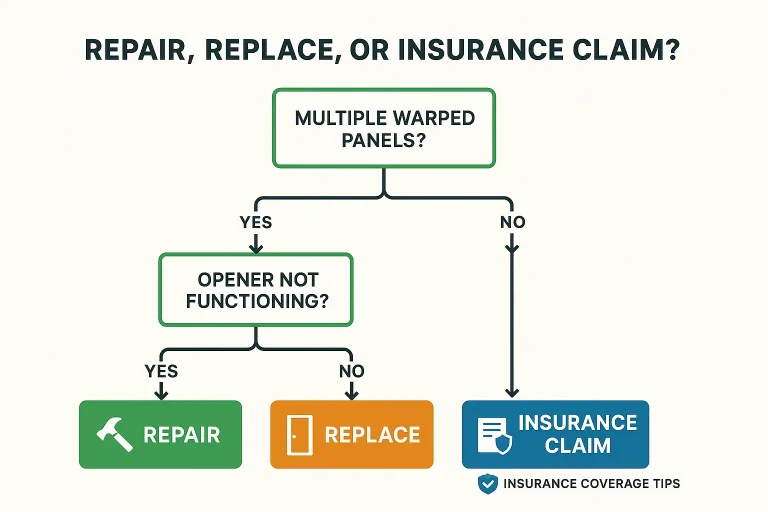
Once your inspection is complete, you’ll have a clear idea of whether you’re dealing with a cosmetic issue or a structural problem. This is where you decide what to do next.
When to Repair
You can likely opt for a repair if:
- The damage is limited to one or two panels on a newer door.
- A specific part, like a hinge or roller, is broken.
- The issue is a simple electrical one with the opener.
Knowing can a damaged garage door be repaired versus needing a full replacement can save you a significant amount of money.
When to Replace
Replacement is often the safer and more cost-effective option when:
- Multiple panels are dented, warped, or damaged.
- The door frame itself is bent, preventing a proper seal.
- The door is older, and matching replacement panels are no longer available.
- The door failed the manual balance test, indicating widespread system strain.
If you live in an area prone to high winds, this is an excellent opportunity to upgrade to one of the modern wind resistant garage doors for better protection in the future.
Navigating Insurance Claims
Most standard homeowner’s insurance policies cover sudden and accidental damage, which includes wind and hail.
- Document Everything: Take clear photos and videos of all damage, no matter how small.
- Contact Your Insurer: Call your agent to start the claims process. They will guide you on their specific requirements.
- Get a Professional Quote: Your insurance company will likely require a quote from a professional garage door company to assess the extent of the damage and the cost to repair or replace it.
FAQ: Your Post-Storm Questions Answered
Can hail really damage a steel garage door?
Absolutely. While steel doors are durable, large hailstones can leave a field of dents that are not only cosmetic but can sometimes be deep enough to affect the panel’s integrity and compromise the paint’s protective layer, leading to rust.
Is my door safe to use if it just has a few dents?
If the door passes the manual operation test and runs smoothly without any new noises, it is likely safe to operate. However, if a dent is severe and has created a crease or warp, it has become a structural weak point that should be inspected by a professional.
My opener won’t work after a storm. What’s the first thing I should do?
Before calling for help, check your circuit breaker and the GFCI outlet the opener is plugged into. If they are fine, try operating the door from the wall-mounted button. This helps determine if the issue is with the opener unit itself or just the remote controls.
Is storm damage covered by my homeowner’s insurance?
In most cases, yes. Wind and hail damage are typically covered perils. However, policies vary, so it’s always best to review your specific coverage and contact your insurance agent to confirm before filing a claim.
Your Next Step: From Assessment to Action
You are now equipped to perform a thorough and confident inspection of your garage door after a storm. By looking beyond the dents and understanding the difference between cosmetic and structural damage, you can catch small problems before they become catastrophic failures.
If your inspection revealed any signs of structural damage—a door that is heavy to lift, makes strange noises, or is visibly warped—it’s crucial to stop using it and seek professional help. For urgent issues that compromise your home’s security, an emergency garage door repair service can provide a safe and immediate solution. Taking the right action today protects your home and family tomorrow.
You May Also Like
Weatherproofing Your Outdoor Garage Door Keypad
It’s one of those moments that can ruin a morning. You’re rushing out the door, coffee in hand, tapping your code into the garage door keypad… and nothing happens. You try again. Still nothing. The rain starts to…
Published Date: Jun 24, 2026
Why Your Garage Door Remote Range Decreases in Cold Weather
It’s one of the most frustrating moments of winter: you pull up to your home, shivering, and press the garage door remote. Nothing happens. You press it again, holding it closer to the windshield. Still nothing.…
Published Date: Apr 24, 2026
Garage Door Spring Maintenance in Extreme Weather
Think of your garage door springs as a ticking clock. With every cycle, they wind and unwind under immense tension, lifting hundreds of pounds of weight. But here’s something most homeowners don’t realize: the…
Published Date: Apr 9, 2026