





Demystifying the Annual Fire-Rated Rolling Door Drop Test
Published: Oct 6, 2026
Facility managers often view the annual fire door drop test with a mix of regulatory obligation and operational anxiety. If you operate a commercial property or warehouse, you might wonder: do garage doors need to be fire rated? When it comes to passive fire protection and life safety, the answer is an absolute yes. However, maintaining these life-saving barriers involves rigorous compliance and professional validation, not just basic visual checks.
The Regulatory Mandate of NFPA 80
Under the NFPA 80 Standard (Section 5.2), rolling steel fire doors must be inspected and tested at least annually. Crucially, the code dictates that this testing must be performed by a “qualified person” with specialized training. This means facility staff cannot self-certify; doing so risks severe local fire marshal fines, denied insurance claims, or catastrophic system failure in an emergency. For businesses seeking reliable compliance partner support, securing professional commercial garage door repair texas ensures your building stays compartmentalized against toxic smoke and fire.
Anatomy of a Forced Drop: The Mechanics of the "Double-Drop" Protocol
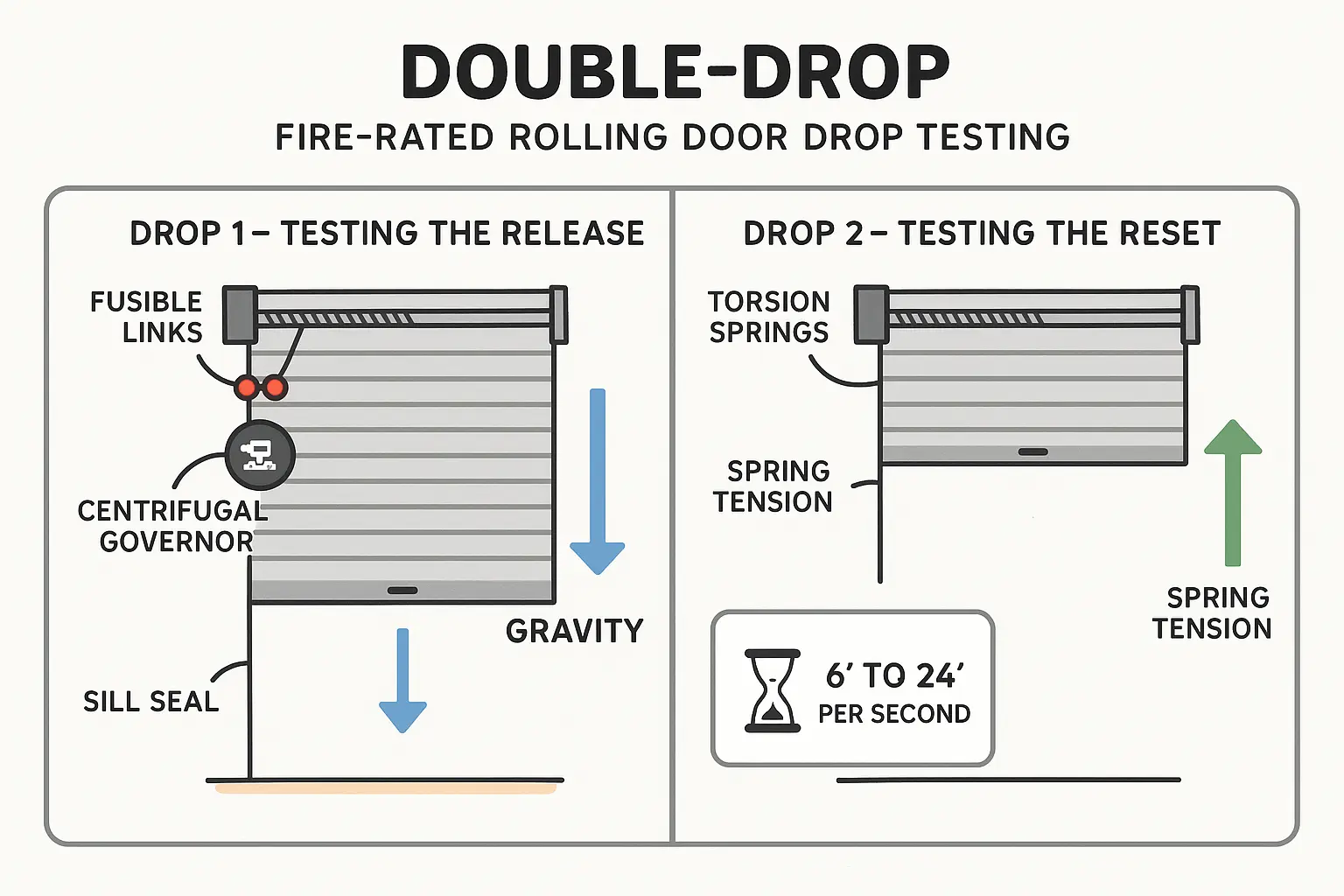
Many managers assume a drop test is a simple one-time release. However, NFPA 80 Section 5.2.14.3 explicitly mandates the “double-drop” protocol. This dual-phase requirement serves two completely different mechanical purposes. The first drop evaluates the automatic release mechanics (fusible links, alarm triggers, and gravity descent). The second drop, performed after a full manual reset, verifies that the internal tension springs and centrifugal governor brakes have been perfectly recalibrated.
During both drops, the door’s curtain must fall between 6 and 24 inches per second. Any slower fails to seal the opening; any faster creates a dangerous “guillotine” effect.
The 5 Most Common Reasons Rolling Fire Doors Fail
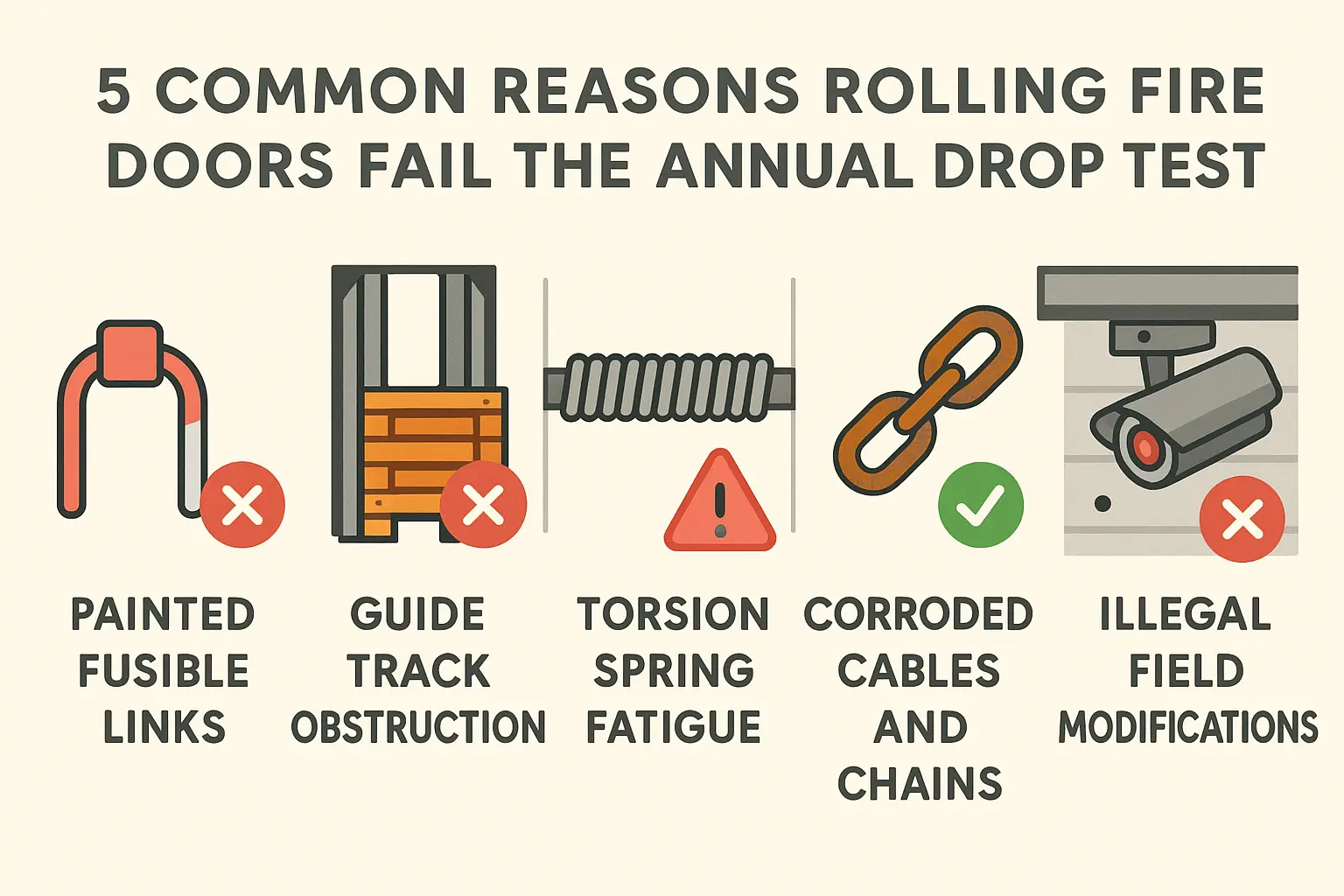
Annual tests expose hidden system wear. Unlike a standard rolling steel door vs roll up door setup, fire doors rely on dormant mechanical components that sit unused for months. This dormancy leads to several common failures:
- Painted Fusible Links: Overzealous maintenance crews often paint over the 165°F fusible links, preventing them from melting in a fire.
- Guide Track Obstructions: Racks, conduits, or pallets block the downward path.
- Torsion Spring Fatigue: Worn inner springs compromise the door’s descent speed limits.
- Damaged Release Chains: A corroded or frayed garage door cable can jam the mechanical release arm.
- Illegal Field Modifications: Screwing signs or cameras directly into the hood voids the UL listing label.
Navigating the Technician's Liability Release Waiver
Before performing a drop test, professional technicians will often ask you to sign a liability waiver. This is because releasing high-tension torsion springs on aged, neglected doors can cause worn internal components to snap. This is not technician error—it is the result of long-term wear. Identifying pre-existing garage door damage before releasing the tension is vital to avoid unexpected downtime.
Facility Manager's Pre-Test Inspection Checklist
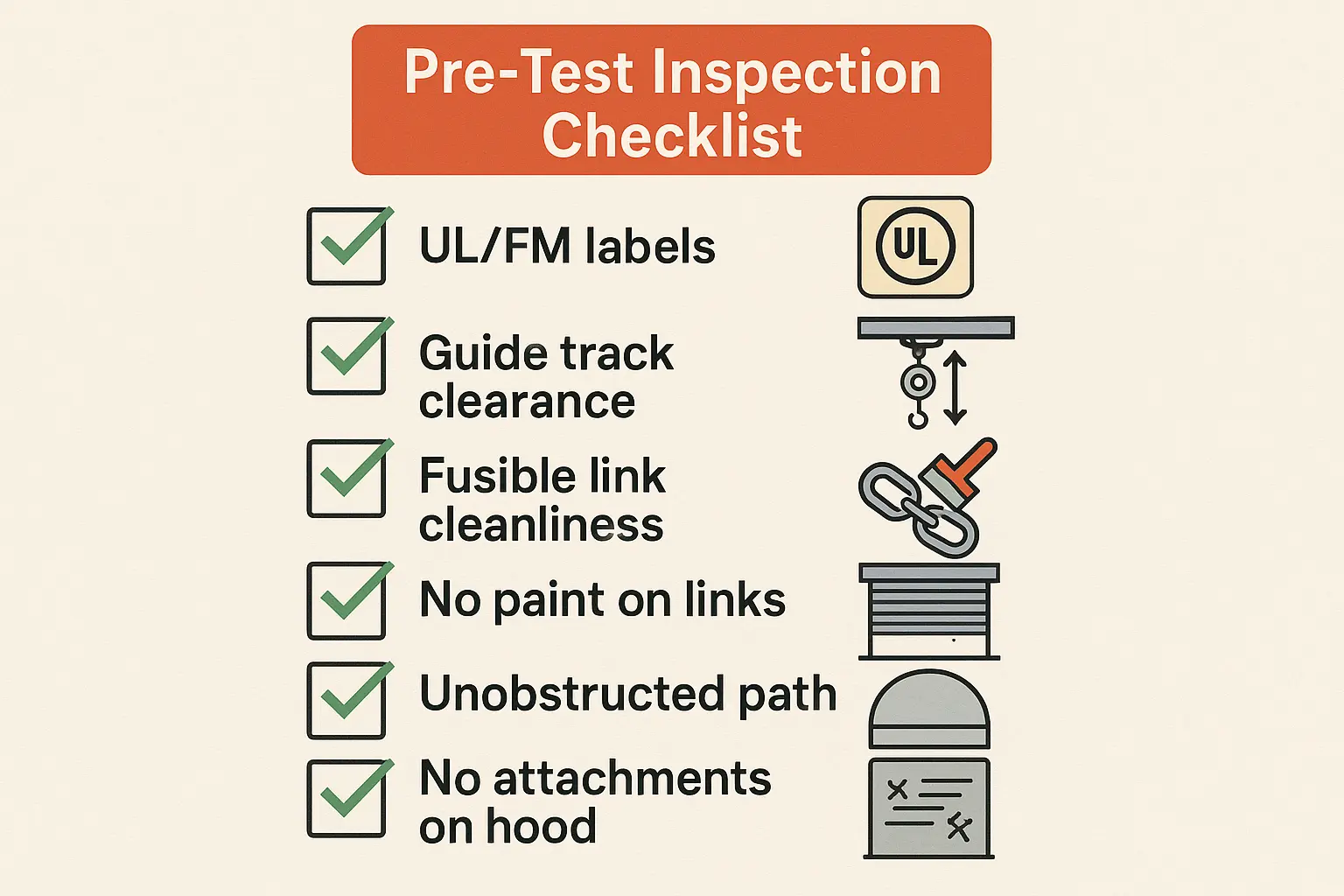
To minimize failure rates, facility managers should run a preliminary, visual check based on DASMA TDS-271. Regular commercial garage door inspection steps can catch obvious code violations before the formal testing begins. Ensure guide tracks are clean, verify that UL/FM labels are visible, and check that no cables or chains are tangled or obstructed.
Upgrading to Modern Auto-Reset Systems
If your facility is still operating traditional, manual-reset chain-hoist tension doors, the annual drop test is a labor-intensive affair. These older systems require technicians on tall ladders manually winding springs. Upgrading to modern “Auto-Reset” motorized operators allows the door to automatically reset once the fire alarm clears, saving hours of downtime and reducing risk.
Frequently Asked Questions
How often does a fire-rated door need to be drop tested?
According to NFPA 80 guidelines, fire-rated doors must be drop tested at least once a year. High-risk or heavy-dust manufacturing facilities may benefit from more frequent, semi-annual inspections.
Can our on-site maintenance team conduct the drop test?
No. NFPA 80 specifies that fire door inspections and tests must be performed by a certified, trained door systems technician to meet safety standards and pass local fire marshal audits.
What happens if our door fails the annual drop test?
If a door fails, it must be repaired immediately. The system remains non-compliant until the underlying mechanical issues are resolved and a successful double-drop certification test is completed.
You May Also Like
Roll-Up Garage Doors: Space-Saving, Security & Industrial Applications
Published Date: Sep 17, 2026
Door Closer Repair vs. Replacement: The Facility Manager’s Guide
When a heavy entry door slams shut with a bone-rattling crash—or swings open limply, refusing to latch—it is more than a daily annoyance. For commercial facility managers and residential property owners, a…
Published Date: Aug 11, 2026
The Future of Mobile Access Control: Aliro 1.0, Next-Gen Hardware, and Regulatory Compliance
For years, facility managers and property developers have tolerated a flawed physical security paradigm. Traditional access cards and physical brass keys are liability vectors. In fact, research indicates that nearly…
Published Date: Aug 6, 2026