





Master Guide to Hydraulic And Pneumatic Door Closer Repair: Triage, Adjustments, and Compliance
Published: Aug 17, 2026
To help you navigate this decision, we have structured this guide into two distinct pathways: commercial-grade hydraulic (fluid-based) systems and residential pneumatic (air-based) cylinders.
⚠️ CRITICAL SAFETY WARNING: Never completely unscrew the adjustment valves on a hydraulic door closer. Limit adjustments to a maximum of two full turns counter-clockwise from the closed position. Over-rotating these screws can cause a high-pressure blowout of pressurized mineral oil, destroying the unit’s seals and presenting a severe safety hazard.
Segment A: The Commercial Hydraulic Adjustment Protocol
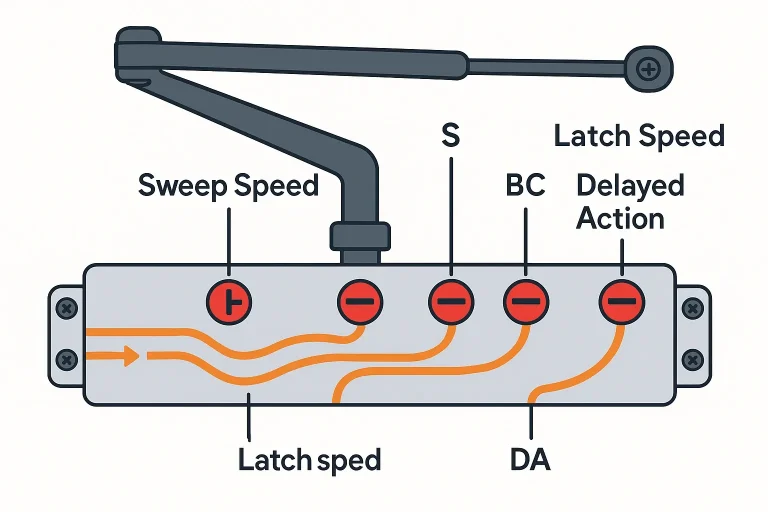
Commercial hydraulic door closers rely on the non-compressibility of internal oil moving through restricted internal passages. Standard units utilize ISO VG 15 or 32 mineral oil, which experiences a 300% change in viscosity between summer (100°F) and winter (30°F). This thermal friction shift causes doors to slam in the summer heat and fail to latch in the winter cold.
To correct this, you must understand your closer’s valve layout. When managing building access points, just like performing a routine garage door maintenance checklist, fine-tuning closer valves protects your structural framework from damage. Use 1/8-turn increments to adjust these specialized controls:
- S (Sweep Speed): Controls the closing speed from a wide-open 90-degree position down to approximately 12 degrees.
- L (Latch Speed): Controls the final 12 degrees of travel, ensuring the door firmly latches without slamming.
- BC (Backcheck): Prevents the door from being thrown open violently by the wind, cushioning the swing at approximately 75 degrees.
- DA (Delayed Action): Delivers a timed delay before closing begins, allowing ADA or cart traffic to pass safely.
Section C: The "Death Rattle" of Leaking Hydraulic Closers - Repair vs. Replace Decision
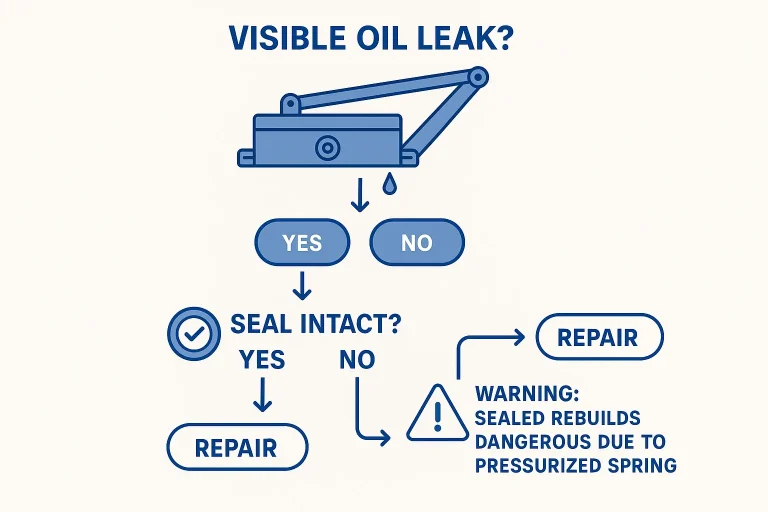
If you notice a dark puddle of fluid underneath the door closer cover or a sticky sheen coating the adjustment screws, your closer has suffered a blown seal.
Despite claims found in online forums, there is no such thing as a reliable DIY field rebuild for commercial hydraulic seals. Commercial-grade closer springs are factory-tensioned under thousands of pounds of pressure. Attempting to disassemble the end caps or replace internal O-rings without specialized industrial pin spanners risks explosive decompression.
To determine your next steps, reference our diagnostic decision matrix:
When a full replacement is required, seek out ANSI/BHMA Grade 1 certified hardware (rated for 2,000,000 cycles) to ensure decade-long operational life. If your entryway requires professional mechanical intervention, our local emergency garage door service handles heavy-duty hardware failures to secure your facility quickly.
Segment B: The Residential Pneumatic (Storm Door) Guide
Residential storm and screen doors typically rely on pneumatic cylinders—air-based pistons that regulate speed via an adjustable air-release screw.
Wright Products (EZ-Hold & V2012)
If your push-button EZ-Hold closer is stuck in the open position, the internal bypass washer has likely gouged the central operating rod. Depress the button and apply a light silicone lubricant to the rod, sliding the hold-open washer back and forth to clear metal burs.
Ryobi Doorman & Residential Overhead Units
Unlike basic storm door cylinders, these light-duty hydraulic units feature dual adjustment valves. If the unit squeals during operation, air has bypassed the internal piston ring. To resolve this, lubricate the piston rod or complete a minor adjustment to purge trapped air pockets.
Similar to diagnosing mechanical binding issues—such as identifying how to put garage door back on track—pneumatic closer issues require a systematic, physical inspection of the hinges, rod straightness, and mounting brackets before assuming the cylinder is broken.
Segment D: Operational ADA & Fire Code Compliance Calculator Section
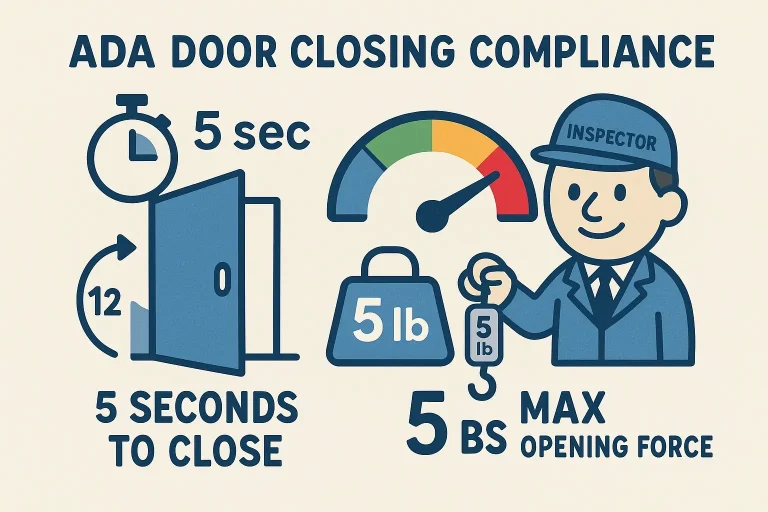
Commercial properties must satisfy strict architectural accessibility mandates. According to ADA Standards and local building codes:
- ADA Standard 404.2.8 (Closing Speed): The door must take a minimum of 5 seconds to move from an open position of 90 degrees to a point 12 degrees from the latch.
- ADA Standard 404.2.9 (Opening Force): The maximum opening force allowed for interior doors is 5 pounds (22.2 N).
To keep your facility compliant and functional, pairing commercial-grade closer adjustments with a comprehensive, professional commercial door service ensures your high-traffic entry points are reliable, secure, and fully accessible.
Frequently Asked Questions
Can I refill a leaking hydraulic door closer?
No. Hydraulic closers are sealed systems manufactured under precise industrial spring load. Once a seal leaks, air enters the chamber, causing irreversible pressure loss. The unit must be replaced.
Why does my storm door closer squeal?
A squealing sound in a pneumatic closer indicates that the internal rubber piston ring is dry, allowing air to escape past the seals. Lubricate the metal operating rod with a light machine oil and cycle the door several times.
How often should I adjust my door closer?
Ideally, commercial door closers require adjustments twice a year—once in late autumn as cold weather thickens the hydraulic fluid, and once in early spring as rising temperatures lower the fluid’s viscosity.
You May Also Like
Door Closer Repair vs. Replacement: The Facility Manager’s Guide
When a heavy entry door slams shut with a bone-rattling crash—or swings open limply, refusing to latch—it is more than a daily annoyance. For commercial facility managers and residential property owners, a…
Published Date: Aug 11, 2026
Garage Door Solutions for RVs, Boats, and Oversized Openings
It’s a moment of pure joy that quickly turns to frustration. You bring home your dream Class A RV or the boat you’ve saved for years, pull up to the garage, and realize with a sinking feeling: it’s not going to fit.…
Published Date: May 11, 2026
Explore Different Types of Garage Doors
Choosing the right garage door is about making your home more secure and looking better. Finding the one that meets your needs and your home’s style can be overwhelming with so many options. Whether you’re looking…
Published Date: Sep 25, 2024