





Door Closer Repair vs. Replacement: The Facility Manager’s Guide
Published: Aug 11, 2026
When a heavy entry door slams shut with a bone-rattling crash—or swings open limply, refusing to latch—it is more than a daily annoyance. For commercial facility managers and residential property owners, a malfunctioning door closer represents a rapid escalation in HVAC costs, a breach of building security, and a major liability under local safety codes.
Determining whether to perform a door closer repair or commit to a full replacement comes down to diagnosing the underlying mechanical failure. This guide breaks down the physics of door control, contrasting heavy-duty commercial hydraulic systems with lightweight residential pneumatic cylinders.
The Hydraulic Oil Leak: An Irreparable Failure
In a commercial hydraulic door closer, the internal fluid acts as a brake, not a lubricant. When a door is pushed open, a heavy steel coil spring is compressed. As the door closes, the spring releases its stored energy, and the hydraulic fluid is forced through tiny, adjustable valves to slow the door down.
Because these are sealed, pressurized systems, any visible oil pooling or dripping from the closer body is a fatal diagnosis. Once the seals fail and fluid escapes, the hydraulic braking force is lost forever. There is no fluid reservoir to top off, and attempting to patch a blown seal is impossible. If your door closer is leaking oil, a full replacement is your only safe option.
Diagnosing the "Viscosity Shift" and Warped Frames
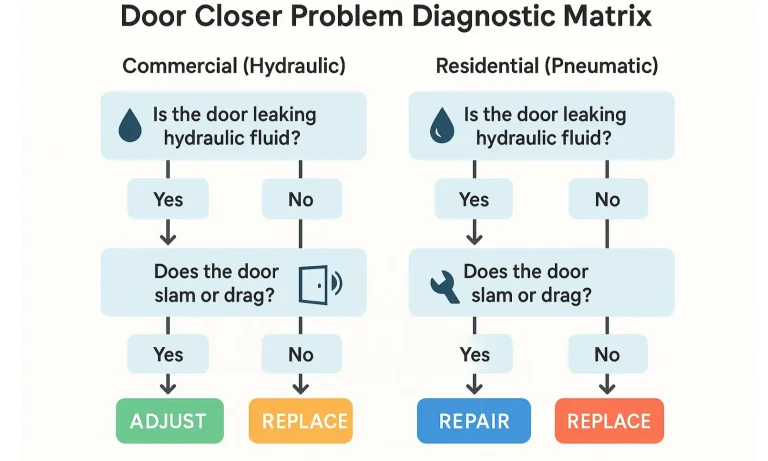
Before replacing a dry, non-leaking closer that has started slamming, check for two common external culprits:
- The Viscosity Shift: Hydraulic oil changes density with the seasons. When winter temperatures plunge, the fluid thickens, causing doors to close too slowly. In summer heat, the oil thins out, leading to heavy slamming. This is solved via a simple quarterly valve adjustment, not hardware replacement.
- Warped Frames and Hinges: Often, a closer is blamed when the structural opening is warped. Use a level on the door frame and check the hinges for play. If the door drags, a hardware replacement won’t solve the root issue. Check out our guide on garage door panel repair to understand how structural warping affects overhead systems similarly.
Adjustment Screws Decoded
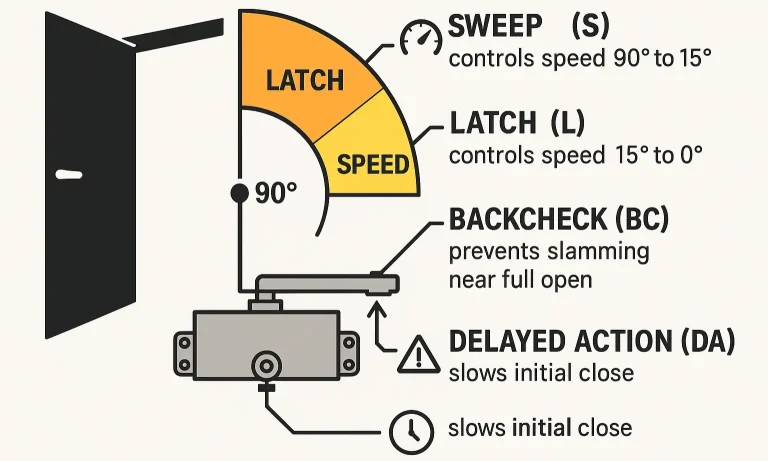
If there are no fluid leaks, most closing speed and latching issues can be resolved by tuning the adjustment valves.
- Sweep Speed (S Valve): Manages the primary closing speed as the door swings from fully open down to about.
- Latch Speed (L Valve): Regulates the final of travel before the door latches shut. Correctly setting this ensures the door closes quietly without slamming, yet securely engages the latch.
- Backcheck (BC Valve): Provides resistance during the opening cycle (usually starting around to prevent a strong gust of wind from violently throwing the door back and damaging your walls.
- Delayed Action (DA Valve): Slows down the initial closing movement from maximum open down to about, giving individuals in wheelchairs or those moving cargo extra time to pass safely.
Repair VS. Replace Cost-Benefit Calculator
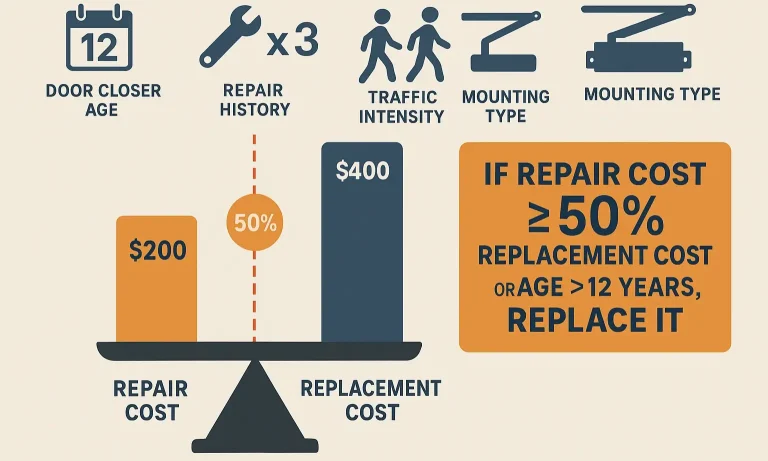
To maximize your facility budget, use the 50% Rule: if a professional repair or adjustment service costs more than 50% of a brand-new, high-grade replacement unit, opt for replacement.
A standard commercial valve adjustment and service call runs between $120 and $200. In contrast, a brand-new, professional-grade (Grade 1) closer replacement costs between $350 and $700, including materials and expert installation.
Consider the ANSI/BHMA Grade of your hardware when calculating value:
- Grade 1: Tested for 2,000,000+ cycles. Best for high-traffic building entries. Lifespan: 15 to 30 years.
- Grade 2: Tested for 1,000,000+ cycles. Perfect for moderate traffic. Lifespan: 10 years.
- Grade 3: Tested for 500,000+ cycles. Recommended only for low-traffic interior closets.
Code Compliance, Fire Safety, and Liability
Commercial facilities must carefully balance mechanical adjustments with strict regulatory requirements:
- ADA Guidelines: According to federal accessibility laws, the maximum opening force for an interior door must not exceed 5 lbs (22 Newtons). Tightening your closer’s spring tension too far to fight outside wind or drafts can easily push you out of ADA compliance.
- NFPA 80 Fire Doors: Fire doors are legally required to self-close and latch securely from any open angle. Propping open fire-rated doors or leaving a broken, non-latching closer in place can result in severe code violations and catastrophic safety risks. Understanding local regulations or codes affecting new garage door installation and entry doors keeps your property compliant and insurable.
To guarantee your entire facility remains secure, energy-efficient, and structurally sound, integrating seasonal closer adjustments into your ongoing commercial garage door maintenance routine is highly recommended.
FAQ: Common Door Closer Questions
Why does my door close fast and slam in the summer but crawl slowly in the winter?
This is due to thermal changes in the hydraulic oil’s viscosity. Standard closer service should include a 1/4-turn valve adjustment during seasonal transitions to compensate.
Can I buy a repair kit and replace the seals on a leaking commercial door closer myself?
No. Commercial closers are sealed under high spring tension. Attempting to open the chamber without industrial tools can result in severe injury, and replacement seals are not sold separately. A leaking closer must be replaced.
How do I stop my door closer from slamming the door?
A slamming door usually means the “latch speed” valve needs a minor adjustment. Most door closers have two main adjustment screws: one for the main swing (sweep speed) and one for the final few inches of closing (latch speed). To stop the slam, locate the latch valve—often labeled with an “L”—and turn it clockwise using an Allen wrench or screwdriver.
Secure Your Openings with Up & Down Garage Doors
At Up & Down Garage Doors, our family-owned operations have provided commercial and residential properties with trusted, honest door services for over 15 years. Whether you need an emergency repair or a high-grade closer installation, our fully trained, licensed technicians are ready 24/7 to secure your facility.
Contact us today to schedule your complete commercial door service and keep your business safe, accessible, and up to code.
You May Also Like
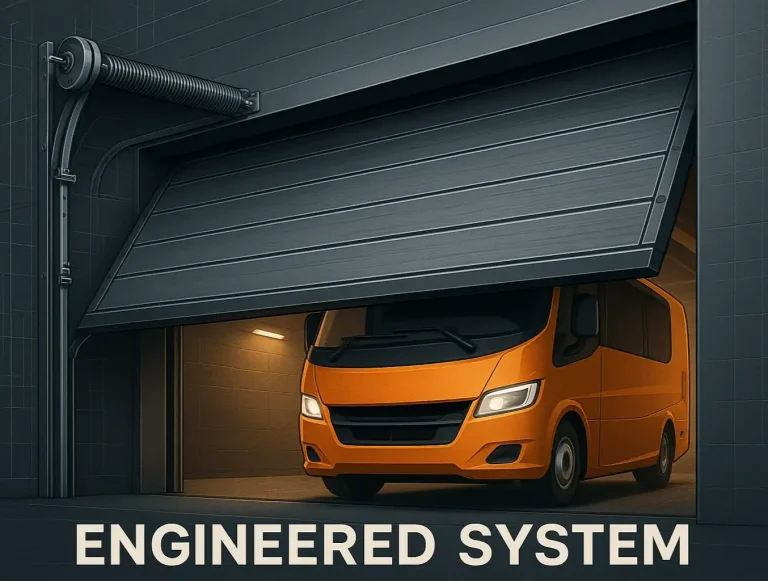
Garage Door Solutions for RVs, Boats, and Oversized Openings
It’s a moment of pure joy that quickly turns to frustration. You bring home your dream Class A RV or the boat you’ve saved for years, pull up to the garage, and realize with a sinking feeling: it’s not going to fit.…
Published Date: May 11, 2026
Why Your Garage Door Stops Opening When it Hits the Floor
It’s one of those uniquely frustrating moments. You hit the button, your garage door starts its familiar rumble, but instead of gliding all the way up, it stops short—maybe a few inches, maybe a few feet from the…
Published Date: May 1, 2026
The Ultimate Safety Guide to Manually Opening Your Garage Door
The power goes out. You hear the faint hum of electronics shutting down, and then silence. You need to get your car out of the garage, but the button on the wall is useless. That red cord hanging from the opener…
Published Date: Jan 14, 2026