





Steps to Maintain Your Smart Garage Opener After Installation
Published: Jul 8, 2026
You did it. After a weekend of careful work, your new smart garage door opener is installed. You’ve synced it with your phone, tested it a dozen times, and enjoyed the modern convenience of opening your garage from anywhere. It’s a great feeling—a perfect blend of home improvement victory and tech wizardry.
But as the initial satisfaction fades, a new question starts to bubble up, one that most installation guides never address: What happens next?
What happens in six months when the app suddenly won’t connect? Who do you call when the opener goes offline for no apparent reason? This is where the path of smart garage door ownership splits into two very different journeys, and the decision you made before installation—DIY or professional—will define your experience for years to come.
DIY vs Professional Support: Who Manages Your Smart Garage Opener
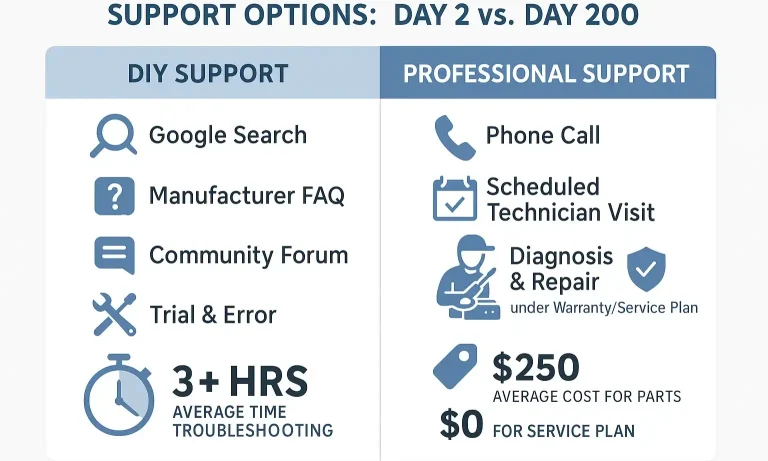
When you own a smart device, you’re not just owning a piece of mechanical hardware; you’re managing a mini-computer that’s connected to your home network. Long-term, your support experience will fall into one of two models.
The “You Are the IT Department” Model (DIY)
Choosing the DIY route means you are the first and last line of defense. You’re the installer, the troubleshooter, the network administrator, and the security chief. When something goes wrong, your support toolkit consists of:
- Manufacturer FAQs: Technical, specific, and assume a certain level of user knowledge.
- Community Forums: A mix of helpful advice, outdated information, and fellow frustrated users.
- Trial and Error: Paging through manuals and search results, hoping to stumble upon the right fix.
This path offers ultimate control but demands your time and technical patience.
The “Service & Guarantee” Model (Professional)
Opting for a professional installation isn’t just about Day 1. It’s about entering into a relationship with a service partner. Your support model is built on accountability and expertise. When an issue arises, your toolkit is simple:
- A Single Phone Number: You have one point of contact responsible for diagnosing and solving the problem.
- Service Guarantees & Warranties: Your labor and the system’s functionality are backed by a professional commitment.
- Expert Technicians: You have access to trained professionals who understand both the mechanical and digital sides of your system.
This path values your time and provides peace of mind through a structured support system.
Long-Term Smart Garage Opener Ownership: Day 2 vs Day 200
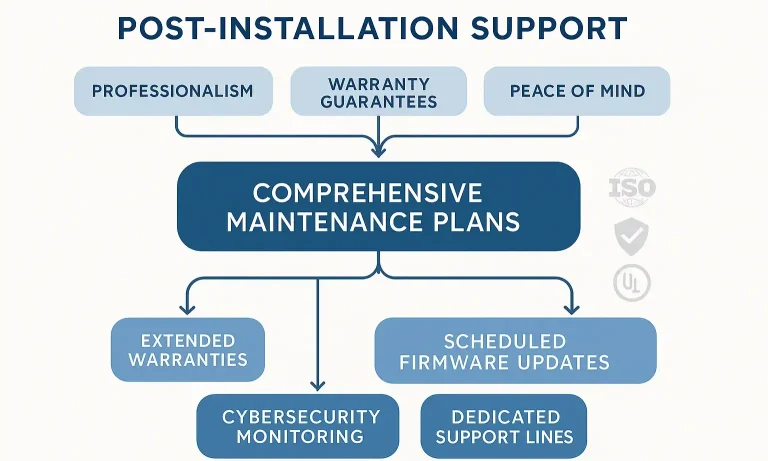
The difference between these two philosophies becomes crystal clear when you face your first real issue long after the initial setup. What seems like a simple problem can quickly spiral into a multi-hour troubleshooting session for a DIYer, while it’s a routine service call for someone with a professional guarantee.
Let’s break down the common points of failure and see how each path handles them.
Mechanical Maintenance: The Common Ground
Every garage door system, smart or not, has moving parts that need care. Springs lose tension, rails get grimy, and sensors get knocked out of alignment. While a dedicated DIYer can learn the basics of garage door maintenance, a professional service plan handles this proactively, ensuring small issues are caught before they become major failures.
“Smart” Failures: Where the Paths Diverge
This is where the DIY journey gets complicated. A “smart” failure isn’t about a broken spring; it’s about a broken connection. Common issues include:
- Connectivity Problems: Your Wi-Fi router updates its firmware, or you get a new internet provider, and suddenly your opener is offline.
- App & Software Bugs: The manufacturer pushes an update to the app that creates a new bug or removes a feature you relied on (as users of MyQ HomeKit integrations have experienced).
- Firmware Glitches: The device’s internal software needs an update that fails, or it develops a conflict with other smart devices on your network.
For the DIYer, solving these problems means becoming a network detective. You’ll spend hours trying to figure out if the problem is the opener, the app, your router, or your phone. This is precisely when homeowners start searching for how to troubleshoot issues connected to smart garage door technology, falling down a rabbit hole of technical forums.
For the professional-backed owner, it’s one call. The technician is responsible for diagnosing the entire system, whether the fault lies in the hardware or the software connection.
Smart Garage Opener Total Cost of Ownership and Hidden Fees
The appeal of DIY is the upfront savings on installation costs. However, this often ignores the Total Cost of Ownership (TCO), which includes your time, future replacement parts, and stress.
Ask yourself: What is an hour of your weekend worth? If you spend four hours troubleshooting a connectivity issue, have you erased your initial savings? A professional maintenance plan turns these unpredictable time-sinks into a fixed, manageable cost.
Product Warranty vs. Service Guarantee: A Critical Distinction
Here’s a common “aha moment” for many homeowners: a manufacturer’s product warranty is not the same as a professional service guarantee.
- A Product Warranty covers the failure of the device itself. If a circuit board fries, the manufacturer may send you a replacement part. It’s up to you to diagnose the problem correctly and install the new
- A Service Guarantee covers the entire system’s functionality. It includes the diagnosis, the labor to fix it, and the assurance that the job will be done right. The typical garage door warranty from a professional covers parts and labor, providing a true safety net.
A product warranty won’t help you when your opener disconnects from a new Wi-Fi router. A service guarantee will.
Your Decision Checklist: Which Path Is Right for You?
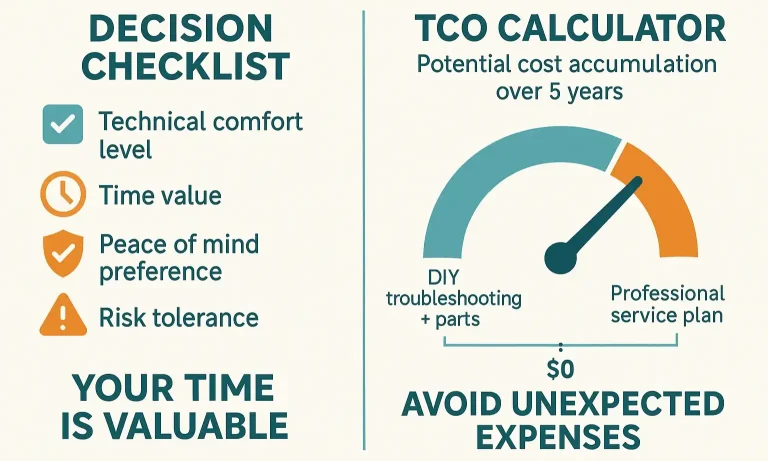
Choosing between a hands-on DIY approach and hiring a seasoned professional isn’t a matter of finding a single “correct” answer.
To help you cut through the indecision and find clarity, we have put together this comprehensive self-assessment checklist. Instead of looking for a one-size-fits-all solution, use these targeted questions to evaluate your current comfort level, look objectively at your available resources, and analyze the specific needs of your situation. By the time you finish walking through these points, you will have a much clearer picture of whether taking the reins yourself or partnering with an expert will deliver the peace of mind and the high-quality results you deserve.
Frequently Asked Questions (FAQ)
Is my manufacturer’s warranty not good enough?
It’s a great start, but it typically only covers the physical parts, not the labor to diagnose or install them, and almost never covers conflicts with your home’s unique tech ecosystem (like your Wi-Fi network).
How often do smart openers actually have problems?
While mechanical parts fail predictably with wear and tear, smart technology issues are more sporadic. They can be triggered by app updates, changes to your home network, or security patches, making them hard to predict but frustrating when they occur.
Can I switch to professional service after a DIY install?
Absolutely. Many professional companies offer maintenance plans and repair services for existing systems, even if they didn’t perform the initial overhead door installation. You can always bring in an expert when you decide your time is more valuable than troubleshooting.
What does a professional maintenance plan typically include?
A good plan usually includes an annual tune-up, safety inspection, lubrication of moving parts, sensor alignment checks, and support for connectivity or software issues. It’s proactive care designed to prevent problems before they start.
Beyond Installation: Investing in Peace of Mind
The decision to install a smart garage door opener is just the beginning. The real choice is how you want to manage that technology over its lifespan. While the satisfaction of a DIY project is undeniable, it’s crucial to understand that you’re also signing up for the long-term role of IT manager.
For many, the initial investment in a professional installation pays dividends in saved time, reduced frustration, and the confidence of knowing an expert is just a phone call away. From understanding the average garage door installation time to having a local partner like a team offering garage door repair in Cypress, TX, a professional relationship provides a seamless ownership experience from start to finish.
Ultimately, the best path is the one that gives you, the homeowner, the most peace of mind.
You May Also Like
Maintaining Your Garage Door in Coastal Areas: Essential Care Tips
Garage doors in coastal areas face specific challenges due to the salty air, moisture, and humidity. Regular maintenance is key to preventing damage and keeping your garage door in good working order. In this…
Published Date: Nov 28, 2024
Maintaining Your Commercial Garage Door for Maximum Efficiency
A commercial garage door is more than just an entryway — it protects your business, helps operations run smoothly, and adds security. When it stops working properly, it can slow down deliveries, put equipment at…
Published Date: May 8, 2025
The Most Common Garage Door Lock Issues & How to Fix Them
A garage door lock may not seem complicated, yet when it fails, it puts your home’s security at risk. Homeowners often run into problems like a lock that won’t latch, turns loosely without engaging, or gets stuck…
Published Date: May 1, 2025