





Fix or Replace Your 20 Year Old Garage Door Opener
Published: Aug 19, 2026
Your 20-year-old Craftsman, LiftMaster, or Chamberlain garage door opener has been a model of reliability. But lately, it is showing its age. Maybe it is making a strange humming sound, emitting a persistent beep, or refusing to sync with your brand-new vehicle.
When a vintage opener begins to falter, homeowners face a classic crossroads: do you invest time and money to fix it, or is it time to completely upgrade? To make an informed decision, you must weigh immediate repair costs against the long-term reliability, safety, and smart features of a modern system.
The Financial Equation: Repair Costs vs. Long-Term Value
When deciding should i fix or replace my garage door opener, it is easy to fall into the sunk-cost trap. Spending money on service fees and parts for a system built in the early 2000s might seem cheaper than a professional replacement. However, at 20 years old, critical components like capacitors, logic boards, and internal gears are operating on borrowed time.
If one minor component fails today, another is highly likely to fail next season. A complete replacement provides a fresh warranty, modern safety features, and a reset on the unit’s 10-to-15-year engineered lifespan.
Symptom Decoder: Diagnosing Vintage Opener Failures
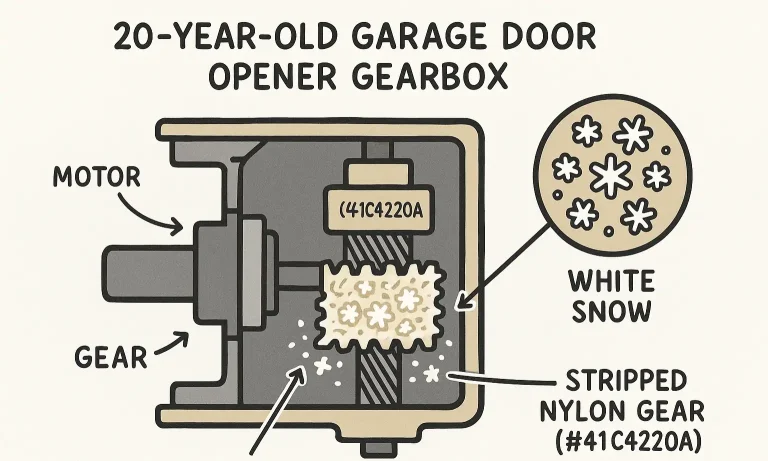
Before calling a professional, you can diagnose the exact health of your opener by paying attention to its sounds and behavior.
The “Humming Motor” (Stripped Nylon Gears)
If your motor hums or spins when you press the button, but the door does not budge, you are likely dealing with a classic mechanical failure. If you experience a garage door not opening but motor running scenario, the culprit is almost always a stripped internal drive gear.
Inside vintage Chamberlain-made chain-drive systems, the standard drive gear (OEM Part #41C4220A) is made of nylon. Over two decades of friction, this gear wears down, leaving “white plastic snow” inside the metal housing. While a replacement gear kit only costs about $20, replacing it is a highly tedious, two-hour labor-intensive DIY task.
Symptom Decoder – Explaining common failure signs on old garage door openers
The Continuous Beep
If your wall panel or opener unit emits a loud beep every 30 seconds, it is signaling a battery issue. Do not confuse this with a weak garage door remote battery, which simply stops sending signals. A rhythmic, persistent beep from the main unit indicates that the internal garage door opener battery backup is depleted and needs to be replaced.
If you decide to try and repair garage door opener electrical issues yourself, always cut the power first to protect the sensitive receiver board from short-circuiting.
The New Car Crisis: Why Your HomeLink Won't Program
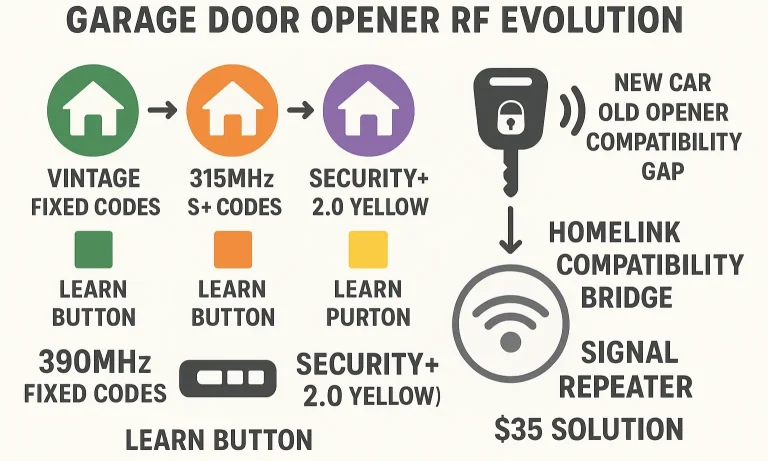
A major friction point for owners of 20-year-old openers is buying a new vehicle and discovering they cannot program the integrated HomeLink buttons.
This compatibility gap exists because older systems manufactured before 2005 communicate on fixed 390MHz or early 315MHz radio frequencies. Modern cars transmit using tri-band Security+ 2.0 signals. To find out what frequency your system uses, check the color of the learn button on garage door opener units. Vintage systems usually have a green, orange, or purple button, while modern systems use a yellow button.
If you want to keep your vintage opener but need it to talk to your new car, you must configure a HomeLink compatibility bridge or repeater. While this workaround resolves your car2u programming issues for around $35, it still leaves you with a loud, outdated mechanical motor.
Safety and Security Vulnerabilities of Vintage Openers
Operating a 20-year-old opener introduces hidden physical safety and cyber-security risks that modern units have solved:
- Physical Safety (UL 325 Standards): Federal guidelines mandated safety eyes (photoelectric sensors) in 1993. If your opener was manufactured before this and does not utilize photoelectric sensors, it violates safety guidelines. Even if sensors are present, operating an older unit where children or pets play can be risky. If you are wondering, will chamberlain garage door opener work without sensors, the answer is that bypasses are dangerous and expose your household to severe entrapment risks.
- Security Vulnerabilities: Pre-1996 openers use outdated fixed-code DIP switches. Modern software-defined radios and “code-grabbing” devices can capture these signals in seconds, allowing tech-savvy intruders easy entry into your home.
- Legal Compliance: In states like California, Senate Bill 969 mandates that any professional garage door motor replacement or new installation must feature an active battery backup system to ensure operation during power grid failures.
Interactive Decision Matrix
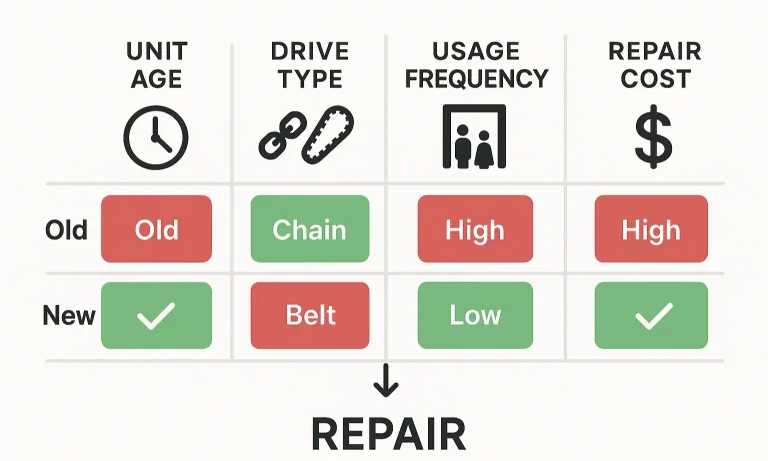
Deciding whether to repair or replace an aging garage door opener doesn’t have to feel like a guessing game. Use our simple, objective scoring matrix below to evaluate the age, performance, and features of your existing system.
How to interpret your score:
- 1 to 2 points: Simple repairs or standard maintenance should be enough to keep your system running smoothly.
- 3 or more points in the replacement column: Your opener has reached the end of its practical lifespan. Upgrading to a modern, energy-efficient garage door opener is the smartest, most cost-effective, and safest investment you can make for your home.
The Modern Upgrade: What a New Opener Offers
Upgrading to a modern belt-drive or direct-drive opener completely transforms how you interact with your home. Modern systems feature ultra-quiet DC motors that eliminate the harsh vibrations of old chain-drive models. Furthermore, built-in smart technology allows you to control garage door from phone, monitor activity logs, grant temporary access to delivery drivers, and view live camera feeds through integrated smart home apps.
Frequently Asked Questions
Can I install a modern smart opener on my existing garage door tracks?
Yes. Modern garage door openers are highly compatible with existing standard T-rail or I-beam tracks, provided your current tracks and garage door springs are in balanced, working condition.
How do I know if my vintage opener is a safety hazard?
If your opener lacks safety eyes at the base of the tracks, or if the door does not automatically reverse when it hits an object, your system is a serious safety hazard and should be replaced immediately.
Is a belt-drive opener really that much quieter than my old chain drive?
Absolutely. Vintage chain drives rely on metal-on-metal contact. Modern belt-drive openers use steel-reinforced rubber belts combined with smooth DC motors, reducing operating noise by up to 70%.
Making Your Decision
If you are tired of dealing with a screeching motor, persistent beeps, or wireless signal headaches, let the professionals help. Contact Up & Down Garage Doors today for an honest, transparent evaluation of your current system and professional installation options tailored to your home.
You May Also Like
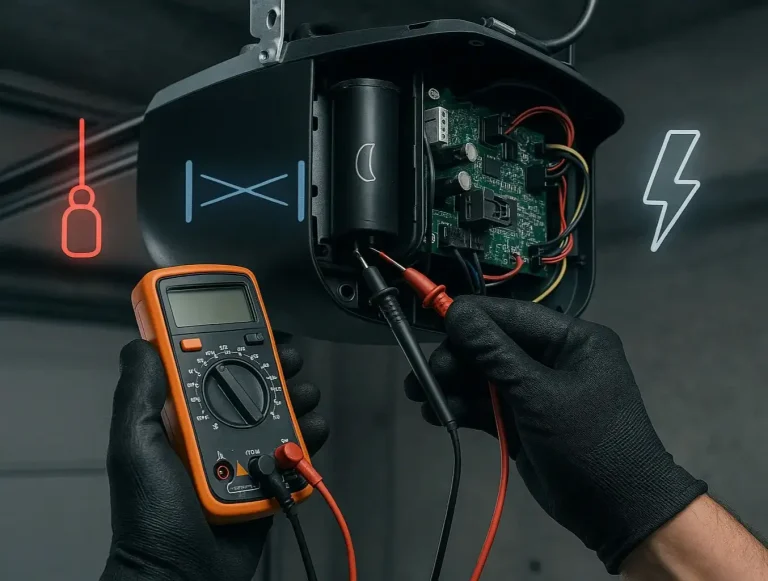
How to Diagnose and Fix Garage Door Opener Electrical Issues
When your automatic garage door refuses to budge, it is rarely just an inconvenience—it is a security vulnerability and a disruption to your day. Homeowners and facility managers often struggle to determine whether a…
Published Date: Aug 7, 2026
Smart Upgrades for Heavy And Multi-Door Openers: DIY vs Pro
You’ve seen the ads and read the articles. A smart garage door opener seems like the perfect weekend project—a simple upgrade for modern convenience. You envision opening your garage from your phone, getting delivery…
Published Date: Jul 27, 2026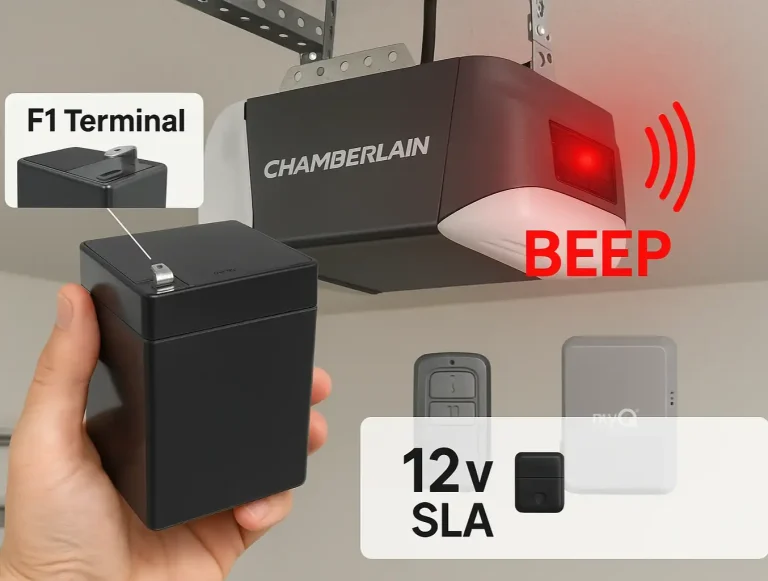
Navigating Chamberlain Garage Door Opener Parts, Accessories And Replacements
When a high-performing garage door system experiences a hiccup—whether it is an annoying, repetitive beep coming from the motor unit or an unresponsive remote control—the physical friction is immediate. For…
Published Date: Jul 13, 2026