





Smart Garage Home Automation: How to Avoid the DIY Nightmare
Published: Jul 28, 2026
You bought the smart garage door opener with a vision in mind: pulling up to your home in the rain and having the door open automatically. Asking your smart speaker if you remembered to close the garage before bed. Getting a notification on your phone when the kids get home from school.
But the reality? You’ve spent four hours on a ladder. The Wi-Fi signal in your garage is apparently nonexistent, the app won’t recognize your opener, and now your smart speaker is giving you the silent treatment. The dream of seamless convenience has turned into a frustrating puzzle of incompatible parts.
You’re not alone. This is the hidden reality of smart home integration that product reviews often gloss over. They sell you the “what,” but they don’t prepare you for the “how”—or more accurately, the “why it won’t connect.”
This guide is different. We’re going to pull back the curtain on the complexities of smart garage door integration. We’ll explore why these headaches happen and explain how professional installation acts as your insurance against frustration, ensuring your smart home devices speak the same language from day one.
How Smart Garage Openers Actually Work
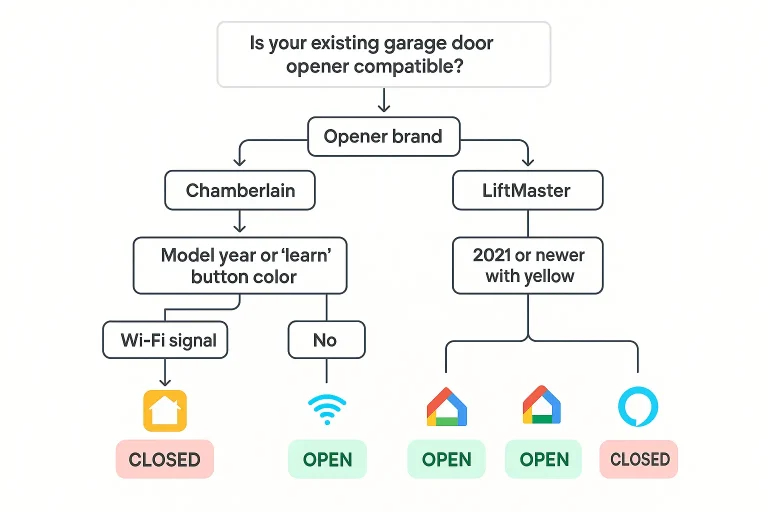
Before we dive into the problems, let’s have a quick coffee-chat about the moving parts. A smart garage system isn’t just one device; it’s a team of components that need to communicate perfectly.
- The Smart Controller (The Brains): This is the device you buy. It’s a small box that physically wires into your existing garage door opener motor. It receives commands from your Wi-Fi network and “tells” your old opener to open or close.
- The Sensor (The Eyes): A small sensor, usually placed on the garage door itself, tells the controller whether the door is open or closed. This is crucial for remote monitoring.
- Your Home Wi-Fi (The Messenger): This is the invisible bridge connecting your controller to your smartphone app and the wider internet. Its strength and stability in your garage are non-negotiable.
- The Smart Home Ecosystem (The Conductor): This is your Google Home, Amazon Alexa, or Apple HomeKit. It’s the central hub that orchestrates commands between all your smart devices.
When everything works, this team is a symphony of convenience. But if one member is out of sync, the whole system fails. A professional’s first job is to ensure every component can communicate flawlessly, preventing the system from breaking down.
Understanding the basics of a smart garage door opener installation is the first step, but the real challenge lies in the digital handshake between devices.
The Great Compatibility Puzzle: Why Your Devices Won't Talk
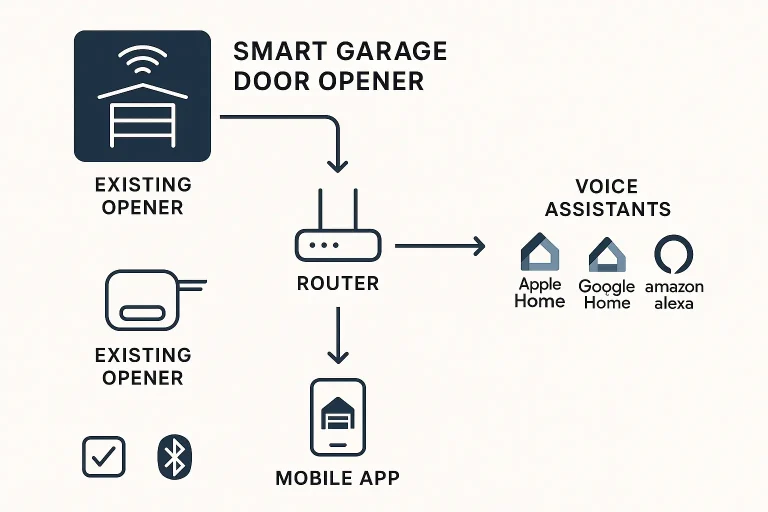
The biggest source of DIY frustration isn’t the wiring—it’s the software. Not all smart devices are created equal, and their ability to communicate with each other is determined by the “ecosystem” they belong to.
“Open” vs. “Closed” Ecosystems: The Smart Home’s Two Languages
Think of it like the difference between Android phones and iPhones. Android is an “open” system, designed to work with a wide variety of hardware from many different companies. Apple’s iOS is a “closed” system (or “walled garden”), where Apple tightly controls both the hardware and software for a more streamlined, but less flexible, experience.
Smart home brands operate the same way:
- Closed Ecosystems (e.g., Chamberlain/LiftMaster’s MyQ): These brands build a walled garden. Their devices work brilliantly with their own apps and accessories. However, getting them to work with outside systems like Google Home or IFTTT can require special workarounds, paid subscriptions, or may not be possible at all.
- Open Ecosystems (e.g., Meross, Tailwind): These brands build their products with broad compatibility in mind. They aim to work with as many platforms as possible (Alexa, Google, HomeKit) right out of the box, offering you more flexibility.
Neither approach is inherently “bad,” but not understanding the difference is the #1 reason a homeowner buys a device that won’t integrate with their existing setup, like a HomeKit garage door opener.
Your Pre-Flight Compatibility Checklist
Before you buy anything, run through this simple flowchart. This five-minute check can save you a full weekend of troubleshooting.
Common Compatibility Roadblocks a Pro Can Spot Instantly
- The Wi-Fi Dead Zone: Your living room might have five bars of Wi-Fi, but your garage—with its thick concrete walls and metal door—is often a signal graveyard. A pro can test this before installation and recommend solutions like mesh extenders or powerline adapters to fix Wi-Fi for your smart garage opener.
- The “Learn” Button Problem: The color of the “learn” button on your opener motor is a secret code. A purple or yellow button often indicates a newer security protocol (like Security+ 2.0) that many universal smart controllers can’t communicate with. A technician knows which smart devices are compatible with which protocols, saving you from a costly mismatch.
- The Age of Your Opener: If your opener was made before 1993, it lacks mandatory safety sensors. No smart controller is compatible with these models because it’s a major safety hazard. For these situations, it’s necessary to upgrade your garage door opener entirely.
When DIY Hits a Wall: The Real Value of a Professional
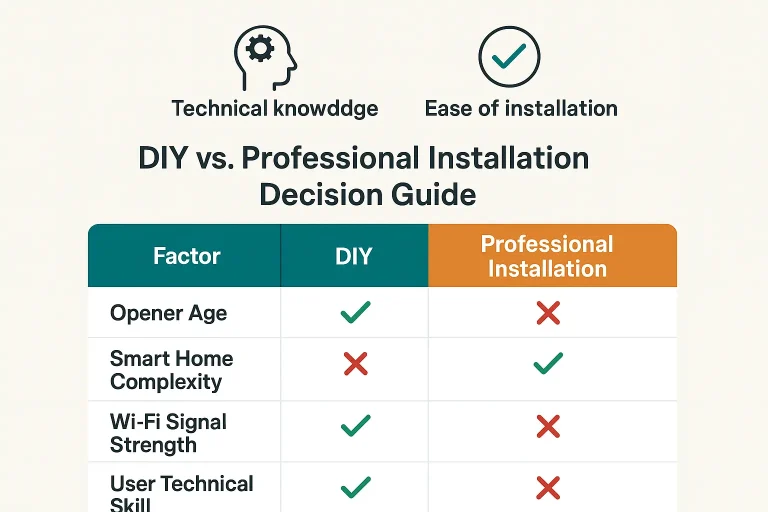
Opting for professional installation isn’t admitting defeat; it’s making a smart investment. You’re not just paying for someone to connect wires. You’re paying for their expertise in navigating the exact compatibility puzzles we’ve discussed.
A professional installer is an integration specialist. Their value lies in:
- Pre-Installation Assessment: They diagnose your Wi-Fi, check your opener’s compatibility, and identify potential roadblocks before any boxes are opened.
- Guaranteed Compatibility: They carry a range of devices and have the expertise to select the one that will work perfectly with your specific opener and smart home ecosystem.
- Advanced Troubleshooting: They can diagnose issues beyond simple connectivity, from radio frequency interference to faulty wiring in your existing opener.
- Time and Peace of Mind: They can complete in an hour what might take you an entire weekend of trial and error. The job is done right, the first time.
So, how do you decide? Here’s a quick guide to help you determine the best path for your situation.
Many homeowners wonder, “are garage door openers easy to install?” While the physical steps might seem straightforward, the digital integration is where the real complexity lies.
Your Path to a Seamless Smart Garage
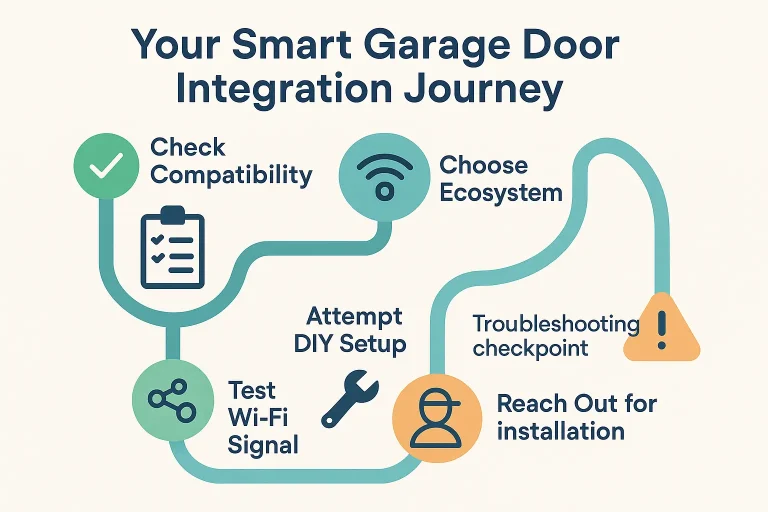
Getting started on the right foot is the most important step. Whether you’re a confident DIYer or someone who’d rather have an expert handle it, this roadmap will lead you to a frustration-free smart garage.
The goal is to achieve a perfect garage door smart home integration where technology works for you, not against you. By understanding the compatibility puzzle ahead of time, you can make informed decisions that turn a potential headache into a seamless upgrade for your home.
Frequently Asked Questions (FAQ)
Can I make my existing garage door opener smart?
In most cases, yes! As long as your opener was manufactured after 1993 and has safety sensors, it can likely be retrofitted with a smart controller. The key is ensuring you choose a controller that is compatible with your specific brand and model. This is where a professional assessment can save you from buying the wrong device.
Is a smart garage door opener secure?
Yes, modern smart openers are very secure. They use encryption for communication and offer features like activity logs and real-time alerts. Our guide on smart garage door security features dives deeper into how this technology protects your home.
What are the most common problems with garage door openers?
Beyond smart integration, common issues include misaligned safety sensors, worn-out gears, or remote control problems. If your opener is acting up before you even add smart tech, it’s best to get it serviced. You can review our guide on garage door opener troubleshooting for more details.
What if my smart opener remote or app stops working?
This is often a connectivity issue. First, check your home’s Wi-Fi network. If that’s working, the problem could be with the controller or the remote’s programming. This is similar to standard garage door remote programming issues, where a simple reset or reprogramming by a technician can often solve the problem quickly.
You May Also Like
Smart Garage Door Openers: Features and Benefits
Smart garage door openers, which offer unprecedented levels of convenience, security, and control, are completely changing how we interact with one of the biggest moving parts in our homes. Providing effective…
Published Date: Oct 20, 2024
A Homeowner’s Guide to Smart Garage Security Features
Remember the days of clipping a clunky remote to your car's sun visor? For decades, that was the peak of garage door technology. But just as our phones have evolved into pocket-sized computers, our garages have…
Published Date: Mar 17, 2026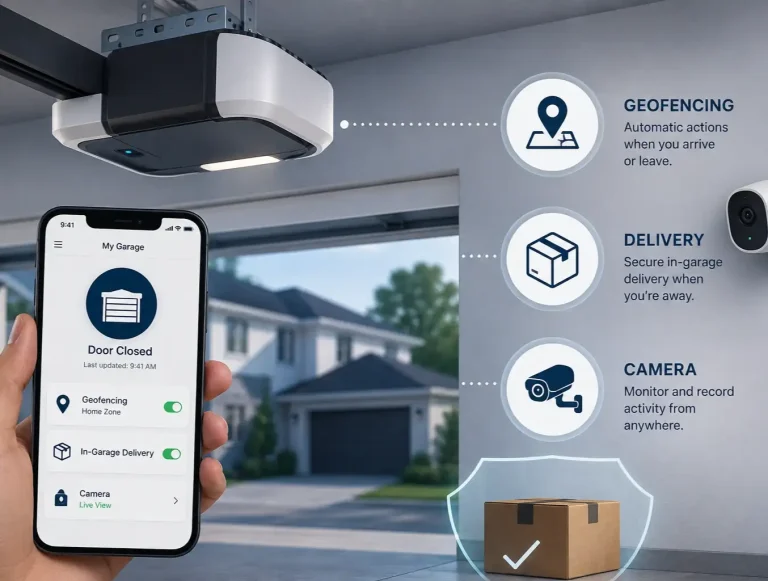
Beyond the App: Why Your Smart Garage Isn’t So Smart (and How to Fix It)
You bought the smart garage door opener for the magic. The promise was a door that senses your arrival and opens automatically, a secure drop-off point for packages, and a watchful eye on the biggest door to your…
Published Date: Jul 15, 2026