





Beyond the App: Why Your Smart Garage Isn’t So Smart (and How to Fix It)
Published: Jul 15, 2026
You bought the smart garage door opener for the magic. The promise was a door that senses your arrival and opens automatically, a secure drop-off point for packages, and a watchful eye on the biggest door to your home.
But the reality has been… less than magical.
You find yourself circling the block, waiting for the geofence to trigger. You get a notification that your Amazon package was delivered, only to find it sitting on the porch in the rain because the driver couldn’t get the door to open. You check the camera feed, and it’s a pixelated, frozen image of a closed door.
If you’re feeling a bit of “smart tech rage,” you’re not alone. The gap between the promise of these advanced features and their real-world performance is the most common frustration for new smart garage owners. The good news? It’s not your fault, and there’s a reliable way to fix it. This guide will explain why these systems often fail in typical DIY setups and how a professional calibration unlocks the flawless experience you were promised from the start.
The 3 Pillars of a Truly Smart Garage
Before we dive into the problems, let’s reset our expectations and look at what these features are supposed to do when they work perfectly.
- Geofencing: Think of this as an invisible, intelligent tripwire for your car. When your phone crosses a virtual boundary you set around your home, it signals your opener to open or close, so you can pull straight in or drive away without fumbling for a remote.
- Secure In-Garage Delivery: This feature grants temporary, one-time access to verified delivery drivers (like with Amazon Key). They can safely place packages inside your garage, protecting them from weather and theft, without you ever needing to share a permanent code.
- Integrated Cameras: More than just a security feed, a truly integrated camera works with your opener. It should start recording the moment the door is activated, provide a crystal-clear live view on demand, and send you video confirmation of events like deliveries.
When these three pillars work in concert, the experience is seamless. But for them to work, they need a foundation far stronger than just connecting to your Wi-Fi and hoping for the best.
The DIY Dilemma: When Smart Features Fail
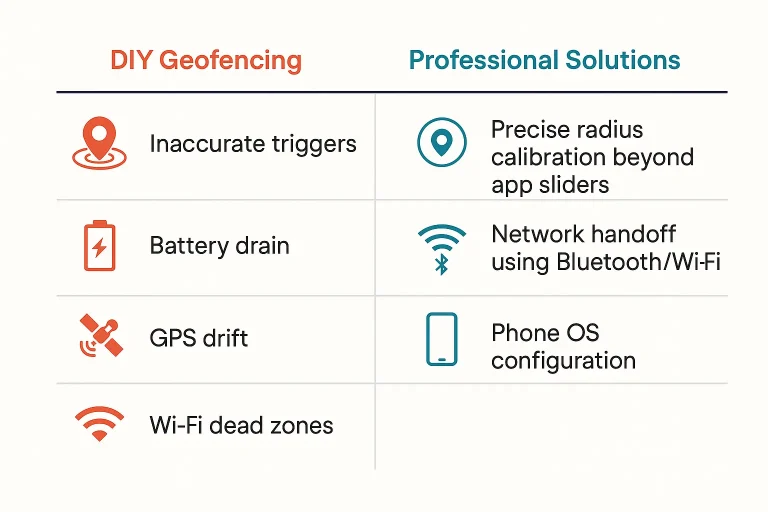
The problem with most DIY smart opener installations isn’t the device itself—it’s the environment. Your home has a unique combination of Wi-Fi dead zones, signal-blocking materials, and software quirks that the simple in-app setup process can’t account for. Let’s break down the most common failure points.
Geofencing Optimization: More Than Just a Pin on a Map
The most frequent complaint about smart openers is erratic geofencing. It either triggers too late, too early, or not at all. This isn’t just an app bug; it’s a complex environmental problem.
Secure In-Garage Delivery: Trusting the System
The idea of a delivery driver opening your garage is built on a foundation of trust—trust that the technology will work every single time. When it fails, the entire system’s value collapses.
Why DIY Setups Falter:
- GPS Drift & Signal Obstruction:: Your phone’s GPS isn’t always precise. In areas with tall buildings or dense tree cover, its reported location can drift, causing false triggers. Furthermore, your garage itself—often built with concrete and metal—can block the final, crucial GPS and Wi-Fi signals your phone needs to confirm its location.
- Wi-Fi Dead Zones:: The Wi-Fi signal from your living room router may show three bars on your phone, but it’s often unstable and weak by the time it passes through multiple walls to reach your garage door opener. This weak link causes delays and failures.
- Aggressive Phone Settings:: To save power, both iOS and Android operating systems often “put to sleep” apps running in the background—including the very app your geofence relies on to know where you are.
A professional approach goes beyond the app’s simple radius slider to create a reliable system. It’s less about the initial garage door geofencing setup and more about ongoing performance in the real world.
The Professional Difference: Orchestrating a Seamless Experience
A professional installer isn’t just there to mount the opener. Their real value lies in diagnosing and solving the unique environmental challenges of your home to build a truly robust and reliable smart system.
This involves:
- A Network Site Survey: Using specialized tools to map your home’s Wi-Fi signal strength and identify dead zones, ensuring a rock-solid connection for the opener, camera, and any other sensors.
- Strategic Component Placement: Installing the opener, sensors, and cameras in optimal locations to avoid physical and wireless interference.
- System Integration and Calibration: Ensuring all components—the opener, camera, and delivery service app—communicate with each other flawlessly and are configured for your specific needs. This is a critical step, whether you’re retrofitting a system or planning for one when to install garage door new construction.
The Fully Integrated, "Truly Smart" Garage
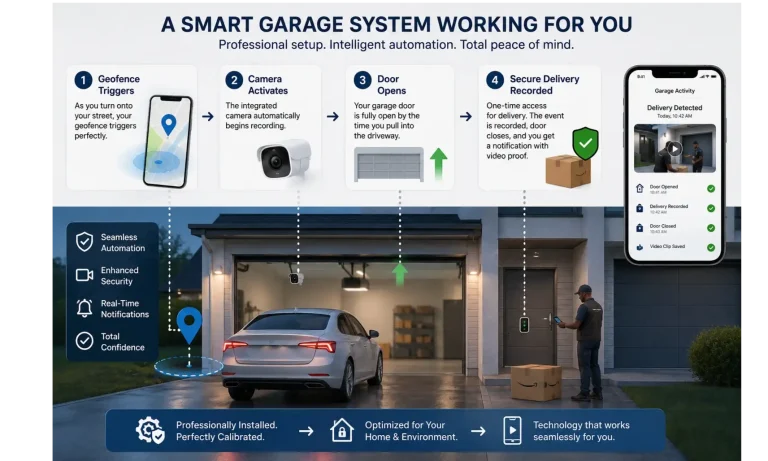
When these advanced features are calibrated by a professional, they transform from a collection of neat tricks into a cohesive, intelligent system.
Imagine this:
- As you turn onto your street, your geofence triggers perfectly.
- The integrated camera automatically begins recording.
- Your garage door is fully open by the time you pull into the driveway.
- Later, an Amazon driver arrives. They scan the package, which grants them one-time access. The door opens, the delivery is recorded, the door securely closes, and you receive a notification on your phone with a video clip confirming the entire event.
This isn’t magic. It’s technology that has been properly installed, calibrated, and optimized for the environment where it operates.
Your Professional Installation Checklist
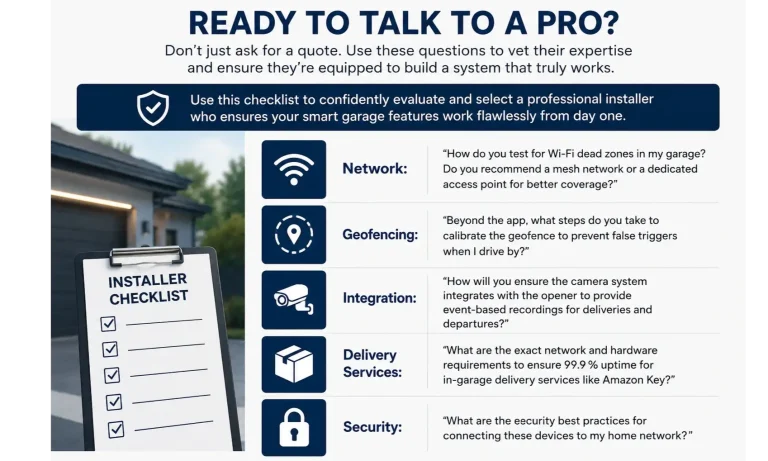
Ready to talk to a pro? Don’t just ask for a quote. Use these questions to vet their expertise and ensure they’re equipped to build a system that truly works.
- Network: “How do you test for Wi-Fi dead zones in my garage? Do you recommend a mesh network or a dedicated access point for better coverage?”
- Geofencing: “Beyond the app, what steps do you take to calibrate the geofence to prevent false triggers when I drive by?”
- Integration: “How will you ensure the camera system integrates with the opener to provide event-based recordings for deliveries and departures?
- Delivery Services: “What are the exact network and hardware requirements to ensure 99.9% uptime for in-garage delivery services like Amazon Key?
- Security: “What are the security best practices for connecting these devices to my home network?”
Frequently Asked Questions
Is a professional installation really necessary for a smart opener?
For basic open/close functions with a remote, a DIY installation can be sufficient. However, for advanced features like geofencing, in-garage delivery, and camera integration to work reliably, a professional installation that addresses your home’s unique network environment is highly recommended.
My Wi-Fi is strong in my house, why isn’t it good enough for my garage?
Common garage construction materials like concrete, steel beams, and metal garage doors are highly effective at blocking Wi-Fi signals. A signal that seems strong in your kitchen can become weak and unstable by the time it reaches your opener, leading to connectivity issues.
Can my existing garage door opener be made smart?
In many cases, yes. There are smart controller hubs (like the myQ Smart Garage Control) that can be added to many existing models of garage door openers. However, they are subject to the same environmental and network issues. If you find your myq app not working consistently, it’s likely a sign of these underlying connectivity problems.
Your Next Step to a Smarter Garage
The allure of a smart home is a seamless, automated life. When it comes to your garage, that dream is entirely achievable. Understanding the hidden complexities of network stability, signal interference, and system integration is the first and most important step.
If you’re tired of troubleshooting and ready to move from frustration to flawless function, exploring a professional consultation can illuminate the best path forward for your specific home, ensuring your smart garage is finally as smart as it was promised to be.
You May Also Like
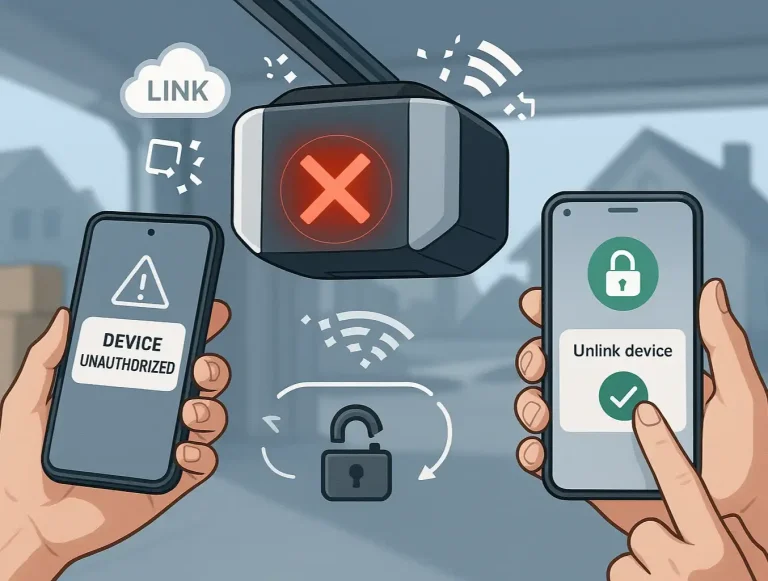
Clearing Smart Garage Door Opener Wi-Fi & App Integrations Before Sale
Selling your home is a whirlwind of packing, paperwork, and planning. In the chaos, it's easy to overlook a critical digital detail: your smart garage door opener. You might remember to hand over the physical…
Published Date: Jun 11, 2026
Smart Garage Door Opener Offline: Your Step-by-Step Connectivity Fix
That sinking feeling is all too familiar. You pull up to your home, tap the app on your phone, and... nothing. The screen flashes "Device Offline" or "Not Responding." Just like that, the "smart" part of your smart…
Published Date: Mar 23, 2026
A Homeowner’s Guide to Smart Garage Security Features
Remember the days of clipping a clunky remote to your car's sun visor? For decades, that was the peak of garage door technology. But just as our phones have evolved into pocket-sized computers, our garages have…
Published Date: Mar 17, 2026