




The Science of Steel Gauge: Understanding Thickness and Strength
Published: Sep 9, 2026
When choosing durable steel assets, most decision-makers face a confusing paradox: why does a lower gauge number represent thicker, more durable metal? Choosing the wrong material thickness can lead to premature structural bowing, warping, and poor performance.
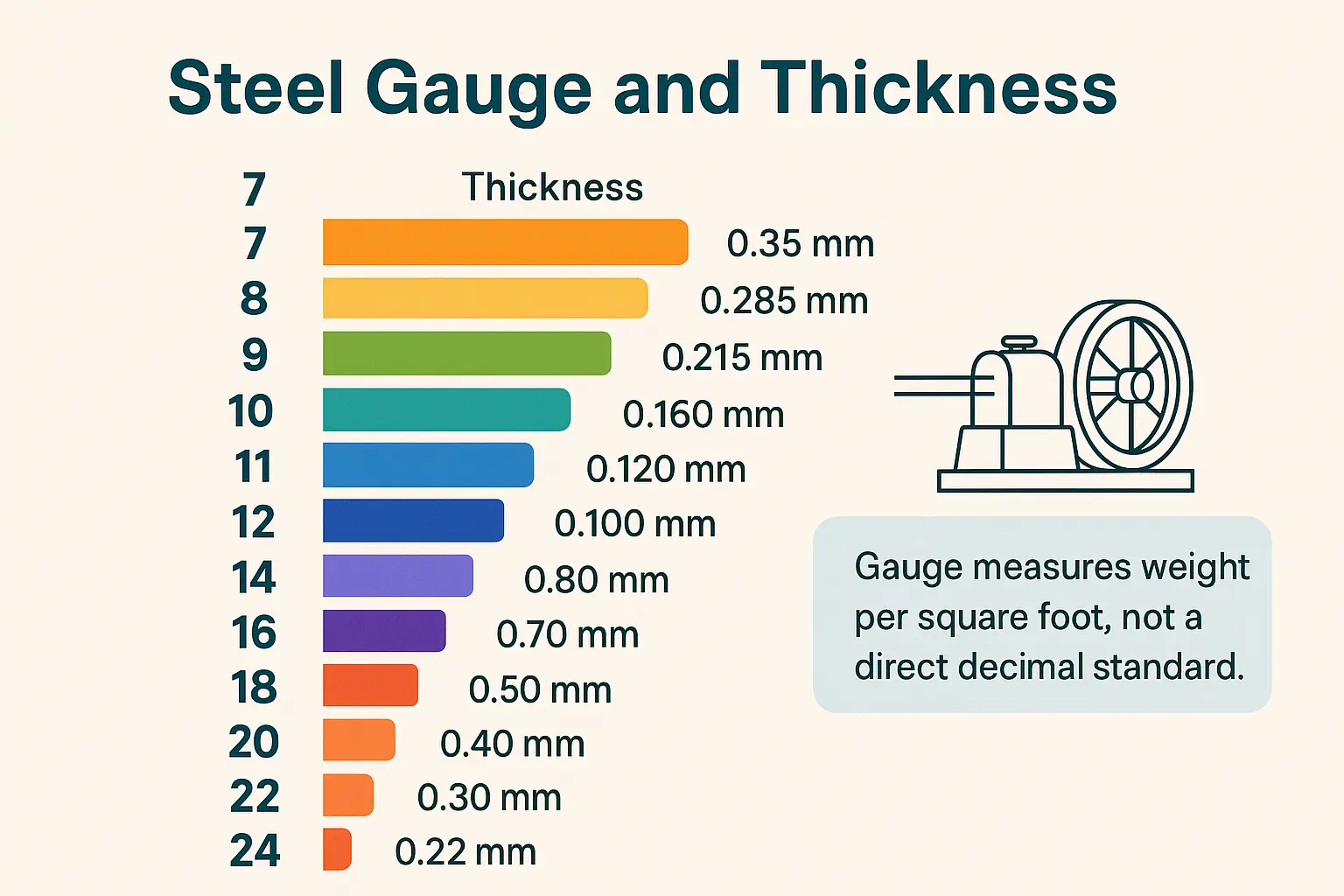
This counterintuitive system stems from the historical wire-drawing process. Each drawing step reduced wire thickness, increasing the “draw” count. Thus, a high gauge represents thin steel, whereas a low gauge represents thick, robust steel. In heavy structural applications, understanding this inverse scale is vital.
Master Steel Gauge Conversion Chart
Because standard gauge tables are no longer officially maintained by ASTM in favor of precise decimal measurements, specifying steel requires looking closely at actual decimal inches.
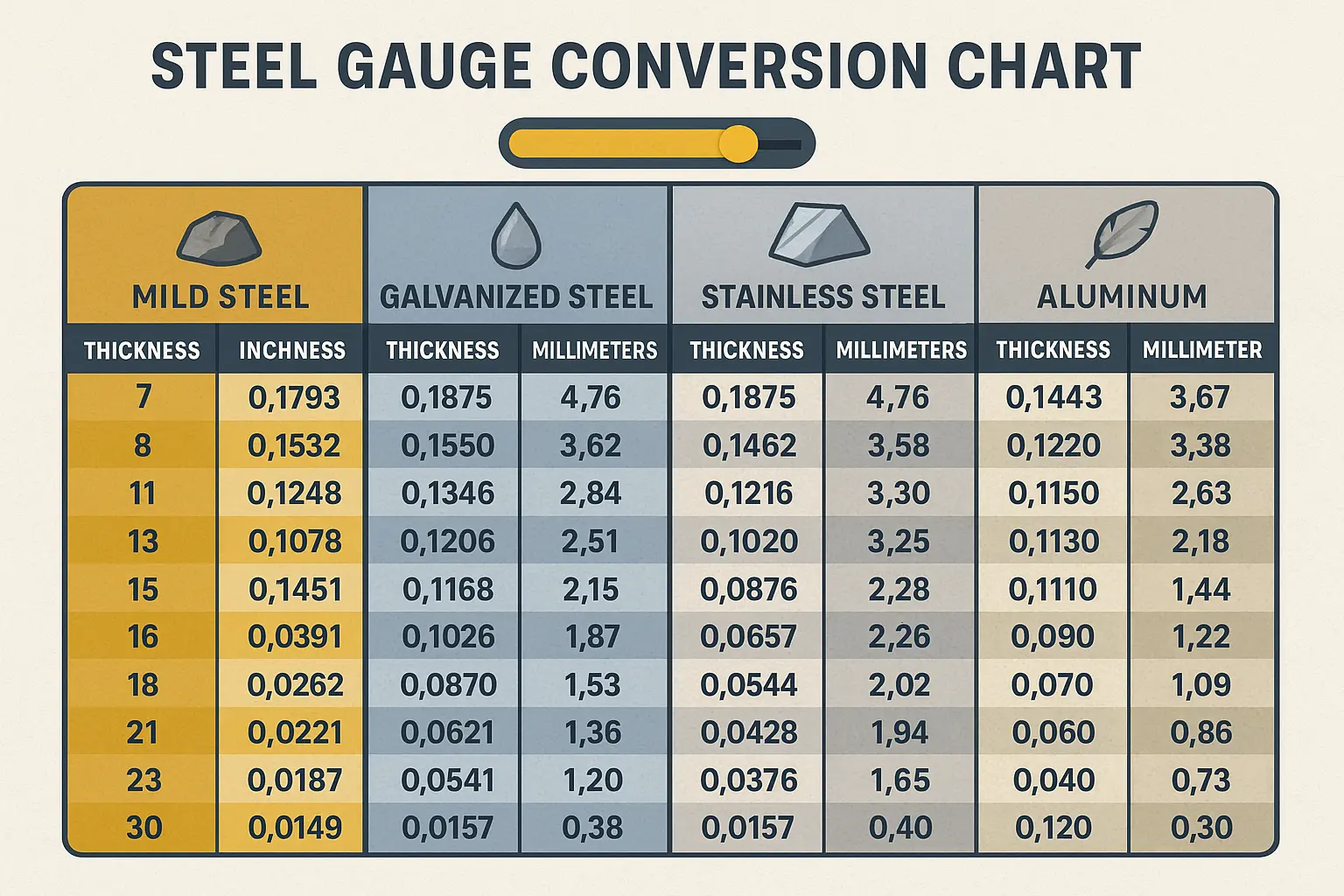
| Gauge Number | Standard Carbon Steel (Inches) | Galvanized Steel (Inches) | Aluminum (Inches) |
|---|---|---|---|
| 16 | 0.0598 | 0.0635 | 0.0508 |
| 20 | 0.0359 | 0.0396 | 0.0320 |
| 24 | 0.0239 | 0.0276 | 0.0201 |
| 26 | 0.0179 | 0.0217 | 0.0159 |
As shown above, standard 24-gauge carbon steel measures 0.0239 inches, while galvanized 24-gauge steel is 0.0276 inches because the gauge reading incorporates the outer zinc layer.
The Zinc Illusion and Coating Tolerances
This difference exposes a common manufacturing vulnerability. The “zinc illusion” occurs when heavy zinc coatings (such as G90 or G60) are added to a thin base steel substrate to artificially inflate its total measurement.
To combat this, the Door & Access Systems Manufacturers Association (DASMA) published Technical Data Sheet 154 (TDS 154). To be marketed as a true 24-gauge galvanized sheet, the core steel substrate must have a minimum decimal thickness of 0.0216 inches. However, under ASTM A924 tolerances, steel targeting 24-gauge can legally fluctuate up to 0.0296 inches, overlapping into 22-gauge territory.
When evaluating sectional & rolling doors, verifying the base-metal minimum is crucial to ensure structural stability against intense wind or impact loads.
The Metallurgy of Steel Strength
Thickness alone does not determine overall performance. Structural resilience relies on a triad of thickness, alloy composition, and microstructure.
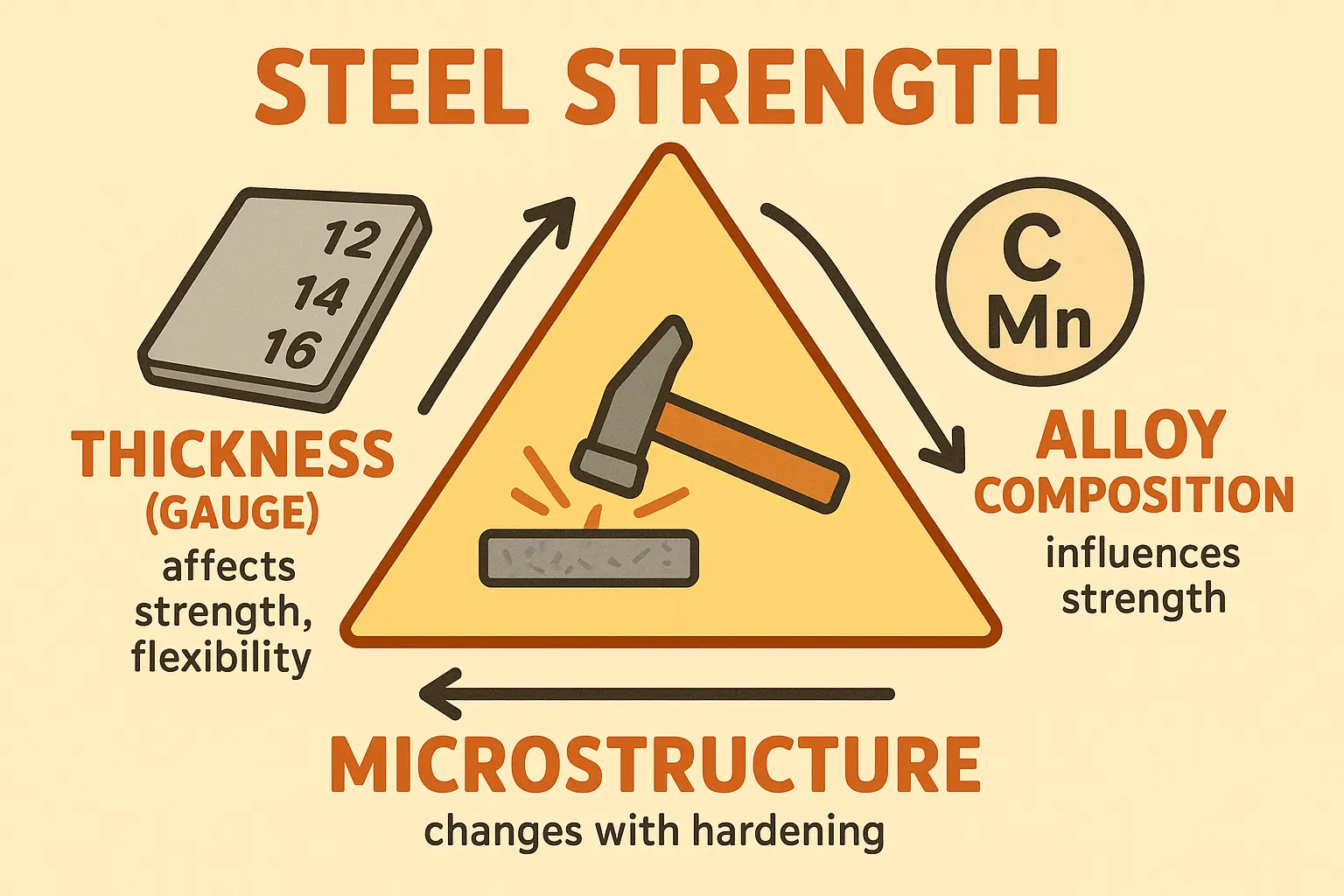
Adding just 0.1% to 0.3% Carbon to iron increases tensile strength by over 300% by disrupting slip planes at the atomic level. Additionally, work hardening during cold-rolling creates highly dent-resistant surfaces. This allows thinner, engineered steel alloys to sometimes outperform thicker, softer hot-rolled sheets.
Consider structural physics analogies: while thicker concrete excels under compression, it remains fragile without steel reinforcement. Similarly, thicker magnets are stronger only up to magnetic saturation. Steel strength is also an integrated design equation. Combining high-quality alloy profiles with durable garage door insulation creates rigid composite structures that far exceed raw steel values.
Practical Applications in Overhead Systems
When selecting a durable overhead asset, the steel gauge directly dictates performance, lifespan, and resistance to environmental forces:
- 24-Gauge (Heavy-Duty): This is the gold standard for high-wind environments. It offers unmatched resistance to denting and structural sagging. It is the core component of robust, wind load garage doors.
- 25/26-Gauge (Midgrade): Common in entry-level setups. It is more flexible and prone to “oil-canning”—an audible buckling noise when temperature or pressure shifts.
- 27/28-Gauge (Economy): Highly flexible skins that rely entirely on polyurethane backing for rigid structure.
If your existing system exhibits significant oil-canning or fatigue, you may face a choice: is it cheaper to repair or replace a garage door? Upgrading to a heavier, true-gauge substrate minimizes long-term maintenance overhead.
Frequently Asked Questions
What is the actual thickness difference between 24-gauge and 25-gauge steel?
A 24-gauge galvanized sheet has a nominal thickness of 0.0276 inches, whereas 25-gauge measures roughly 0.0247 inches. While this difference of ~0.003 inches seems microscopic, it accounts for a major difference in structural deflection and dent resistance.
How does the “zinc illusion” affect the performance of steel?
Zinc coatings protect against oxidation but add zero structural strength. If a manufacturer uses a heavy zinc coating over a thin core of 0.019 inches, they can legally market it as a thicker nominal gauge. This leaves the structure vulnerable to wind loads.
Does a lower gauge number always mean a stronger product?
Not necessarily. While a lower gauge indicates thicker steel, strength is also determined by the carbon content of the alloy and whether the metal underwent work hardening during manufacturing.
Choosing the right material ensures long-term reliability. Our family-owned business brings over 15 years of practical expertise to help you avoid common industrial traps like nominal thickness inflation. If you want to protect your property with certified, heavy-duty engineering, reach out today for a garage door installation near me.
You May Also Like