





Garage Door Repair vs Replace: Five Financial Factors
Published: Sep 4, 2026
Every homeowner eventually faces the same stressful dilemma: a garage door that hesitates, screeches, or refuses to open. When this happens, the immediate instinct is to look for the quickest, cheapest fix. However, looking only at upfront costs can be a financial trap.
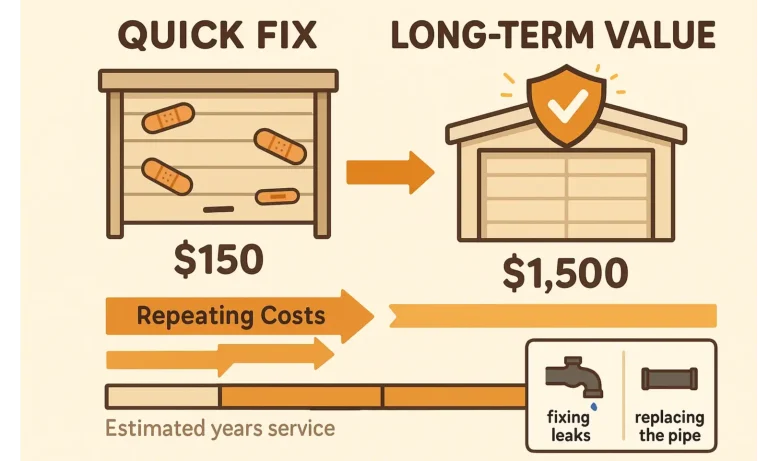
While spending $150 to $350 on a quick repair feels easier than investing in a complete replacement, treating a system nearing terminal failure with temporary band-aids often leads to a cycle of ongoing costs. To make a smart financial decision, you must evaluate the long-term Lifetime Value (LTV) of your garage door system.
When calculating these costs, it is helpful to look at how a simple repair compares to a full upgrade. Deciding on a damaged garage door replacement early on can save you from the compounding service fees of an aging system.
Condition 1: The "Unmatched Panel" Weight Imbalance
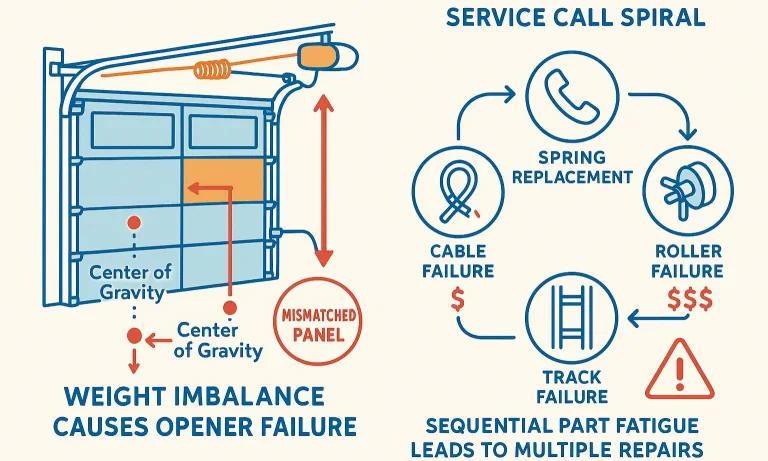
When a single panel is dented, many homeowners seek a localized garage door panel replacement. While this seems logical, installing a new panel on a door that is over ten years old introduces serious mechanical risks.
Over time, manufacturers update their inventory, changing steel thicknesses, section profiles, and insulation densities. Installing an unmatched panel alters the door’s precise center of gravity. This weight disparity causes the torsion springs to bind or unwind unevenly, stripping the opener’s internal drive gears and causing total system failure within months.
Condition 2: The "Service Call Spiral" (Component Fatigue Lifespans)
Garage door hardware is engineered to wear out at a similar rate. Torsion springs, for example, have a fatigue life of approximately 10,000 cycles. For a family operating their door four times a day, this translates to roughly 6.8 years of service.
If you pay for a broken garage spring repair, you are still running your system on worn cables, rusted rollers, and loose tracks. When you calculate how much does a garage door spring cost to repair alongside the sequential failure of these adjacent parts, three consecutive service calls can easily exceed 60% of the cost of a brand-new, zero-maintenance system.
Condition 3: Pre-1993 UL 325 Non-Compliance and Legal Liability
If your automatic opener was manufactured before January 1, 1993, it lacks the infrared photo-eye sensors mandated by federal safety standards (UL 325). Homeowners often wonder: will chamberlain garage door opener work without sensors? While it might physically run, doing so is highly unsafe and exposes you to major legal liabilities.
Under building codes such as California’s HSC § 19890, certified technicians are legally restricted from repairing non-compliant systems without upgrading them to modern safety standards. Attempting a temporary fix on an obsolete system can lead to denied homeowners insurance claims, liability for personal injuries, and instant red flags on home inspection reports during a sale.
Condition 4: The "Thermal Lung" Effect & Connected HVAC Bleed
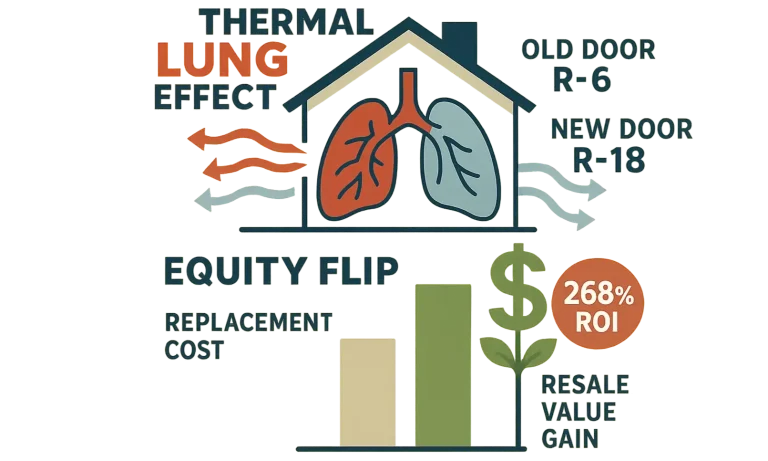
For homes with attached garages, the garage functions as a “thermal lung,” constantly transferring air through shared walls and into the living spaces above. An uninsulated or damaged door has a thermal resistance near zero.
By investing in high-quality garage door insulation dallas or upgrading to a door with an optimal garage door r value, you can reduce heat transfer by up to 70%. In regions with extreme seasonal temperatures, this energy-efficiency upgrade lowers monthly utility bills, allowing the new door to pay for itself over time.
Condition 5: The Equity Flip (Resale Appraisal Arbitrage)
According to the 38th Annual Cost vs. Value Report (2025/2026 data), a garage door replacement ranks as the #1 home remodeling project for Return on Investment, yielding a national average ROI of 267.7% to 268%. This translates to an average $4,672 project cost returning a $12,507 bump in home equity.
Spending hundreds of dollars to patch and paint a rusted, noisy door is a sunk cost. Conversely, a professional garage door installation immediately enhances curb appeal, boosts home appraisal values, and helps your property sell faster, making a new door a highly profitable investment.
Frequently Asked Questions
Can I save money by replacing just the broken spring?
While replacing only the broken spring has a lower upfront cost, the remaining components have experienced the same amount of wear. If your tracks, rollers, and cables are near the end of their lifespan, they are likely to fail shortly after, leading to additional service fees.
How long does a complete garage door replacement take?
A standard professional garage door installation time is typically between three to five hours. This quick turnaround limits any disruption to your day compared to managing multiple repair appointments.
Will a new garage door really lower my heating and cooling bills?
Yes. If your garage is attached to your home, a modern insulated door significantly reduces thermal transfer. This helps maintain stable temperatures in the garage and lowers the heating and cooling load on your home’s HVAC system.
Make the Right Investment for Your Home
If your garage door is constantly needing attention, it is time to stop paying for temporary fixes. Up & Down Garage Doors offers transparent pricing, expert diagnostics, and 24/7 emergency services across Connecticut, Texas, New York, Illinois, and Arizona. Contact our experienced team today to request an honest, professional assessment of your garage door.
You May Also Like
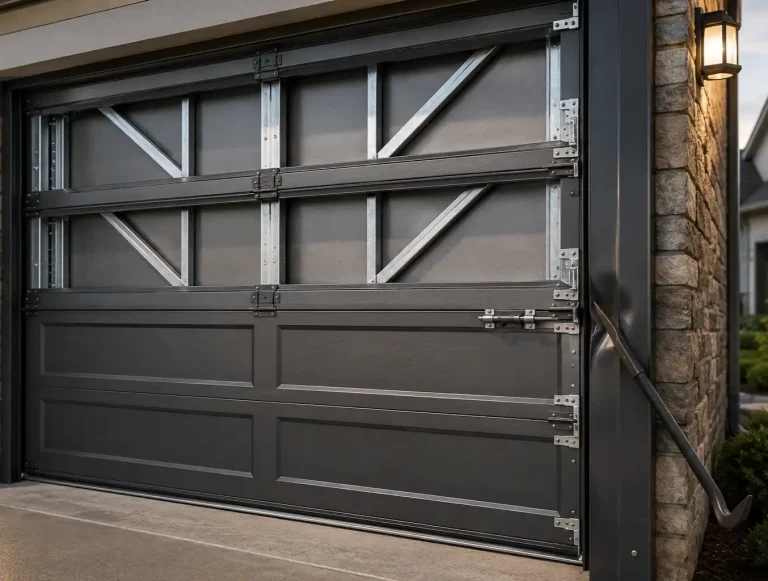
Garage Door Panel Reinforcement and Repair Guide
We’ve all seen it in movies: a determined character gains entry to a home with a single, well-placed kick to the garage door. While it might seem like Hollywood drama, there's a kernel of truth to it. Your garage…
Published Date: Aug 25, 2026
Door Closer Repair vs. Replacement: The Facility Manager’s Guide
When a heavy entry door slams shut with a bone-rattling crash—or swings open limply, refusing to latch—it is more than a daily annoyance. For commercial facility managers and residential property owners, a…
Published Date: Aug 11, 2026
How to Avoid Costly Garage Door Repairs: A Complete Guide
Every day, your garage door works hard to protect your tools, vehicles, and belongings. It opens and closes each time you need to access your garage. However, even the best garage door may need repair over time.…
Published Date: Feb 27, 2025