





How Garage Door Type and Weight Dictate Manual Operation Safety
Published: Sep 10, 2026
When your automatic garage door opener loses power or experiences a mechanical failure, you are suddenly forced to confront the true physical weight of your door. For many homeowners, pulling the red emergency release cord reveals an unsettling surprise: a door that is supposed to glide open with a light touch suddenly feels like a heavy concrete wall.
Understanding how different door materials, weights, and engineering systems affect manual operation can mean the difference between a simple manual lift and a serious back injury.
Introduction: The 10-Pound Rule
According to the Door & Access Systems Manufacturers Association (DASMA) standards, a properly balanced garage door—regardless of its structural material or overall physical weight—should require no more than 10 to 15 pounds of physical force to open or close manually. The entire weight of the door should be offset by the counterbalance system.
If you must strain to lift your door, your system is fundamentally unbalanced or broken. Knowing how to open garage door manually safely is crucial, but forcing a heavy, compromised door can lead to catastrophic failure.
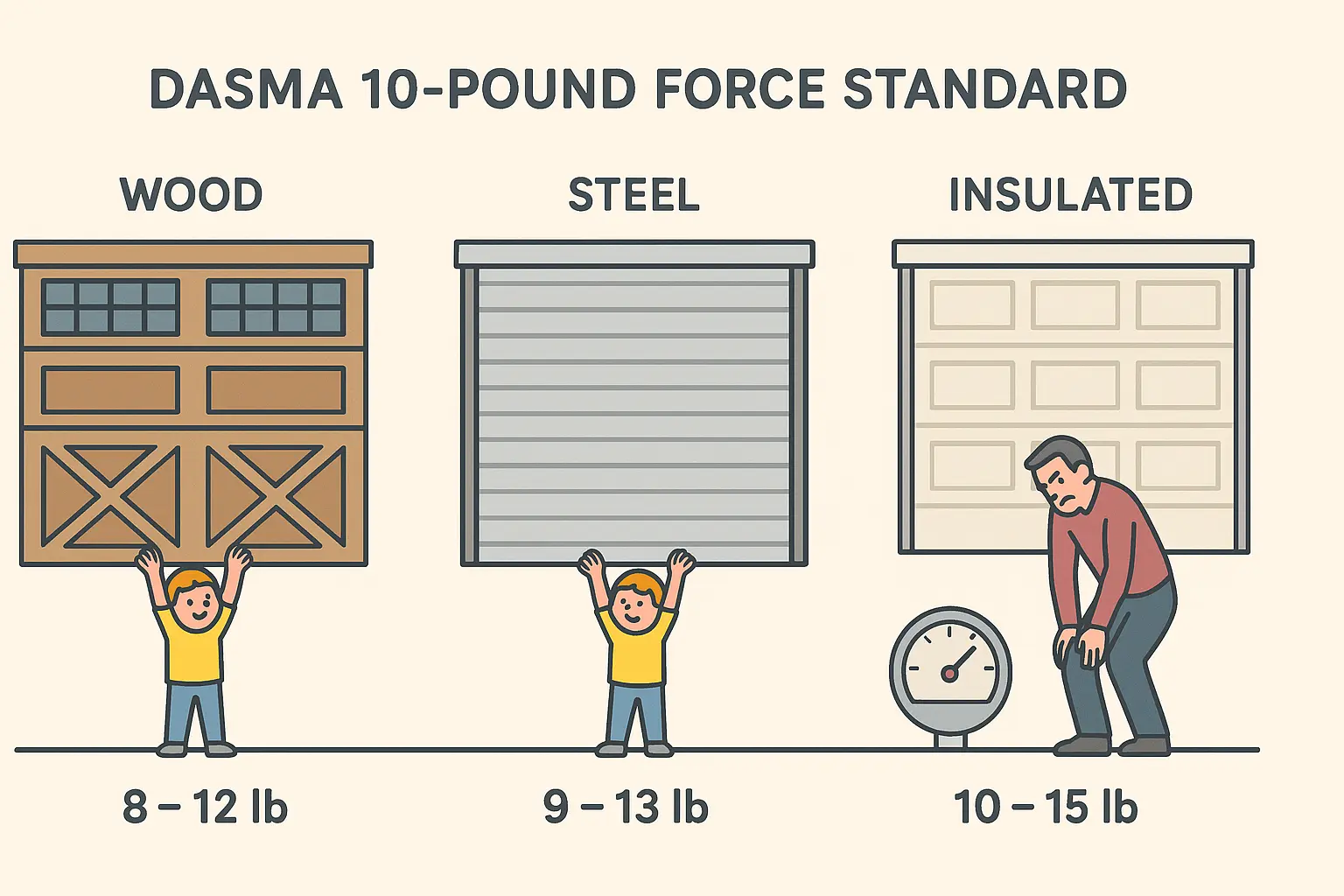
Emergency Anatomy: Why is Your Garage Door Suddenly a Heavy Safe?
When manual operation suddenly becomes nearly impossible, it is usually due to one of three mechanical culprits:
- The Snapped Spring: The counterbalance springs (torsion or extension) do 90% of the lifting work. If a spring snaps, a door’s dead weight falls entirely on you. Attempting to lift a door under these conditions is highly dangerous. Learn how to identify this situation and the protocol for how to open garage door with broken spring before hurting your back.
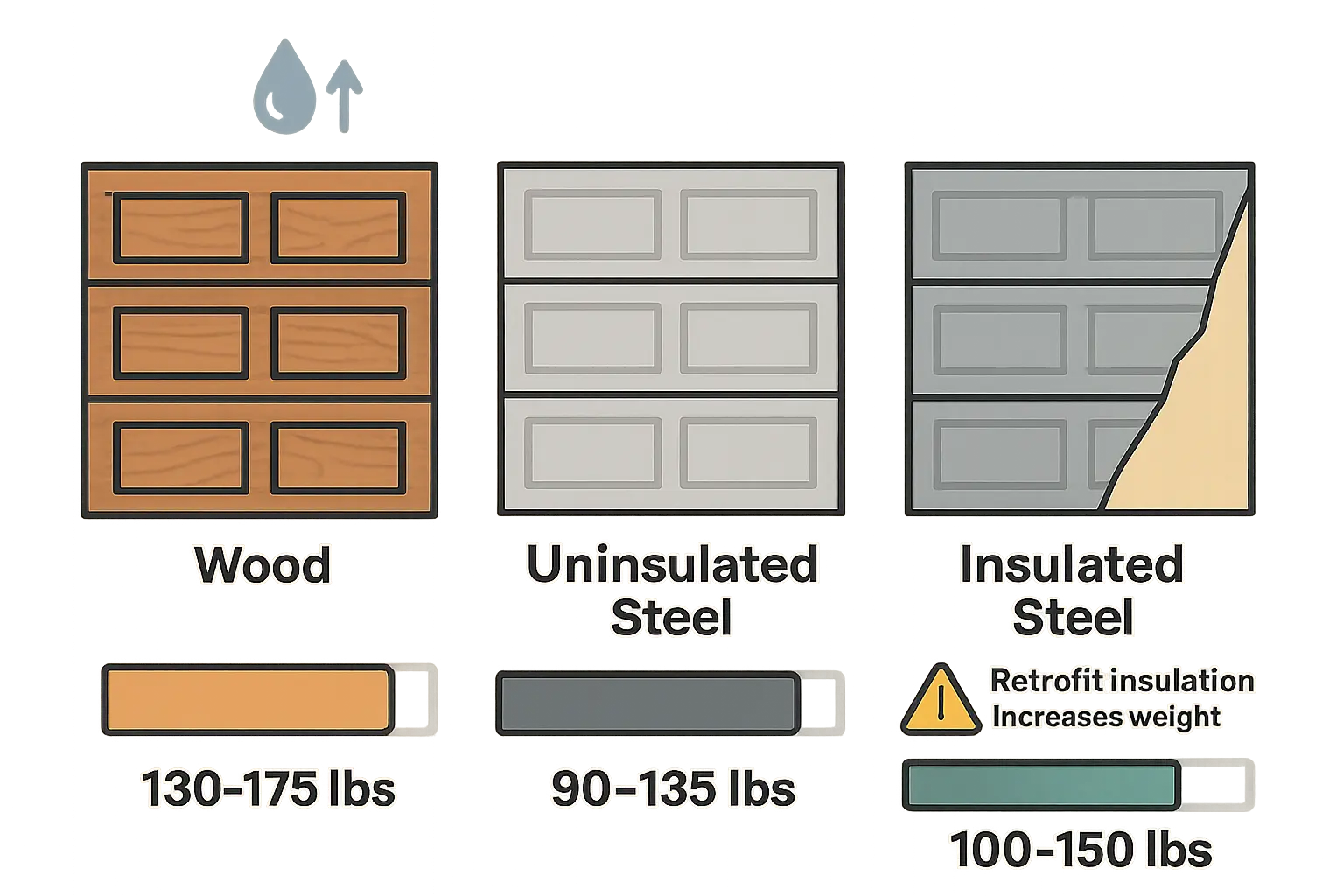
- The Wood Moisture Penalty: Solid timber doors are beautiful, but they are highly porous. An unsealed wooden door can absorb atmospheric moisture during rainy seasons, adding up to 50–100 lbs of dead weight. This silent “spongefication” ruins the counterbalance. Proper sealing and timely wooden garage door repair are essential to prevent this issue.
- Accidental Slide-Lock Engagement: Sometimes, the physical slide lock on the side of your track has accidentally engaged, completely halting the door’s movement and mimicking the feel of a broken system.
Material Science & Manual Operation: Wood vs. Steel vs. Insulated
The base weight of your door depends heavily on its material construction:
- Standard Single Steel Door (8×7): Weighs approximately 70–100 lbs. It is relatively easy to lift manually even if slightly out of balance.
- Double Insulated Steel Door (16×7): Weighs around 150–180 lbs. It offers excellent thermal properties, but a broken spring makes manual lifting dangerous.
- Double Solid Wood Carriage Door (16×7): Often weighs 300 to over 450 lbs. This requires industrial-grade springs.
Evaluating the pros and cons of garage door materials will show that while wood offers unparalleled aesthetics, its weight requires flawless mechanical upkeep.
Furthermore, adding aftermarket garage door insulation panels to an uninsulated steel door adds dead weight. Doing so without adjusting or replacing your springs will ruin the counterbalance, quickly wearing out opener gears and making manual lifting highly risky. For larger commercial installations, commercial garage doors require specialized heavy-duty spring assemblies to handle the immense weight of rolling steel or insulated sections.
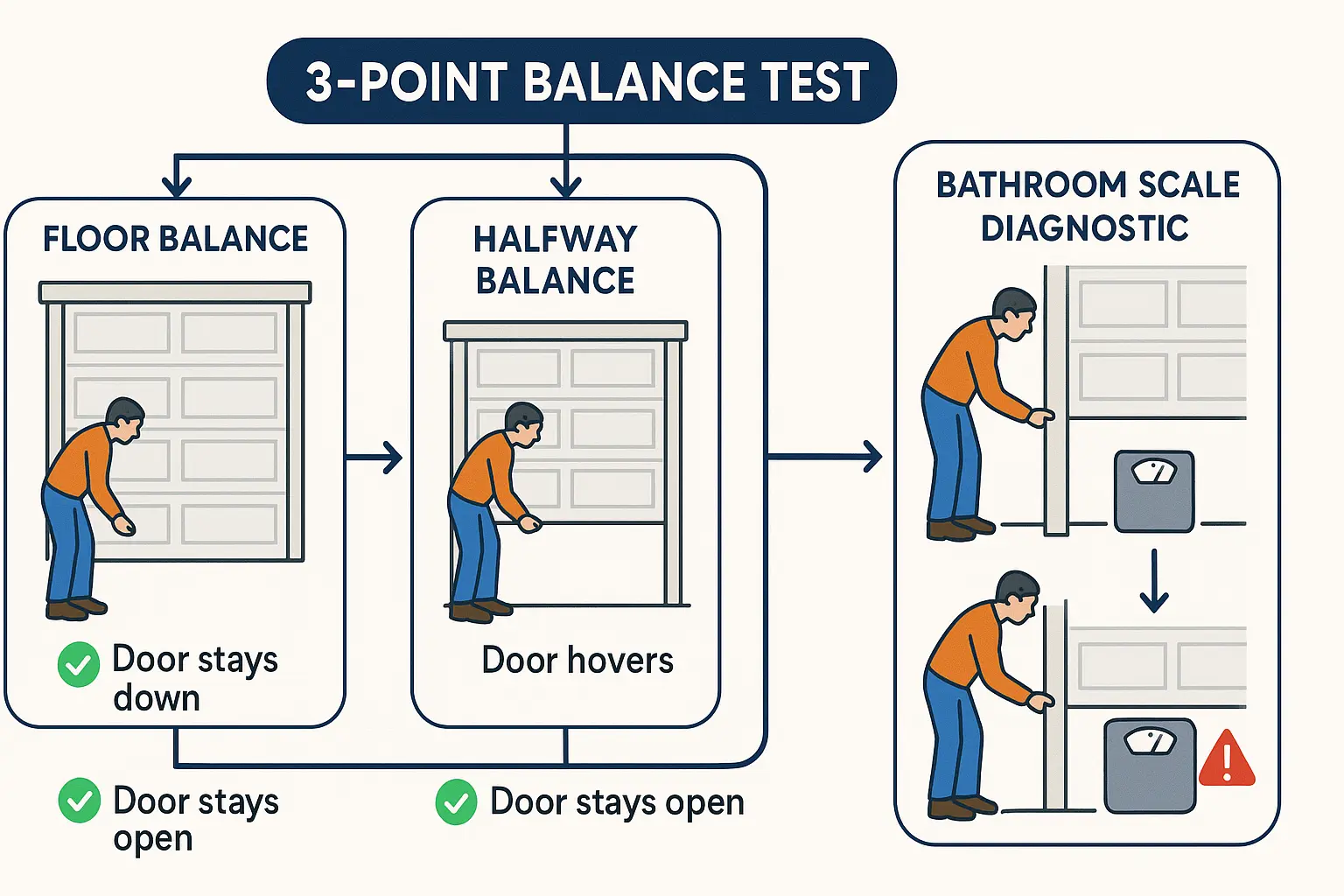
Step-by-Step Diagnostic: Safe Manual Lifting & Balance Testing
To diagnose an unbalanced garage door, you can safely perform a 3-point balance test:
- Disconnect Safely: Ensure the door is fully closed. Pull the red emergency release cord down and back toward the opener to disengage the trolley.
- Floor Balance Test: Try to lift the door. It should lift with minimal effort. If it wants to fly upward immediately, the springs are wound too tight.
- The Halfway Hover Test: Lift the door halfway and let go. A healthy door will hover in place, supported entirely by the springs. If it falls or shoots upward, your system is unbalanced.
- The Bathroom Scale Diagnostic: Place a standard bathroom scale flat on the floor directly under the center of the closed door. Manually lower the door onto the scale. If the scale reads higher than 15 pounds, your springs are losing tension and require professional service.
Solutions: Engineering an Easy-Lift Garage Door
If your manual garage door is consistently heavy, consider these high-impact upgrades:
- Precision Spring Calibration: Old springs lose elasticity over time. Do not attempt to add extra tension turns to old springs yourself—adding just one extra turn of tension to a fatigued spring reduces its remaining lifespan by up to 45%. Instead, search for professional garage door spring tension adjustment near me to properly size and replace them.
- Upgrading Rollers: Upgrading to high-quality nylon vs steel garage door rollers with sealed ball bearings drastically reduces rolling friction, making manual lifting feel significantly lighter.
- Cable Drum Optimization: Proper maintenance and timely garage door drum repair ensure that cables wind evenly. Specialized drum designs like Raynor’s TruBalance system can reduce manual lifting force by up to 87% as the door sweeps through the track radius.
Troubleshooting the Eazy Lift Motor (Intent-Busting Guide)
If you arrived here searching for “easy lift garage door manual” because you are trying to configure an Eazy Lift / Easy Lift 600 Mark II opener motor, use this quick programming checklist:
- Manual Disengagement: Pull the mechanical lever on the motor head downward to release the carriage and allow manual operation.
- Programming Travel Limits: Press and hold the K1 button on the back of the motor panel until the LED flashes. Use the up and down arrow buttons to set your open and closed limits, then press K1 again to save.
- Clearing Remote Codes: Press and hold the K2 button for 6 seconds to clear all programmed remotes from the receiver memory.
Frequently Asked Questions
Can you safely lift a double-wide wood garage door manually if the spring is broken?
No. A double-wide wood garage door can weigh upwards of 400 pounds. Without the assistance of functioning counterbalance springs, attempting to lift this much dead weight manually can cause severe lower-back injuries, and if dropped, the door can slam down with enough force to act like a guillotine.
Why does my garage door feel heavier in the winter?
Cold weather makes lubricants thick and gummy, increasing friction along the tracks and rollers. Additionally, wooden doors can absorb high moisture from winter storms, adding real weight, while metal parts contract slightly, throwing off the fine balance of the spring tension.
How often should my garage door’s balance be checked?
You should test your garage door’s balance at least twice a year. Testing it before winter and after spring allows you to catch issues related to temperature shifts, moisture absorption in wood doors, and normal spring tension fatigue before they strain your automatic opener.
You May Also Like
Extend Garage Door Lifespan with High-Cycle Hardware
Published Date: Sep 4, 2026
The Surprising Science: Why Garage Springs Break in Texas Heat vs. Connecticut Winters
You’ve probably heard it before—that loud, startling bang from the garage that sounds like a firecracker went off. It’s the classic sign of a broken garage door spring, and for decades, the common wisdom has been…
Published Date: Jul 17, 2026
Difference Between Garage Door Spring Repair vs. Full System Failure
Imagine this: You're rushing out the door one morning, you hit the garage door remote, and instead of the familiar whir, you hear a startlingly loud BANG. The door groans, moves a few inches, and stops dead. That…
Published Date: Jun 11, 2026