




Commercial Sectional Door Section Replacement After a Truck Strike: The Evaluation Guide
Published: Nov 11, 2026
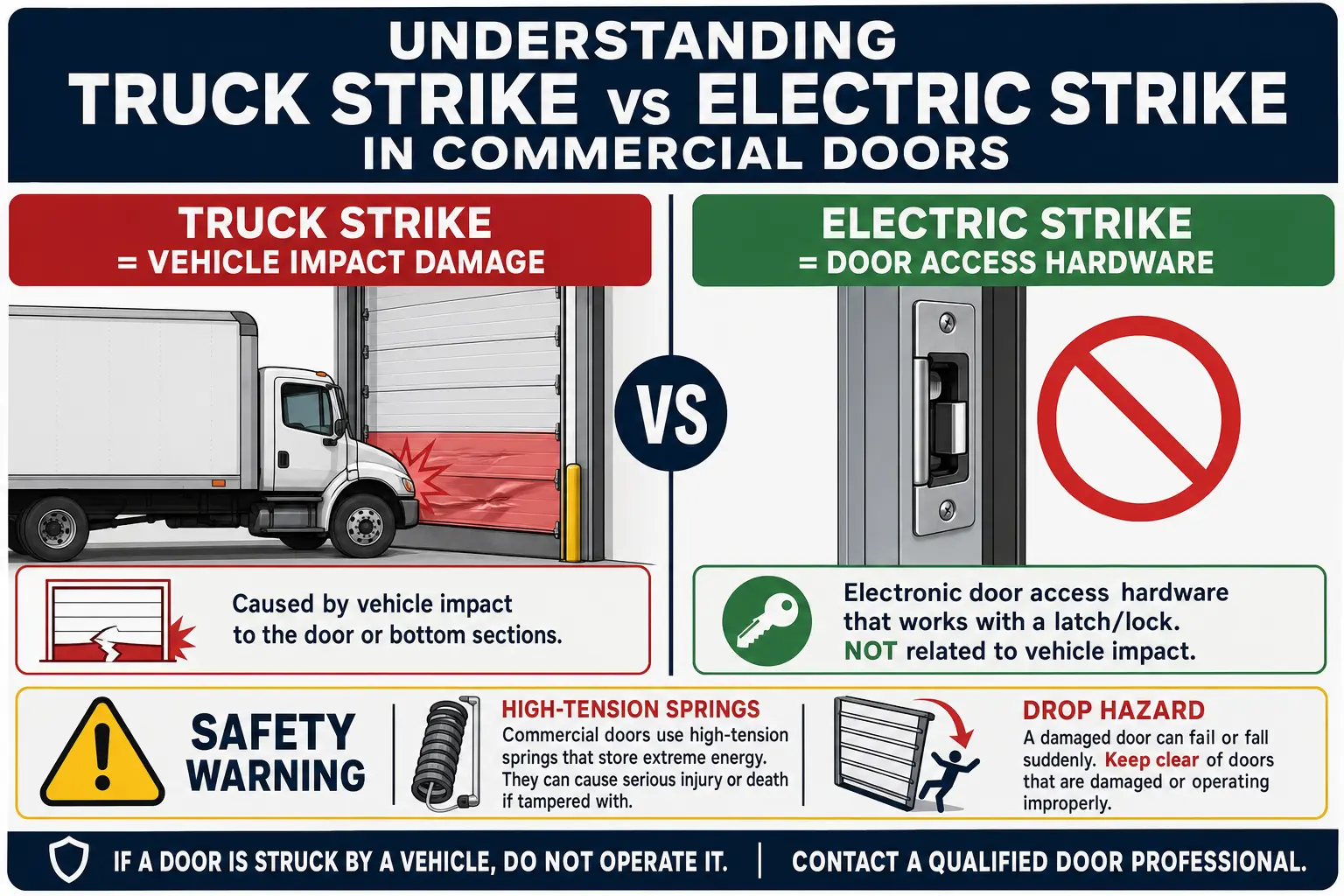
When a semi-trailer, box truck, or forklift strikes a commercial loading dock door, facility managers face an immediate operational crisis. It is critical to clarify that a physical vehicle collision—or truck strike—requires structural assessment of heavy-gauge overhead steel doors, distinct from electronic door access control hardware known as electric strikes. Over 65% of commercial loading dock maintenance emergencies stem from vehicle impacts.
Before evaluating options, clear the loading bay area immediately. Compromised high-tension torsion springs, bent tracks, and displaced lift cables pose severe drop hazards under ANSI/DASMA safety standards. Temporary pinning and mechanical lockdown can secure the facility opening within 2 to 4 hours while formal engineering and financial evaluations take place.
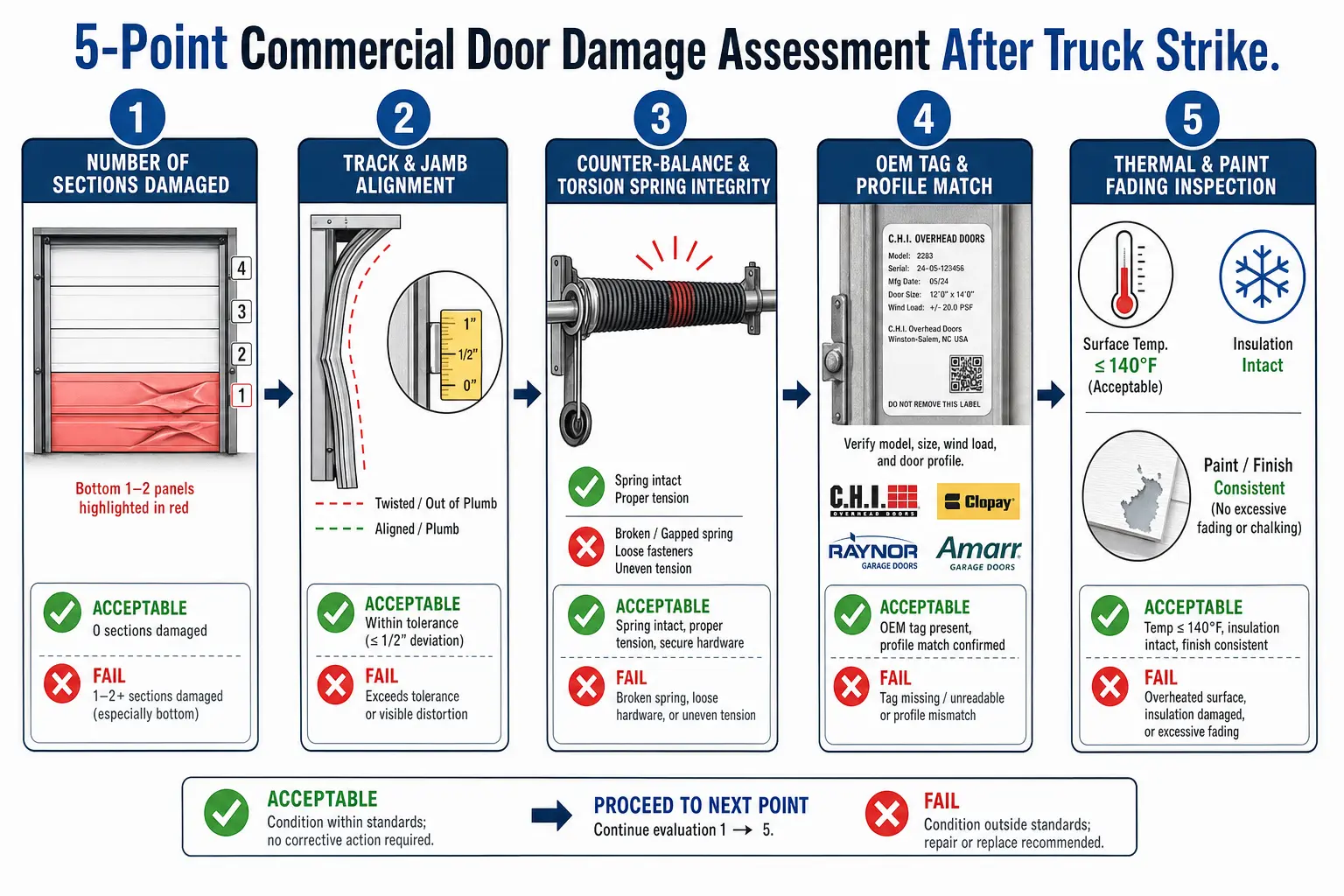
The 5-Point Structural Damage Assessment
Industry data reveals that in 78% of vehicular collisions, damage is confined to the bottom two sections (Sections #1 and #2) and bottom fixtures. To determine whether individual panel replacement is viable or full assembly replacement is necessary, evaluate these five critical factors:
- Section Damage Count: If impact affects 1 or 2 bottom panels, replacing isolated sections is structurally sound. If 3 or more sections are crushed, full door replacement provides superior structural integrity and financial value.
- Track and Jamb Plumbness: Measure vertical tracks using a spirit level. If tracks deviate more than 1/8 inch per foot or jamb mounting steel is sheared, replacing sections alone will cause severe roller binding.
- Counterbalance System Integrity: Inspect torsion springs and lift cables for shaft deflection or slack. Any cable damage requires immediate garage door cable replacement before resetting panel weight.
- OEM Profile Identification: Locate the manufacturer identification plate on the end stile (such as Clopay, C.H.I., Raynor, or Wayne Dalton) to ensure factory gauge matching and joint alignment.
- Thermal Break and Insulation Assessment: For climate-controlled facilities, verify polyurethane R-value specs. Damaged thermal breaks lead to substantial energy loss while awaiting repairs.
When dealing with localized impact, professional garage door panel repair or section replacement protects your capital budget while restoring security.
Commercial Cost and Operational Lead Time Matrix
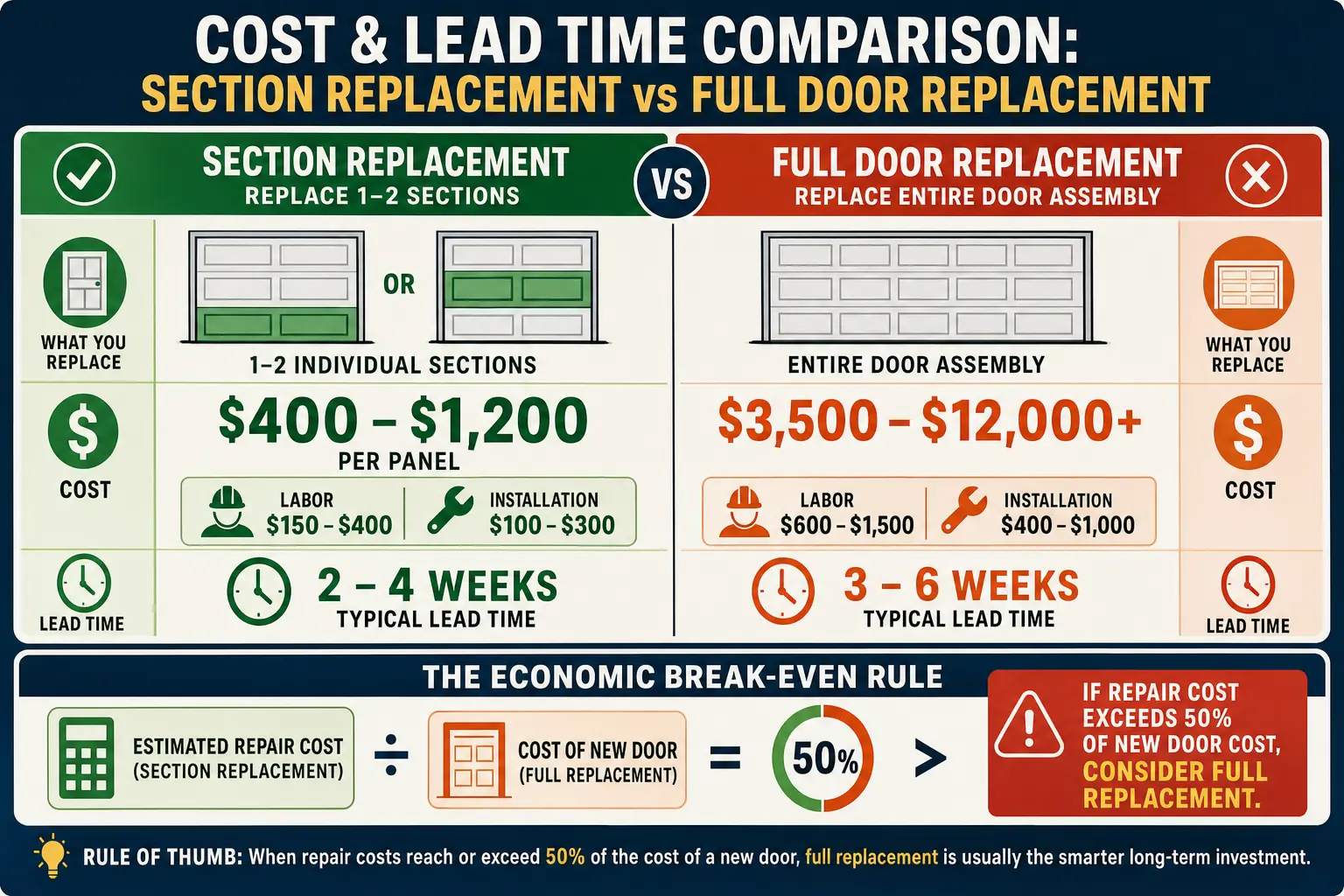
Weighing section replacement against complete system installation requires reviewing direct hardware costs, labor, and operational downtime.
| Evaluation Metric | Partial Section Replacement (1-2 Panels) | Full Commercial System Replacement |
|---|---|---|
| Hardware Cost | $400 – $1,200 per section | $2,500 – $9,000 (Full Assembly) |
| Labor & Installation | $250 – $500 | $1,000 – $3,000 |
| Factory Lead Time | 2 to 4 Weeks | 3 to 6 Weeks |
| Temporary Downtime | 2 to 4 Hours (Secured) | Full Tear-out Required |
| Total Estimated Cost | $650 – $2,900 | $3,500 – $12,000+ |
Economic Decision Rule: If total section repair costs exceed 50% of a replacement door’s total installed cost, installing a modern high-efficiency assembly yields a better 5-year ROI. However, if structural components remain sound, repairing garage door panels remains the most cost-effective path.
Technical Compliance and Safety Protocols
Executing a commercial section replacement demands compliance with ANSI/DASMA 102/108 standards. Because commercial high-cycle springs operate under immense torque, technicians must lock out power, pin the door assembly, unwind spring tension safely, and replace end hinges using structural-grade fasteners. Following section insertion, recalibrating spring tension ensures balanced operation. Relying on specialized commercial garage door repair guarantees compliance and prevents catastrophic drop risks.
Commercial Insurance Recovery and Damage Prevention
To recover costs after a third-party freight truck strike, document the incident immediately. Take high-resolution photographs of panel destruction, track alignment, skid marks, and driver bill of lading information. Commercial property adjusters typically require three detailed estimates before approving claims.
To eliminate future truck strike vulnerability, consider upgrading loading bays with knock-out breakaway bottom sections that flex out of tracks upon impact and pop back into place without structural damage. Installing heavy-duty steel bollards and high-visibility LED alignment lights further mitigates collision risks.
Frequently Asked Questions
Can you replace just the bottom panel of a commercial overhead door after a forklift strike?
Yes. If track alignment, counterbalance system, and upper sections remain undamaged, replacing isolated bottom sections (#1 or #2) is standard practice and saves up to 70% compared to a full system replacement.
How long does it take to secure a dock door after a vehicle collision?
Emergency lockdown and mechanical pinning typically take 2 to 4 hours to secure the opening, while factory-matched replacement sections take 2 to 4 weeks to arrive from major manufacturers.
What is the 50 percent rule for commercial door replacement?
If total repair costs—including sections, tracks, and labor—exceed 50% of the price of a complete new high-efficiency sectional door assembly, replacing the full door provides greater long-term return on investment.
You May Also Like