





Is That Garage Door Dent a Big Deal: How to Tell Cosmetic from Structural Damage
Published: Jul 23, 2026
You’re not alone in asking this. The good news is that not all dents are created equal. Some are purely cosmetic, while others can compromise the entire structure and safety of your door. The key is knowing how to spot the difference. This guide will walk you through a simple inspection process to help you understand what you’re looking at, transforming you from a worried homeowner into an informed one.
Is Your Garage Door Dent a Nuisance or a Ticking Time Bomb?
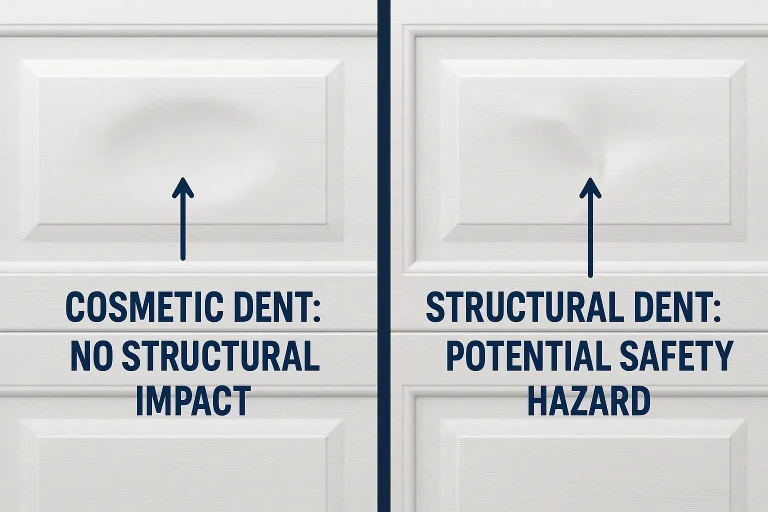
At a glance, two dents might look similar, but their impact on your door’s health can be worlds apart. A cosmetic dent is a surface-level imperfection, while a structural dent is a wound that affects the door’s ability to function safely and correctly.
The 5-Minute Visual Inspection You Must Do
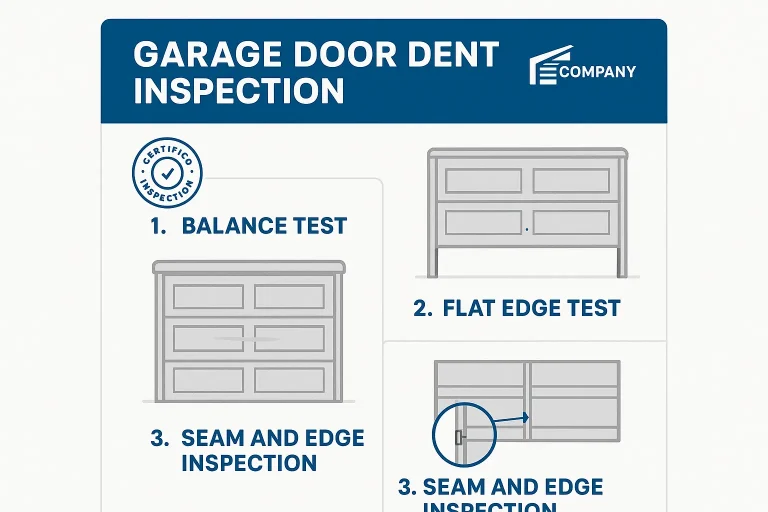
Before you do anything else, grab a flashlight and spend five minutes performing this simple check. This initial assessment will give you the crucial information you need to decide on your next steps. For a comprehensive overview, a complete garage door safety inspection is always a good idea, but these steps focus specifically on dent-related issues.
Check the Dent’s Location: Where the dent is matters more than its size.
- Center of the Panel: A shallow dent here is often cosmetic.
- Near Edges or Rollers: Dents here are serious. They can interfere with the tracks and cause the door to jam or fall.
- On a Seam: A dent on the horizontal line where two panels meet is structural. It can prevent the door from folding correctly as it moves.
Look for Creases: Run your hand gently over the dent (wear gloves if there are sharp edges). Does the metal have a sharp, defined crease? A sharp line indicates the metal has been stretched and weakened, compromising the panel’s rigidity. A smooth, shallow depression is less concerning.
Perform a Function Test: Stand back and operate the door with your opener.
- Watch: Does the door move smoothly, or does it jerk and hesitate? Look for wobbling or shifting as it moves past the dented area.
- Listen: Do you hear any new scraping, grinding, or popping sounds? These are red flags for structural problems.
- With the door closed, pull the red emergency release cord to disconnect the opener.
- Manually lift the door until it’s about halfway open.
- Let go. If the door stays put, it’s likely balanced. If it slams down or flies up, the dent has affected its balance, and it needs professional attention immediately.ard
Do the Balance Test (Carefully): An unbalanced door puts immense strain on your opener.
Use a Straight Edge: Place a level or a yardstick across the dent. Does the panel lay flat on either side, or has the entire panel bowed or warped? Any warping is a clear sign of structural damage that goes beyond the dent itself.
An Illustrated Guide: Cosmetic vs. Structural Damage
Now that you’ve done a quick inspection, let’s put a name to what you’re seeing. Understanding these categories will clarify the severity of your situation.
Cosmetic Damage: The Blemishes
- What it looks like: Shallow, smooth dents, typically in the flat center of a panel. No sharp creases. The surrounding panel is not warped or bent.
- Impact: Primarily affects your home’s curb appeal. It does not interfere with the door’s function or safety.
- Example: A soccer ball hits the middle of the bottom panel, leaving a small, round indentation. The door still opens and closes perfectly.
Structural Damage: The System-Wide Threats
- What it looks like: Deep dents with sharp creases, any dent located on a seam or near the edge, or any impact that causes the entire panel to warp. If you have bent garage door panels, you’re dealing with structural damage.
- Impact: This is where the real danger lies. Structural damage can:
- Prevent the door from sealing properly, letting in pests, water, and drafts.
- Cause the door to bind or jam in the tracks.
- Throw the door off balance, destroying the opener motor and springs over time.
- In a worst-case scenario, cause the door to come off its tracks, creating a serious safety haz
- What it looks like: Deep dents with sharp creases, any dent located on a seam or near the edge, or any impact that causes the entire panel to warp. If you have bent garage door panels, you’re dealing with structural damage.
- Impact: This is where the real danger lies. Structural damage can:
- Prevent the door from sealing properly, letting in pests, water, and drafts.
- Cause the door to bind or jam in the tracks.
- Throw the door off balance, destroying the opener motor and springs over time.
- In a worst-case scenario, cause the door to come off its tracks, creating a serious safety haz
Understanding the Ripple Effect
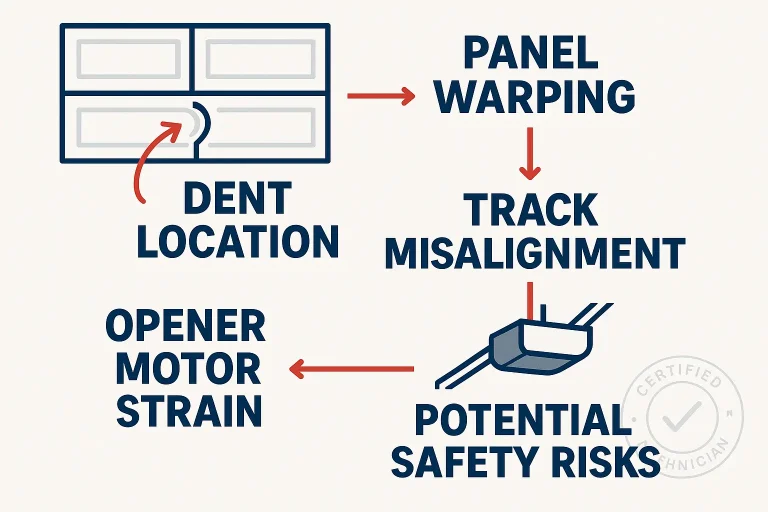
A common mistake is thinking, “It’s just one dent, what’s the big deal?” But a garage door is a complex, interconnected system. A problem in one area—like a dented panel—creates a chain reaction that can lead to catastrophic failure.
Here’s how a seemingly small issue can escalate:
- Panel Warping -> Track Misalignment: A warped panel won’t sit correctly in the tracks. As it moves, it puts lateral pressure on the rollers and can slowly bend the vertical tracks out of alignment.
- Added Weight/Friction -> Opener Strain: A damaged panel doesn’t move as smoothly. This extra friction forces your garage door opener to work harder to lift the same amount of weight, leading to premature motor burnout.
- Imbalance -> Spring Failure: The springs are calibrated to lift a precise weight. Structural damage can alter a panel’s weight and mechanics, throwing the system out of balance. This puts constant, excessive stress on the springs, which are the most dangerous component to fail. Attempting to rewind garage door spring systems yourself is extremely hazardous.
- Compromised Seals -> Weather and Pest Damage: A bent bottom panel can break the seal with the floor, allowing water to seep in, rodents to enter, and energy to escape.
Ignoring these issues doesn’t save money; it just delays a much larger and more expensive repair bill. Proper maintenance and safety checks on all overhead door safety devices are essential.
Your Next Steps: DIY Fix, Panel Replacement, or Full Upgrade?
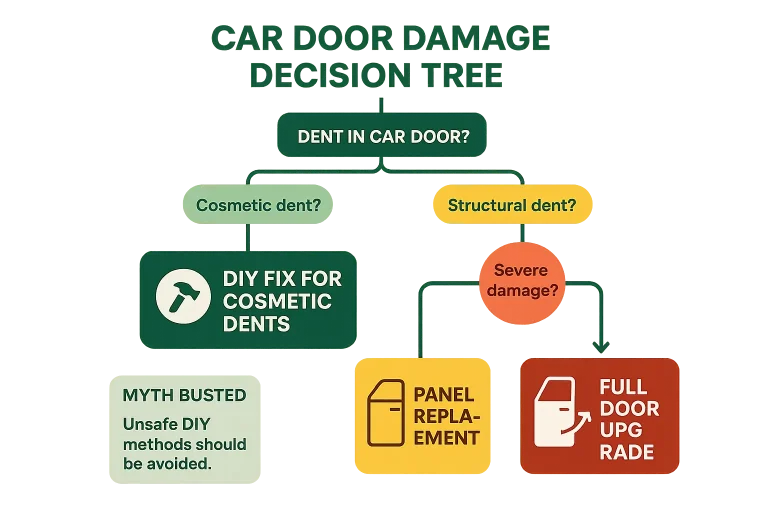
Based on your inspection, you can now make an informed decision. This chart will help guide you toward the safest and most effective solution.
A Word of Warning on DIY Fixes
The internet is full of “quick fixes” for dents involving suction cups, dry ice, or rubber mallets. While tempting, these methods are rarely effective on the rigid steel used in modern garage doors and can often make the problem worse by cracking the paint or creating more creases.
For purely cosmetic issues, a professional garage door dent repair service might be able to improve its appearance. However, if you’ve identified any signs of structural damage, the answer to the question “can a damaged garage door be repaired” often involves replacing the affected panel, not just patching the dent.
Frequently Asked Questions About Garage Door Dents
Can all dents be fixed?
No. Cosmetic dents can sometimes be repaired or improved, but structural damage that involves creasing, warping, or damage to a seam cannot be safely “fixed.” In these cases, the integrity of the panel is compromised, and it must be replaced.
How much does it cost to replace a single garage door panel?
The cost varies widely depending on the door’s manufacturer, model, size, and material. It can range from a few hundred to over a thousand dollars. Sometimes, if the door is older, finding a matching panel can be difficult or impossible, making a full door replacement a more practical option.
Is it safe to keep using my garage door if it has a structural dent?
It is not recommended. Every time you operate a structurally compromised door, you risk causing more damage to the tracks, opener, and springs. More importantly, you create a potential safety hazard if the door were to jam or fall.
My door was damaged in a storm. Is that different?
Yes, damage from events like hail or high winds can be widespread. Even small-looking dings from hail can add up, and significant impacts may require a professional garage door storm damage repair assessment to check the frame and overall alignment.
Your Partner in Home Maintenance
That dent on your garage door is more than just an eyesore—it’s a signal. By taking a few minutes to inspect it properly, you’ve taken the first and most important step toward protecting your home and family. You now have the knowledge to distinguish a minor cosmetic issue from a serious structural problem, ensuring you make the right call for a safe, reliable, and great-looking garage door.
You May Also Like
Assessing Hail, Storm, and Impact Damage on Garage Door Frames
That sinking feeling is unmistakable. After a wild hailstorm, a wind-lashing storm, or the accidental tap from a car bumper, you see it—the damage to your garage door frame. It’s more than just an eyesore. A…
Published Date: Apr 20, 2026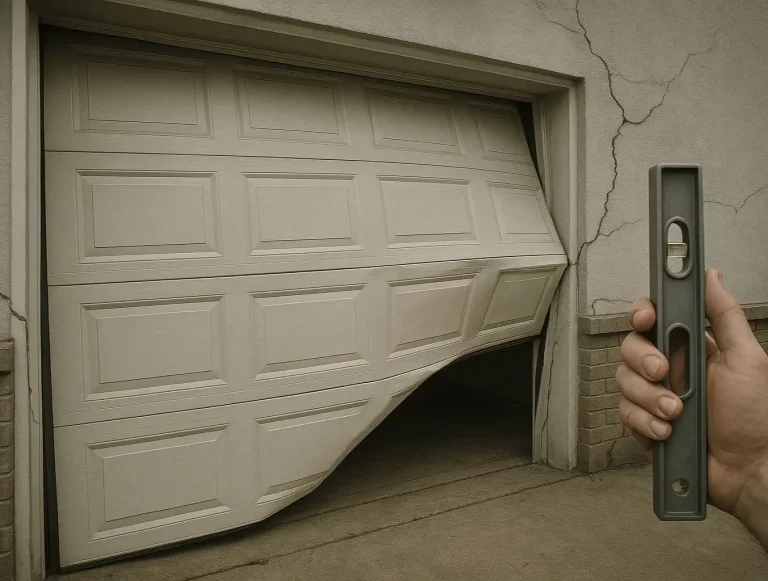
Identifying and Addressing Garage Door Frame Damage
You’ve been there. You press the button on your remote, the garage door starts its descent, and then… it stops. Or it closes unevenly, leaving a gap on one side. You’ve done the usual dance: you’ve checked the…
Published Date: Apr 16, 2026
How to Fix a Garage Door Panel: Repair Damaged Sections
A damaged garage door panel isn’t just cosmetic — it can affect how your entire door system operates. From small dents to cracks or warping, panel issues happen for many reasons. If you’re wondering how to fix a…
Published Date: Sep 29, 2025