





Fiberglass Garage Door Insulation Safety Guide: Protecting Lungs, Skin And Springs
Published: Aug 14, 2026
When evaluating your options for home energy efficiency, choosing to insulate your garage door is a highly cost-effective decision. Many homeowners turn to DIY fiberglass batt kits because they offer excellent thermal performance at an affordable price. However, adding insulation to a moving mechanical system involves critical health and structural considerations that are often overlooked.
Every year, approximately 40,000 emergency room visits in the U.S. involve insulation installation injuries. The vast majority of these stem from inadequate personal protective equipment (PPE) or improper handling. Before learning how to insulate a garage door, it is vital to understand both the biological and mechanical safety protocols required to protect yourself and your home.
Biological Dangers of Pink Fiberglass Insulation
Fiberglass glass fibers typically measure between 3 and 20 microns in diameter. While these particles are too large to penetrate the deep alveolar regions of your lungs, they are highly irritating to your eyes, skin, and upper respiratory tract.
A common concern among homeowners is the “vibration-shedding” effect: Does the daily mechanical movement of the door release micro-glass fibers into the air?
When using high-quality, vinyl-faced fiberglass kits, the insulation fibers are safely sealed behind a durable barrier. However, risks arise when these panels are cut to fit non-standard garage panels, leaving raw, unsealed fiberglass edges. Over time, the continuous vibration of the door opening and closing can shake micro-fibers loose into your active garage space—where children play, pets rest, or family members exercise.
The Ultimate PPE Blueprint for Installation
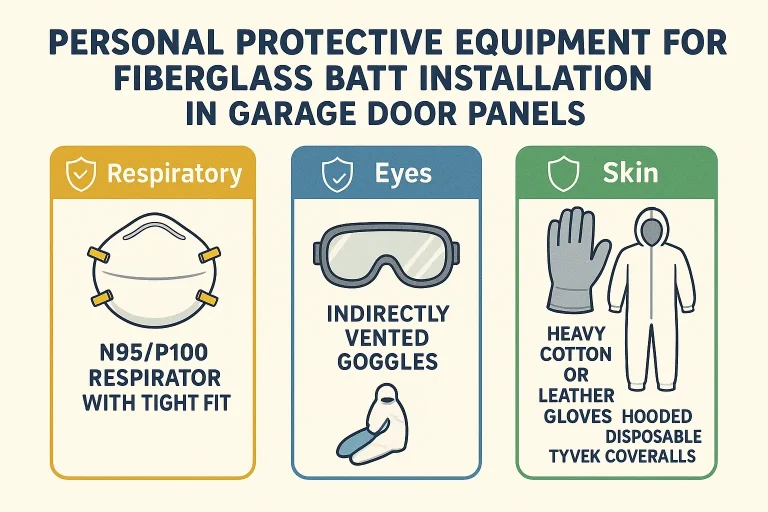
Standard paper dust masks are highly ineffective during fiberglass installation because they allow bypass air to enter around the nose and cheeks. Only a tight-fitting, NIOSH-approved respirator provides the necessary protection.
To safely install garage door insulation, adhere strictly to this PPE blueprint:
- Respiratory: A NIOSH-approved N95 or P100 half-mask respirator.
- Eye Protection: Indirectly vented, sealed safety goggles (standard open safety glasses will not stop airborne micro-fibers from entering your eyes).
- Skin Protection: Loose-fitting, long-sleeved shirts, long pants, and hooded disposable Tyvek suits.
- Hands: Heavy cotton or leather gloves. Avoid thin latex or nitrile gloves, which tear easily when handling rough fiberglass batts.
The Hidden Mechanical Threat (Door Balance & Spring Failures)
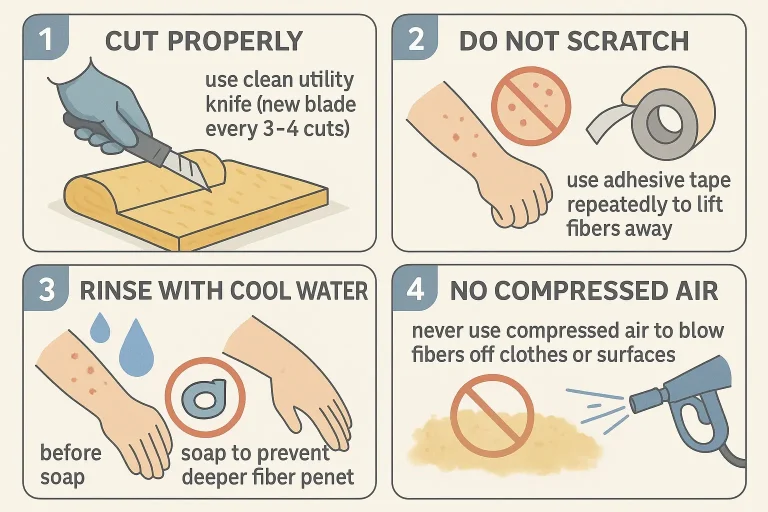
Beyond physical health risks, adding unregulated weight to a moving door system poses a serious mechanical hazard. Garage doors are precision-engineered to operate within a narrow buoyancy margin of just 1 to 2 pounds. Adding a standard fiberglass panel kit can add 10 to 15 pounds to the door.
This added weight increases stress on your garage door springs, which can cut their lifecycles in half or cause them to snap violently, risking catastrophic structural damage or severe injury. To understand why this balance is so delicate, it helps to review how does a garage door spring work.
The “Neutral Buoyancy” DIY Test
Always check your door’s balance after installing any insulation:
- Close the garage door completely.
- Pull the red emergency release cord to disconnect the automatic opener.
- Manually lift the door halfway up and let go.
- The Verdict: If the door remains stationary, it is balanced. If it falls to the floor or shoots upward rapidly, the spring tension is incorrect and requires immediate professional adjustment.
Safe Handling, Cutting, and First-Aid Techniques
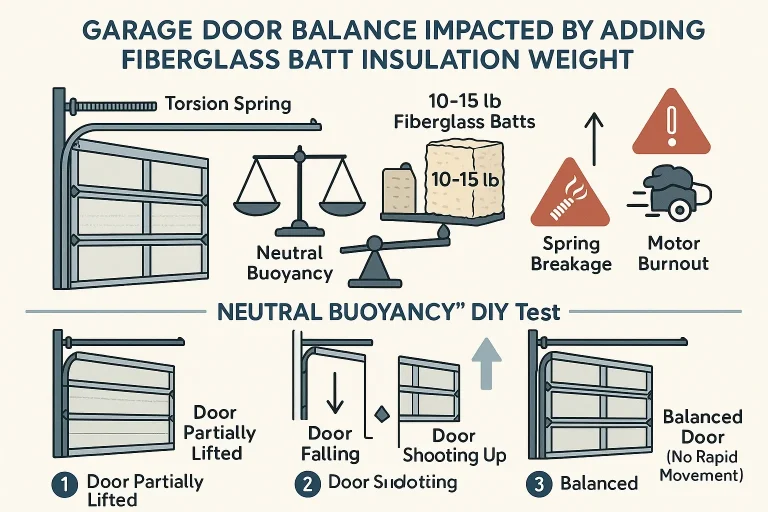
To minimize fiber release and skin irritation, follow these critical safety guidelines during your project:
- Keep Blades Sharp: Change your utility knife blade every 3 to 4 cuts. A dull blade tears the fiberglass backing, creating large clouds of airborne glass dust.
- The Tape Trick: If fiberglass makes contact with bare skin, do not scratch. Apply heavy adhesive tape (like duct tape) to the area and peel it back gently to lift the micro-fibers out.
- The Cool Shower Rule: Always shower with cool water and soap first. Warm water opens your pores, allowing micro-glasAs fibers to penetrate deeper into the skin layers.
- Avoid Compressed Air: Never use compressed air to blow dust off your clothes, as this forces the fibers back into the air where they can be inhaled.
Safe Disposal & Waste Management
When removing old fiberglass panels, wear full PPE. Carefully roll the old batts and double-bag them in heavy-duty, 4-mil contractor trash bags. Secure the bags tightly with duct tape. Check with your local municipality for specific guidelines, as fiberglass insulation is typically classified as construction waste and must be disposed of at designated solid waste facilities.
Materials Comparison (Safety, R-Value, & Weight)
| Insulation Type | Health Risk (Install) | Fire Safety | R-Value per Inch | Weight Impact |
|---|---|---|---|---|
| Vinyl-Faced Fiberglass | Moderate (Skin/Lung) | Non-combustible | R-3.8 to R-4.2 | 10–15 lbs (High) |
| Rigid Polystyrene | Low | Requires thermal barrier | R-3.8 to R-5.0 | 5–8 lbs (Medium) |
| Reflective Foil | Extremely Low | Flame-resistant | Low (R-1.1 alone) | 1–3 lbs (Very Low) |
If the physical handling risks of fiberglass seem too daunting, choosing a safer option like polystyrene garage door insulation can provide excellent thermal resistance with far fewer irritation hazards. Always check the garage door r value to balance insulation performance against the physical weight added to your system.
Frequently Asked Questions
Are fiberglass garage door kits safe for homes with children or pets?
Yes, provided they are faced with a vinyl barrier and installed correctly. Unfaced, raw fiberglass should never be left exposed on a moving garage door, as continuous vibration can release irritating glass fibers into the air.
What should I do if my garage door feels heavy after insulating it?
If your door fails the neutral buoyancy test, do not use your automatic opener. Operating an unbalanced door can quickly burn out the motor. Contact a licensed professional to adjust your springs safely.
Can adding fiberglass insulation affect my garage door springs?
Yes. Adding fiberglass insulation increases the total weight of your garage door. Even a few extra pounds can throw off the counterbalance system, causing high-tension springs to wear out prematurely or forcing the automatic opener to strain. Always test your door’s balance after insulating and consult a professional technician to adjust the spring tension if needed.
You May Also Like
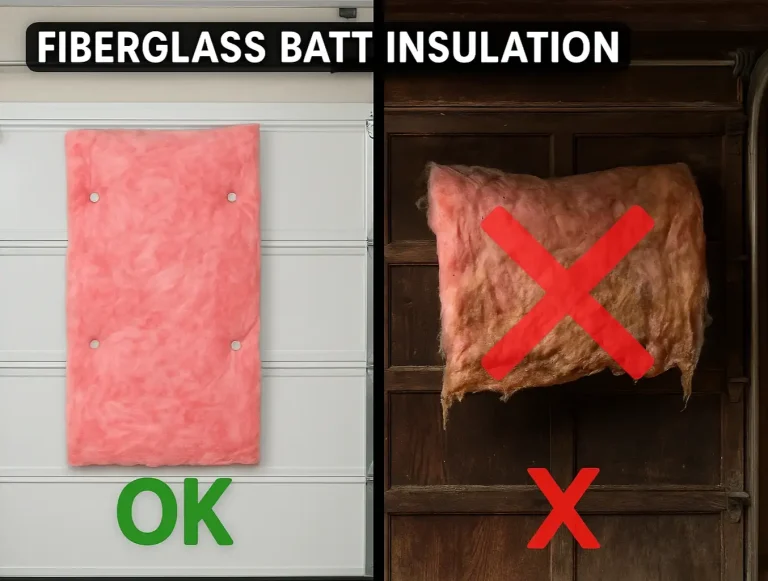
Fiberglass Batt Garage Door Insulation: R-Value, Weight And Real-World Results
If you have walked down the insulation aisle of any home improvement store, you have likely spotted those convenient-looking fiberglass batt DIY kits. They promise an easy weekend project and immediate thermal…
Published Date: Aug 12, 2026
Evaluating UV Degradation on Fiberglass Garage Doors
You just finished washing your car, and as you stand back to admire the shine, you notice it: your garage door. The once vibrant, rich color that perfectly complemented your home now looks tired, dusty, and washed…
Published Date: Jul 28, 2026
5 Reasons to Choose a Fiberglass Garage Door
Considering a garage door that’s practical, durable, and visually appealing? A fiberglass garage door is a well-balanced choice for homeowners who want the appearance of wood with less maintenance and better…
Published Date: Dec 11, 2025