





Fiberglass Batt Garage Door Insulation: R-Value, Weight And Real-World Results
Published: Aug 12, 2026
If you have walked down the insulation aisle of any home improvement store, you have likely spotted those convenient-looking fiberglass batt DIY kits. They promise an easy weekend project and immediate thermal improvement. However, if you read the fine print, you will encounter a stark warning: “Not for wood doors, pre-insulated doors, or doors with windows.”
Why is this? The answer lies in the physics of your door’s construction. Retrofitting insulation is not a one-size-fits-all project. Understanding the garage door insulation options that work for your specific panel setup is crucial to avoid structural, mechanical, or aesthetic damage.
The Universal Compatibility Matrix (Interactive Table)
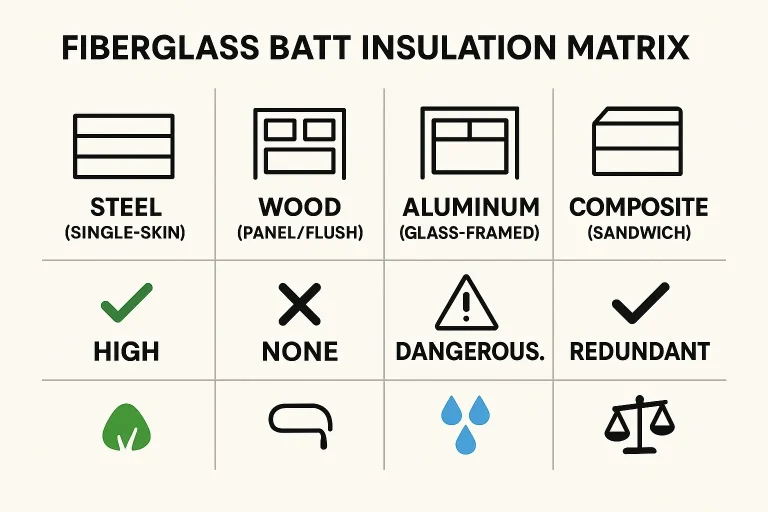
Before choosing insulation, it is critical to perform an insulated garage door materials comparison to see how your current panels behave.
| Door Panel Material | Compatibility with Fiberglass Batts | Key Performance / Safety Risk | Best Alternative |
|---|---|---|---|
| Steel Pan (Single-Skin) | High | Minimal; requires securing pins | Standard Fiberglass or XPS |
| Wood (Panel/Flush) | Dangerous / Very Low | Wood rot, moisture trapping, heavy weight | Rigid EPS with Vapor Barrier |
| Aluminum & Glass | None | Condensation, blocks natural light | Insulated Glass Upgrade |
| Composite / Pre-Insulated | Redundant | No cavity to fit; mechanical strain | Leave as-is |
Deep-Dive Material Analysis & Compatibility Mechanics
Let us break down how flexible fiberglass batts—which offer an impressive R-8 thermal value at 2 to 2.25 inches of thickness—interact with different garage door constructions.
Steel Pan Construction (Single-Skin)
Single-skin steel doors are the gold standard for fiberglass retrofitting. The hollow interior recessed “pans” (usually 1.25 to 2 inches deep) act as natural pockets to friction-fit fiberglass batts. To enjoy maximum steel garage door benefits, you must prevent the fiberglass from sagging and catching in the tracks. Use adhesive-backed retaining pins to lock the batts in place.
Be aware of thermal bridging: uninsulated steel ribs can reduce retrofitted insulation efficiency by 30-40%. If you live in a hot climate, use high-temp epoxy to secure the retaining clips, as heat can melt standard adhesives. Alternatively, check out polystyrene garage door insulation boards for high structural rigidity.
Wood Panel Construction (Carriage & Traditional)
Wood doors are a poor fit for retrofitted fiberglass batts. Wood is a dynamic, organic material, while fiberglass is highly hydrophilic (water-absorbing). Placing fiberglass directly against wood panels traps moisture, leading to systemic rot, warping, and mold. If your wood door has sustained moisture damage, seek out professional wooden garage door repair before proceeding with any insulation plans. Furthermore, wood is heavy; damp fiberglass can double in weight, severely straining your garage system.
Aluminum & Glass Construction (Modern/Contemporary)
Applying pink fiberglass batts to modern glass garage doors ruins their clean aesthetic and blocks natural light. Aluminum and single-pane glass also act as highly conductive thermal bridges. Moisture will form as condensation, running down the frames and soaking the fiberglass. This ruins its thermal resistance, dropping the R-value to zero and promoting mold.
Composite & Pre-Insulated Sandwich Construction
Many modern doors use a triple-layer sandwich construction (steel-insulation-steel). If you already have a pre-insulated door, adding fiberglass batts is completely redundant. There are no cavities to secure the batts, and doing so will only add dead weight and ruin the door’s flat backing. If you are comparing door properties, checking the garage door r value will tell you if your current pre-insulated setup is already performing at its peak.
The Hidden Threat: Torsion Spring Calibration & Weight Math
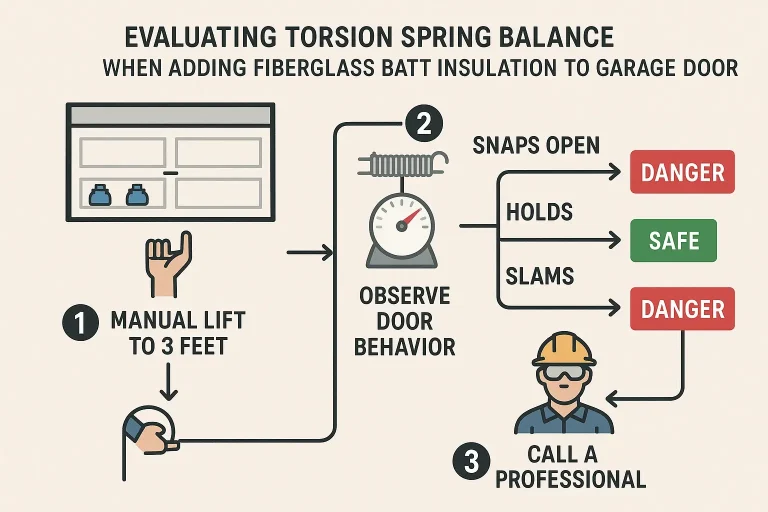
A single-car fiberglass kit weighs around 10 to 15 lbs. While this sounds negligible, garage door systems rely on delicate counterbalancing. Springs are wound to balance the exact dry weight of your door. Adding even 12 lbs can throw off this balance. This risks burning out your opener motor or snapping a spring.
Perform the 3-Foot Balance Test: disconnect your automatic opener, manually raise the door halfway, and let go. If it drifts up or slides down, your springs are unbalanced. Adjusting these is extremely dangerous; always contact a professional for a garage door spring tension adjustment near me to prevent catastrophic failure or injury.
DIY Installation Walkthrough (Optimized for Steel Doors)
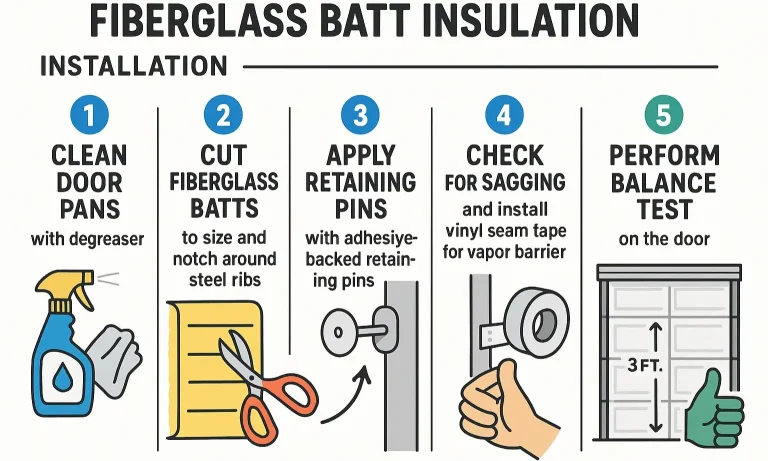
If you have an uninsulated steel door, retrofitting vinyl-faced fiberglass batts is a highly effective DIY project. Follow these steps:
- Prep the Panels: Clean the metal pans with a degreaser so the retaining pins adhere firmly.
- Install Retaining Pins: Place adhesive-backed clips about 12 inches from panel edges.
- Measure and Cut: Measure each panel cavity. Cut the fiberglass batts slightly larger (approx 1 inch) to ensure a tight friction-fit.
- Secure the Batts: Push the batt onto the pins (vinyl facing facing outward) and lock them with retaining caps.
- Seal and Control: Apply vinyl seam tape across joint lines to secure the vapor barrier. This is one of the best garage door condensation solutions for high-humidity areas.
Frequently Asked Questions | FAQ
Does retrofitted fiberglass insulation reduce noise?
Yes. Fiberglass acts as an excellent sound dampener, reducing high-frequency street noise by up to 6 to 8 decibels—making it perfect for garage home gyms or workshops.
Will retrofitting insulation void my manufacturer warranty?
In many cases, yes. Modifying standard doors by drilling or adding weight can void warranties. This is why many homeowners opt for professional, factory-insulated composite garage doors or steel upgrades instead.
Is fiberglass safe to handle?
Yes, provided you wear proper PPE (gloves, safety glasses, and a dust mask) to avoid skin irritation and inhaling loose particles.
Secure Your Garage with Up & Down Garage Doors
If you are unsure whether your current garage door can safely handle retrofitted fiberglass insulation, let our experts help. From spring calibration to custom-insulated door replacements, we provide 24/7 emergency support and honest, professional guidance across Connecticut, Texas, New York, Illinois, and Arizona. Contact us today for a free consultation.
You May Also Like
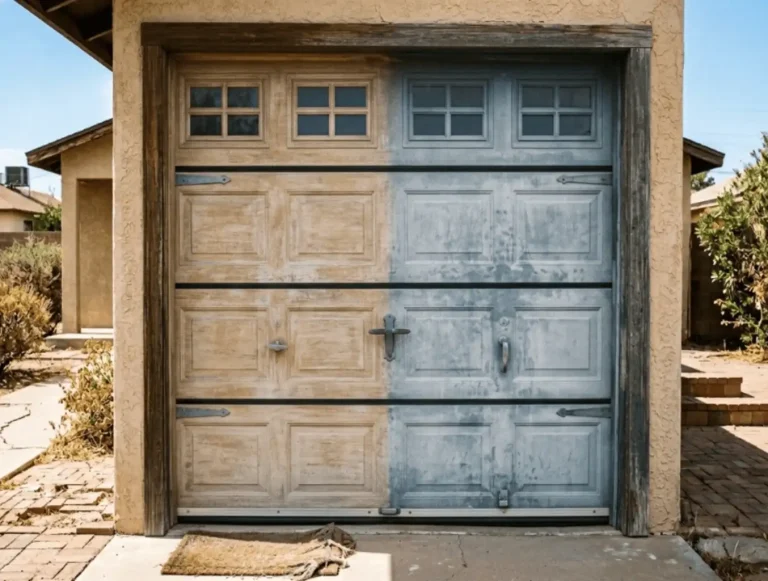
Evaluating UV Degradation on Fiberglass Garage Doors
You just finished washing your car, and as you stand back to admire the shine, you notice it: your garage door. The once vibrant, rich color that perfectly complemented your home now looks tired, dusty, and washed…
Published Date: Jul 28, 2026
5 Reasons to Choose a Fiberglass Garage Door
Considering a garage door that’s practical, durable, and visually appealing? A fiberglass garage door is a well-balanced choice for homeowners who want the appearance of wood with less maintenance and better…
Published Date: Dec 11, 2025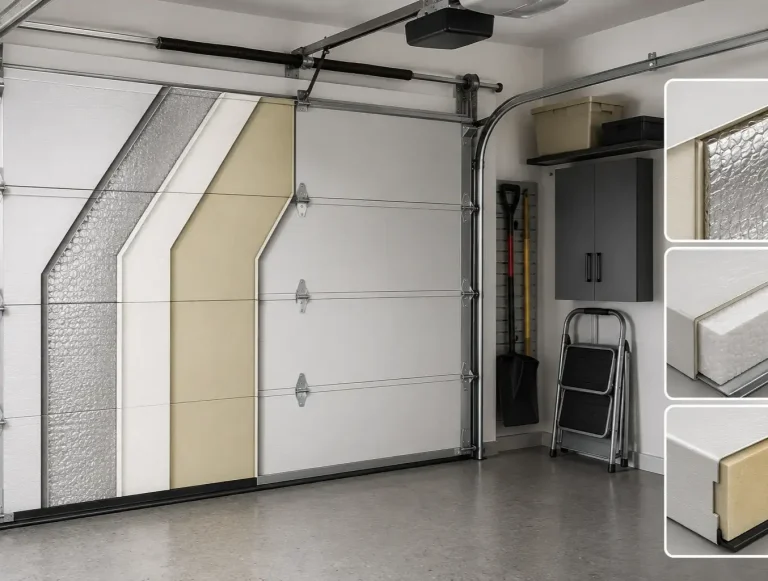
Space-Saving Insulation Solutions for Garage Doors in Compact
You’ve meticulously designed your compact, energy-efficient home. Every square foot is optimized, every window is triple-paned, and your walls have the perfect thermal envelope. But there’s a giant, uninsulated hole…
Published Date: Jun 26, 2026