





Evaluating UV Degradation on Fiberglass Garage Doors
Published: Jul 28, 2026
You just finished washing your car, and as you stand back to admire the shine, you notice it: your garage door. The once vibrant, rich color that perfectly complemented your home now looks tired, dusty, and washed out. You try wiping a spot, but the dullness remains.
If this sounds familiar, you’re not alone. Many homeowners with fiberglass or composite garage doors notice this chalky, faded appearance over time and assume it’s just a cosmetic problem that requires a coat of paint. But that fading is actually a distress signal. It’s your garage door telling you that its first line of defense against the elements is breaking down.
Think of it less as a paint problem and more as a skin problem. Your door is getting a sunburn, and understanding what’s happening beneath the surface is the key to choosing the right remedy—and preventing further damage.
The Science of a Sunburn: What UV Rays Actually Do to Fiberglass
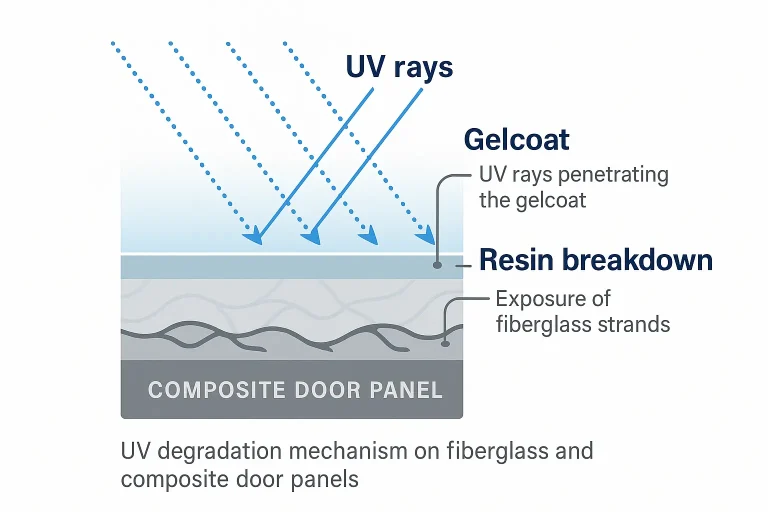
To understand why your door is fading, you first need to know what it’s made of. Most fiberglass and composite doors consist of three key components: fiberglass strands for strength, a polymer resin that binds them together, and a protective topcoat, often called a gelcoat, which provides the color and finish.
This gelcoat acts like sunscreen. Its primary job is to block ultraviolet (UV) radiation from the sun. Over years of exposure, however, those relentless UV rays begin to break down the gelcoat.
Once the “sunscreen” is compromised, the UV radiation can attack the polymer resin underneath. This process, called UV degradation, chemically alters the resin, causing it to lose its pigment and break down into a chalky substance. This is why a faded door often feels dusty to the touch. The glass fibers, which were once fully encased in resin, start to become exposed, weakening the panel’s surface.
This process varies depending on the materials and construction, as different types of composite garage doors use unique resin and gelcoat formulations. But the principle remains the same: sun exposure is the primary culprit behind a fading finish.
The Diagnostic Clinic: How to Evaluate Your Garage Door's Health
Before you grab a paintbrush or call a professional, it’s crucial to diagnose the severity of the damage. A door that’s just lost its shine requires a very different approach than one that’s become rough and brittle.
Your First Clue: The “Chalky Test”
Here’s an “aha moment” you can have right now. Go outside and wipe a dark-colored cloth (like a microfiber towel) across a small section of your garage door.
Now, look at the cloth. Do you see a chalky, powdery residue that matches your door’s color?
If so, you’ve just confirmed that the protective gelcoat has failed and the underlying resin is breaking down. This simple test is the single best indicator that you’re dealing with UV degradation and not just dirt.
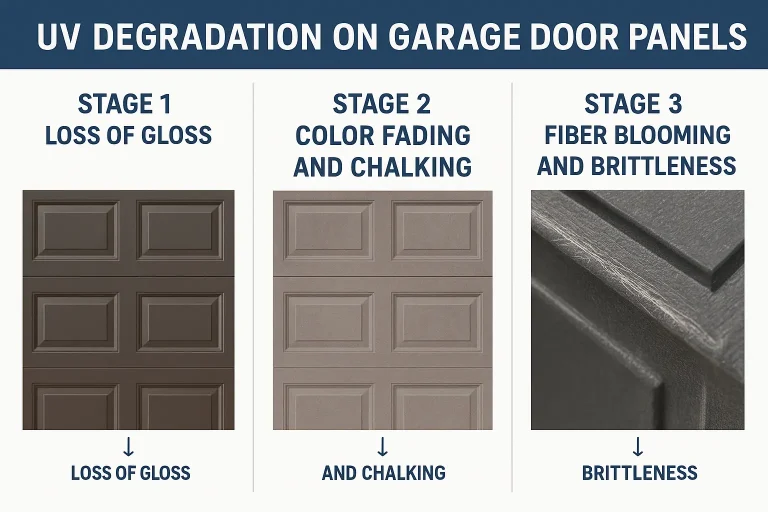
A Visual Guide to UV Damage: The 3 Stages of Degradation
Once you’ve confirmed chalking, you can identify the specific stage of damage. This will help you choose the most effective solution.
- Stage 1: Loss of Gloss. The door has lost its factory sheen and appears dull, especially from an angle. The color is still relatively even, and there is little to no chalky residue. The gelcoat is starting to wear thin but is largely intact.
- Stage 2: Color Fading & Chalking. This is the most common stage. The color is noticeably lighter or washed out, and the “Chalky Test” is clearly positive. The surface feels dry and slightly dusty. The gelcoat has failed, and the resin is actively degrading.
- Stage 3: Fiber Blooming & Brittleness. The surface feels rough and almost fuzzy to the touch. This is “fiber blooming,” where the exposed fiberglass strands are becoming visible. At this stage, the panel has lost much of its protective resin and may become brittle and more susceptible to cracking.
Choosing Your Restoration Path
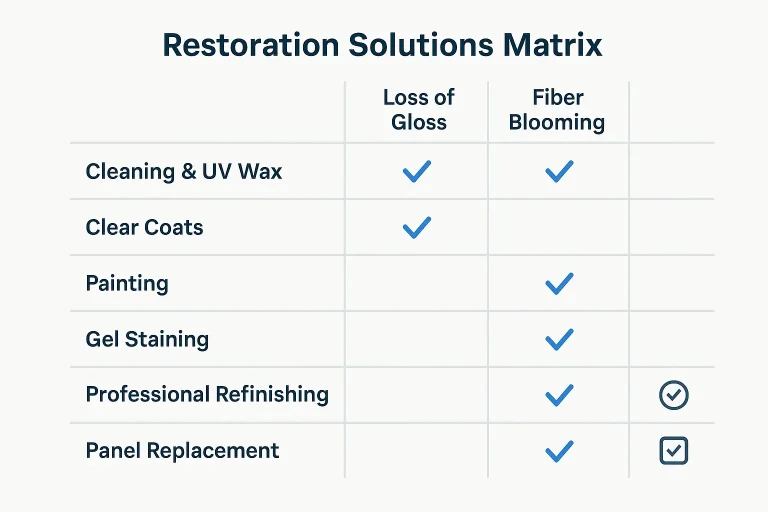
Your diagnosis from the previous step will guide you directly to the right solution. Trying to wax a Stage 3 door is as ineffective as replacing a panel on a Stage 1 door.
For Stage 1 (Loss of Gloss): Protect and Preserve
Your goal here is prevention. The damage is minimal, so you just need to restore the shine and add a new layer of UV protection.
- Solution: After a thorough cleaning with a mild detergent, apply a high-quality, non-abrasive marine or automotive wax that contains UV inhibitors. This acts as a new layer of sunscreen for your door.
For Stage 2 (Fading & Chalking): Restore and Revitalize
The gelcoat is gone, so you need a solution that can penetrate the surface and bring the color back to life.
- Solution 1: Clear Coat Restoration. Products like Everbrite or Polytrol are designed to re-saturate the dried-out resin, restoring the original color and sealing the surface without paint. This is often the best choice for preserving the original look.
- Solution 2: Painting. If you want a new color or the fading is severe, painting is a great option. However, preparation is everything. You must meticulously clean the chalky residue, lightly sand the surface, and use a high-quality primer and acrylic latex or urethane-based exterior paint designed for composite materials.
For Stage 3 (Fiber Blooming): When to Call for Backup
At this stage, the panel’s integrity is a concern. The brittleness means it can be easily damaged, and DIY solutions may not be enough.
- Solution: Professional refinishing is often the safest bet. Experts can properly sand the rough surface without causing damage and apply industrial-grade coatings. In cases where the panel is cracked or severely weathered, a targeted garage door panel repair might be necessary. If you have a heavily damage garage door, a professional evaluation can determine if replacement is more cost-effective.
Your Long-Term Prevention Plan
Once your door is restored, keeping it that way is simple. Just like maintaining your car’s finish, a little annual care goes a long way.
- Wash twice a year: Use a soft cloth or sponge with mild soap and water to remove dirt and pollutants that can degrade the surface.
- Seal once a year: Apply a fresh coat of a UV-protective sealant or wax, especially if your door faces direct sun for most of the day.
This simple routine is a core part of any good garage door maintenance checklist and can add years to the life of your door’s finish.
Frequently Asked Questions (FAQ)
Are certain colors more likely to fade?
Yes. Darker colors like deep browns, blacks, and dark grays absorb significantly more light and heat. This thermal energy accelerates the breakdown of the gelcoat and resin, causing them to fade much faster than lighter colors like white or beige.
Is the damage just cosmetic, or is my door’s structure at risk?
In Stages 1 and 2, the damage is primarily aesthetic. However, by Stage 3, the panel becomes brittle. This can affect its impact resistance and even its garage door insulation properties. A brittle panel is more likely to crack from a stray basketball or during extreme temperature shifts.
How long do fiberglass doors last?
A well-maintained fiberglass or composite door can easily last 15 to 20 years or more. However, persistent neglect in a high-UV climate can dramatically shorten the lifespan of its finish and structural integrity. Learning what wears out in a garage door over time helps you prioritize maintenance.
Can I use a pressure washer to clean my faded door?
This is very risky. While a pressure washer is great for a concrete driveway, it can be destructive to a compromised fiberglass surface. On a Stage 2 or 3 door, the high-pressure stream can blast away the remaining resin, drive grit deep into the exposed fibers, and make restoration nearly impossible. Always stick to a gentle wash with a hose and soft cloth.
What if I see cracks or severe damage?
If you notice physical cracks, deep gouges, or warping, the problem has moved beyond fading. This kind of damage can compromise the safety and operation of your door and may require emergency garage door repair. A consistent garage door maintenance schedule helps you catch these issues before they become critical.
Moving from Diagnosis to Decision
Your garage door’s faded finish isn’t an ending; it’s an indicator. It’s a signpost telling you that the protective layers need attention. By taking a few minutes to perform the “Chalky Test” and identify the stage of degradation, you can move from worrying about the problem to confidently choosing the right solution.
Whether it’s a simple wax application or a full restoration, you’re now empowered to give your door the care it needs. For homeowners who prefer to keep their entire system in peak condition, a professional annual garage door maintenance plan can ensure your door not only looks great but functions safely for years to come.
You May Also Like
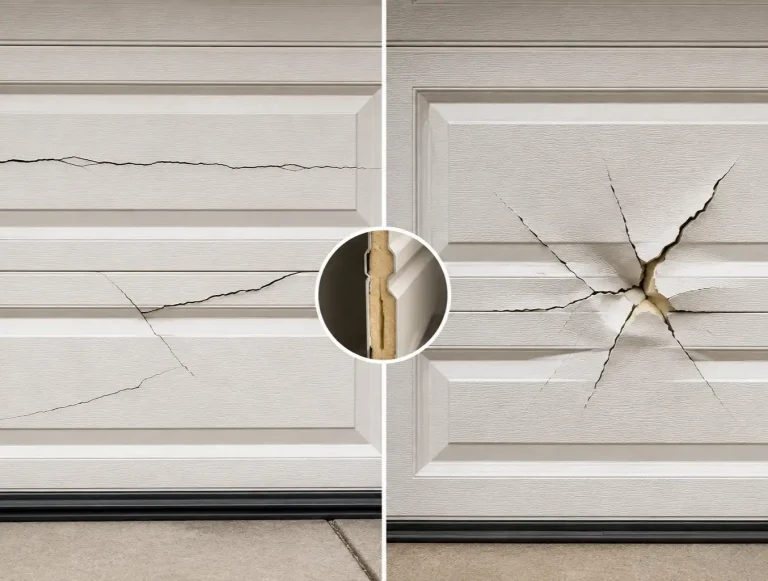
Stress Crack or Impact Damage? A Homeowner’s Guide to Reading Your Garage Door
You see it one morning while grabbing the newspaper—a fine, spidery line across one of your garage door panels. Your first thought might be, "How did that happen?" Your second is probably, "How do I fix it?" Before…
Published Date: Jul 24, 2026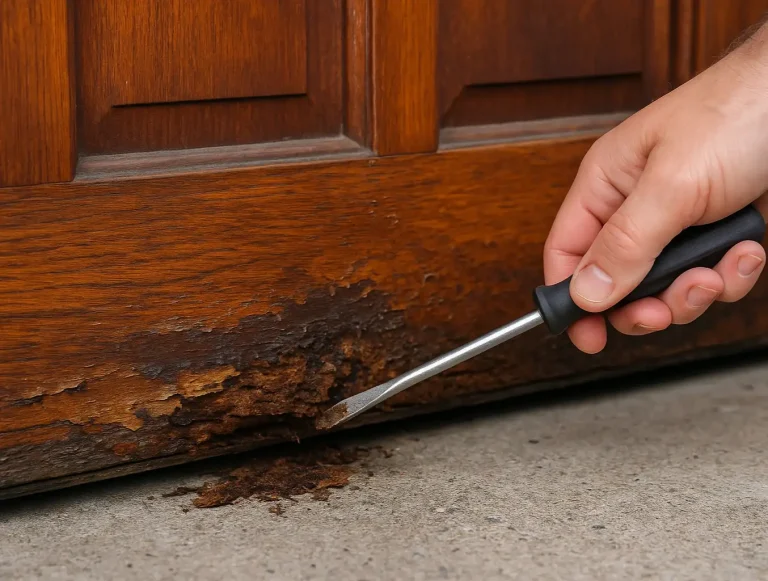
Is Your Wooden Garage Door Rotting? A Homeowner’s Guide to Repair vs. Replacement
You’ve noticed it, haven’t you? That small, dark stain at the bottom of your beautiful wooden garage door. Maybe it’s a few paint bubbles that weren’t there last season. It’s easy to dismiss, but that little spot…
Published Date: Jul 27, 2026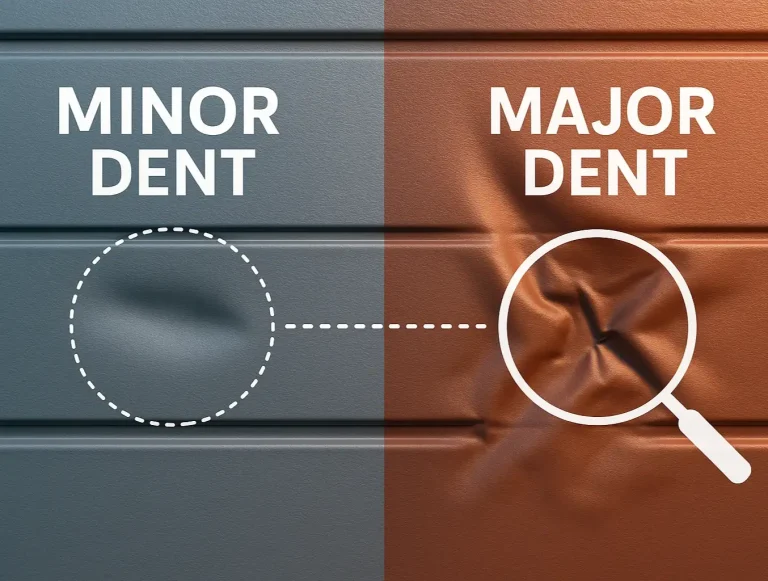
Is That Garage Door Dent a Big Deal: How to Tell Cosmetic from Structural Damage
You’re not alone in asking this. The good news is that not all dents are created equal. Some are purely cosmetic, while others can compromise the entire structure and safety of your door. The key is knowing how to…
Published Date: Jul 23, 2026