




Garage Door Slamming Shut or Dropping Fast: What It Says About Springs and Cables
Published: Sep 23, 2026
A bone-rattling slam that vibrates through your entire home is more than just a startling noise—it is a critical safety warning. When a garage door, which can weigh anywhere from 150 to over 400 pounds, drops fast or slams shut, it behaves like a free-falling hazard.
STOP: If your door just slammed, do not attempt to force it open manually or operate your automatic opener. A compromised counterbalance system makes the door incredibly heavy and dangerous to touch.
The Core Anatomy of a Free Fall (Physics of Counterbalance)
To understand why your door is falling, we must first look at how does a garage door spring work. Garage doors do not rely on the opener’s motor to lift their massive weight; instead, they use a tightly wound counterbalance system to offset gravity.
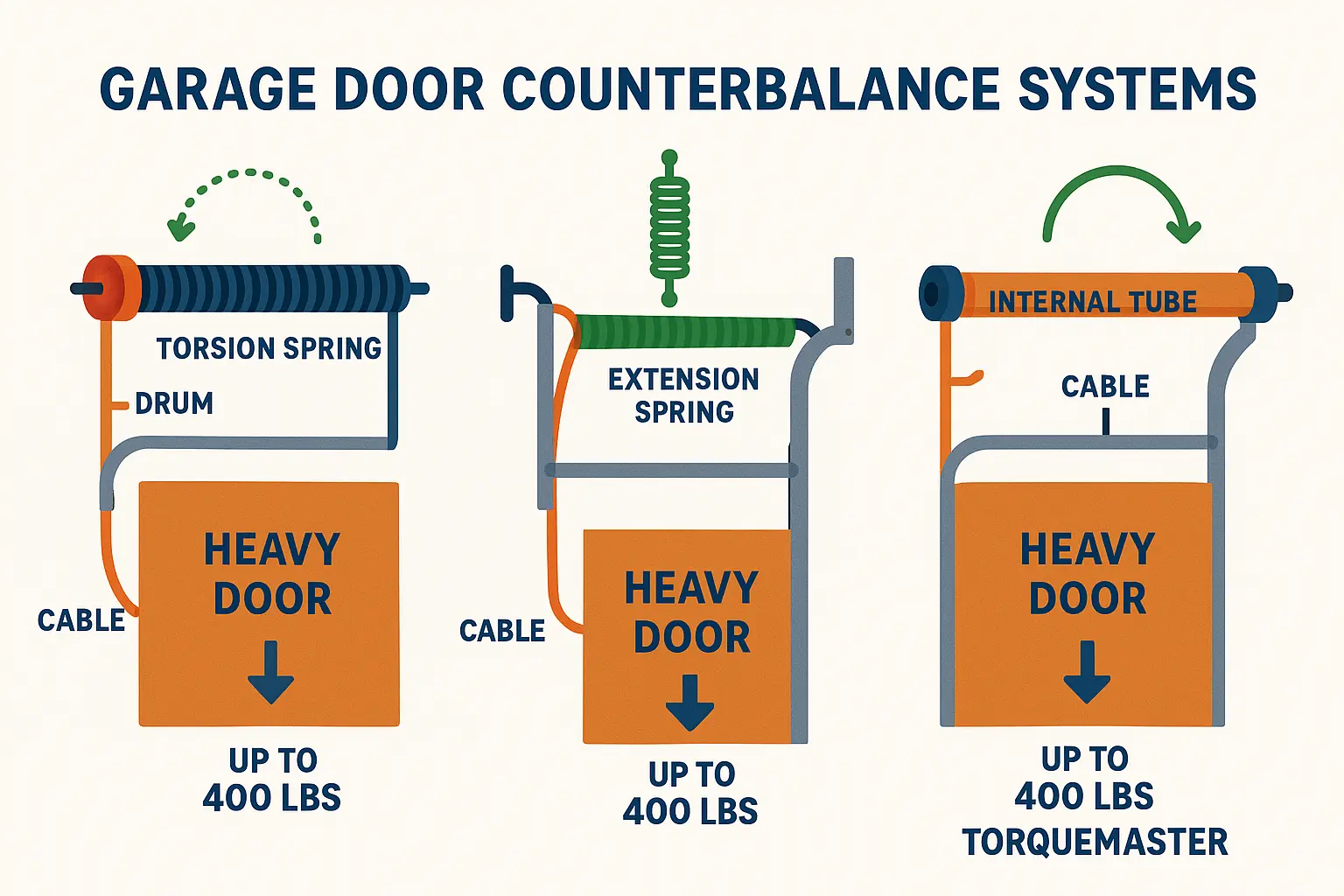
Standard residential systems rely on torsion springs mounted above the door, or extension springs running along the upper tracks. Torsion springs typically carry a standard lifespan rating of 10,000 cycles (one cycle is one open and close), translating to roughly 6.8 to 7 years of daily use. Extension springs are generally rated for 7,000 to 10,000 cycles (5 to 7 years). Once a spring reaches the end of its structural life, the steel suffers fatigue and snaps, instantly transferring the door’s entire dead weight to gravity or the remaining components.
If you own a Wayne Dalton door, you might have a TorqueMaster system, which conceals the springs inside a steel tube. While aesthetically cleaner, diagnosing a broken TorqueMaster spring is trickier because the break is hidden from view, though a sudden heavy door or rapid descent remains the telltale sign of internal failure.
The 60-Second DIY Diagnostic Decision Tree
Before making any repair decisions, perform this quick, contact-free diagnostic check to isolate the underlying cause of your slamming door.
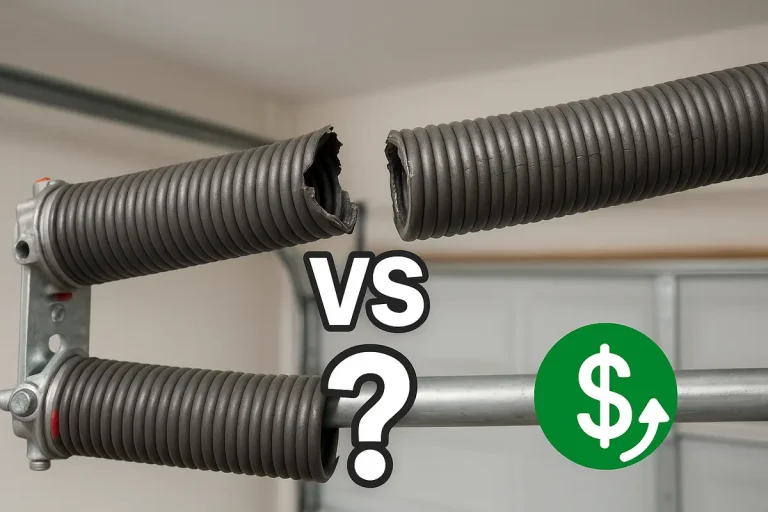
- Symptom A: A clear gap in the overhead spring. If you look above your door and see a distinct two-inch gap in the coiled steel, you have a broken torsion spring. This requires immediate professional attention. You can find experienced help to replace garage door spring near me.
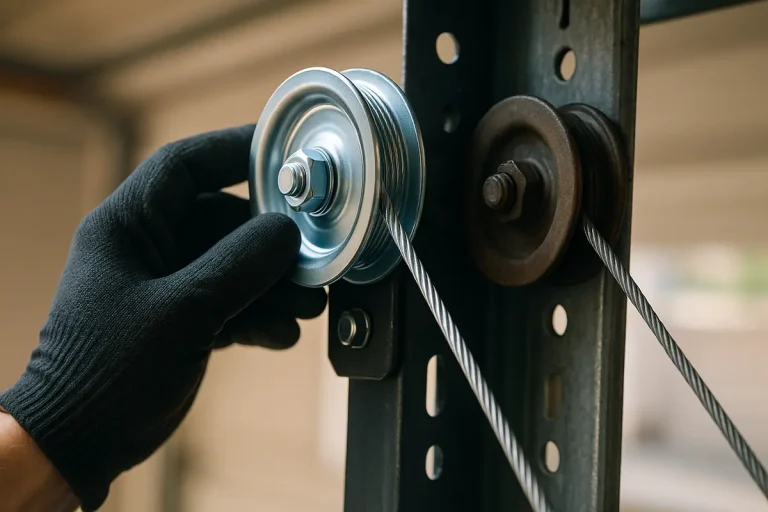
- Symptom B: The door hangs unevenly, or a cable is loose. If the door is crooked in the opening and one side sags, you likely have a snapped or derailed cable. Do not operate the door; a loose or frayed garage door cable can cause the door to fall completely off track.
- Symptom C: The door moves smoothly but slams hard in the final foot of travel. If the door descent is steady until the last 12 inches, the issue is likely electronic rather than mechanical. You may simply need to learn how to adjust garage door travel limit or force settings on your opener unit.
- Symptom D: The door halts, jerks violently, and then drops. This erratic behavior points to binding issues, often caused by dirt-clogged tracks or seized rollers. Knowing how to lubricate garage door hinges and rollers can resolve minor sticking, but severely damaged tracks require alignment.
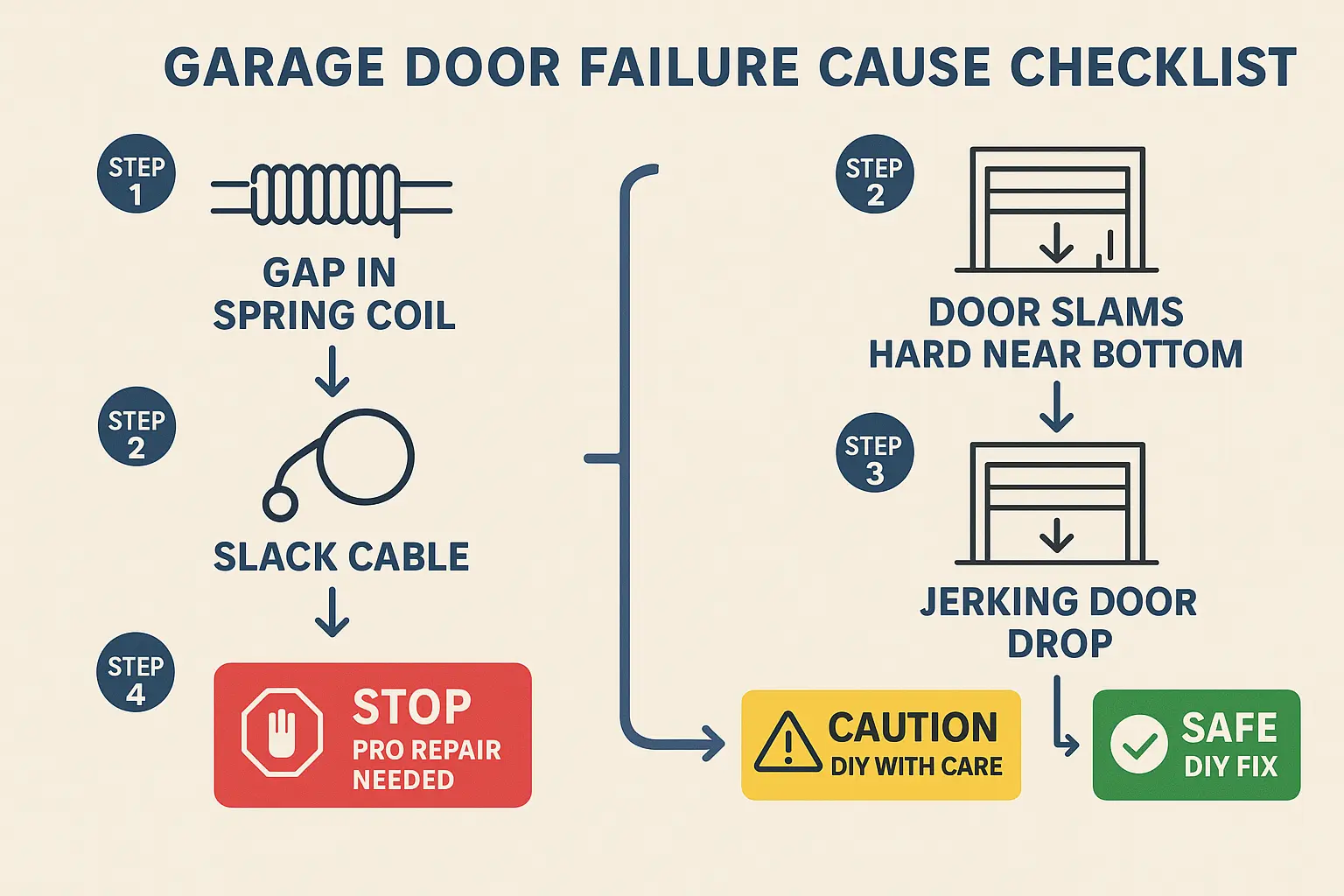
The Hidden Threat: Collateral Damage from a Hard Drop
Ignoring a slamming door or forcing it to run on a weak counterbalance system causes severe damage to other structural parts:
- Bent tracks: The force of a dropping door can easily twist metal tracks, leading to a dangerous bent garage door track situation that completely derails the system.
- Stripped opener gears: When the motor attempts to lift an unbalanced garage door, the internal plastic drive gears quickly strip under the excessive load.
- Cracked panel sections: Hard impacts on the concrete floor can bend hinges and warp modern insulated panels, turning a simple spring repair into an expensive, full door replacement.
Solution Evaluation Matrix - DIY vs. Professional Repair
While minor maintenance is safe for homeowners, handling high-tension parts without specialized training carries severe physical risks.
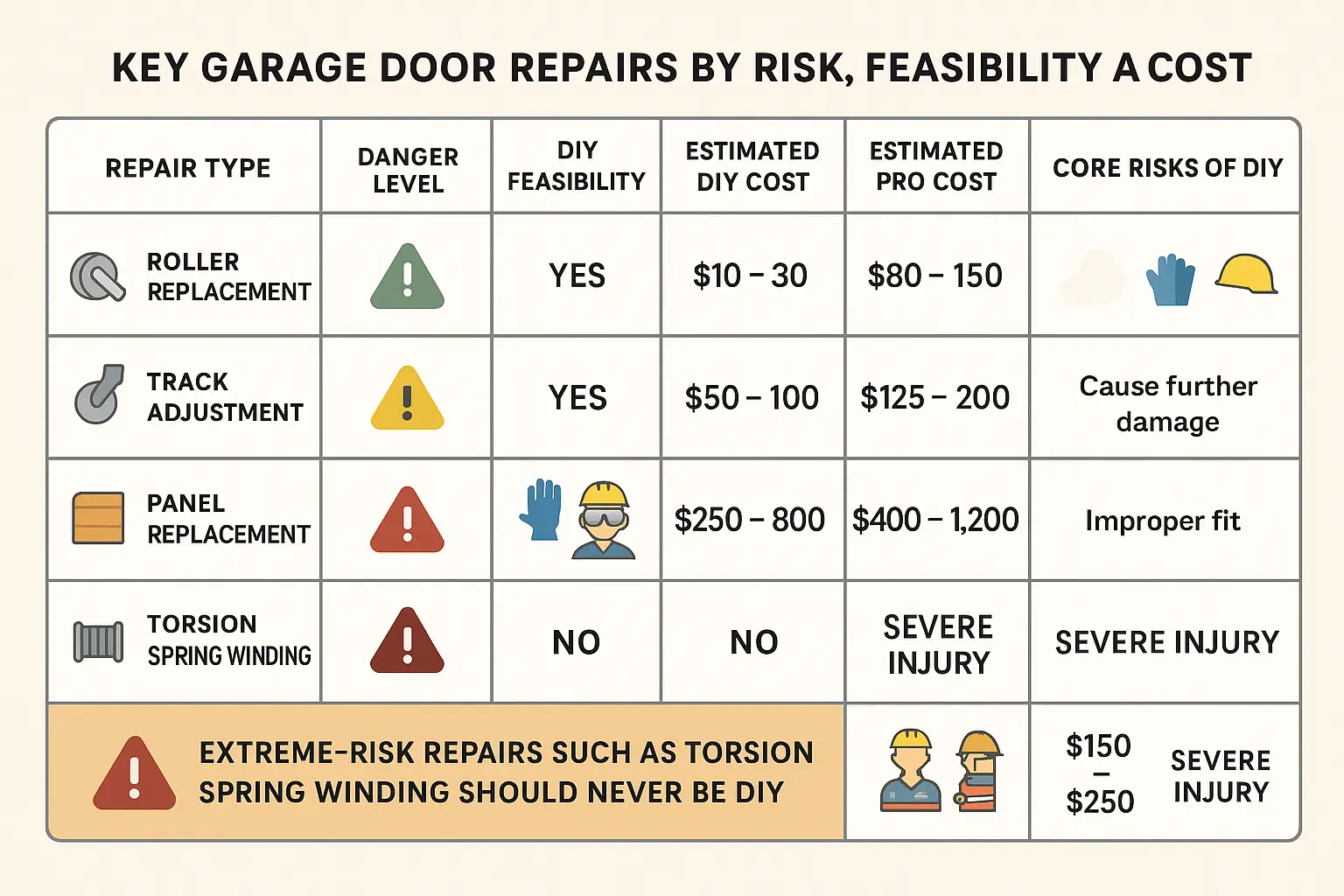
For low-risk tasks, you can confidently proceed with a garage door roller replacement or clean the tracks yourself. However, for high-tension tasks, an expert garage door cable replacement or professional spring replacement ensures safety and preserves your manufacturer warranties.
Frequently Asked Questions
Can I spray WD-40 on my tracks to stop the slamming?
No. WD-40 is a degreaser, not a long-term lubricant, and it will attract dust and debris that can clog your tracks over time. Instead, keep the tracks clean and dry, and use a professional silicone or lithium-based spray to lubricate the rollers, hinges, and springs.
Why does my garage door slam when closing but opens fine?
When your door is opening, the motor is actively pulling it up. However, when closing, the motor relies on the counterbalance system to slowly ease the door down against gravity. If your springs have lost tension or have snapped, the motor loses control of the weight during descent, resulting in a sudden, heavy drop.
Should I replace both garage door springs if only one broke?
Yes. Garage door springs are manufactured to the same cycle life and experience the exact same amount of wear. If one spring has snapped, the other is likely near the end of its lifespan and will fail shortly after, requiring a second service call and placing unnecessary strain on your system.
What is DASMA TDS-171?
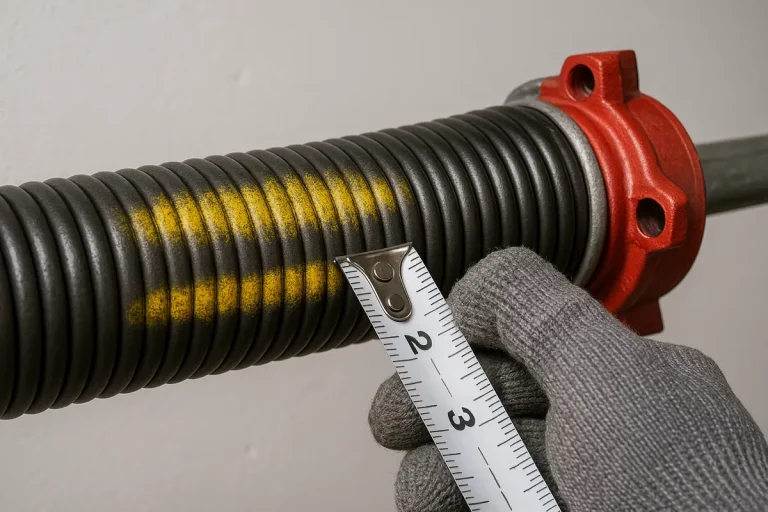
DASMA TDS-171 is an industry technical standard established by the Door & Access Systems Manufacturers Association. It defines the color-coding guidelines for garage door springs, helping technicians identify wire gauges and lifting capacities to ensure your replacement spring perfectly matches your door’s physical weight.
At Up & Down Garage Doors, we bring over 15 years of family-owned experience to every repair. Whether you need a quick diagnostic check or an emergency spring replacement, our fully trained, licensed technicians are available 24/7 across Connecticut, Texas, New York, Illinois, and Arizona. Contact us today to restore safe, smooth operation to your garage door.
You May Also Like