




Opener Overheating in Texas Heat: Thermal Protection and Duty Limits
Published: Oct 23, 2026
Introduction: The Texas Garage Thermal Trap
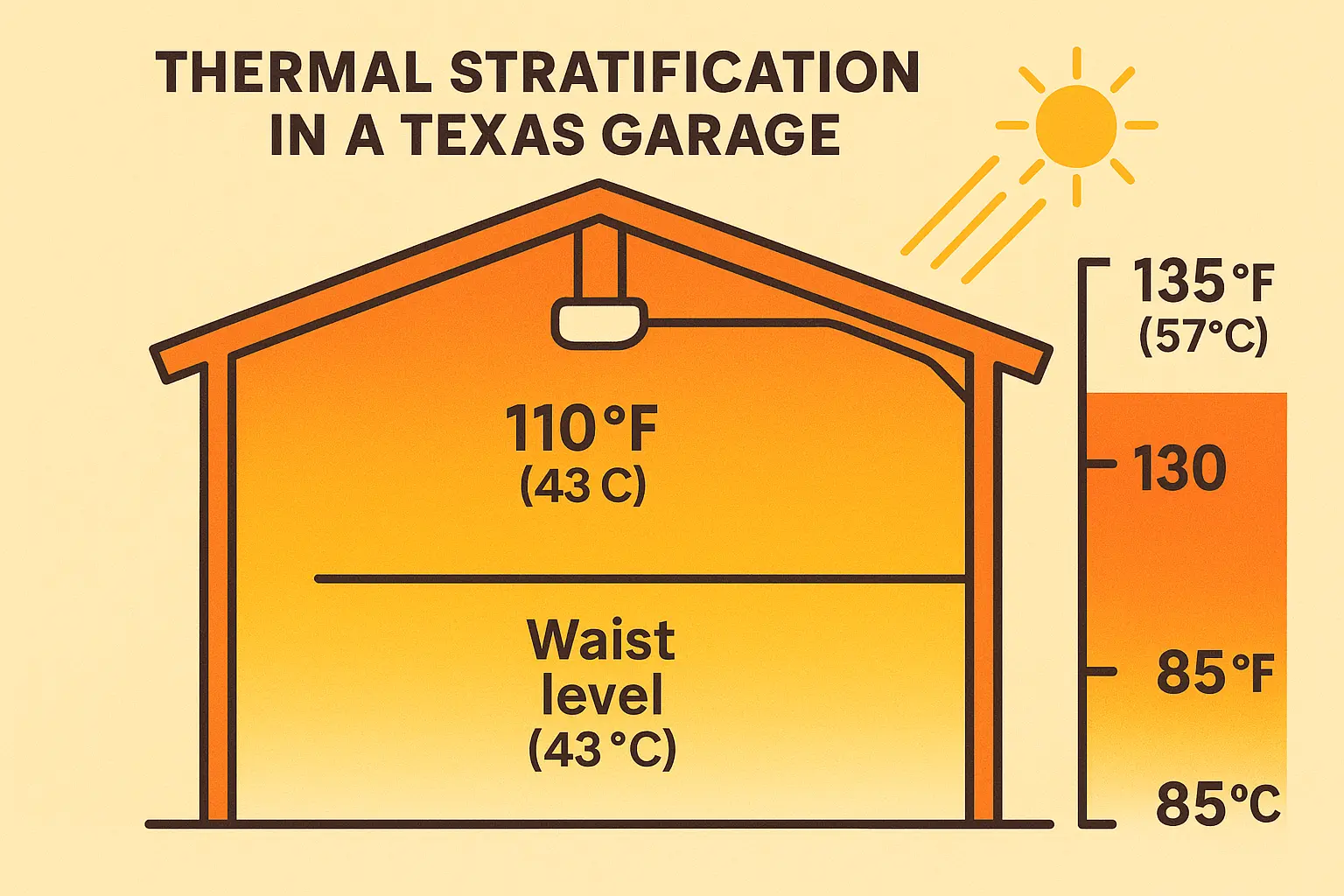
When ambient temperatures across Texas climb past 100°F during mid-summer afternoons, the area beneath your garage roof transforms into a severe heat trap. Uninsulated garages frequently record standing waist-height temperatures of 120°F, while upper ceiling pockets trap superheated radiant air reaching 120°F to 135°F. Because traditional ceiling-mounted openers reside directly inside this microclimate thermal pocket, internal motor winding temperatures rapidly spike during standard operation.
If your system stops mid-cycle between 2:00 PM and 6:00 PM, you are likely dealing with an internal thermal protection lockout rather than a complete electronic control failure. Understanding these motor thermodynamics helps homeowners systematically evaluate whether to wait out a cooling cycle, adjust spring balance, or upgrade equipment when looking to repair garage door systems stressed by harsh Sunbelt heat.
Thermal Overload Protection Mechanisms
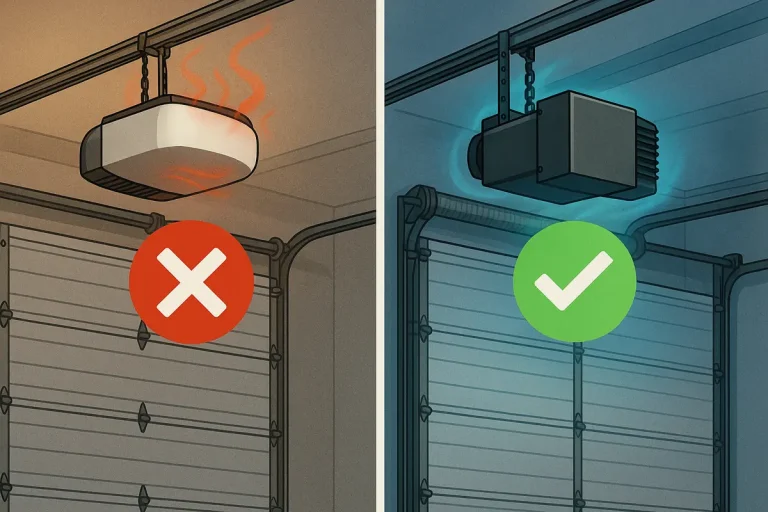
Garage door motors incorporate internal bimetallic thermal overload protection switches engineered to cut power when motor windings reach critical thresholds between 130°F and 140°F (55°C–60°C). This automatic cutoff prevents internal copper insulation from melting and protects home electrical circuits from overload hazards.
When a thermal trip is triggered, the motor cuts power instantly. If your garage door opener has power but not working, simply cycling electrical breaker switches or unplugging the unit will not override the lockout; the physical motor head must cool down below 110°F, which typically requires 20 to 30 minutes.
Extreme ceiling heat also accelerates start capacitor breakdown. Elevated temperatures cause dielectric fluid degradation, forcing the capacitor to draw up to 200% more starting current and causing extreme heat spikes within the first 2 seconds of motor engagement. Understanding how to reset garage door opener units after thermal events ensures you accurately distinguish between temporary safety lockouts and permanent hardware damage.
Duty Cycles & Motor Thermodynamics: Residential vs. Commercial Limits
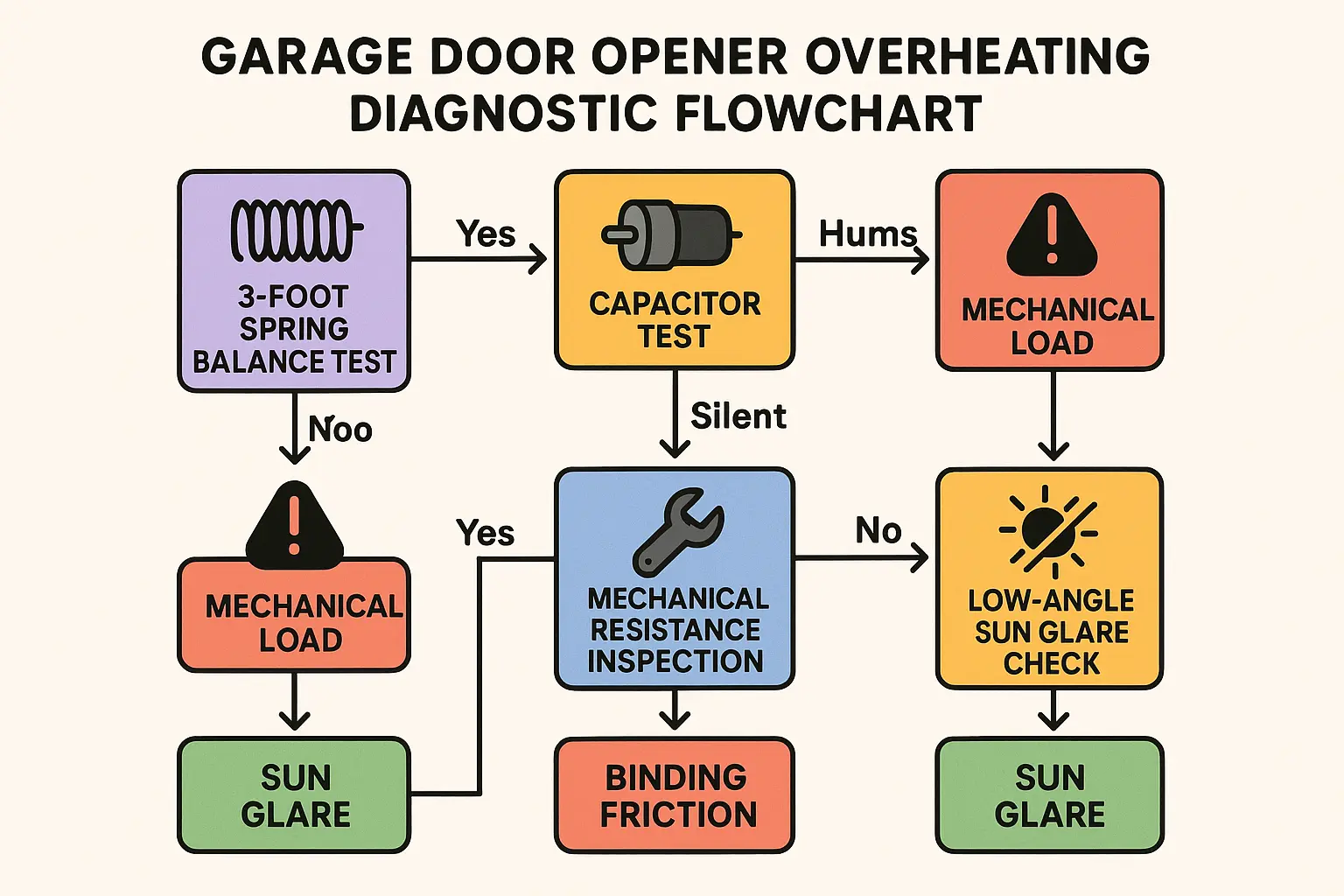
Standard residential AC induction motors utilize Class A insulation and intermittent-duty ratings calculated for 8 to 10 cycles per hour under standard test conditions (77°F). However, when ambient ceiling pockets hover near 115°F+, allowable duty margins drop by 50% to 70%. Under these conditions, safe operation drops to just 3 or 4 consecutive cycles per hour before triggering thermal shutdowns.
Conversely, modern DC brushless motors deliver 30% to 40% higher electrical-to-mechanical efficiency. They produce far less operational waste heat and utilize soft-start/soft-stop pulse-width modulation (PWM) technology to eliminate initial electrical current surges. For busy households or commercial properties facing intense heat exposure, transitioning to a heavy-duty unit like a liftmaster commercial garage door opener with continuous-duty rating offers long-term immunity against summer heat lockout.
Master Diagnostic Flowchart: Why Is Your Opener Overheating?
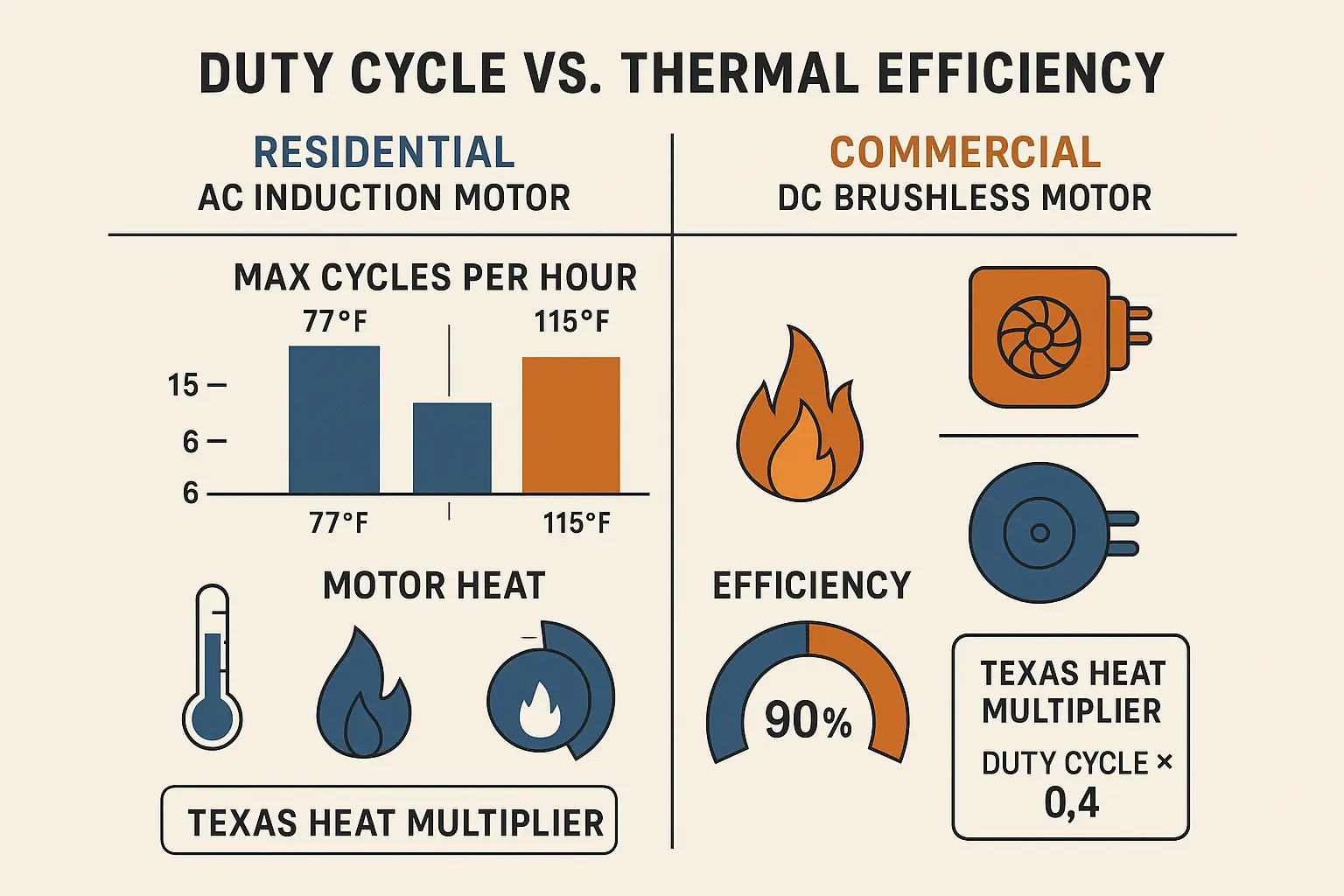
Follow this diagnostic protocol to determine why your system is overheating:
- Perform the 3-Foot Balance Test: Disengage the emergency release cord and manually lift the garage door 3 feet off the ground. If the door slips downward or feels heavy, your counterbalance springs have lost tension. Motors lifting dead door weight overheat exponentially faster. Schedule a professional garage door spring tension adjustment near me to rectify mechanical strain.
- Isolate Motor Noise: If the motor hums loudly without moving, the start capacitor has likely failed due to heat breakdown. If the unit is silent, the thermal switch is active and cooling down.
- Check Infrared Glare: Late afternoon Texas sunlight generates strong 850–950nm infrared light that can blind safety sensors, causing auto-reverse symptoms that resemble thermal lockouts. Follow standard garage door sensors troubleshooting steps to align optics or add sun shades.
- Inspect Drag & Friction: Check for warped tracks or dried-out petroleum grease. Comprehensive garage door motor troubleshooting reveals if mechanical binding is overloading your drive mechanism.
Strategic Hardware Selection: AC vs DC and Wall-Mount Solutions
Selecting the proper hardware grade prevents recurring summer thermal failures:
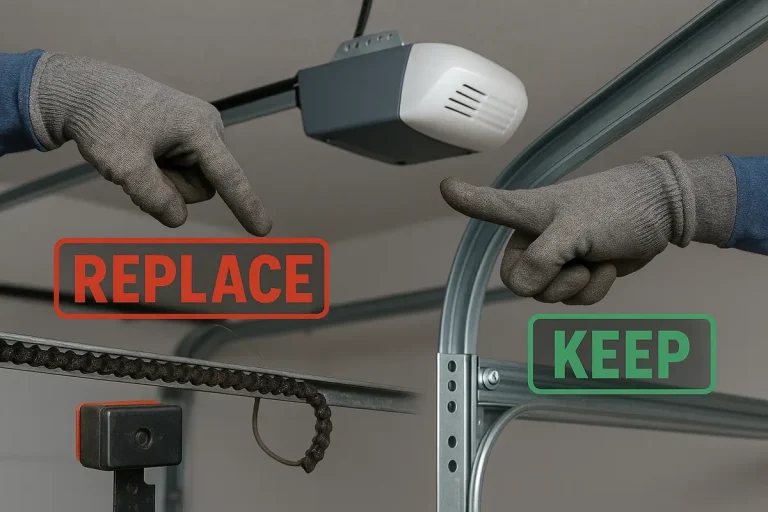
- Retail Consumer vs. Dealer Professional Grade: Consumer retail openers often rely on lightweight heat sinks and multi-piece rails that expand and flex under high ambient heat. Professional dealer-grade models feature heavy-duty solid steel rails and advanced logic board heat dispersion. Evaluate your model’s specifications using our chamberlain garage door opener troubleshooting and liftmaster garage door opener troubleshooting guides.
- Side-Mount (Jackshaft) Architecture: Moving away from ceiling-mounted openers entirely by installing a wall-mount jackshaft opener (such as the LiftMaster 8500W) relocates the motor assembly to the side wall—5 to 7 feet lower than ceiling pockets where temperatures remain up to 15°F cooler.
Frequently Asked Questions
How long does a garage door opener take to cool down after overheating?
An opener’s internal bimetallic thermal overload switch usually takes 20 to 30 minutes to reset. The internal motor head temperature must drop below 110°F before the switch reconnects electrical power. Unplugging the unit does not speed up this mechanical cooling process.
Why does my garage door opener work in the morning but fail in the afternoon?
Garage ceiling temperatures in Texas frequently reach 120°F to 135°F by late afternoon. This ambient heat reduces the motor’s thermal safety margin, causing normal cycle operation to push internal motor winding temperatures past the 130°F threshold and trip the thermal cutout.
Can replacing springs prevent my garage door opener from overheating?
Yes. Openers are designed to push and pull a balanced door, not lift its full physical weight. If broken or worn springs force the motor to lift unassisted weight, electrical current draw spikes, accelerating thermal overload within 1 to 2 continuous cycles.
You May Also Like