




Fixing Stripped Hinge Screw Holes on Wood Garage Doors: Structural Repair Guide
Published: Nov 3, 2026
A loose hinge on an interior bedroom door is a minor inconvenience. On a solid wood garage door weighing anywhere from 150 to over 350 pounds, a stripped hinge fastener is a structural liability. Every time your door cycles up and down—often 1,500 to 2,000 times per year—it exerts dynamic shear and tension loads on every hinge mounting point.
When wood screws spin endlessly without gripping, quick-fix hacks floating around the internet will fail quickly. Restoring stripped holes on cedar, redwood, or Douglas fir garage doors requires structural engineering methods that preserve both panel integrity and exterior curb appeal.
Critical Safety First: The "No-Touch Zone" Map
Before picking up a screwdriver, you must understand where spring tension lives on your door. Attempting repairs on high-tension components can cause severe impact injuries.
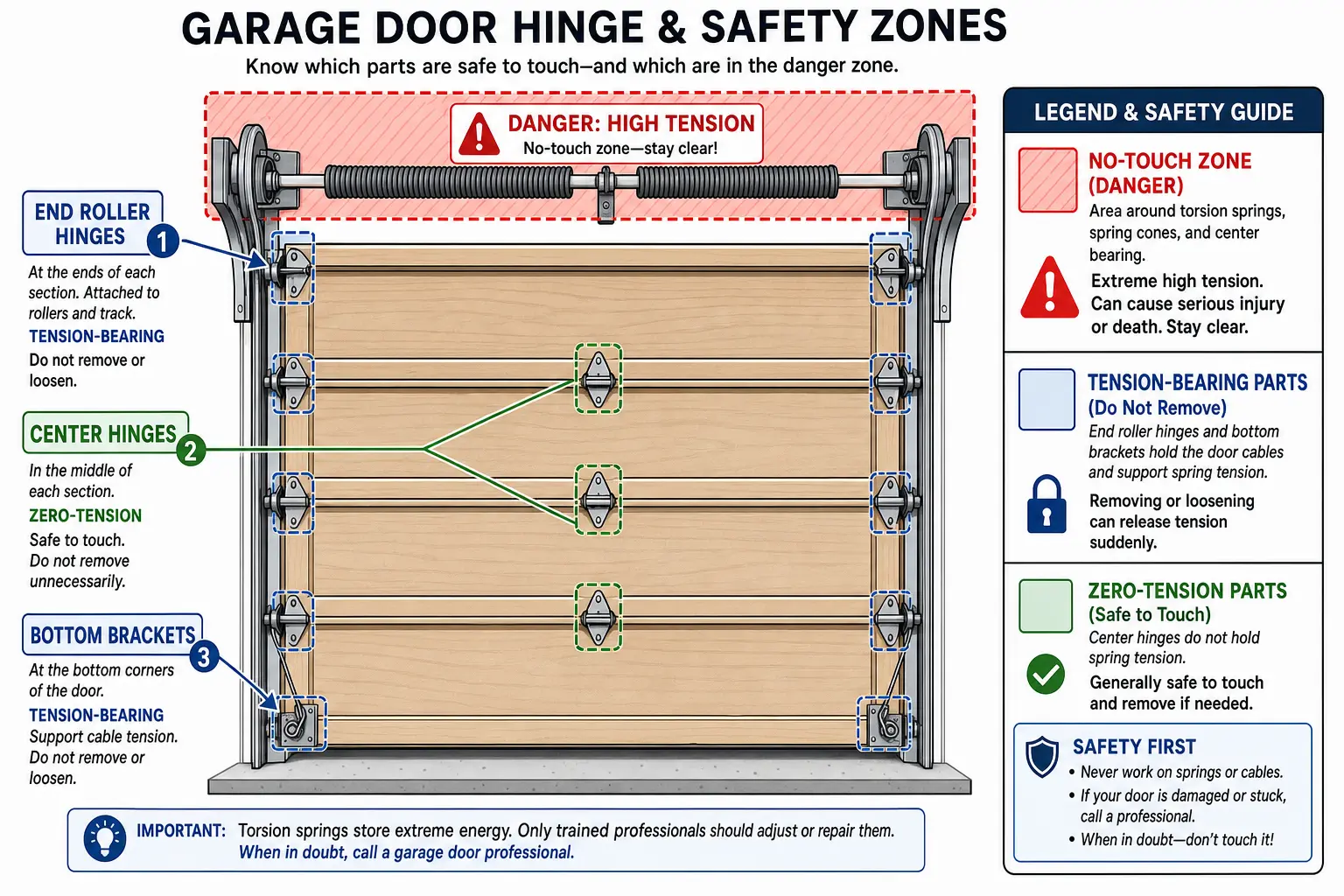
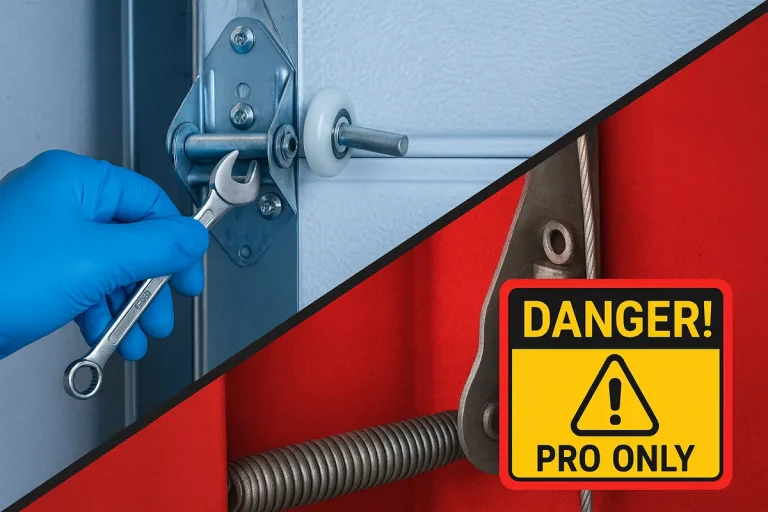
Center panel hinges hold section panels together and operate under zero direct cable tension, making them safe for DIY repair. However, bottom corner brackets and top roller fixtures are directly anchored to counter-balance lift cables. Understanding why are garage door springs dangerous helps prevent accidental releases of stored mechanical force. If a stripped screw is located on a bottom fixture or high-tension bracket, leave the door closed and consult a trained technician before backing out any hardware.
Why Quick DIY Hacks Fail on Heavy Wooden Doors
Popular internet hacks suggest stuffing stripped holes with toothpicks, matchsticks, or plastic drywall anchors coupled with standard yellow wood glue or super glue. On lightweight interior doors, these fixes might hold. On a heavy exterior wooden garage door, they fail rapidly due to three mechanical factors:
- Softwood Fiber Collapse: Toothpicks are made from soft birch scraps. Most custom wood doors are constructed from softwoods like Western Red Cedar (Specific Gravity 0.35–0.38) or Douglas Fir (SG 0.45–0.50). Softwood-on-softwood bonds offer weak pullout resistance (~180 lbs/inch) under heavy vibration.
- Glue Fatigue: Standard Polyvinyl Acetate (PVA) wood glue requires tight clamping pressure (0.002-inch gaps) to form a structural bond. In blown-out, oversized screw holes, PVA glue cures with internal voids, breaking down under dynamic shear within 30 to 90 days.
- Thermal Cycling: Exterior doors endure extreme temperature swings and humidity changes, causing low-grade adhesive bonds to crack and release.
MOFU DECISION MATRIX: Selecting Your Repair Strategy
Selecting the right repair depends on panel wood quality, hole damage, and whether you want to conceal hardware on the door’s exterior face.
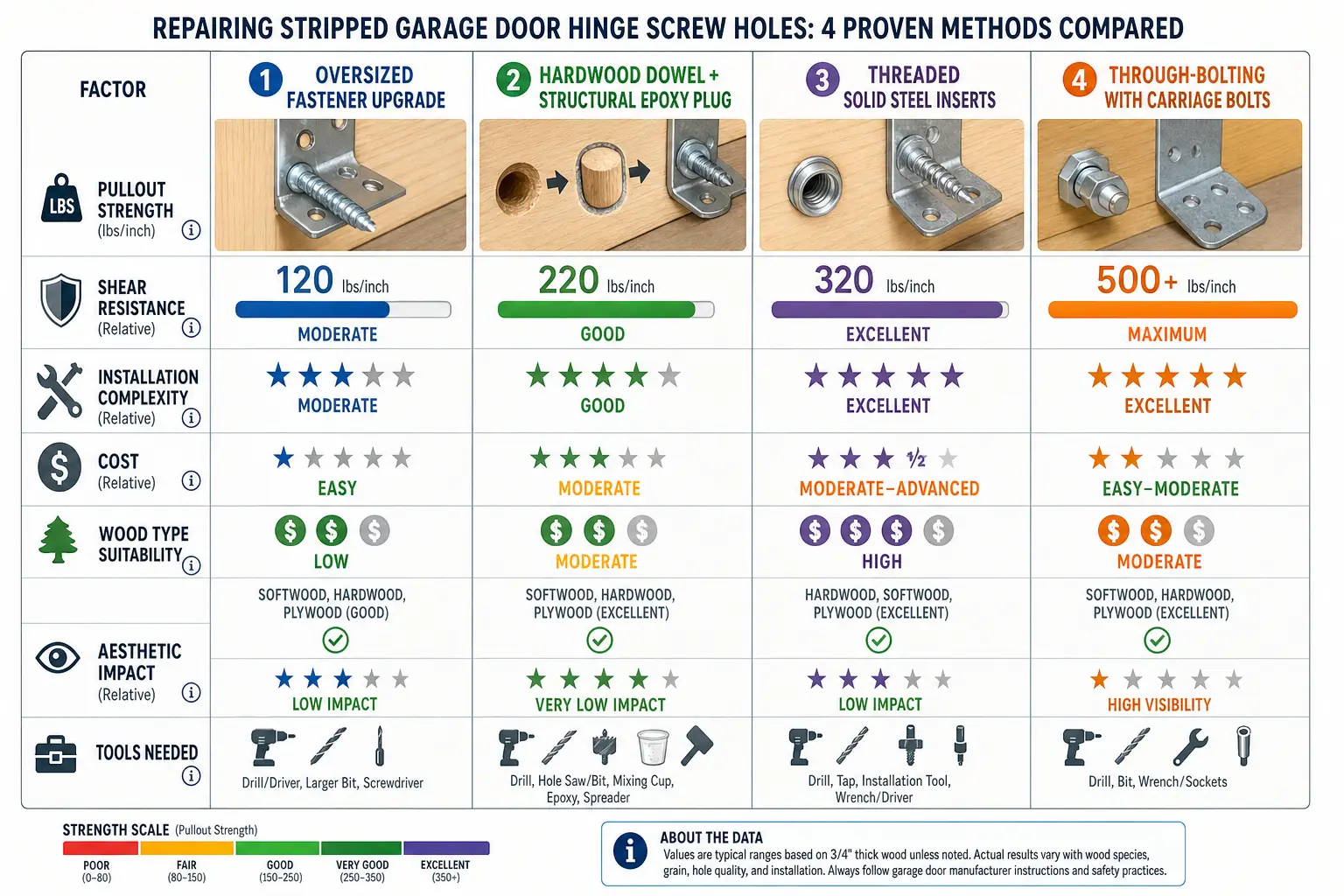
For light strip-outs, step up from a #10 to a #14 lag screw. For moderate damage where you must preserve the front facade, use a hardwood dowel with structural epoxy. If structural degradation extends beyond the screw area, installing garage door panel reinforcement or utilizing through-bolts with backing plates provides maximum clamping power.
STEP-BY-STEP REPAIR PROTOCOLS: Protocol A - Hardwood Dowel & Epoxy Re-Core
This protocol restores localized holding strength exceeding 500 lbs/inch by embedding high-density hardwood (Oak or Beech, SG 0.64+) into the softwood panel using gap-filling two-part marine epoxy (>2,000 PSI shear strength).
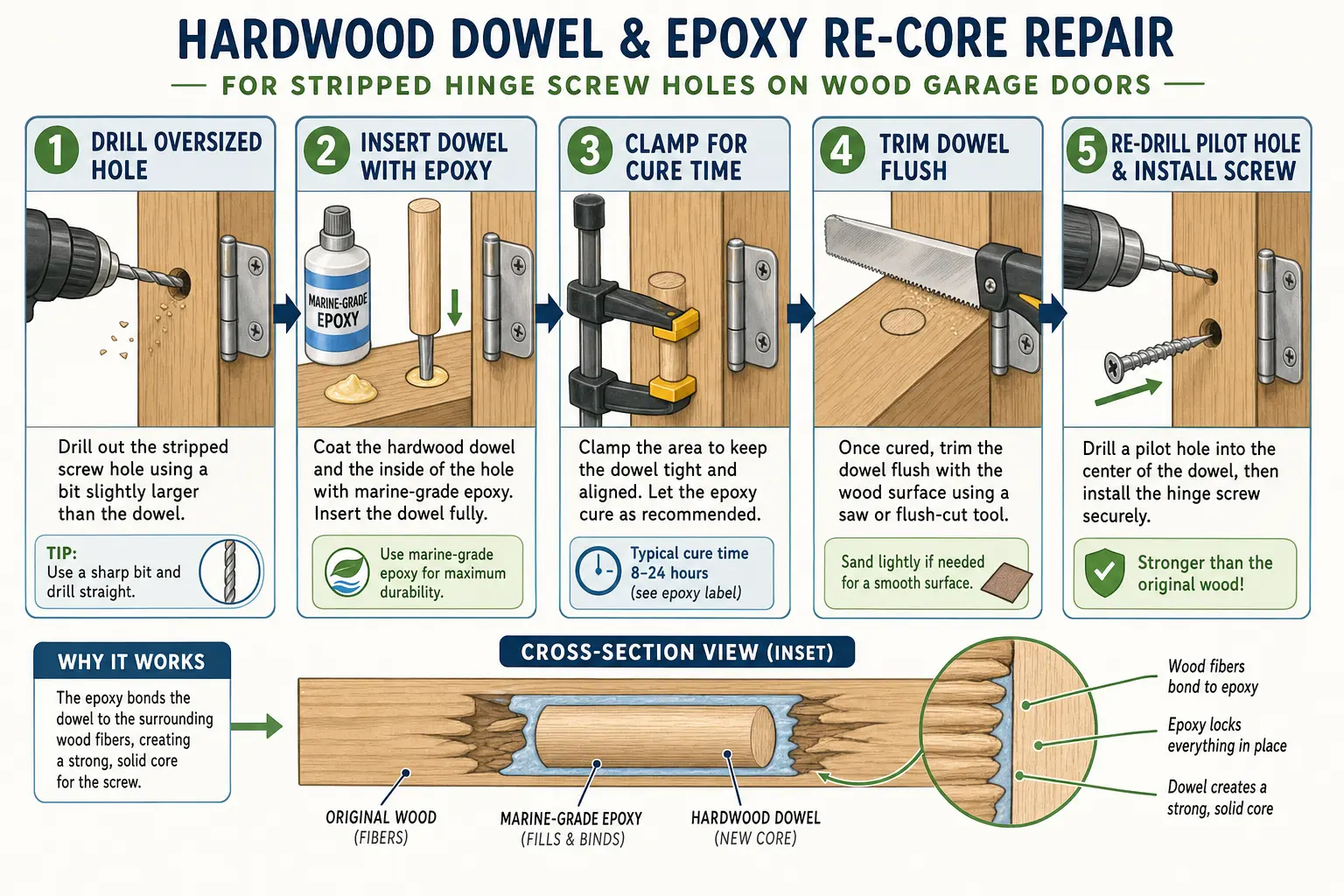
- Remove the Hinge: Support the panel section and unscrew the hinge. Review standard types of garage door hinges to mark positioning clearly.
- Bore out Damaged Wood: Use a 3/8-inch or 1/2-inch drill bit to bore out all pulverized wood fibers to a depth of 1 to 1.5 inches. Vacuum out all dust.
- Inject Structural Epoxy: Mix two-part structural epoxy and coat both the inside of the hole and an Oak dowel plug.
- Drive and Trim Dowel: Tap the dowel firmly into the hole until flush. Allow the epoxy to cure fully per manufacturer specs, then cut any excess dowel flat using a flush-cut Japanese hand saw.
- Pilot Drill and Reinstall: Center-punch the dowel face, drill a proper pilot hole, and fasten your hinge screws securely without over-torquing.
If you discover crumbly, dark fibers during boring, you may be dealing with moisture rot rather than simple mechanical stripping. Reviewing protocols for wooden garage door repair will help you evaluate structural rot before mounting hardware.
Evaluating DIY Capabilities vs. Professional Service
When evaluating can i do diy garage door repair, consider your tools, physical safety, and available time. Re-coring center hinges on stable wood panels is an accessible weekend project. However, if multiple hinges are failing simultaneously, panels show sagging, or stripped holes reside on bottom tension fixtures, bringing in a seasoned professional protects your investment.
At Up & Down Garage Doors, our family-owned business brings over 15 years of hands-on experience across multiple states. Whether you need precise hardware re-anchoring, custom panel restoration, or 24/7 emergency support, our licensed technicians provide honest guidance and upfront pricing.
Frequently Asked Questions
Can I use plastic drywall anchors in a wood garage door?
No. Plastic anchors depend on hollow drywall cavity expansion or soft friction grip. The violent vibration and shear pull experienced by an operating overhead garage door will pull plastic anchors straight out of the wood panel.
What size drill bit should I use for drilling dowel pilot holes?
Select a pilot drill bit that matches the solid root diameter of your wood screw, excluding the outer threads. For a standard #14 wood screw, a 5/32-inch pilot bit creates ideal thread engagement in oak dowels.
How do I know if my loose hinge is caused by wood rot?
Insert an awl or flathead screwdriver into the stripped screw hole and press firmly. If the tool sinks effortlessly into soft, spongy wood or yields damp crumbly fibers, moisture rot has compromised the panel interior.
You May Also Like