




Opener Overheating in Texas Heat: Thermal Protection and Duty Limits
Published: Nov 2, 2026
It is 4:30 PM on a 102°F July afternoon in Texas. You pull into your driveway, hit your remote, and your garage door lifts halfway before suddenly shutting off. The motor hums briefly, then goes completely silent.
This scenario plays out across thousands of Texas homes every summer. When your garage door fails during peak heat, it is rarely an act of randomness. Instead, it is your opener’s built-in thermal protection system responding to extreme environmental stress. Understanding why this happens—and evaluating whether your unit needs maintenance, environmental adjustment, or an upgrade—is essential to preventing summer lockouts.
Thermal Mechanics: Why Garage & Gate Openers Overheat
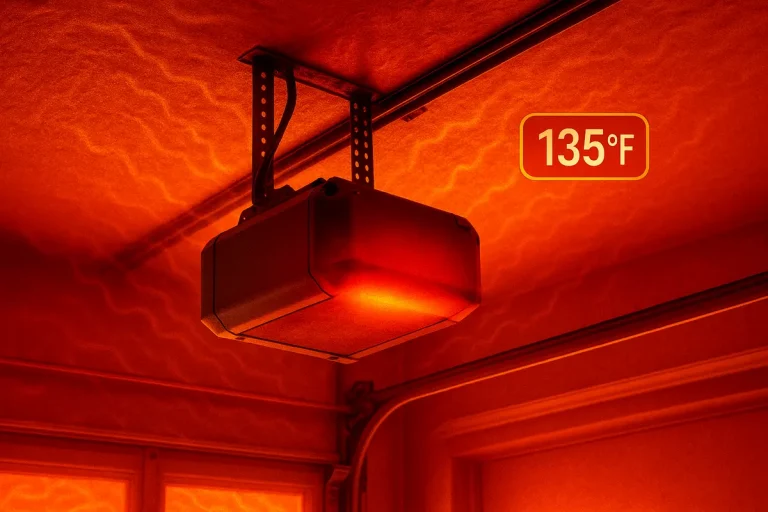
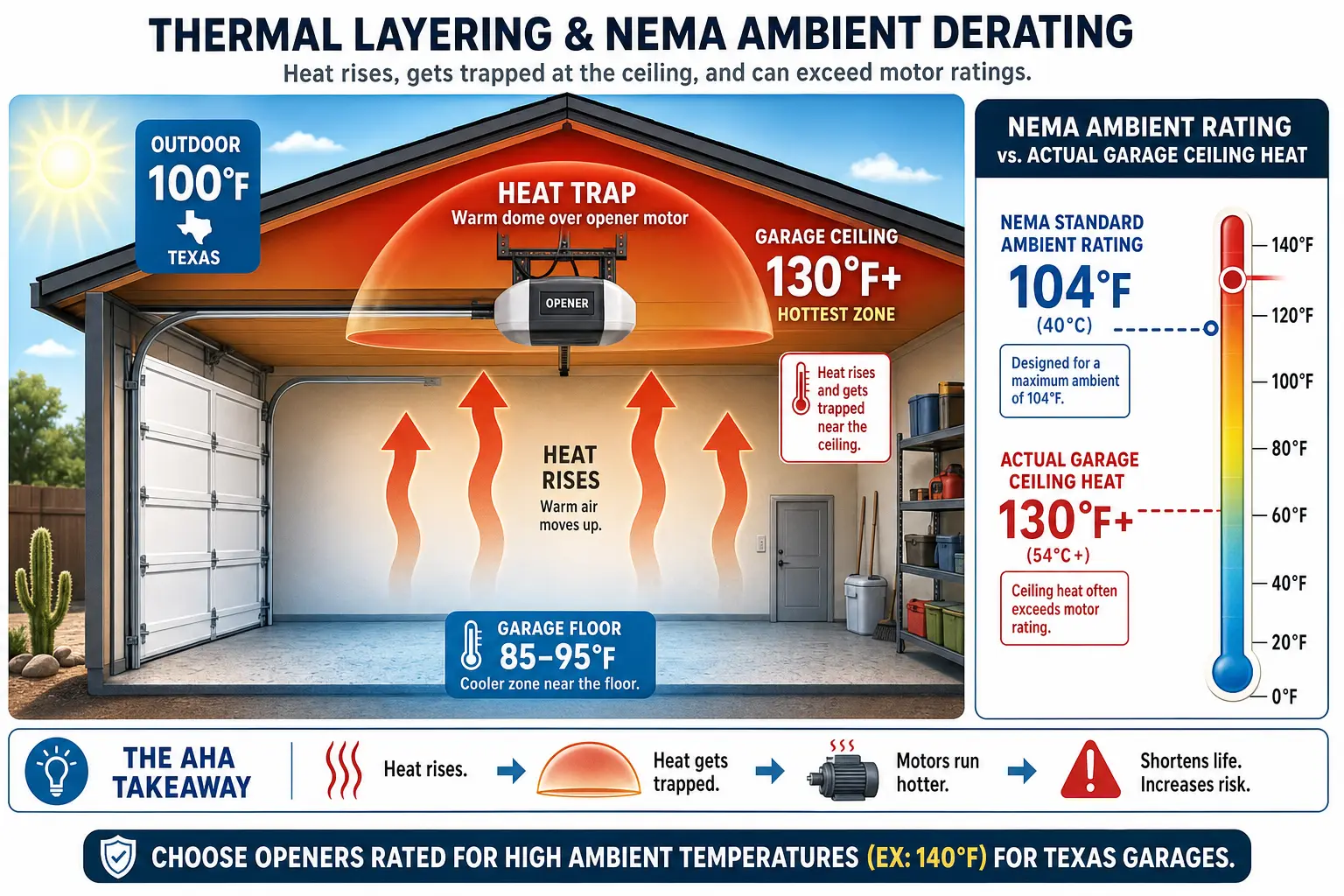
Garage ceiling space acts as a thermal trap. While ambient outdoor temperatures in Texas routinely hit 100°F to 105°F, trapped ceiling air frequently reaches 120°F to 140°F due to attic radiant heat gain and roof exposure. Dark-colored garage doors exacerbate this issue by absorbing up to 80% of solar radiation, transferring massive thermal energy directly into the tracks and opener rail.
Standard residential motor specifications operate under NEMA (National Electrical Manufacturers Association) guidelines, which baseline maximum ambient operating temperatures at 104°F (40°C). When ceiling air exceeds this baseline by 20°F to 36°F, the motor operates outside its designed thermal window from the moment it starts.
Three primary mechanical and electrical factors drive summer thermal lockouts:
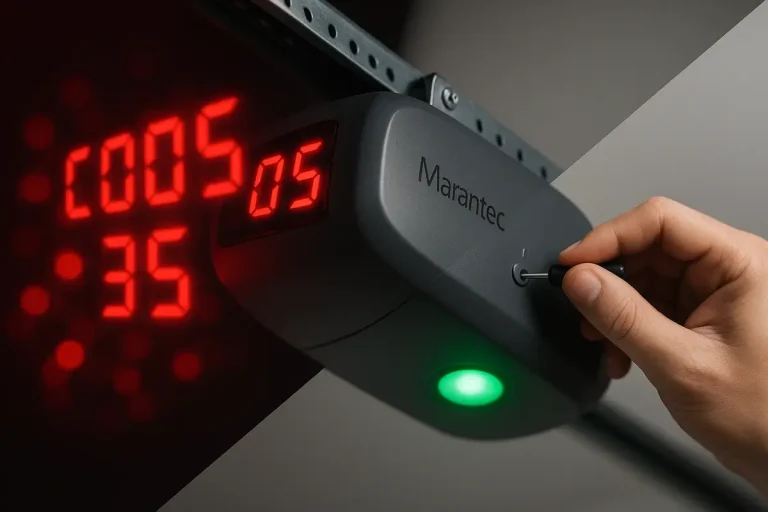
- Bi-Metal Thermal Overload Trips: To prevent internal motor windings from catching fire, manufacturers install a bi-metal overload switch. When internal winding temperatures reach approximately 257°F (125°C), the bi-metal strip bends, cutting power. It requires 20 to 45 minutes of cooling airflow before resetting.
- Capacitor Degradation (The 18°F Rule): AC motor start capacitors are highly sensitive to heat. Electrical engineering standards show that for every 18°F (10°C) increase above rated operating temperature, a capacitor’s operational lifespan decreases by 50%. A degraded capacitor forces the motor to draw higher current, accelerating thermal overload.
- Friction & Lubricant Breakdown: Standard petroleum sprays break down and evaporate in extreme heat. Unlubricated metal-on-metal friction combines with thermal expansion of steel tracks, forcing the motor to work significantly harder and generate excess internal heat.
AC vs. DC Motors: Thermal Resilience & Duty Cycle Comparison
Motor architecture directly dictates how an opener handles heat. Traditional AC split-phase induction motors draw heavy inrush current upon startup. This surge creates substantial internal resistance and heat. Most residential AC units feature an intermittent duty cycle of 15% to 20%, meaning they can safely operate for only 3 to 5 continuous cycles per hour under high ambient thermal load.
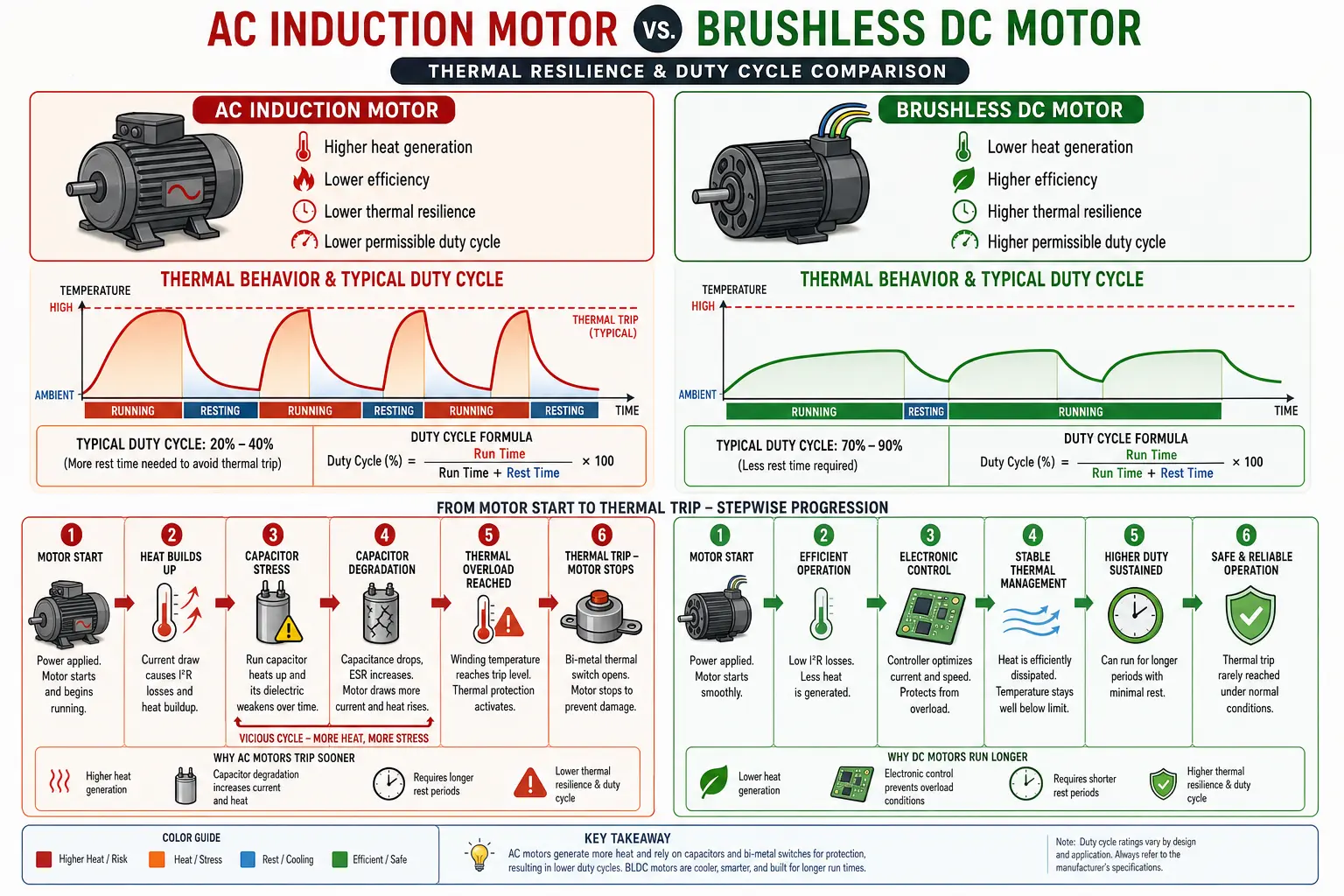
By contrast, modern brushless DC motors utilize variable-speed soft start and soft stop electronics. By eliminating initial current spikes, DC motors run cooler and offer higher duty cycle thresholds. Digital current monitoring dynamically adjusts power output, protecting internal components without tripping physical bi-metal switches.
Diagnostic Matrix: Thermal Overload vs. Component Failure
Determining whether your system suffers from heat lockout or severe mechanical damage requires systematic evaluation:
| Symptom | Primary Cause | Immediate Action |
|---|---|---|
| Motor stops mid-cycle; completely dead for 30 minutes | Thermal overload protector tripped | Allow 45 min cool-down. Check track alignment and lubrication. |
| Motor hums continuously but door fails to lift | Failed start capacitor or broken spring | Inspect springs. Professional garage door spring tension adjustment or capacitor repair required. |
| Door moves slowly and noisily in late afternoons | Thinned lubricant & thermal track expansion | Apply high-temp synthetic silicone lubricant. |
| System opens door partially, reverses, and flashes lights | Mechanical binding or photo-eye misalignment | Check balance; schedule diagnostic garage door repair. |
If your system experiences a situation where the garage door motor running but door not opening, the issue likely stems from stripped drive gears or disengaged trolley assemblies damaged by prolonged heat friction.
Evaluating Your Options: Repair, Modify, or Upgrade?
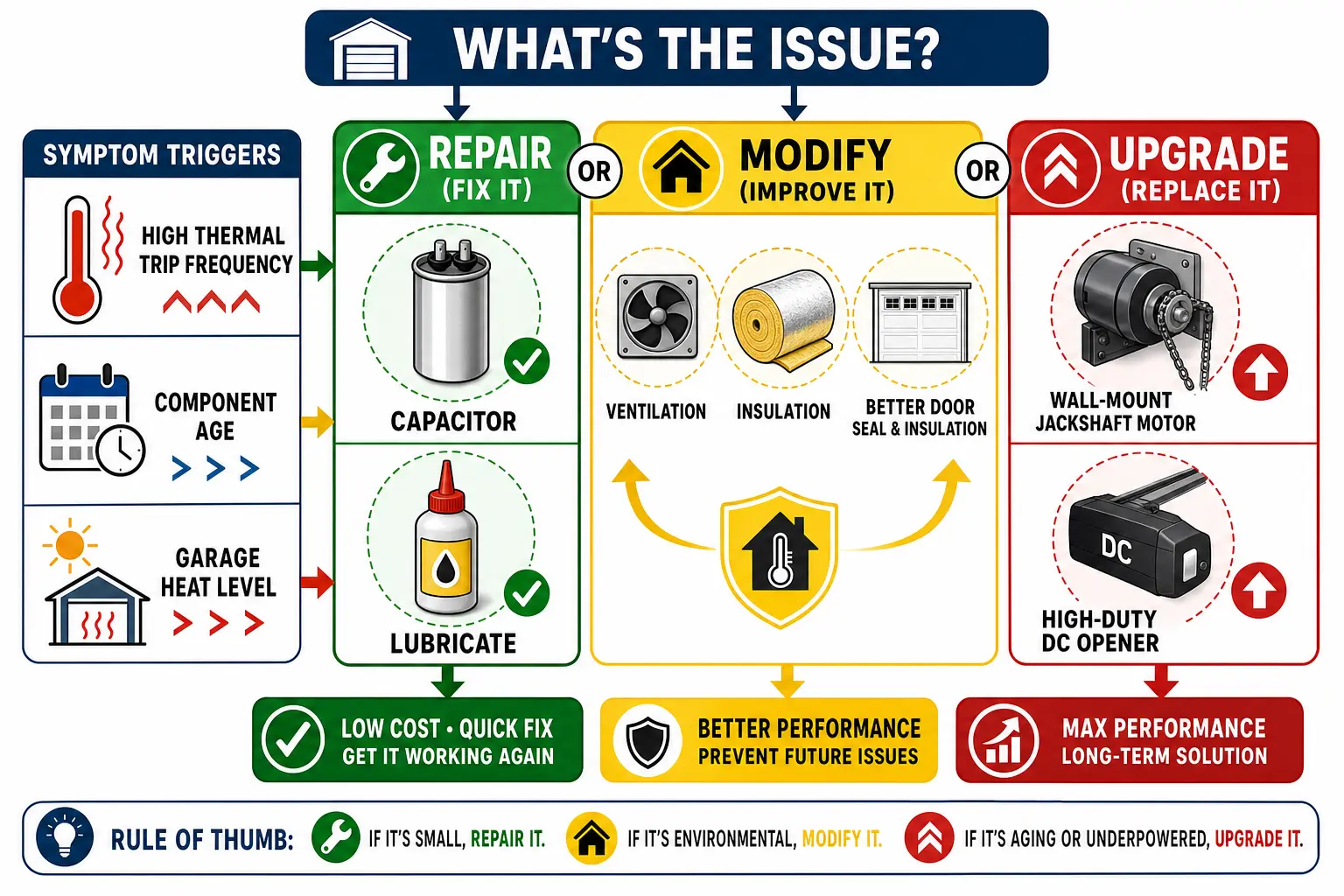
When evaluating recurring heat lockouts, homeowners face three distinct paths:
Option A: Professional Maintenance & Repair
If your opener is under seven years old and only trips during peak heat waves, basic targeted repairs work best. Replacing a heat-stressed start capacitor and applying high-temperature synthetic silicone grease can restore efficient operation. Professional inspection ensures proper spring counterbalancing, reducing mechanical load on the motor.
Option B: Thermal Environment Modification
Lowering ambient temperatures protects your entire garage ecosystem. Installing radiant barriers, attic ventilation fans, or quality garage door insulation dallas products can reduce interior garage temperatures by up to 20°F, bringing ceiling air back within standard NEMA motor limits.
Option C: System Upgrades to High-Duty DC Operators
For multi-vehicle households or properties with heavy insulated doors, replacing an aging AC opener with a modern DC system offers a permanent solution. Professional automatic garage door installation featuring wall-mount (jackshaft) units completely eliminates ceiling heat exposure by mounting the motor low on the wall, well below the thermal ceiling trap.
Buyer’s Guide: Heat-Resistant Openers for Texas Climates
When selecting a replacement opener built to handle severe climate demands, prioritize these features:
- Brushless DC Motor Architecture: Provides soft-start efficiency and high duty cycle endurance.
- Wall-Mount (Jackshaft) Mounting: Moves the motor away from 130°F ceiling heat pockets down to cooler side walls.
- Commercial-Grade Thermal Ratings: Look for units specified for continuous duty or reinforced internal heat sinks.
Whether you need quick garage door repair houston tx, reliable service across garage door repair dallas county, or emergency commercial door support like commercial garage door repair Texas, choosing specialized local expertise ensures long-term operational performance. When unexpected thermal lockouts strike, quick access to emergency garage door repair restores home security without delay.
Summary Troubleshooting Checklist
When your opener overheats during a Texas heatwave, follow these steps:
- Disconnect Power Safely: Unplug the opener unit to allow internal electronics to discharge.
- Engage Manual Release: Pull the emergency red cord to operate the door manually if necessary.
- Allow 45-Minute Cool Down: Do not repeatedly hit the wall button; bi-metal switches require time to reset.
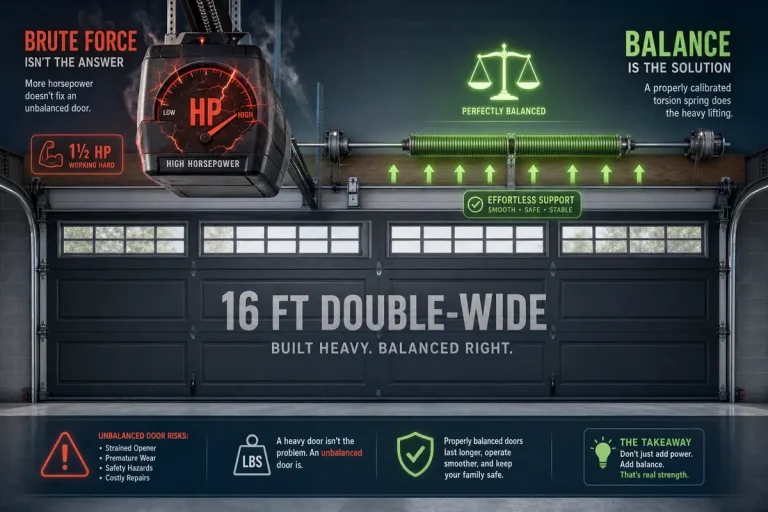
- Test Mechanical Balance: Lift the door manually to waist height. If it falls or feels heavy, your springs are out of balance.
- Schedule Expert Diagnostics: Have a licensed technician evaluate capacitor health, motor current draw, and mechanical resistance.
Frequently Asked Questions
Why does my garage door opener stop working only in the late afternoon?
Late afternoon is when ambient garage temperatures peak due to ceiling heat stacking and solar radiation on garage door panels. This combined heat drives internal motor winding temperatures past the bi-metal thermal trip threshold of roughly 257°F, causing an automatic safety shutdown.
How long does it take for a garage door motor thermal switch to reset?
An internal bi-metal thermal switch typically requires 20 to 45 minutes to cool down and reset automatically. Attempting to operate the motor before it has fully cooled can re-trigger the protection circuit or cause permanent damage to the motor windings.
Is a wall-mount opener better for hot Texas garages?
Yes. Wall-mount (jackshaft) openers mount on the wall beside the garage door, entirely bypassing the 120°F to 140°F heat layer trapped near uninsulated garage ceilings. Operating in cooler wall-level air significantly reduces thermal stress and extends opener life.
You May Also Like