





Frost Inside Full-View Glass Panels: Diagnostic & Fixes
Published: Nov 25, 2026
Frost develops on the interior surface of full-view glass panels—including patio sliders, storm doors, and architectural garage doors—when warm, humid indoor air makes contact with a glass pane chilled below the freezing point, causing airborne moisture to condense and freeze. Pinpointing whether ice is accumulating on the room-facing surface or trapped between panes determines if the issue stems from indoor humidity or a compromised thermal envelope, preventing unnecessary frame replacements.
Primary Causes of Interior Panel Frost
-
Excess indoor moisture: Everyday activities like cooking, showering, running laundry, or storing wet gear elevate interior humidity levels that rapidly condense on cold glass.
-
Chilled glazing & thermal leaks: Single-pane glass, aging insulated units, or degraded weatherstripping allow sub-zero exterior temperatures to drop the interior glass surface below freezing.
-
Restricted air circulation: Closed window coverings, heavy drapes, or nearby objects trap pockets of stagnant, cold air directly against the panel.
-
Inter-pane seal failure (Diagnostic Check): If frost or fog appears between double- or triple-pane glass rather than on the room-facing surface, the insulated glass unit (IGU) seal has failed and requires glazing repair rather than humidity control.
Immediate Steps to Stop & Prevent Buildup
-
Regulate interior humidity: Run exhaust fans during high-moisture tasks and use a dehumidifier to maintain indoor relative humidity between 30% and 50% (dropping lower during extreme cold snaps).
-
Restore warm airflow: Open blinds or curtains partially, keep obstructions away from the door or window, and direct warm air circulation across the glass surface.
-
Clear meltwater promptly: Wipe away thawing frost and standing condensation before moisture pools along frames, sills, or thresholds and triggers wood rot or mold.
-
Upgrade seals and glazing: Replace worn perimeter weatherstripping, seal frame drafts, or upgrade single-pane panels to thermally broken, insulated glass units.
Diagnostic Quick-Check: Location Matters
Not all panel frost stems from the same building envelope failure. Identifying where the ice accumulates dictates whether you need simple indoor humidity adjustments or specialized glazing service.
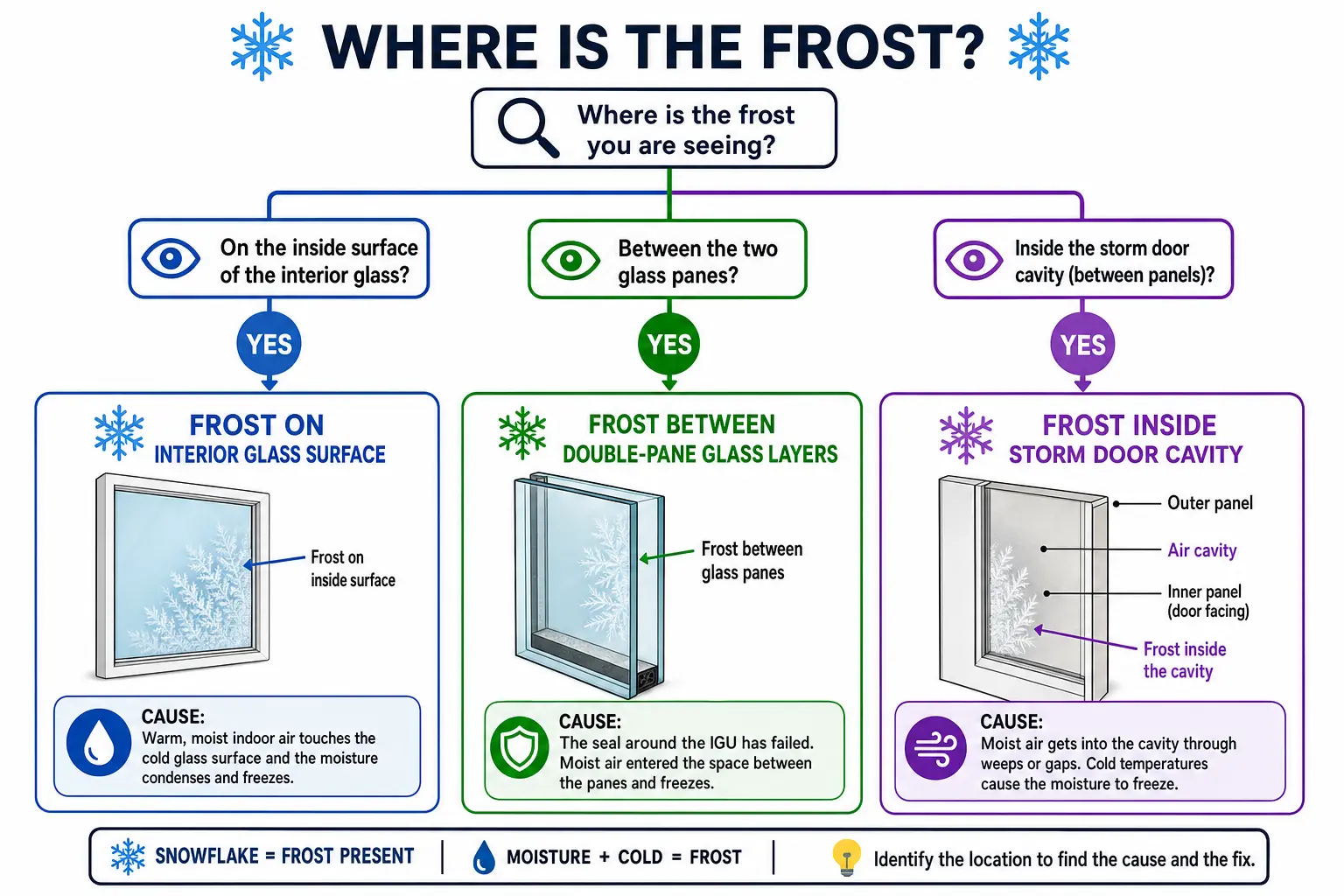
- Interior Surface Frost (Room-Side): Ice forms directly on the room-facing glass surface. Root Cause: High interior relative humidity combined with poor thermal bridging around cold frames.
- Inter-Pane Frost (Between Dual Panes): Moisture, haze, or ice crystals are trapped between sealed glass sheets. Root Cause: Permanent failure of the perimeter hermetic seal and desiccant saturation.
- Storm Door Cavity Frost: Heavy frost builds up in the air pocket between your primary entry door and storm panel. Root Cause: Warm interior air leaking past primary door seals into an unvented exterior cavity.
The Physics of Panel Frosting: Root Cause Analysis
Understanding frost formation requires looking at dew points and thermal dynamics within insulated glass units (IGUs).
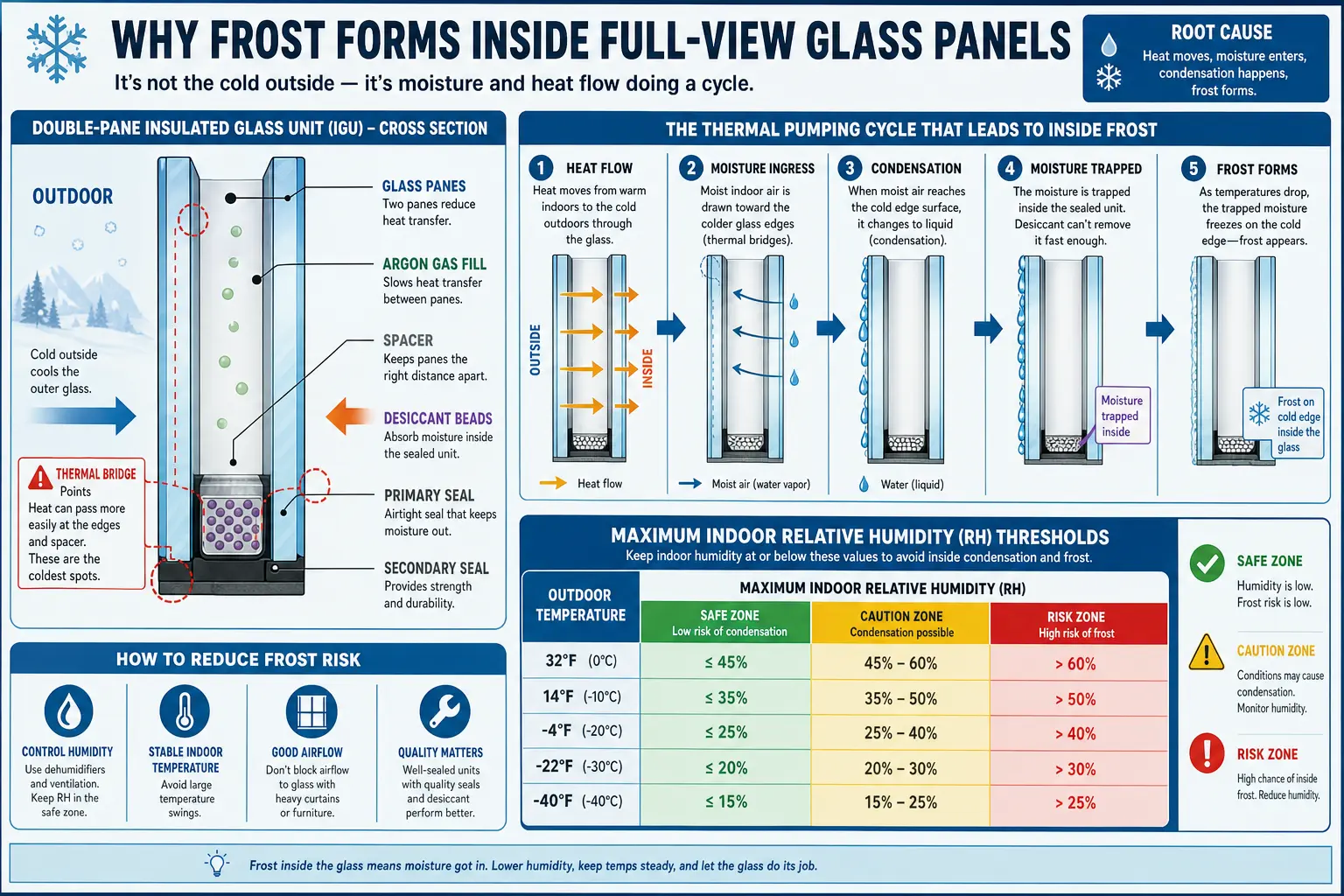
Sealed double-pane IGUs feature internal aluminum spacers packed with silica gel desiccant. This material boasts an extraordinary absorption surface area of nearly 7,200 sq ft per gram. Over years of exposure, daily heating and cooling cycles trigger “thermal pumping”—expanding and contracting the unit until ambient moisture enters the seal.
Once the desiccant reaches 100% capacity, water vapor condenses inside the panes. In freezing weather, this internal moisture crystallizes into white “silica snow” or distinct riverbedding patterns.
For modern full view garage doors, frost frequently originates at metal contact points. Non-thermalized anodized aluminum garage doors act as rapid thermal bridges, drawing heat away from glass perimeters. Additionally, when choosing between polycarbonate vs glass garage doors, glass provides superior clarity and scratch resistance but requires tight perimeter weatherseals to prevent edge freezing.
Safe Relative Humidity Thresholds
To prevent indoor surface frost, homeowners must lower indoor moisture levels as outside temperatures drop. According to ASHRAE standards, maintain these maximum indoor relative humidity (RH) levels during winter:
- 0°F (-18°C) Outdoor Temp: Maximum 25% Indoor RH
- -10°F (-23°C) Outdoor Temp: Maximum 20% Indoor RH
- -20°F (-29°C) Outdoor Temp: Maximum 15% Indoor RH
When interior humidity rises above these safety zones, air striking the cold glass rapidly drops below its dew point, forming surface ice.
Step-by-Step Resolution Pathways
Tier 1: Relative Humidity & Airflow Controls ($0–$50)
Run Heat Recovery Ventilators (HRVs) or dedicated dehumidifiers to lower indoor relative humidity. Position floor registers or booster fans toward low glass sills to eliminate stagnant air pockets.
Tier 2: Seal Restoration & Draft Proofing ($50–$200)
Inspect all perimeter gaskets. Recognizing the importance of garage door weather stripping is critical; intact side jambs and top bulb seals stop warm interior air from seeping into unheated door gaps. If bottom seals are stiff or cracked, knowing when to replace garage door bottom seal stops lower glass panels from icing up and prevents your garage door frozen shut issues during severe thaws.
Tier 3: Professional IGU Glass Insert Replacement ($200–$800+)
When internal IGU seals rupture, re-sealing in place is impossible. Certified technicians remove the glazing stops and replace only the double-pane glass insert, preserving your existing panel structure.
Repair vs. Defogging vs. Total Panel Replacement
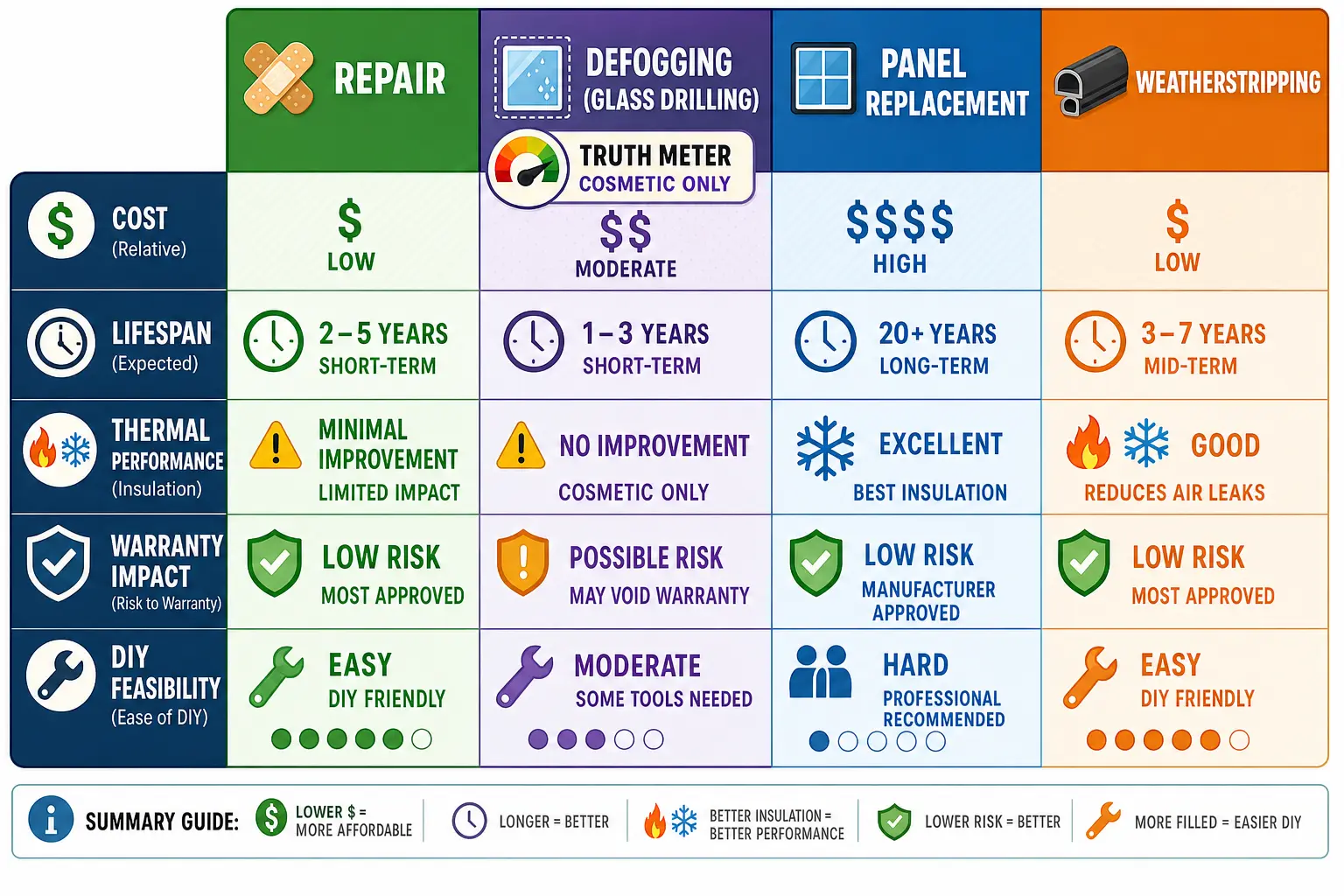
Property owners often evaluate commercial “glass defogging” (drilling micro-holes to vent internal fog). While cheap, drilling destroys insulating argon gas and leaves the glass unit vulnerable to permanent dirt staining.
When weighing a overall repair vs replace garage door or glass unit decision, national glass association data reveals:
- 75% of failed assemblies only require an IGU glass insert swap.
- 20% require sash or individual section replacement.
- Only 5% necessitate total frame replacement.
Replacing the insulated glass pack restores full thermal R-value and factory warranties at a fraction of the cost of a total door replacement.
Frequently Asked Questions
Will ice expanding inside dual-pane glass cause it to break?
Yes. Continuous freeze-thaw cycles create substantial outward pressure within the sealed cavity. Left unaddressed, expanding ice can stress-fracture tempered glass panels and distort surrounding aluminum or vinyl frames.
Can defogging kits permanently eliminate frost between glass panes?
No. Defogging merely provides a temporary cosmetic fix by allowing moisture to vent out of drilled holes. Because the internal desiccant remains saturated and the factory seal is broken, insulating performance is lost and frost will return during cold snaps.
Why does heavy frost form inside full-view storm door cavities?
Storm door ice occurs when warm room air escapes past worn primary door weatherstripping into the cold storm door cavity. Trapped against cold glass, this humidity condenses and freezes into heavy sheet ice. Replacing primary door seals resolves the problem.
You May Also Like
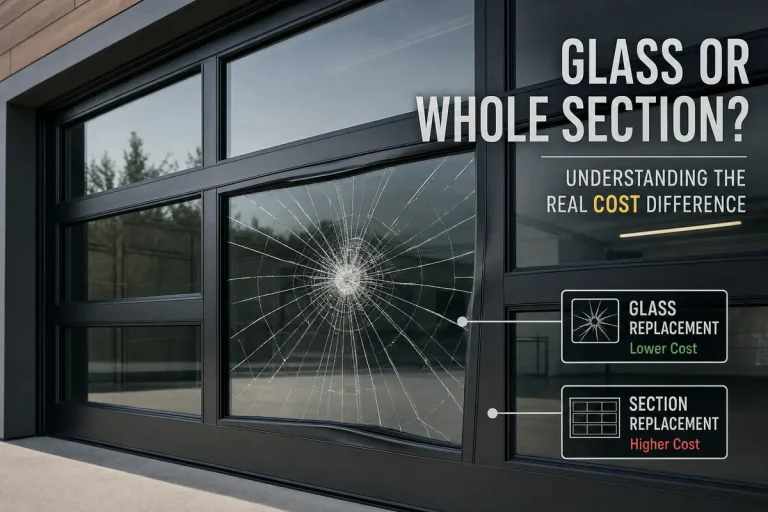
Cracked Glass in a Full-View Garage Door: Replace the Glass or the Entire Section?
Published Date: Nov 20, 2026
Carriage-House Overlay Delamination: Causes, Diagnostic Protocol & Repair Options
Published Date: Nov 9, 2026
Safe Fuel Storage Protocols: Managing Fire Hazards in the Residential Garage
Published Date: Sep 18, 2026