





Garage Door Blog
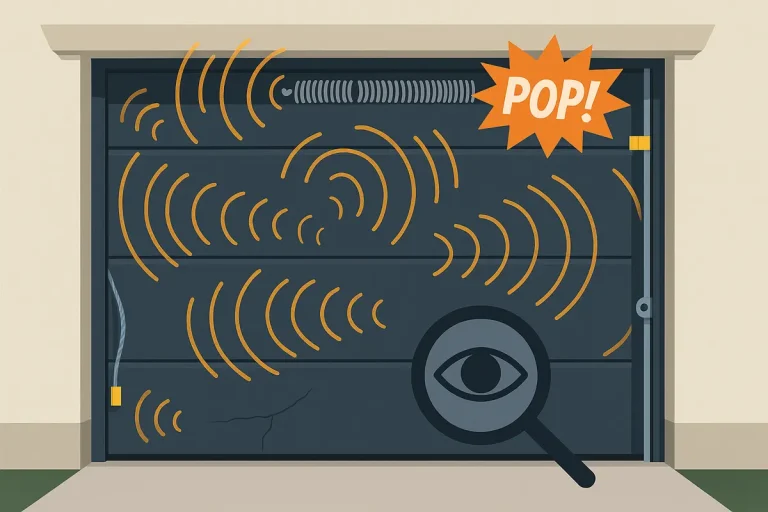
Your Garage Door Is Talking: A Homeowner’s Guide to Wear & Tear Signs
Your garage door speaks a language of its own. It’s a subtle dialect of creaks, groans, and jerky movements that are easy to ignore during the morning rush. But these aren’t just random noises—they’re early warnings. Listening now can mean the difference between a simple adjustment and a costly, middle-of-the-night emergency. Most homeowners don’t think […]
Published Date: Oct 26, 2026
Rollers Popping Out of the Track: Causes and Safe Repair
Rollers Popping Out of the Track: Causes and Safe Repair When a loud grinding noise shakes your garage and a roller pops free, the immediate instinct is to force the door back down or grab a pair of pliers. However, standard residential garage doors weigh between 150 and 350+ pounds. Pushing against a bound mechanism […]
Published Date: Oct 23, 2026
Opener Overheating in Texas Heat: Thermal Protection and Duty Limits
Opener Overheating in Texas Heat: Thermal Protection and Duty Limits Introduction: The Texas Garage Thermal Trap When ambient temperatures across Texas climb past 100°F during mid-summer afternoons, the area beneath your garage roof transforms into a severe heat trap. Uninsulated garages frequently record standing waist-height temperatures of 120°F, while upper ceiling pockets trap superheated radiant […]
Published Date: Oct 23, 2026
Emergency Commercial Garage Door Service: What Counts as Urgent
Emergency Commercial Garage Door Service: What Counts as Urgent When a commercial overhead door malfunctions outside regular operational hours, facility managers face a high-stress economic calculation: pay an after-hours emergency dispatch premium ($300 to $800+) or wait for standard business hours. Unlike residential garage door issues, commercial overhead door failures threaten operational continuity, worker safety, […]
Published Date: Oct 22, 2026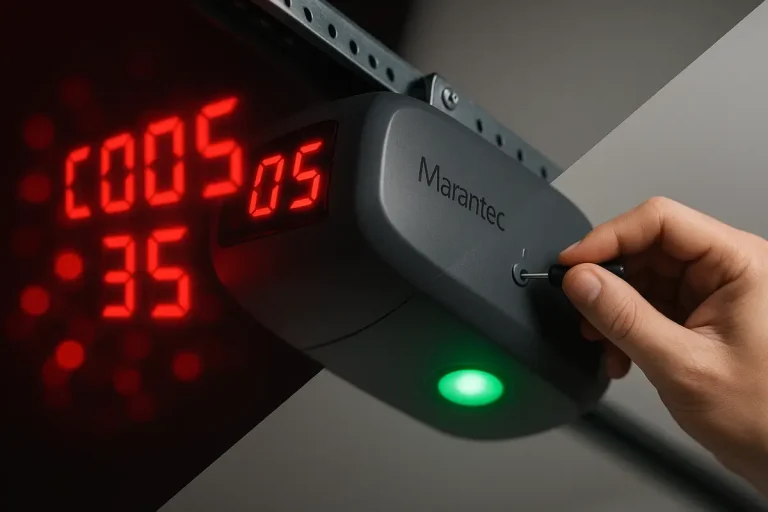
Definitive Marantec Garage Door Opener Troubleshooting & Decision Guide
Definitive Marantec Garage Door Opener Troubleshooting & Decision Guide Marantec garage door openers command respect across the industry for quiet German engineering, yet diagnosing a malfunction can test any homeowner’s patience. Whether operating a legacy M-Line unit (M4500, M4700) or a modern Synergy system (Synergy 260, 270, 370, 380), interpreting blink code arrays and digital […]
Published Date: Oct 22, 2026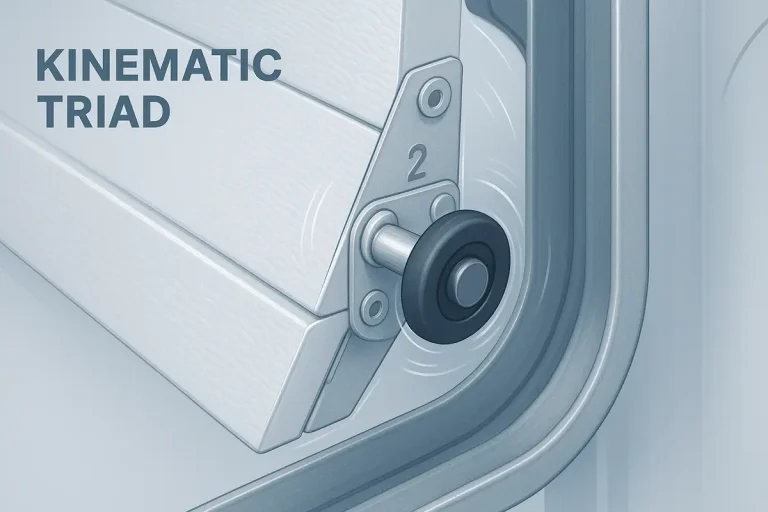
Sectional Garage Doors: How Sections, Hinges, and Rollers Work Together
Sectional Garage Doors: How Sections, Hinges, and Rollers Work Together When evaluating a malfunctioning or noisy garage door, homeowners often look at individual components in isolation. However, according to DASMA standards—which govern over 95% of North American residential and commercial doors—a sectional garage door functions as a single kinetic assembly. The interaction between door sections, […]
Published Date: Oct 21, 2026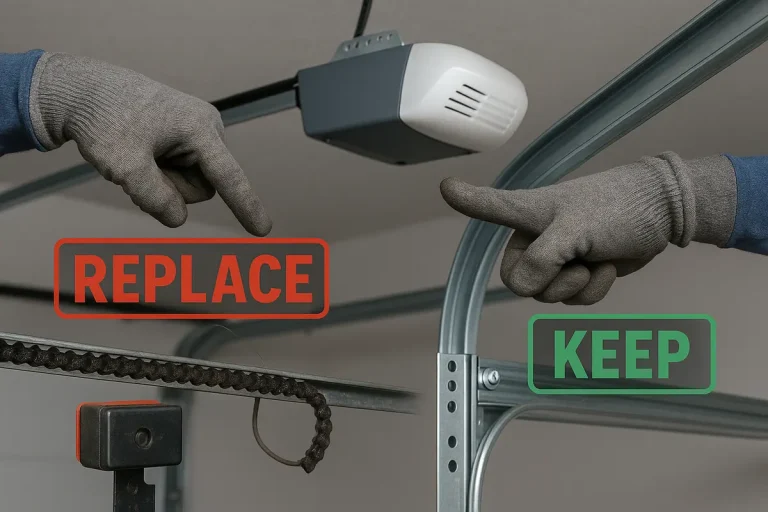
Replacing an Opener: What Gets Reused and What Gets Replaced
Replacing an Opener: What Gets Reused and What Gets Replaced When evaluating a new motor unit, homeowners usually encounter two extremes: service contractors claiming every single bolt must be torn out, or DIY forums advocating risky “motor-head swaps” onto incompatible legacy rails. Deciding whether you should repair garage door opener components or invest in a […]
Published Date: Oct 21, 2026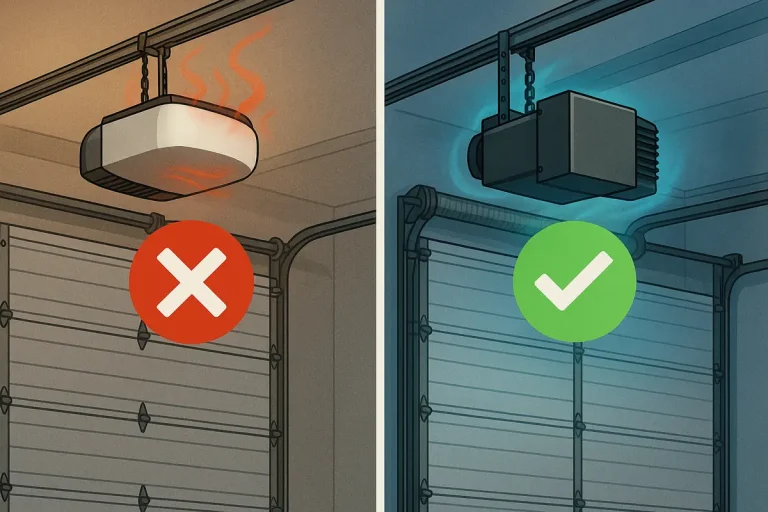
Residential vs. Commercial Opener Duty Cycles: Matching the Operator to the Door
Residential vs. Commercial Opener Duty Cycles: Matching the Operator to the Door Installing a heavy-duty residential operator on a light commercial bay door often seems like a practical cost-saving shortcut during initial procurement. However, facility managers and building operators quickly discover that this mismatch leads to premature motor burnout, costly operational downtime, and severe code […]
Published Date: Oct 20, 2026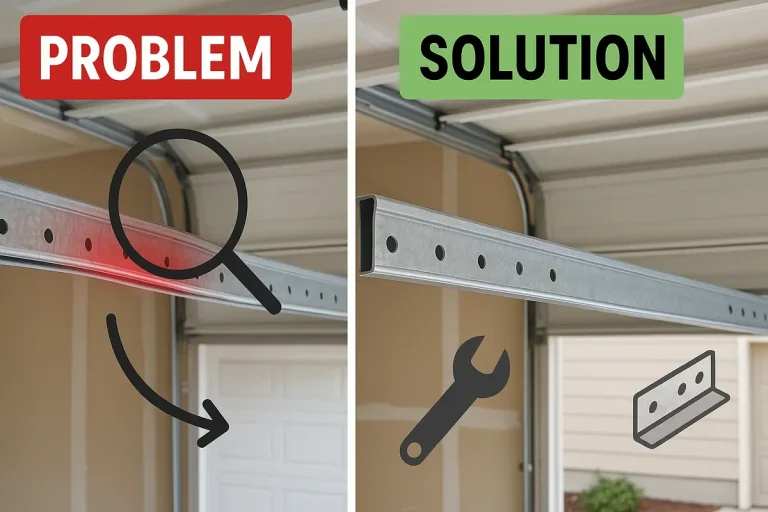
Opener Rail Bent or Sagging: Repair Options and Diagnostic Guide
When your garage door opener rail sags downward or bows violently during operation, evaluating your repair choices requires immediate clarity. Over 75% of online guides mistakenly confuse the central motor drive rail with the side roller tracks. If your issue involves the perimeter channels where rollers travel, you are dealing with a bent garage door […]
Published Date: Oct 20, 2026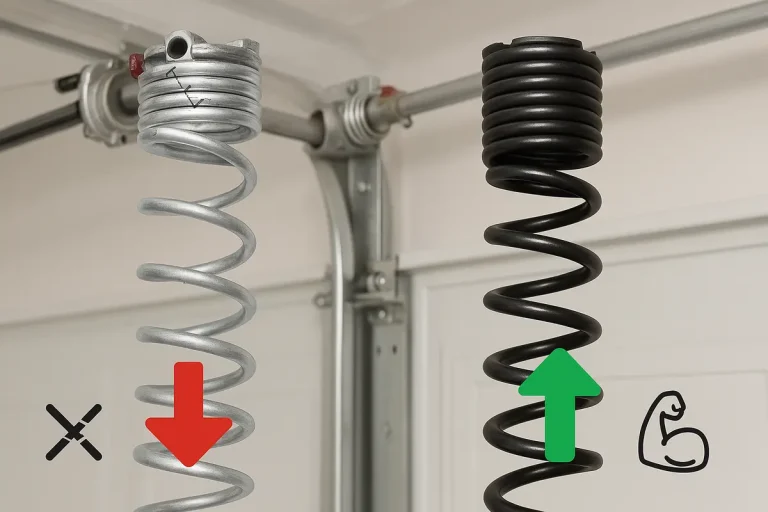
Oil-Tempered vs. Galvanized Torsion Springs: What Changes
Oil-Tempered vs. Galvanized Torsion Springs: What Changes Evaluating garage door torsion springs comes down to a critical balance between mechanical stability, environmental durability, and long-term operating costs. Homeowners and property managers comparing replacement options are often caught between sleek, silver galvanized springs and industrial, dark oil-tempered steel. While galvanized springs offer immediate aesthetic appeal and […]
Published Date: Oct 19, 2026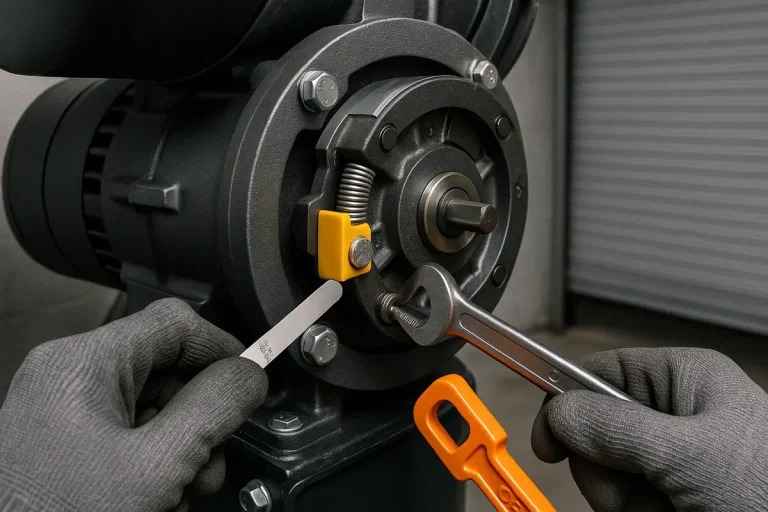
Commercial Door Motor Brake Adjustment: Stopping Drift and Overtravel
Commercial Door Motor Brake Adjustment: Stopping Drift and Overtravel When heavy industrial doors slide past their intended stop positions or crash into floor limits, facility operators often default to adjusting electronic limit switches. However, commercial jackshaft and gear-head operators do not rely on residential force knobs or logic board programming to stop motion. When a […]
Published Date: Oct 19, 2026
Smart Garage Security & Automation Hub: Evaluating Connected Entry Protection
Smart Garage Security & Automation Hub: Evaluating Connected Entry Protection Crime research indicates that nearly 9% of residential burglaries occur through garage doors, making this primary access point a central focus for modern home security upgrades. Homeowners evaluating automation options often face a confusing landscape of platform lockouts, conflicting protocols, and hidden subscription costs. Achieving […]
Published Date: Oct 16, 2026