




Keeping Mice Out: Garage Door Threshold Seals and Gap Fixes
Published: Sep 24, 2026
If you have discovered rodent droppings or chewed electrical wiring in your garage, you are likely realizing that standard traps only treat the symptom. The real challenge is physical exclusion. Because a garage door is a moving wall, it represents the single most vulnerable entry point in any home.
To secure this boundary permanently, you must shift your focus from temporary DIY quick-fixes to engineered, physical barriers designed to withstand rodent biology.
The 3-Point Garage Door Rodent Audit
Before purchasing any replacement hardware, you must run a physical diagnostic to locate where security has broken down.
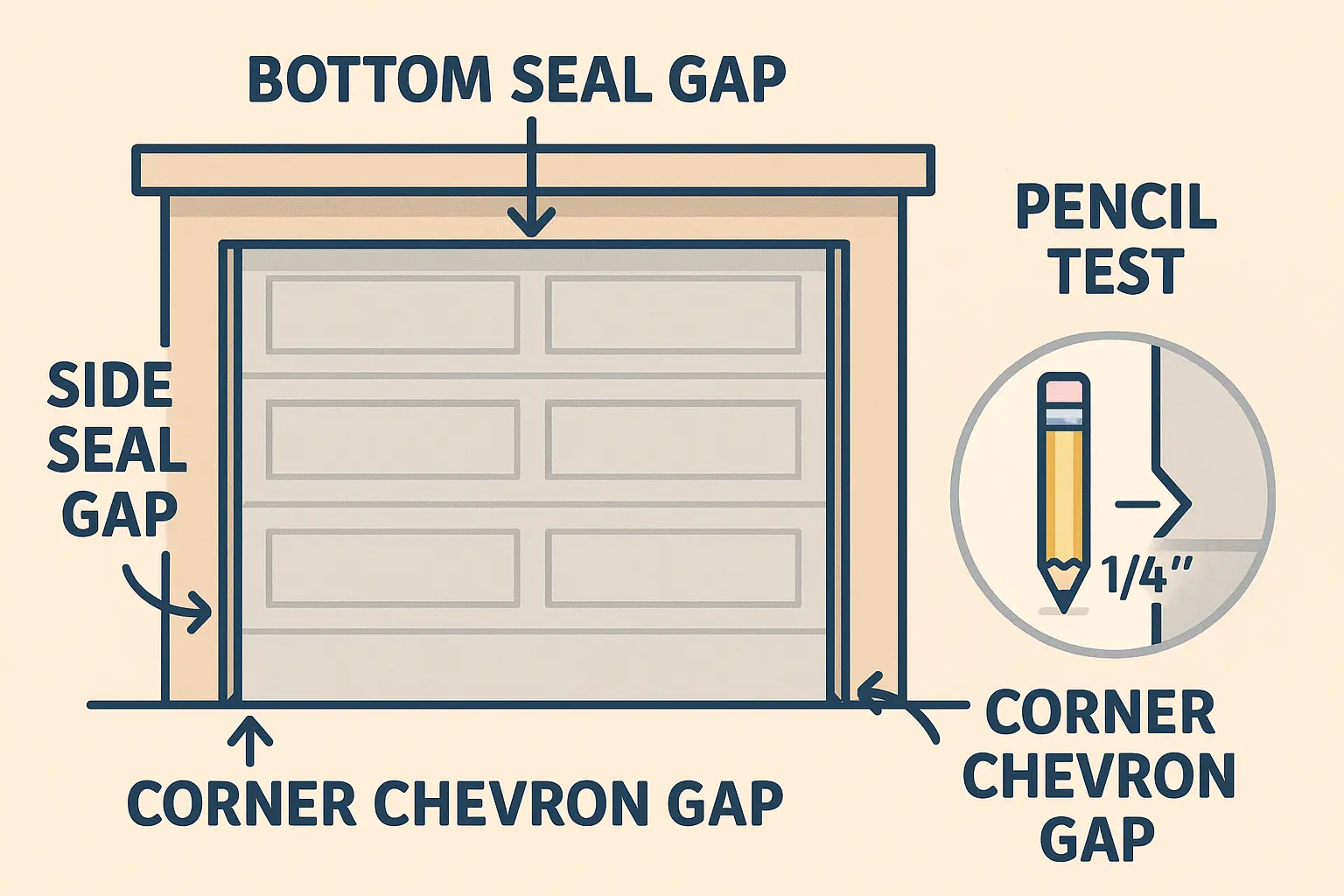
- The Pencil Test: According to CDC guidelines, a juvenile mouse can compress its skull and squeeze through any opening larger than 1/4 inch (the width of a standard wooden pencil). Rats require only 1/2 inch (the width of a penny). If you can slide a pencil under or around your closed door, a rodent can easily slip inside.
- The Light Leak Check: Turn off your garage lights during the day. Inspect the entire perimeter of the closed door. Any visible daylight indicates an active rodent highway.
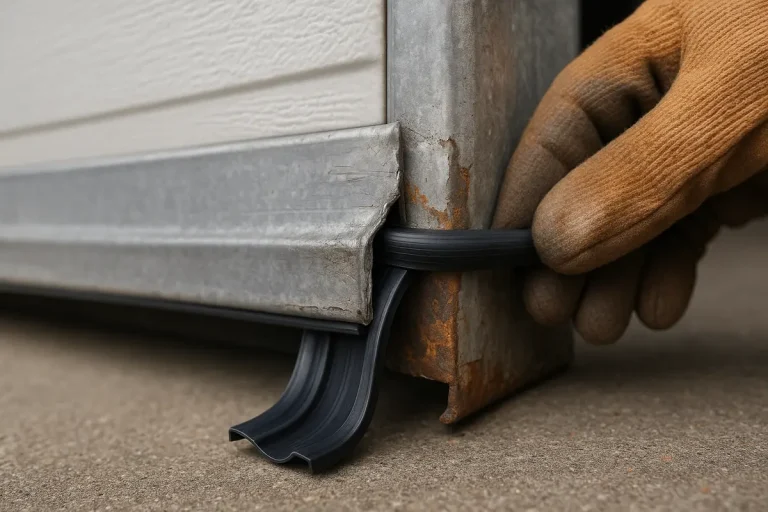
- The Corner Chevron Audit: Inspect the extreme bottom corners where the horizontal bottom seal meets the vertical tracks. This transition area is called the “Chevron Gap.” Because vertical weather seals rarely extend completely to the concrete, mice frequently exploit this corner to bypass your defenses entirely.
If you identify significant daylight on the vertical sides, you may need to learn how to fix garage door gaps on sides alongside upgrading your bottom seal, or review comprehensive steps on how to seal garage door gaps to optimize your home’s thermal barrier.
The Science of the Gnaw: Why Standard Seals Fail
Many homeowners purchase basic vinyl or PVC replacement seals, only to find them chewed through within days.
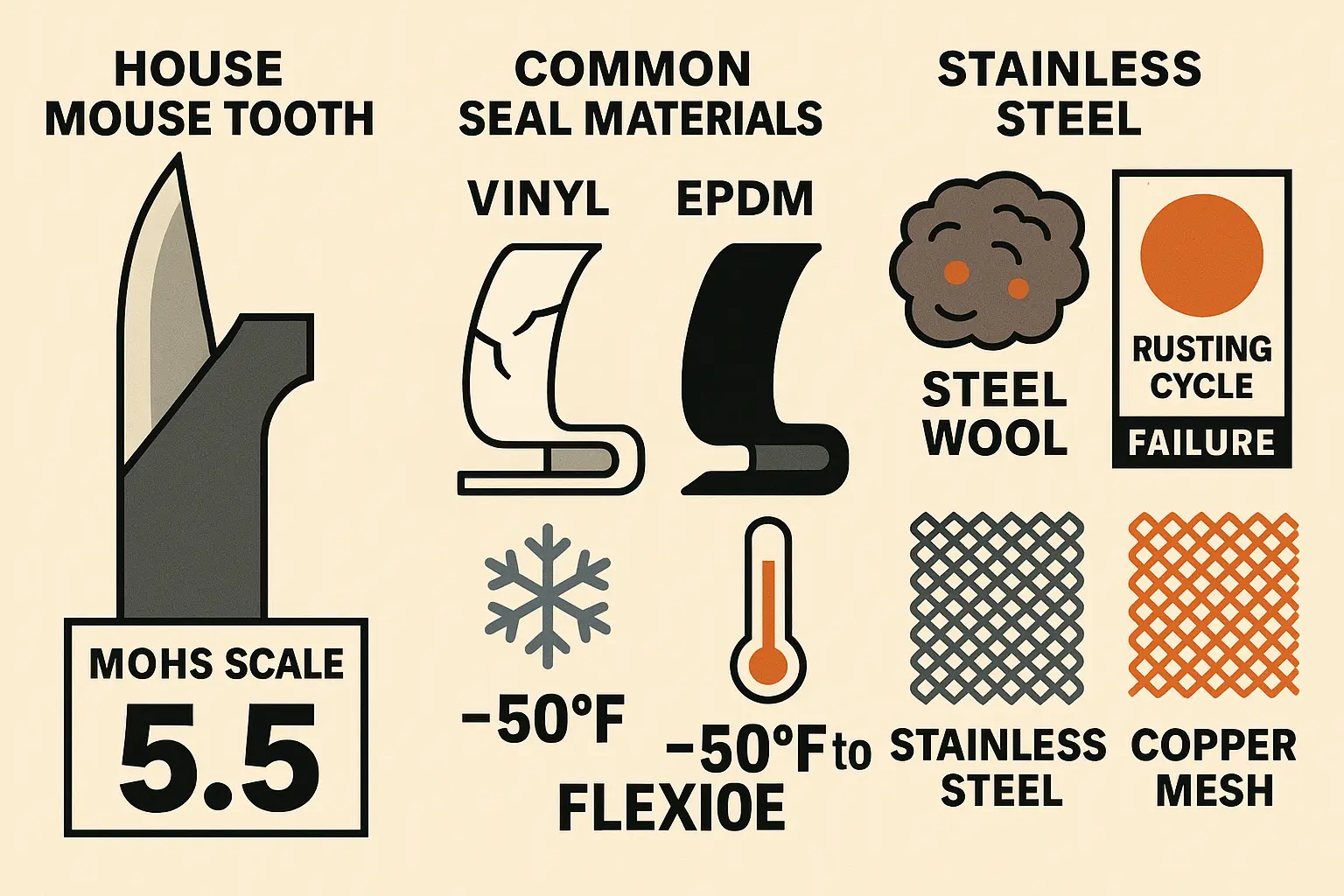
A house mouse’s (Mus musculus) incisors grow up to 5 inches per year and have a hardness of 5.5 on the Mohs scale. This makes their teeth harder than copper, iron, and standard structural aluminum. To a rodent, standard vinyl or soft rubber is completely effortless to penetrate.
Furthermore, vinyl seals perform poorly in colder climates. At 32°F (0°C), standard PVC/Vinyl loses up to 60% of its elasticity, stiffening into a warped shape that leaves permanent gaps.
To prevent this, you should transition to an EPDM garage door seal. EPDM synthetic rubber maintains complete flexibility down to -50°F, ensuring a tight ground seal year-round.
But rubber alone will not stop a determined rodent. For permanent exclusion, you must choose a seal reinforced with coarse stainless steel wool or high-tensile steel mesh (hardness of 6+), which rodent teeth cannot shear. Avoid using cheap carbon steel wool for DIY stuffing; moisture and road salt will quickly rust and degrade it, staining your concrete and leaving the gap vulnerable.
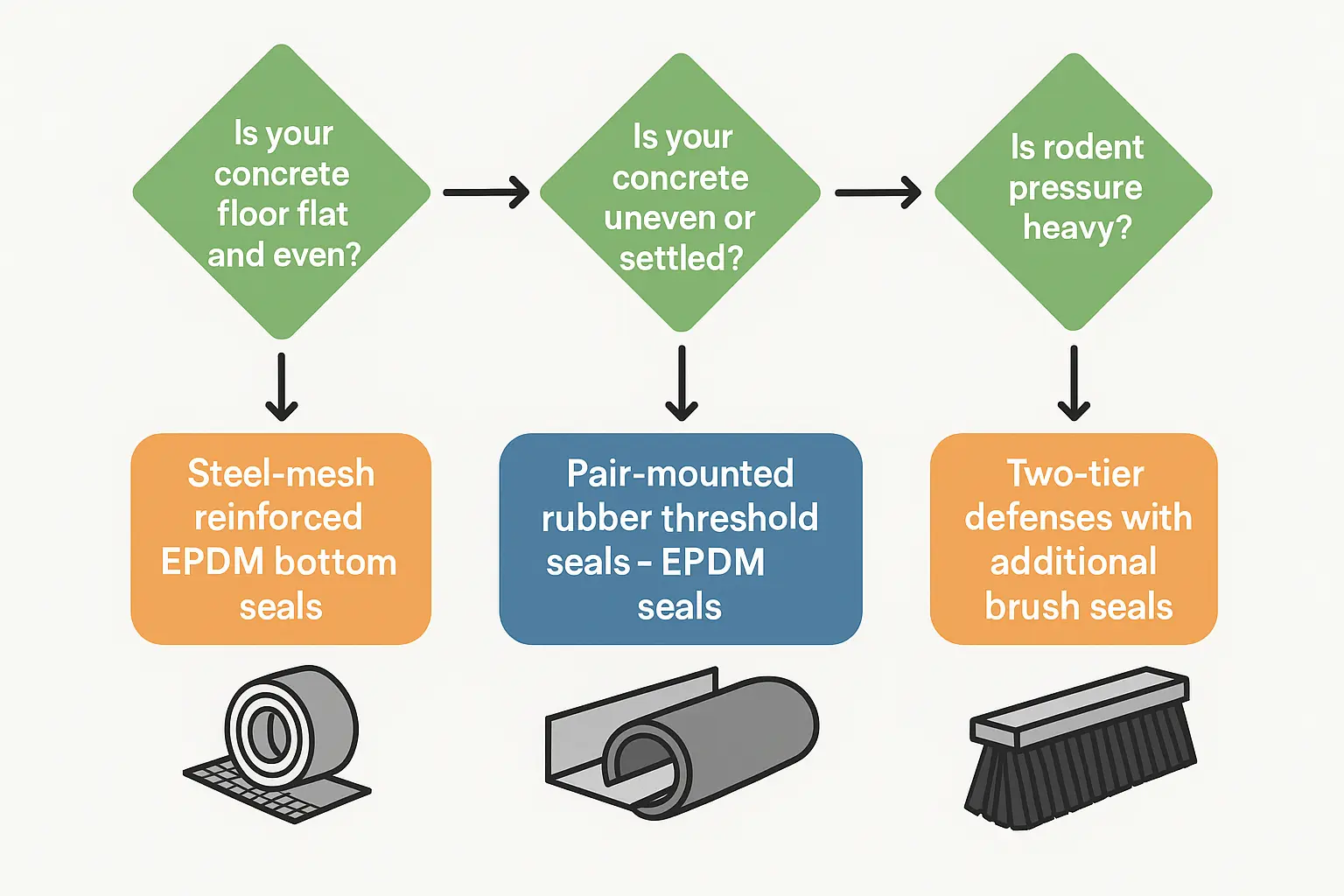
Diagnostic Flowchart: Bottom Seals vs. Floor Thresholds
Choosing the correct defense depends heavily on your garage floor’s structural condition and the severity of the rodent pressure.
If you have a flat, even floor, replacing your existing bottom gasket with a steel-mesh reinforced EPDM seal (such as Xcluder or RodentBLOCK) is the ideal solution.
However, if your concrete has settled, cracked, or sloped, a standard seal cannot flex enough to cover the wedge-shaped opening. In this scenario, you must install a garage door bottom seal for uneven floor or pair a flexible bottom seal with a floor-mounted rubber threshold barrier. This threshold is epoxied directly to the concrete, acting as a physical dam that blocks both heavy rain and low spots that standard doors cannot reach.
The Track & Retainer Profile Identifier
To select a replacement seal, you must identify your bottom track’s retainer profile. Look at the aluminum track on the bottom of your door from the side to see its connector shape:
- Double T-End: The most common residential style. It features two “T” shaped ends that slide into a double-channel aluminum track.
- Bead End: Utilizes round, bulbous connectors that slide into a single, circular channel.
- P-End: Specifically engineered to fit Wayne Dalton brand doors, shaped like the letter “P.”
- Nail-On: Found on older wood garage doors that lack aluminum mounting tracks.
To save time and avoid return shipping fees, check for what signs indicate it’s time to replace a garage door bottom seal? If the aluminum retainer itself is damaged or missing, you may need to upgrade garage door bottom seal assemblies completely.
Resolving the "Corner Chevron Gap"
Because vertical seals stop just short of the floor, rodents easily slip through the bottom corners. You can resolve this issue using two proven methods:
- The Guerrilla DIY Hack: Buy a roll of heavy-duty copper mesh or stainless-steel poly-fiber fill. Stuff a 3-inch roll tightly into the hollow, open ends of your U-shaped rubber bottom seal. This blocks the side entryway without affecting the rubber’s ability to compress against the ground.
- The Professional Fix: Install heavy-duty stainless steel corner shields (like HernsPro or Xcluder Rodent Shields) directly onto the lower 8 inches of your vertical weatherstripping.
Master Installation Protocol
Ready to secure your garage? Follow this reliable installation process:
- Clean the Track: Slide out the old seal. Use a stiff wire brush to clear all dirt, rust, and debris from the aluminum channels.
- Lubricate the Channel: Spray a generous amount of silicone lubricant or dish soap down the track channels. Avoid using WD-40, which can attract dirt and degrade rubber over time.
- Slide and Secure: Have a partner help pull the new EPDM seal through the channel while you feed it from the opposite end. Leave an extra 2 inches on both sides to fold back into the track, creating an additional physical barrier.
For a detailed walkthrough, follow our how to install garage door bottom seal guide or learn how to replace garage door weather seal to complete a full weatherization project.
Frequently Asked Questions
Can mice chew through an EPDM rubber garage door seal?
Yes. While EPDM rubber has exceptional weatherproofing properties and remains flexible in freezing temperatures, it is not tough enough on its own to stop a mouse’s Mohs 5.5 hardness teeth. To make it rodent-proof, you must select an EPDM seal that is reinforced with stainless steel mesh or fill the hollow ends of the seal with copper mesh.
What is the best way to seal a garage door on highly uneven concrete?
The most reliable method is a two-tier defense. First, install a heavy-duty, flexible EPDM T-end seal on the bottom of the door. Second, install a floor-mounted rubber threshold barrier directly on the concrete. The threshold fills the deep depressions and creates a physical seal that the door can rest against.
Will standard steel wool keep mice out of my garage door corners?
Standard carbon steel wool will briefly stop mice, but it rusts and disintegrates rapidly when exposed to rain, melting snow, and winter road salt. Once it rusts, it crumbles away and leaves ugly red stains on your concrete. Always use rust-resistant materials like coarse stainless steel wool or copper mesh.
Protecting your garage from rodents requires the right materials and a precise fit. If you are dealing with tricky uneven floors, damaged tracks, or persistent pest entry, the experienced professionals at Up & Down Garage Doors are ready to help. Reach out to our family-owned team today for honest, dependable support.
You May Also Like