





Securing Your Tracks: Preventing Garage Door Derailment And Break-In Opportunities
Published: Jul 22, 2026
A poorly maintained garage door track isn’t just an operational headache; it’s a critical security vulnerability. For a potential intruder, a misaligned or wobbly door is a prime target. The small gaps and structural weaknesses created by a derailed roller can be all they need to pry the door open and gain access to your home. Understanding the link between simple maintenance and robust security is the first step in hardening what is often the largest and most overlooked entry point to your house. This guide will help you reframe routine checks as a crucial part of your home’s defense, moving from reactive fixes to proactive security.
Anatomy of a Secure Garage Door
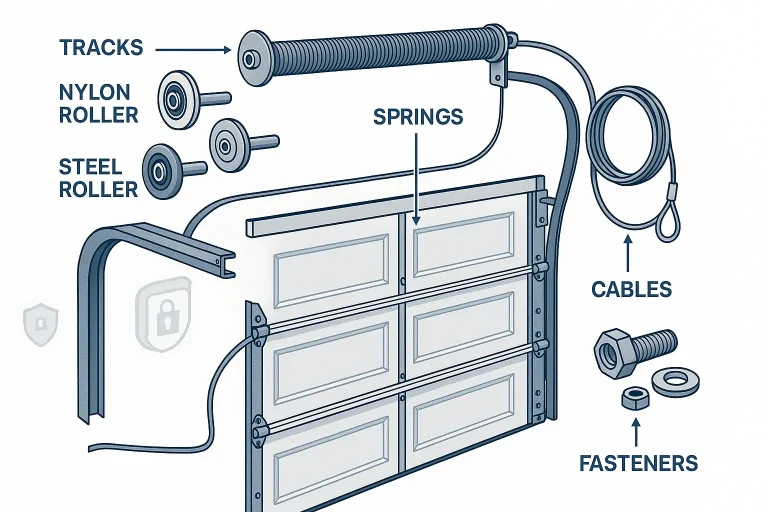
Before we dive into maintenance, let’s have a quick chat about how the system works. Your garage door isn’t just one moving part; it’s a team of components working in perfect harmony. When one part falters, the whole system is compromised.
- Tracks: These are the metal channels that guide the door up and down. They must be perfectly aligned—vertically and horizontally—to ensure smooth, secure operation.
- Rollers: These small wheels sit inside the tracks and are attached to the door panels. They do the heavy lifting, and their condition directly impacts the strain on the rest of the system.
- Cables: The lift cables work with the springs to counterbalance the door’s immense weight, allowing it to open and close safely.
- Springs (Torsion or Extension): These are the powerhouse of the system, holding massive amounts of tension to lift the door. (Safety Warning: Springs are extremely dangerous and should only be handled by trained professionals.)
When these parts work together seamlessly, your door is a formidable barrier. When they don’t, it creates the weaknesses that can lead to derailment and security risks.
The Proactive Homeowner's Prevention Guide
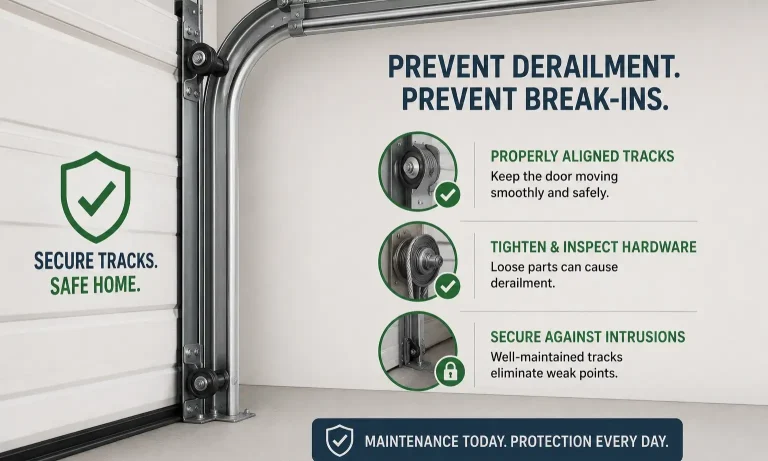
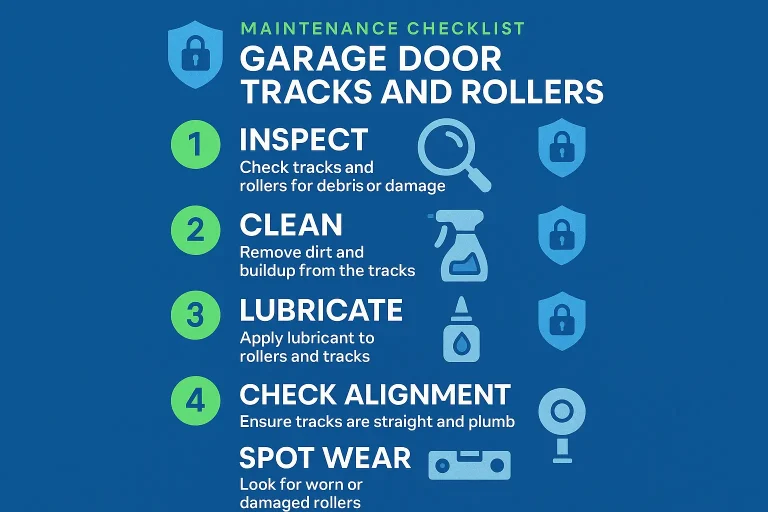
The best way to fix a derailed garage door is to never let it happen in the first place. A simple, 15-minute inspection every few months can save you from costly repairs and sleepless nights. Think of this as your DIY garage door maintenance checklist for security.
1. Inspect and Clean the Tracks
Look at the vertical and horizontal tracks on both sides. Are they free of debris like dirt, leaves, or grime? Buildup can obstruct the rollers, causing them to jump the track.
- What to do: Wipe the inside of the tracks with a damp cloth. Avoid using grease or thick lubricants here, as they can attract more dirt and gum up the rollers.
- Security Checkpoint: Clean tracks ensure the door closes flush with the ground, leaving no gaps for a crowbar.
2. Check the Rollers for Wear and Tear
Your rollers are the workhorses. Look for signs of cracking, chipping, or excessive wobble in the stems. Worn-out rollers don’t glide smoothly; they grind and scrape, which can damage the track and lead to derailment. If you notice significant wear, a garage door roller replacement may be necessary to restore smooth operation.
- What to do: Lubricate the roller bearings (not the track itself) with a high-quality garage door lubricant spray. If you’re choosing new ones, learn about the best garage door rollers for durability and quiet operation, like nylon rollers with sealed bearings.
- What to do: Gently tighten any loose nuts or bolts on the mounting brackets. Be careful not to overtighten.
- Security Checkpoint: Perfectly aligned tracks prevent the door from getting stuck partway, a major security flaw. A severe bend or misalignment may require professional garage door track installation to ensure the door is structurally sound.
3. Verify Track Alignment
Visually inspect the tracks. Do they look parallel to each other and perpendicular to the door? Use a level to check. The brackets holding the tracks can become loose over time from vibrations, causing misalignment.
Diagnosing Derailment—A Safety-First Approach
Even with perfect maintenance, accidents happen. A car bump or a broken part can send your door off its tracks. When it does, the first question is always: “Can I fix this myself?”
The answer depends entirely on the cause of the derailment. Some situations are minor adjustments, while others involve incredibly dangerous high-tension components. Before you grab your tools, use this guide to diagnose the problem safely.
Common Causes and the “Stop vs. Go” Decision
1. A Single Roller Popped Out (Minor Obstruction/Impact)
- What it looks like: The door is slightly crooked, but mostly intact. One or two rollers are out of the track, but the cables are still on their drums and the springs look fine.
- Go (with caution): This is often the most manageable DIY fix. You may be able to gently guide the roller back into the track. For a detailed walkthrough on this specific scenario, see our guide on how to put a garage door back on track.
- Stop if: The door is heavy, severely jammed, or if the roller is at the very bottom (this bracket is under spring tension).
2. Major Impact (Hit by a Car)
- What it looks like: The door is visibly bent, and multiple rollers are off track. The tracks themselves may be bent or damaged.
- Stop: This is not just a derailment; it’s structural damage. Trying to force the door can cause it to collapse. This requires a professional assessment.
- What it looks like:: One side of the door is sagging significantly. You’ll see a frayed or snapped cable hanging loose, and the other cable will be extremely tight.
- STOP! THIS IS EXTREMELY DANGEROUS.: The remaining cable and spring are holding the full weight of the door under immense tension. Attempting to move the door or touch the components can result in catastrophic failure and serious injury. A professional garage door cable replacement is the only safe solution.
3. A Broken or Snapped Cable
Your Next Steps: From Awareness to Action
Your garage door is more than a convenience; it’s a key part of your home’s security system. By shifting your perspective from “it’s just making a noise” to “this is a potential vulnerability,” you empower yourself to protect your home and family.
If your inspection reveals loose parts, strange noises, or a door that just doesn’t feel right, don’t wait for it to become a major security issue. And if you’re facing a derailment caused by anything more than a single popped roller, prioritize your safety and call a trusted professional. They have the tools and training to fix the problem safely and ensure your door is once again a secure, reliable barrier. For more information, explore these top 5 tips to secure your garage door.
Frequently Asked Questions (FAQ)
What does it mean for a garage door to be “off track”?
“Off track” means one or more of the door’s rollers have come out of the metal tracks that guide it. This causes the door to hang unevenly, get stuck, or stop moving altogether. It compromises both the function and security of the door.
What are the most common reasons a garage door comes off its track?
The most frequent causes are physical impact (like hitting it with a car), worn-out or broken rollers that fail under pressure, or a snapped lift cable which causes the door to become unbalanced and fall off the track on one side.
How can I tell if my garage door is off the track?
The signs are usually obvious. You’ll see a visible gap between the door edge and the track, the door will look crooked when it’s partially open, or it will make loud grinding or scraping noises and refuse to move smoothly.
Is a derailed garage door a security risk?
Absolutely. A misaligned door doesn’t seal properly, leaving gaps that can be exploited by burglars using a crowbar. The structural integrity is also compromised, making it easier to force open. Recognizing these garage door security risks is key to home safety.
How much does it typically cost to fix a garage door that’s off track?
The cost varies widely depending on the cause. A simple fix where a technician just needs to reset the rollers might cost between $100 and $200. However, if the cause was a broken cable, bent track, or damaged panels, the cost will be higher as it involves replacing parts. It’s always best to get a quote from a professional service.
You May Also Like
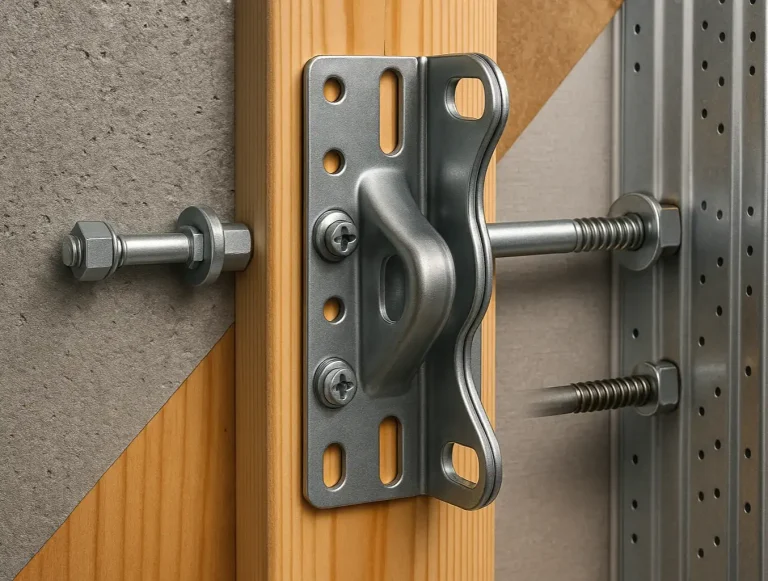
Mounting Garage Door Tracks to Different Wall Materials
You’ve just unboxed a brand-new garage door. The panels are pristine, the hardware gleams, and you’re envisioning a smooth, quiet operation. You grab the vertical tracks, hold them up to the wall, and suddenly, the…
Published Date: May 1, 2026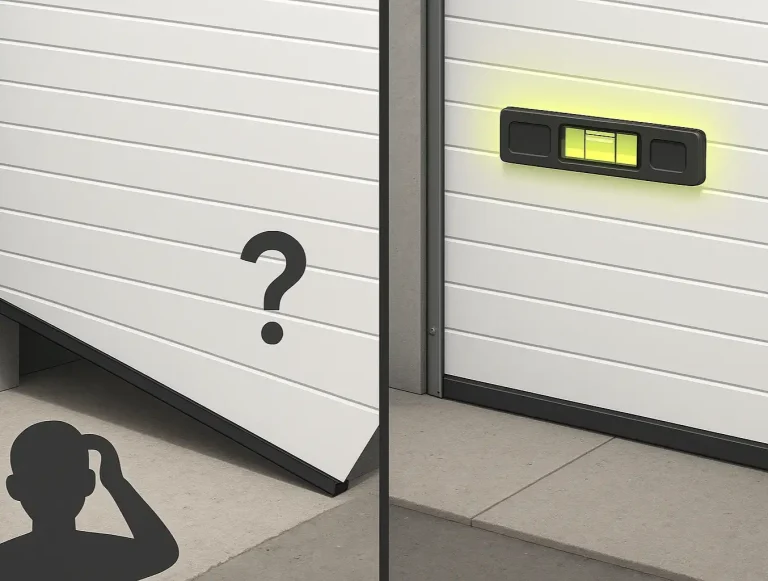
How to Square and Level Garage Door Tracks on Uneven Garage Floors
That wedge-shaped gap under your garage door isn't just an eyesore—it's a puzzle. You’ve probably tried everything, nudging the tracks left and right, hoping to close it. But the more you adjust, the worse the door…
Published Date: Apr 30, 2026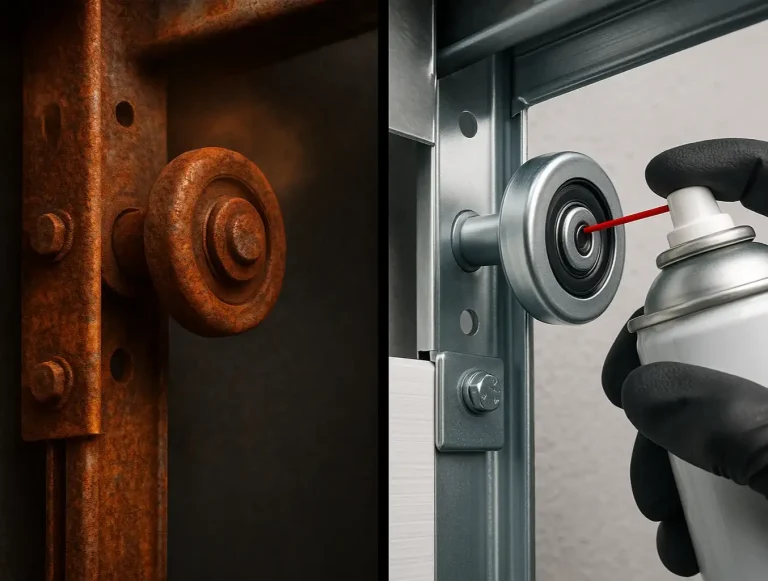
Fixing Rust on Garage Door Tracks and Rollers
Ever been jolted by a sudden grinding, squeaking, or shuddering noise as your garage door opens or closes? It’s a sound that makes you cringe, and for good reason. That noise isn't just an annoyance; it's a warning…
Published Date: Jan 23, 2026