





Reflective Foil Garage Door Insulation Installation: DIY vs. Professional
Published: Aug 10, 2026
Stepping into your garage on a midsummer afternoon shouldn’t feel like stepping into an oven. For many homeowners—especially those with electric vehicles whose lithium batteries charge most efficiently between 50°F and 86°F—finding an effective way to manage garage temperatures is a top priority.
The market presents two main paths: a $50 to $200 DIY insulation kit, or a $200 to $1,000+ professional retrofitting. While the low upfront cost of a DIY project is highly appealing, the mechanical reality of your garage door system often complicates the decision.
Introduction: The Extreme Temperature Garage Battle
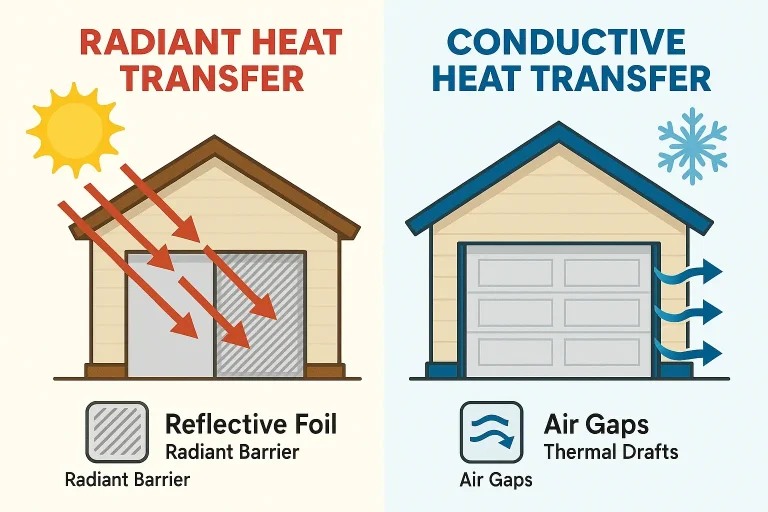
An uninsulated steel garage door acts as a giant radiator, transferring outdoor heat directly into your home. While cheap foam or foil kits promise a quick fix, understanding the physics of radiant heat is essential before starting any installation.
The Material Debate: Foil, Foam, and Thermal Physics
When researching how to insulate a garage door, you will encounter three primary material classes:
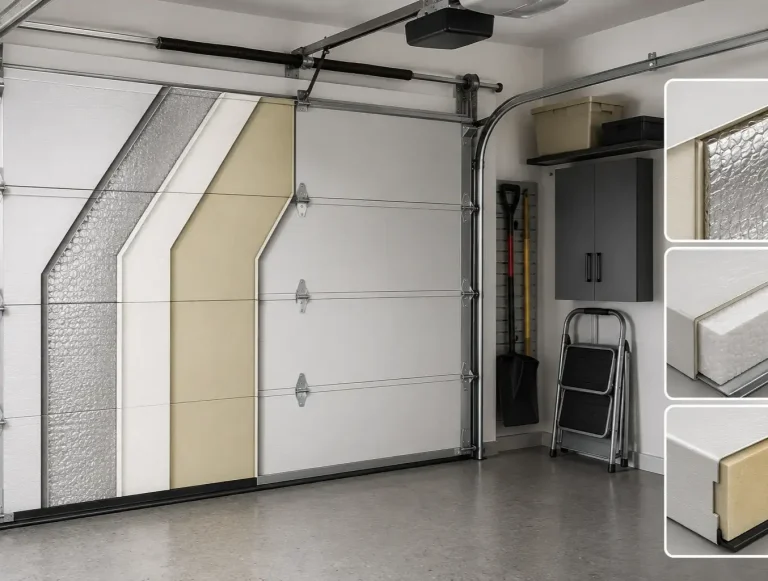
- Reflective Foil (Radiant Barriers): These are thin, flexible sheets designed to reflect up to 97% of radiant heat. While foil has a nominal conductive rating of only R-1.1, pairing it with a sealed 1/2-inch to 1-inch air gap yields an effective garage door r value of R-6 to R-8 in hot climates.
- Polystyrene Panels: Rigid foam boards that offer a durable, budget-friendly middle ground. However, you must carefully evaluate the thermal performance and thickness using a guide on polystyrene garage door insulation.
- Polyurethane: Typically professional-grade spray or injection foam that provides high R-values (R-12 to R-18) and adds structural rigidity.
Note on Cellulose: While cellulose insulation works well for static walls and ceilings, its high moisture susceptibility and weight make it completely unsuitable for moving garage doors. Additionally, if you plan a DIY setup, you might wonder: how do i pick the right size garage door insulation? to ensure panels don’t bind in the tracks.
Deconstructing Mr. Fred’s DIY 'Cellular' Insulation Method
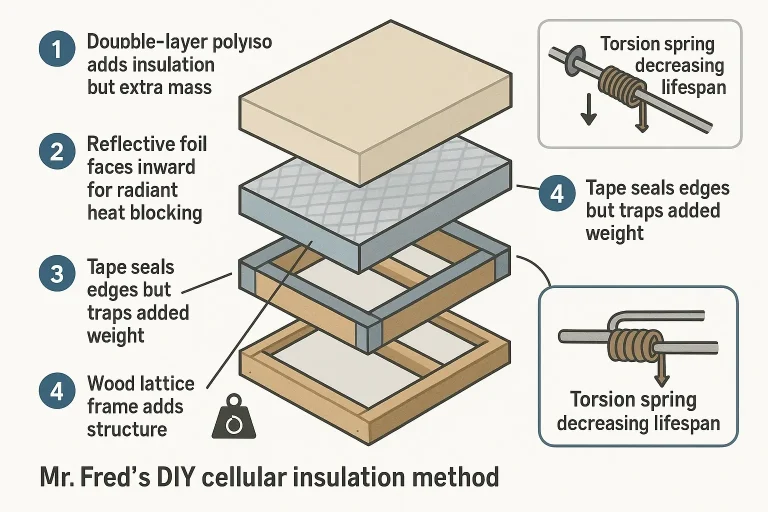
A viral trend known as “Mr. Fred’s Cellular Method” has gained popularity among DIY enthusiasts. This approach involves building a trapped grid of air cells against the steel door skin using wood or foam spacers, then sealing foil-faced polyiso boards over the top with heavy-duty foil tape.
While the thermal physics of this cellular air-gap design are sound—successfully blocking conductive heat—the physical execution introduces a severe mechanical vulnerability: weight. Adding a wood lattice, multiple foam layers, and heavy adhesive layers can add 15 to 25 pounds of dead weight to a standard double garage door.
The Silent Danger: Torsion Springs, Door Balance, and Safety
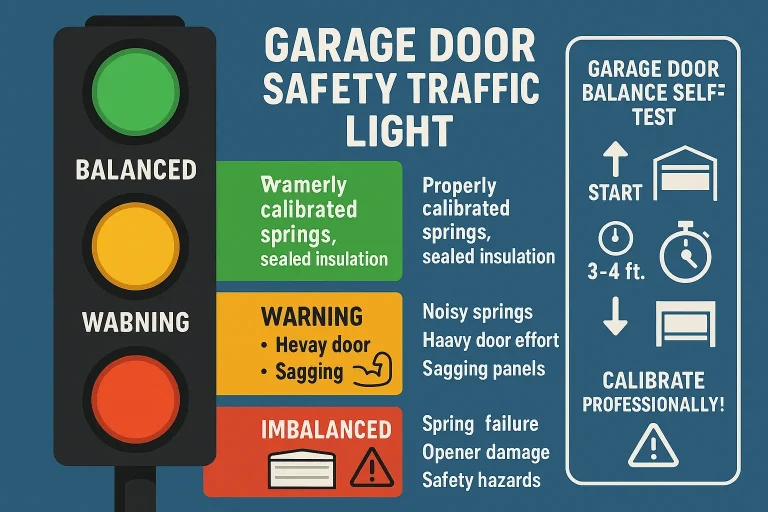
Your garage door is a finely balanced, counterweighted machine. Understanding how does a garage door spring work reveals that engineered springs are manufactured to balance a door within a strict 2-pound margin.
When you add 15+ pounds of insulation weight without recalibration, you cause serious system issues:
- Spring Fatigue: The spring cycle-life drops by 20% to 30%, leading to premature failure.
- Opener Wear: Your automatic opener is forced to lift the uncompensated weight, stripping plastic drive gears and resulting in a garage door not opening but motor running.
- Physical Hazard: Adjusting high-tension torsion springs yourself is incredibly dangerous and can lead to severe injuries.
The 3-Step Garage Door Balance Test
To check if your door’s balance is compromised after an insulated garage door installation
- Disconnect: Pull the red emergency release cord to operate the door manually.
- Lift: Raise the door halfway and let go.
- Observe: A properly balanced door should stay in place. If it falls or shoots upward, your springs require a professional garage door spring tension adjustment near me.
The Complete Thermal Envelope: Sealing the Gaps
No matter how high your insulation’s R-value is, up to 40% of thermal loss occurs around the door perimeter. To build an effective thermal envelope, you must address air infiltration. This requires a durable garage door bottom seal for uneven floor surfaces, high-quality perimeter weatherstripping. If your garage has an attic access panel, be sure to insulate that hatch as well to stop chimney-effect drafts.
Comparing the Paths: DIY vs. Professional Retrofit
| Feature | DIY Radiant Foil Kit | Mr. Fred’s Cellular DIY | Professional Retrofitting |
|---|---|---|---|
| Material Cost | $50 – $150 | $100 – $250 | Included in service |
| Total Installed Cost | $50 – $150 | $100 – $250 | $200 – $600 |
| Effective R-Value | R-1.1 (No air gap) | R-5 to R-7 | R-6 to R-12 (With calibrated gap) |
| Mechanical Check | None | None | Full spring balance & opener calibration |
| Safety Risk | Low (material only) | Medium (handling weight) | None (fully handled by experts) |
Frequently Asked Questions
Will insulating my garage door void my manufacturer warranty?
Adding unapproved weight to certain garage door panels can void both the panel warranty and the automatic opener warranty if the system is operated out of balance.
Can I use regular house insulation on my garage door?
No. Fiberglass batts and loose-fill cellulose will collapse, absorb moisture, sag, and shed fibers as the door cycles up and down, posing mechanical and respiratory hazards.
How do I know if I need to adjust my garage door opener settings after insulating?
If the door struggles to lift, reverses unexpectedly, or makes grinding noises, you must immediately learn how to adjust garage door opener limits and force settings, or call a professional to recalibrate the system.
Take the Next Step Toward Year-Round Comfort
If you are planning to upgrade your garage’s energy efficiency with high-performance insulation, don’t risk damaging your door’s mechanical system. Contact the specialists at Up & Down Garage Doors today. We will evaluate your door’s condition, install a perfectly air-gapped insulation system, and professionally recalibrate your springs to ensure smooth, safe operation for years to come. Or, if you need localized help right away, check our services for garage door insulation houston.
You May Also Like
Space-Saving Insulation Solutions for Garage Doors in Compact
You’ve meticulously designed your compact, energy-efficient home. Every square foot is optimized, every window is triple-paned, and your walls have the perfect thermal envelope. But there’s a giant, uninsulated hole…
Published Date: Jun 26, 2026
Retrofitting Existing Garage Doors with Insulation Kits
You’ve probably felt it. The blast of cold air from the garage in the winter, or the wave of heat that hits you when you open the door in the summer. Your garage is often the largest uninsulated space in your home,…
Published Date: Jun 2, 2026
The Pros and Cons of Polystyrene Garage Door Insulation
Polystyrene garage door insulation is a popular option for homeowners and property managers looking to improve comfort without a major renovation. It’s affordable, lightweight, and widely used in DIY insulation kits.…
Published Date: Jan 12, 2026