




Forklift Damage to Dock Doors: Repair Options for Sectional and Rolling Steel
Published: Sep 29, 2026
When a forklift strikes a loading dock door, the immediate reaction is logistical triage. Security is compromised, climate controls fail, and throughput stalls. According to data from the Material Handling Institute, a single inactive dock bay can cost a high-volume distribution center between $1,500 and $5,000 per day in lost shipping capacity, truck demurrage, and energy loss.
For facility managers, the critical decision isn’t just about getting the door back on its tracks—it is analyzing the structural and financial trade-offs of the repair path. Establishing a clear, data-backed strategy is key to minimizing operational downtime.
Anatomy of a Forklift Collision
National Safety Council data shows that a single dockside forklift accident averages $150,000 in combined structural, equipment, and product loss. Approximately 80% of these impacts occur within the bottom 24 to 48 inches of the door—the primary “strike zone.”
How a door absorbs this kinetic force depends entirely on whether you utilize sectional or rolling steel door architectures.
Sectional Steel Doors: Damage Patterns and Repair Pathways
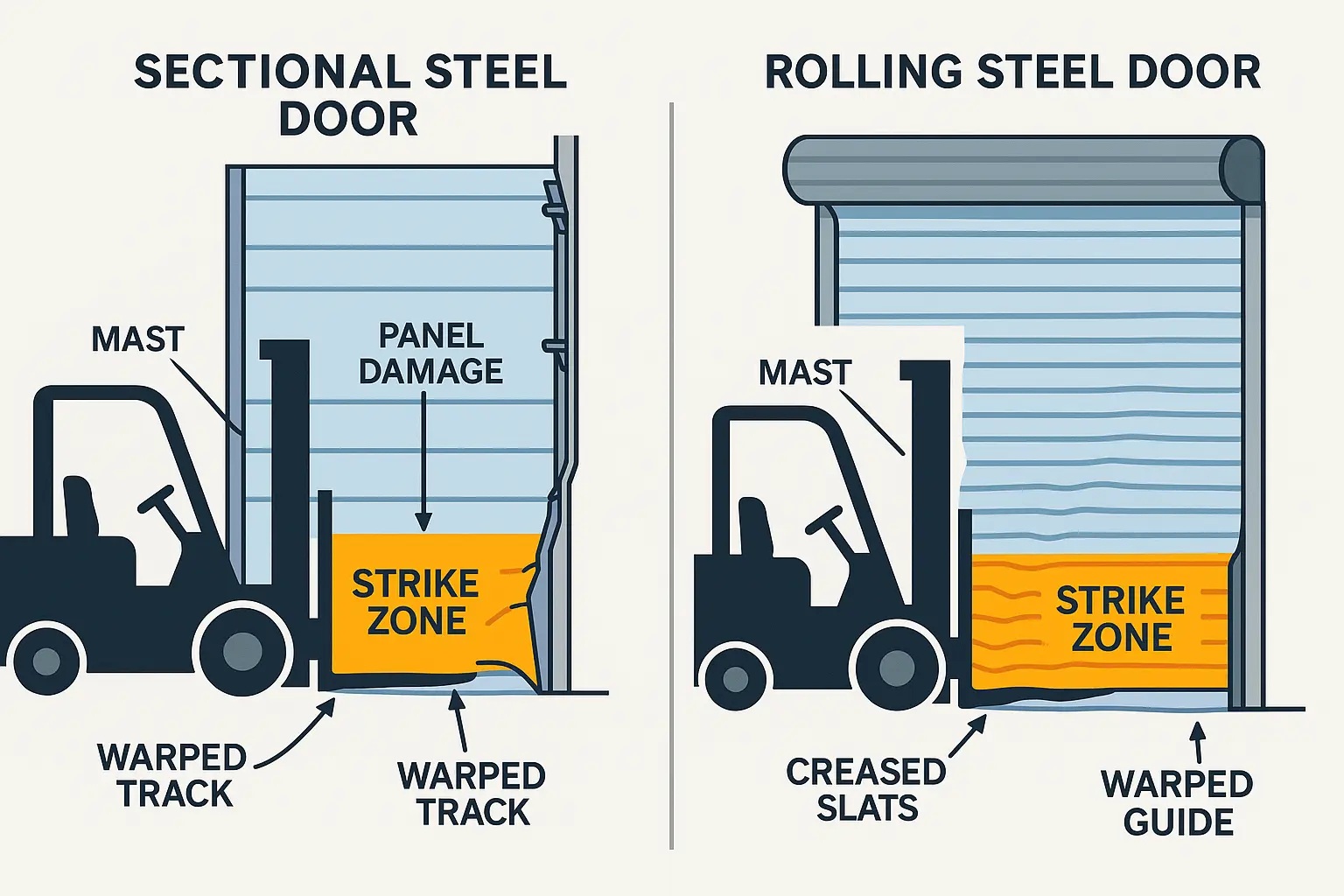
Sectional doors consist of individual insulated or non-insulated panels rolling on steel tracks. When a forklift strikes a sectional door, the damage is typically isolated but structurally disruptive. Panels buckle, rollers pop, and tracks twist.
This modular design makes garage door panels repair highly cost-effective; you can perform a selective garage door panel replacement dallas rather than overhauling the whole system.
However, track alignment is critical. If you experience severe garage door track damage, the vertical tracks must be replaced or upgraded. Attempting to hammer out a twisted track often leaves micro-bends that cause premature wear on the rollers and operator motor over time.
Rolling Steel Doors: Structural Integrity and Repair Realities
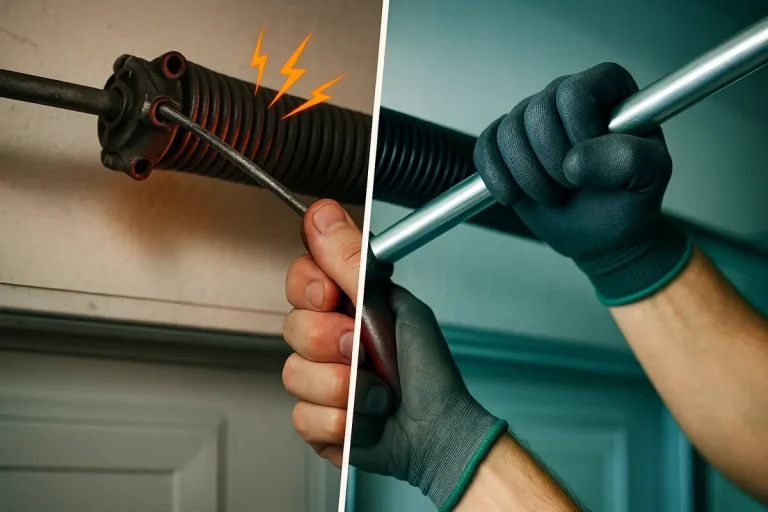
Rolling steel doors feature interlocking metal slats that wrap around an overhead drum. Built to handle heavy duty cycles and high wind loads, they lack flexibility. A forklift strike creases the slats, binding the entire curtain in its guides and risking damage to the overhead tension spring.
Standard repair involves unthreading individual slats, but severe collisions often deform the heavy-duty guides or bend the barrel shaft, requiring a complete curtain drop. When deciding on the right infrastructure for high-traffic bays, facility managers often compare the mechanics of sectional & rolling doors to align with local climate needs and operation frequencies.
Side-by-Side Comparison: Cost, Repairability, & Downtime Matrix
Understanding the baseline costs and operational recovery timelines helps clarify the best pathway for your facility.
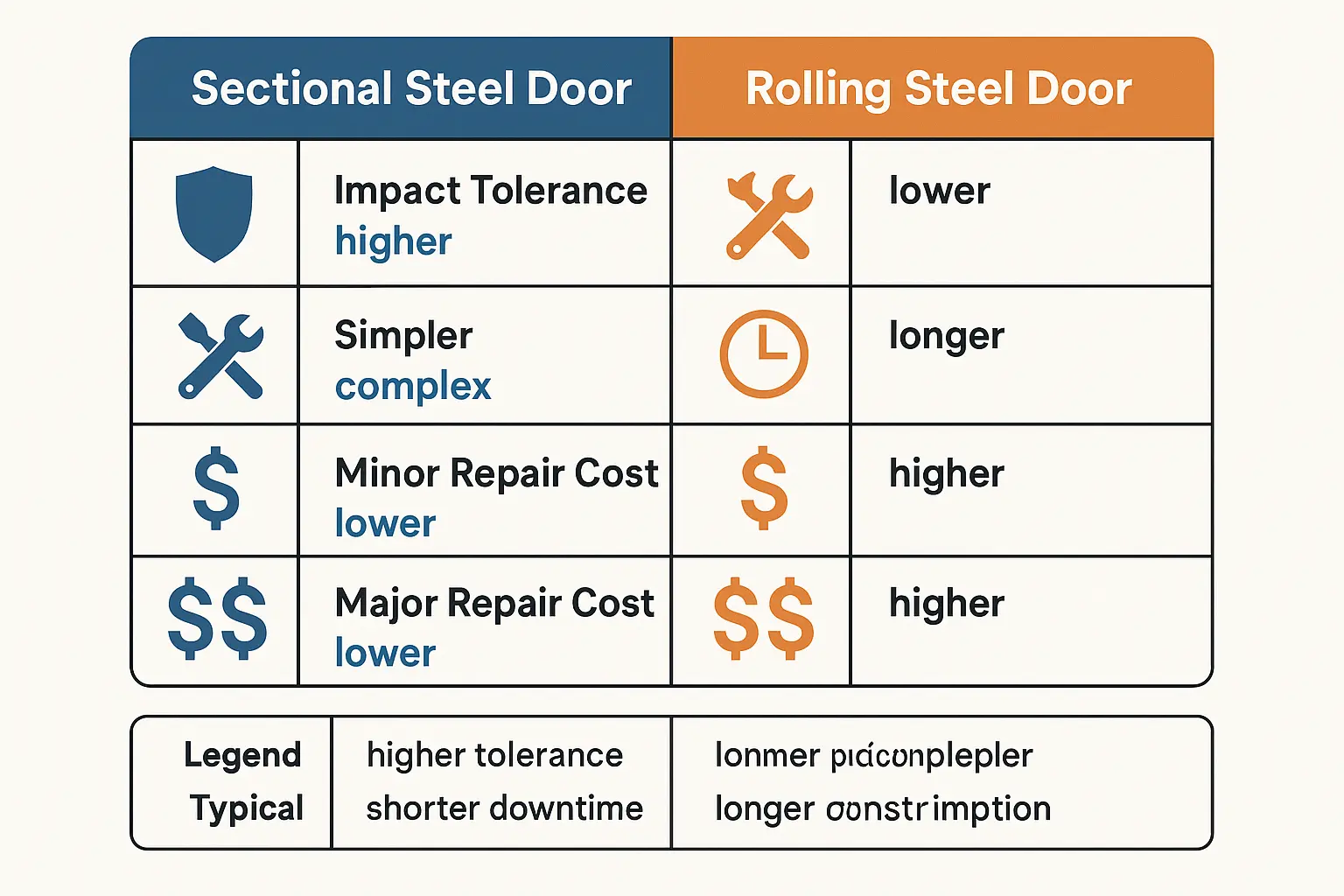
- Minor Sectional Repairs: $350–$800 (rollers, hinges, track tuning); 2–4 hours of downtime.
- Major Sectional Repairs: $900–$1,800 (replacing bottom panels and tracks); 4–8 hours of downtime.
- Minor Rolling Steel Repairs: $500–$1,200 (re-inserting curtain, minor guide repair); 4–12 hours of downtime.
- Major Rolling Steel Repairs: $2,000–$5,000 (replacing complete curtain and guides); 1–2 days of downtime.
The Decision Matrix: Is Your Door "Totaled"?
Navigating the choice of garage door repair vs replacement requires clear, objective parameters. A miscalculation can result in recurring service calls that quickly eclipse the price of a new system.
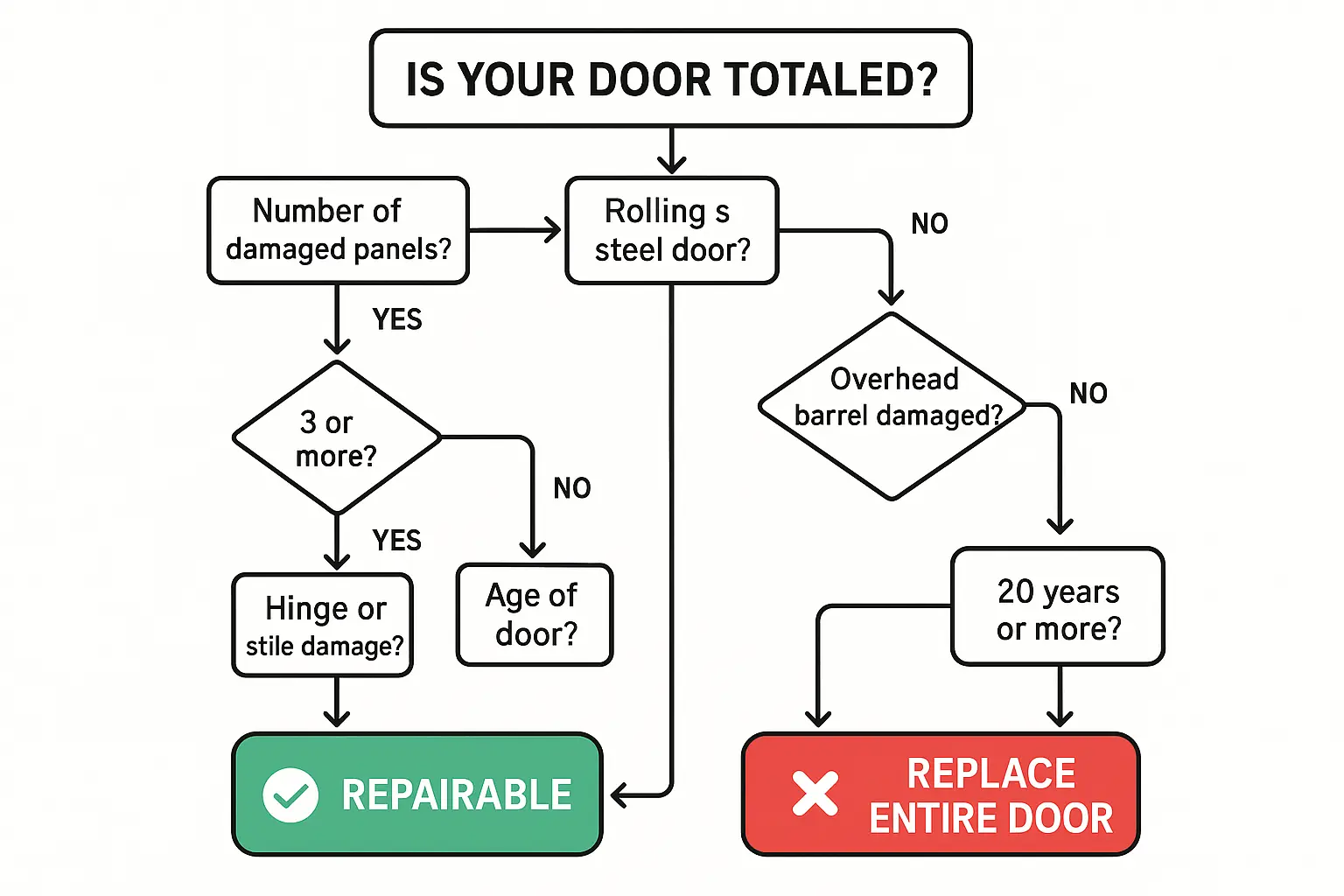
For sectional systems, if three or more panels are crushed or the hinges are torn directly from the sheet metal stiles, a full commercial garage door replacement is your best financial path. For rolling doors, if more than 20% of the slats are creased or the overhead barrel shaft is warped, patching individual slats is a temporary fix that will cause premature motor wear.
Proactive Engineering: Breaking the Cycle of Damage
Rather than treating forklift strikes as an unavoidable cost of doing business, forward-thinking facility managers implement preventative design shifts:
- Goalpost Guards and Track Protectors: Heavy-duty steel wraps anchored directly to the concrete floor shield vertical tracks from side-swipes.
- High-Visibility Bollards: High-visibility, concrete-filled steel bollards placed in front of the door tracks stop forklifts before they make contact.
- Impact-Resistant Breakaway Bottoms: Upgrading to sectional panels with flexible breakaway bottom sections allows the door to pop out of its tracks upon impact and snap back in place without tools.
- High-Speed Conversions: For high-volume dock high doors, transitioning to fabric high-speed doors for distribution reduces the strike probability entirely through rapid cycle times.
To keep your operations seamless, scheduling a routine commercial garage door maintenance program will help identify minor structural misalignments before they lead to emergency failures.
If you are currently facing a down bay and need fast, expert intervention, contact Up & Down Garage Doors for rapid, professional emergency garage door service. Our fully licensed and trained technicians are available 24/7 to get your logistics chain moving safely again.
Frequently Asked Questions
Can you replace just one damaged panel on a sectional dock door?
Yes, sectional doors are modular, allowing you to replace only the damaged panels (usually the bottom two sections) as long as the tracks, hinges, and remaining panel stiles are structurally sound.
How do I know if my rolling steel door’s overhead barrel is damaged?
If the door hesitates, makes grinding noises, or the curtain appears uneven when winding, the overhead barrel or internal tension springs may be warped. This requires immediate professional evaluation as tensioned springs pose severe safety risks.
Are flexible breakaway bottom tracks worth the extra cost?
Absolutely. In high-traffic distribution centers, breakaway sections pay for themselves during the very first forklift impact by allowing the door to release and reset in minutes without requiring a service technician.
You May Also Like