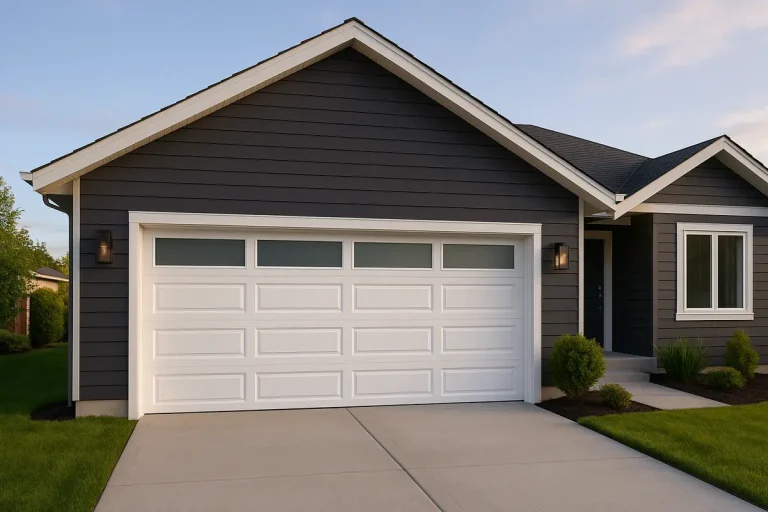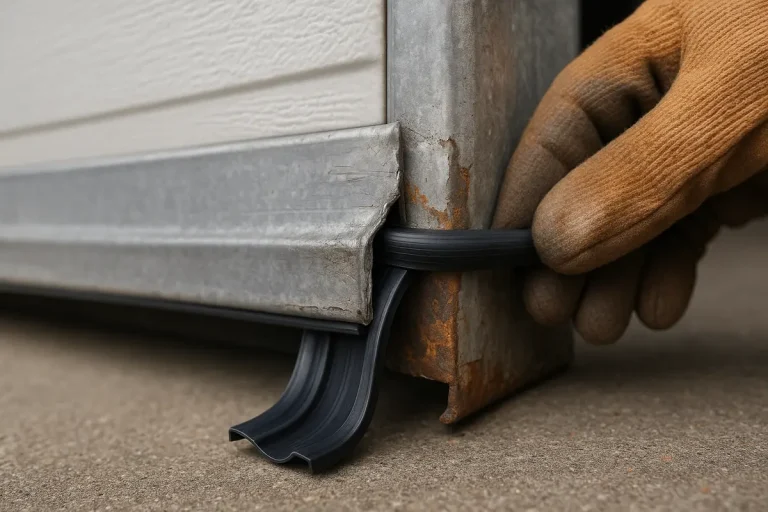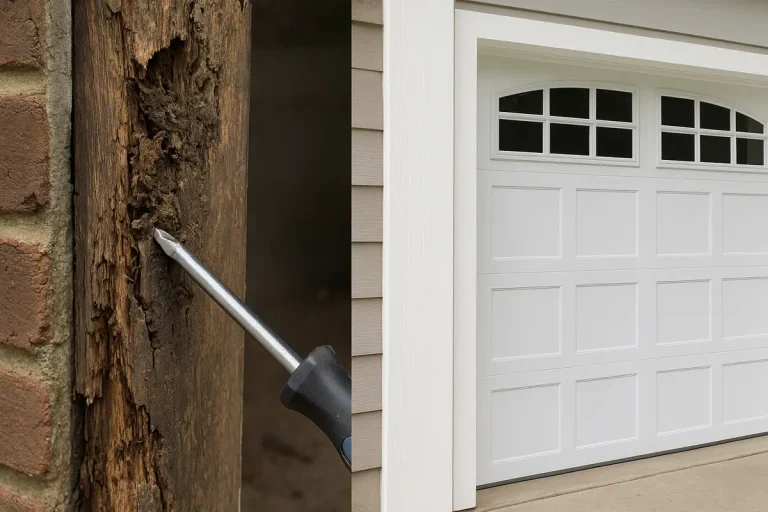





HOA Approval for a New Garage Door: What to Submit
Published: Sep 24, 2026
Replacing a garage door should be an exciting home improvement project. However, if you live in one of the many community associations across the country, a major administrative hurdle stands between you and your new door: the Architectural Review Committee (ARC).
According to data from the Community Associations Institute (CAI), approximately 75.5 million Americans live in HOA communities [1]. Furthermore, CAI surveys reveal that exterior modifications—including landscaping, exterior paint, and garage doors—account for over 60% of all HOA fine disputes [1]. Installing a door without formal approval can lead to costly fines, stop-work orders, or even legal mandates to remove the brand-new door entirely.
Before navigating this administrative process, homeowners often weigh whether they truly need a full upgrade. If you are still on the fence, reviewing a structural comparison of garage door repair vs replacement can help clarify your next steps. Once you decide to move forward, securing approval requires submitting a comprehensive, error-free administrative packet.
The 8-Point HOA Submission Packet
To secure a first-time approval and bypass arbitrary committee rejections, you must present an airtight packet. Do not simply state your intention to install a new door; submit these eight crucial assets to your HOA portal or management office.
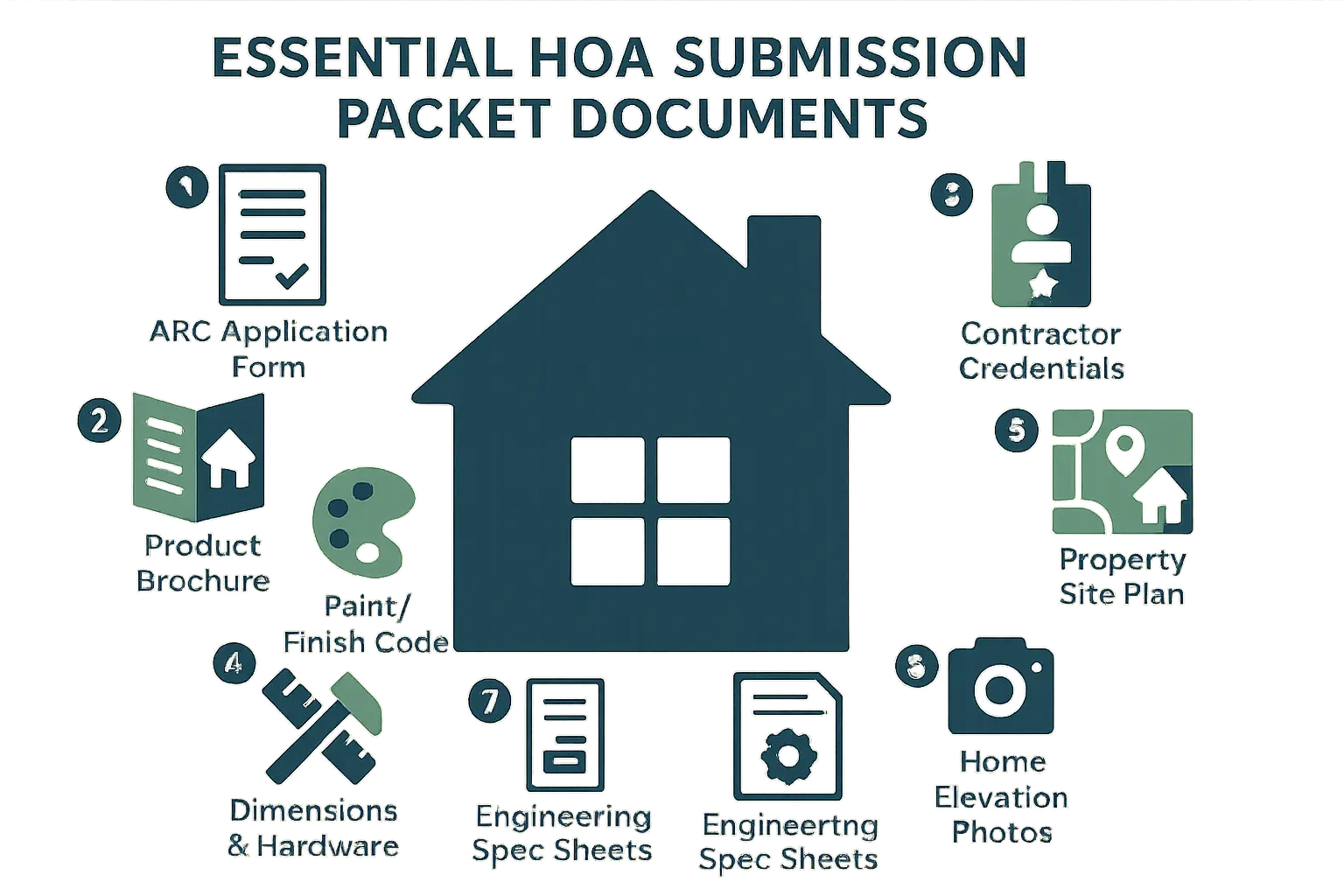
- The ARC Application Form: The primary document outlining project start and end dates, scope of work, and contractor details.
- Manufacturer Product Brochure: A PDF highlighting the specific door model, panel design (e.g., carriage, flush, long-panel), and any window inserts.
- Exact Paint or Finish Code: The specific manufacturer paint brand and color code (e.g., Sherwin-Williams “Pure White” SW 7005) to prove alignment with your community’s permitted color palette.
- Dimensions & Hardware Specs: Detailed width, height, and style of decorative hardware (like strap hinges or clavos).
- Contractor Credentials Packet: HOAs require proof that your installer is qualified. This includes their State Contractor License Number, Certificate of Insurance (COI) naming the HOA as additionally insured, and Workers’ Compensation proof.
- Property Site Plan: A basic property survey indicating the garage’s position relative to property lines (typically required for detached garages).
- Engineering Spec Sheets: Technical documentation showing the door’s structural integrity, thermal performance, and compliance with building codes.
- Current Elevation Photos: Clear, high-resolution photographs of the front of your home to establish visual harmony.
If you are planning the project timeline, referencing a garage door maintenance checklist can ensure your current system remains safe while you wait for the committee’s decision.
How to Create a Visual Mockup
Most HOA board members are volunteers who struggle to visualize architectural changes from text descriptions alone. Providing a clear, before-and-after visual mockup can reduce your approval time by up to 50%.
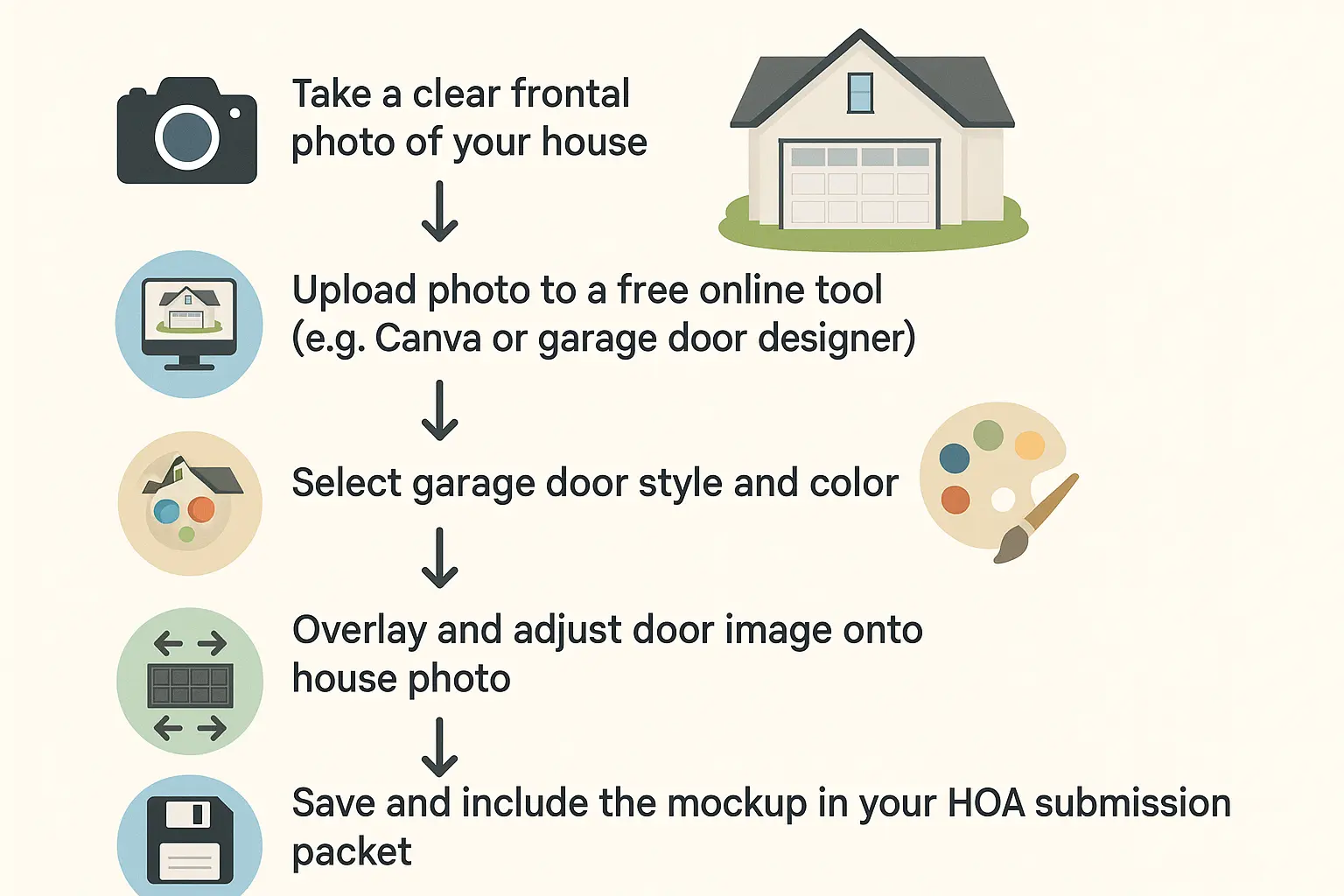
To build a professional mockup, take a straight-on, high-resolution photo of your garage in clear daylight. Next, use a free online design platform or a manufacturer’s online visualization tool to overlay the proposed door design onto your home’s exterior. Ensure the color representation is accurate under natural lighting conditions. This explicit contrast demonstrates to the ARC that the new installation will enhance, rather than detract from, the neighborhood’s aesthetic cohesion.
Technical Evaluation Criteria for HOA Compliance
Beyond style and color, your HOA will evaluate technical specifications to ensure your door meets community standards and municipal safety rules.
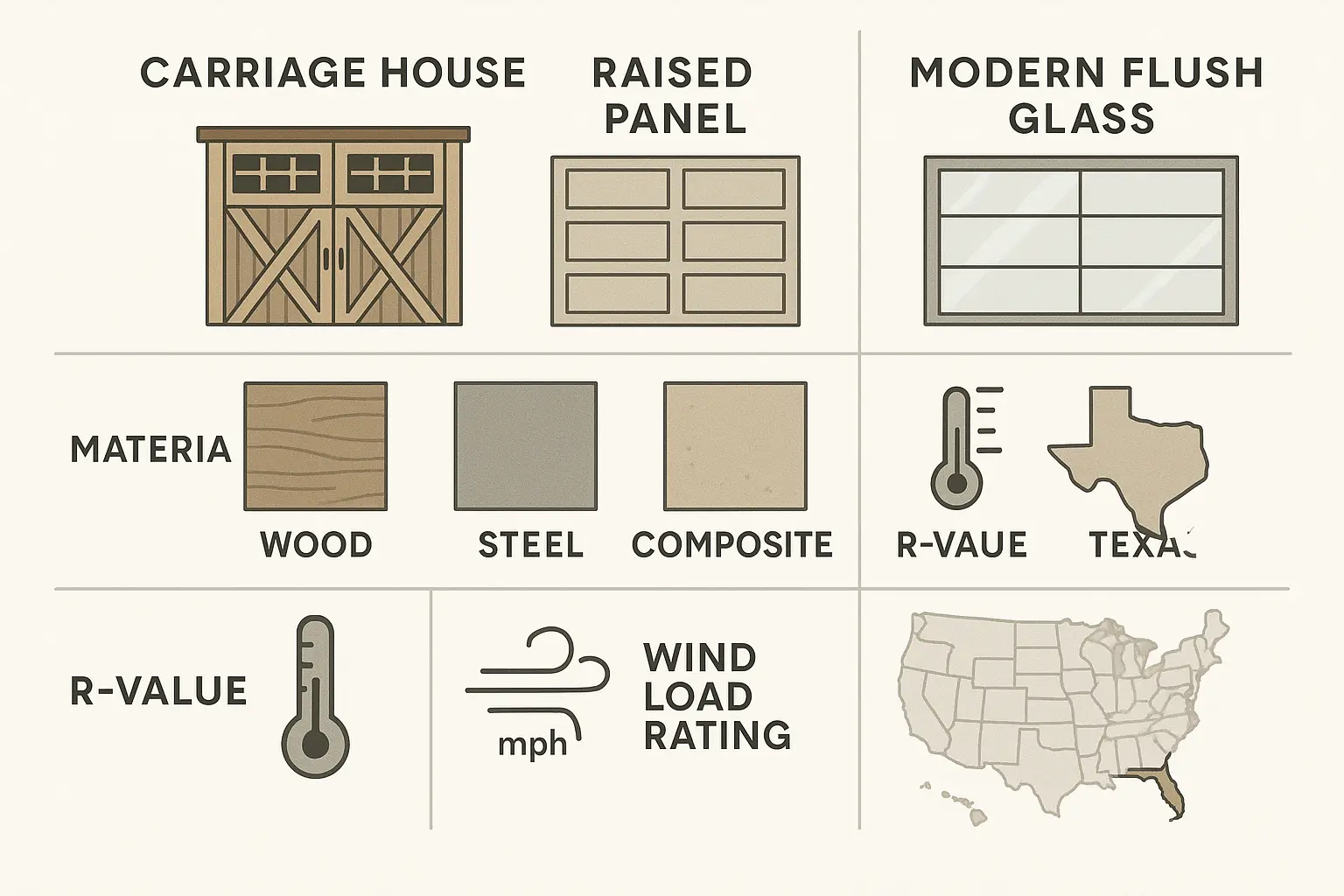
The main criteria include:
- Material Integrity: Whether the door is made of natural wood, steel, composite, or aluminum. Some HOAs prohibit certain materials due to durability or noise concerns.
- Wind-Load Ratings: In coastal or high-wind zones, local building codes mandate strict engineering thresholds. For instance, parts of Florida and Texas require doors rated to withstand wind speeds of 140 to 180 mph [2]. HOAs cannot approve a door that fails to meet local safety laws, making a certified wind rated garage door essential. Understanding local regulations or codes affecting new garage door installation ensures your paperwork aligns with municipal laws.
- Energy Efficiency (R-Value): HOAs frequently scrutinize thermal efficiency, particularly in shared townhome structures. Selecting high-performing insulated garage door options and documenting the precise garage door r value in your submission packet proves your door will contribute to regional energy efficiency goals.
Navigating Delays, Rejections, and Appeals
Most HOAs operate on a 14 to 45-day review timeline. During this phase, do not schedule your physical installation. Instead, focus on preparing your property and understanding the mechanics of garage door framing and installation so you are ready once the green light is given.
If your application is rejected, remain calm. HOAs must provide written notice detailing the exact covenants, conditions, and restrictions (CC&Rs) your design violated. Use this feedback to adjust your color, window style, or materials.
If the rejection feels arbitrary, draft a formal appeal letter citing specific precedents in your neighborhood where similar door styles have already been approved. Presenting clear technical specifications, alongside plans for a professional garage door & opener installation, often resolves safety or aesthetic concerns raised by the committee.
Frequently Asked Questions
Do I need HOA approval to paint my garage door the exact same color?
Yes, most HOAs require you to submit a minor modification form even for exact color matches. This ensures the paint formula matches the community’s approved brand list and prevents unapproved shade drift over time.
What happens if I install a new garage door without HOA approval?
Installing a door without approval can result in immediate fines, legal stop-work orders, and a demand to remove the unapproved door at your own expense. It can also complicate the sale of your home during title transfers.
Does the HOA cover the cost of my garage door replacement?
In single-family home communities, the homeowner is entirely responsible for the costs. In some condominium associations where exterior doors are classified as common elements, the HOA may manage and fund the replacement, though this is rare for standard townhomes.
You May Also Like