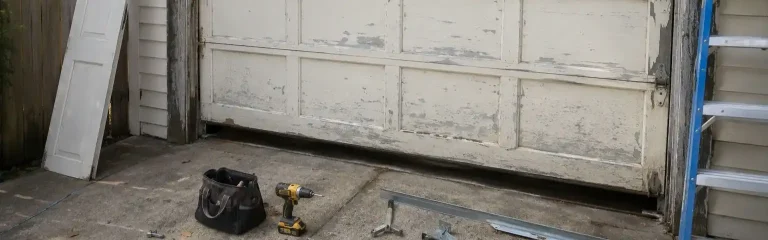





The Myth of the “Quick Fix” Garage Door Repair
Published: Sep 14, 2026
When a garage door fails to open, the immediate instinct for many homeowners is to search for a quick fix online, grab a standard toolbox, and resolve the issue before the weekend ends. However, unlike a leaking faucet or a loose cabinet door, a garage door is not a simple home appliance. It is a highly pressurized, mechanical system weighing anywhere from 150 to over 400 pounds. It operates as a moving wall under massive stored kinetic energy.
To diagnose and resolve issues within this system safely, you must understand the deep gap between everyday household tools and the industrial-grade, specialized equipment used by professionals. Miscalculating the physical forces at play can turn a minor repair into a catastrophic structural failure or a life-altering emergency room visit. True safety requires both specialized equipment and rigorous technical training, such as the standard guidelines set by the Canadian Door Institute (CDI). If you are currently dealing with a system malfunction, starting with a guide on diagnosing common garage door mechanical failures can help you safely evaluate the issue before taking action.
The Specialized Tool vs. Household Tool Gap
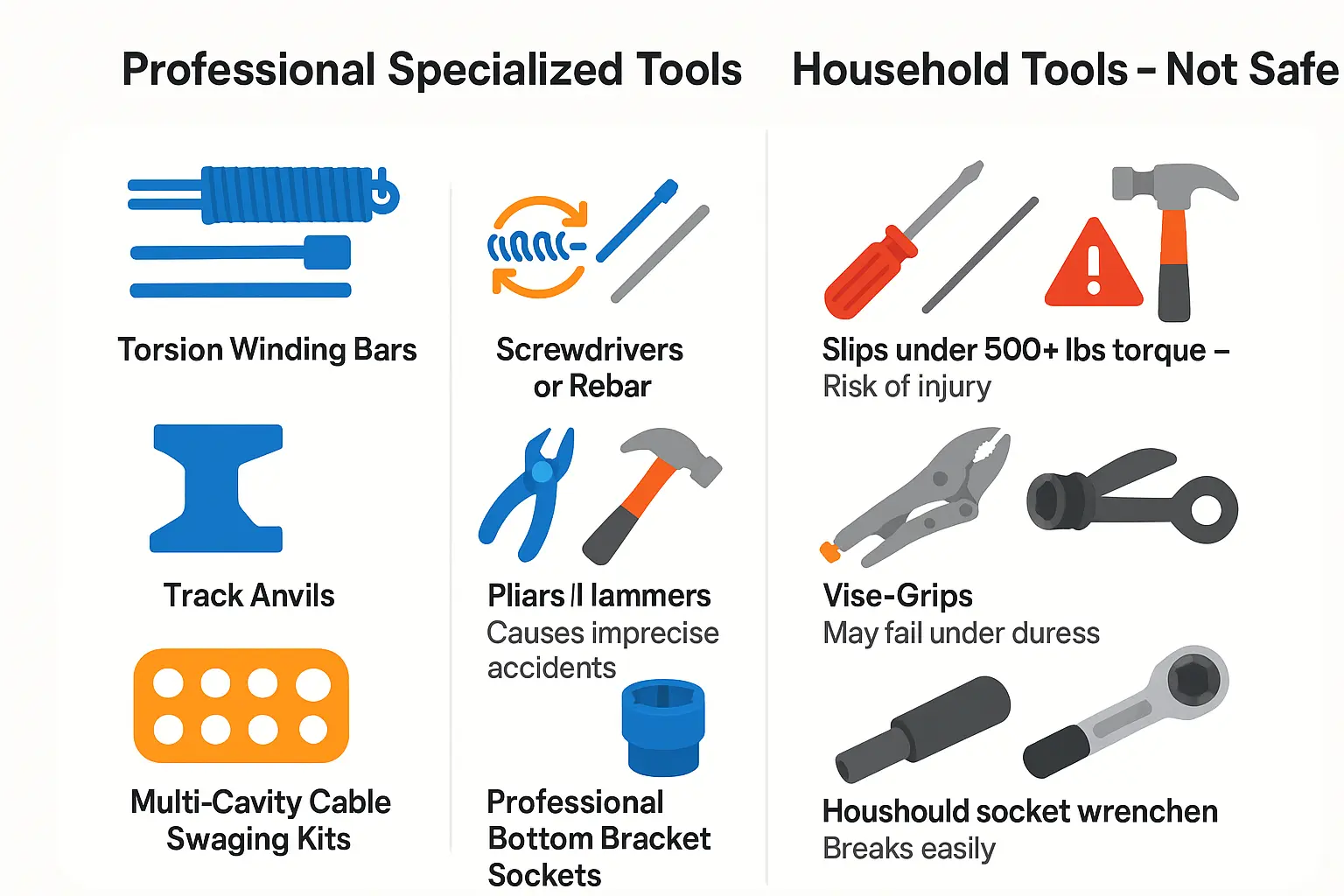
Using standard household tools to fix a high-tension garage system is one of the most common mistakes a homeowner can make. While a standard wrench or screwdriver is perfect for building furniture, it lacks the metallurgy and engineering required to handle garage door dynamics.
- Torsion Winding Bars vs. Screwdrivers or Rebar: To adjust a torsion spring, you must wind it to hold hundreds of pounds of rotational torque. Technicians use dedicated solid steel winding bars designed to fit the spring’s winding cone exactly. Improvising with screwdrivers or rebar is incredibly dangerous. If the tool slips or bends under tension, the spring can instantly unleash its stored energy, launching the improvised tool like a projectile and causing immediate facial fractures or hand trauma. This is why a garage door spring tension adjustment near me should always be handled by someone with the correct equipment.
- Track Anvils vs. Hammers and Pliers: Trying to straighten a bent track with a standard hammer creates micro-crimps in the steel rail. These crimps destroy the smooth path of the rollers, leading to roller binding and eventually stripping the garage door opener internal nylon gears. Professionals utilize a heavy-gauge, clamp-on track anvil to forge the metal rail back to perfect concentricity.
- Multi-Cavity Cable Swagers vs. Vise-Grips: Counterbalance cables support the full physical weight of the door. Attempting to clamp a frayed cable with standard pliers or vise-grips is a recipe for sudden cable slippage. Professionals use specialized multi-cavity hand swagers to crimp heavy aluminum sleeves onto aircraft-grade steel cables, ensuring they can handle a high-tensile load. To understand why this matters, read our guide on garage door cable replacement.
- Bottom Bracket Socket Danger: The bottom bracket of a garage door is under constant, active tension from the cable system. Attempting to loosen these bolts with a standard household socket wrench can cause the bracket to shear off instantly under load, causing severe arm or hand injuries.
The Mathematics of Tension: Calgary's Brittle-Fracture Problem
Geography and environmental climate play a massive role in garage door wear. For example, in Southern Alberta, the city of Calgary experiences dramatic temperature swings known as Chinook winds, where temperatures can swing up to 30°C within a single 24-hour period.
These rapid temperature shifts cause intense thermal expansion and contraction cycles in high-carbon steel torsion springs. This cyclic thermal shock creates micro-condensation between the spring coils, leading to internal rust pits. When the next cold snap hits, the steel becomes brittle and highly susceptible to sudden fracturing.
Only a local professional with specialized spring-balance metrics can properly calculate the exact Inches Per Pound per Turn (IPPT) needed to install a replacement spring capable of weathering these extreme thermal shifts. If you find yourself in need of an emergency garage door repair near me, sourcing a local expert who understands these regional engineering challenges is vital to ensuring a long-lasting, reliable solution.
The Real Safety Numbers: Exposing Industry Lies
Many corporate blogs and general home-improvement guides state that garage doors only cause a handful of minor injuries nationwide each year. This is a massive and dangerous understatement of the real risks.
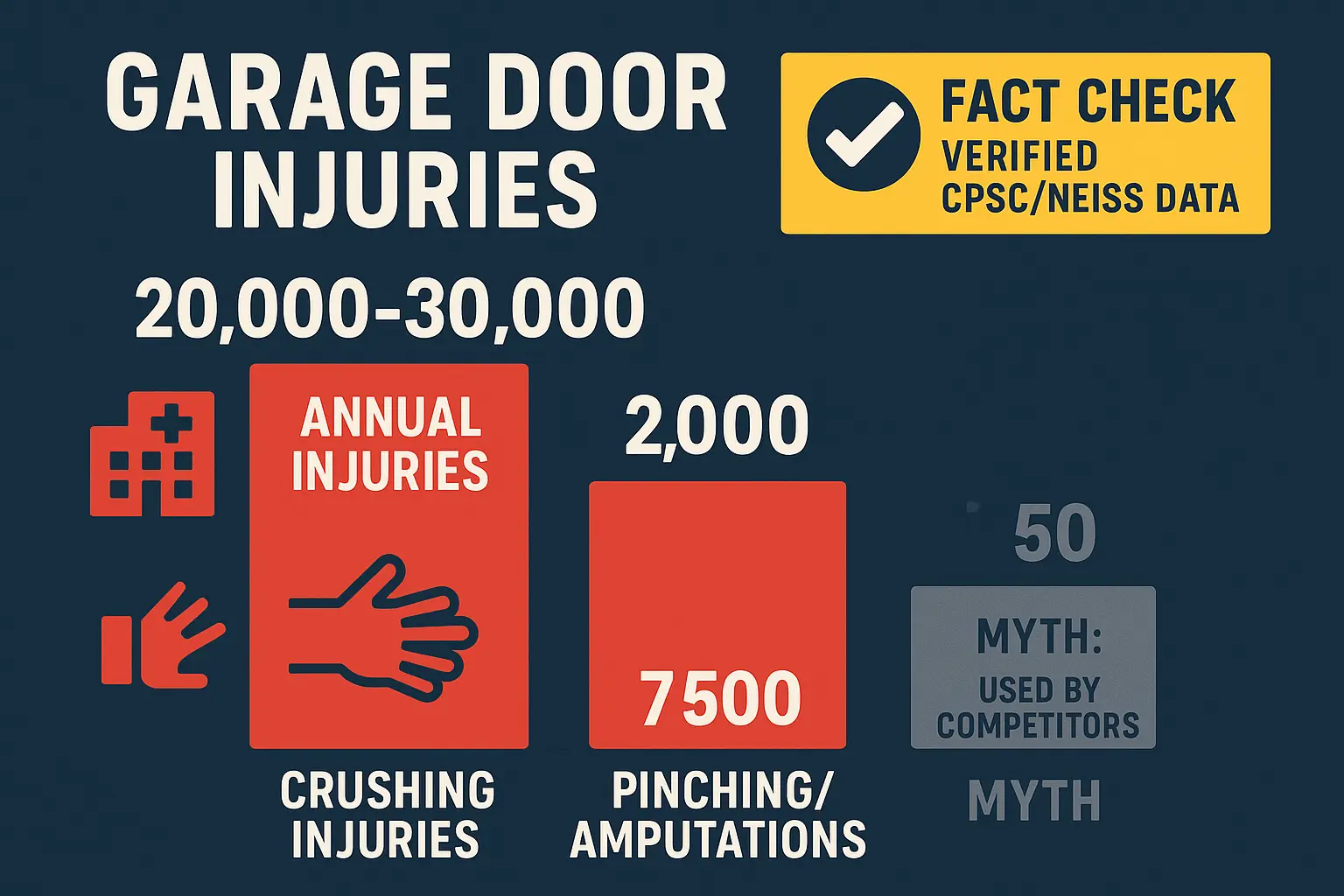
According to verified data from the U.S. Consumer Product Safety Commission (CPSC) and the National Electronic Injury Surveillance System (NEISS), there are an estimated 20,000 to 30,000 emergency room visits every single year due to garage door accidents.
Breaking down the database details highlights the physical mechanics of these incidents:
- Over 2,000 injuries per year are crushing accidents caused by heavy doors falling due to snapped springs or broken cables.
- More than 7,500 injuries are pinching accidents, which frequently occur when homeowners try to adjust moving door panels using household pliers, resulting in finger amputations.
- Federal safety mandates, such as UL 325 passed in 1993, require automatic reversing mechanisms and safety sensors to mitigate crushing hazards. Bypassing or incorrectly adjusting these sensors during a DIY attempt can result in serious safety and liability failures. For guidance on sensor issues, see our garage door safety sensor troubleshoot resource.
DIY Liability: Will Your Home Insurance Cover a DIY Failure?
Beyond immediate physical dangers, there is a financial aspect to consider. Homeowners’ insurance policies often include “negligence” or “uncertified workmanship” clauses.
If you attempt a DIY repair on a high-tension torsion system and the door later collapses—crushing your vehicle or damaging the garage’s structural frame—your insurance company may legally deny your garage door insurance claim. Working with licensed, insured professionals who install certified components from top brands like Clopay and LiftMaster protects both your physical safety and your financial liability. When dynamic systems fail unexpectedly, reaching out to a certified emergency garage door service provider keeps your home protected under your policy terms.
Summary: When is DIY Safe?
While major mechanical issues require specialized equipment, there are several routine maintenance tasks that homeowners can safely handle themselves:
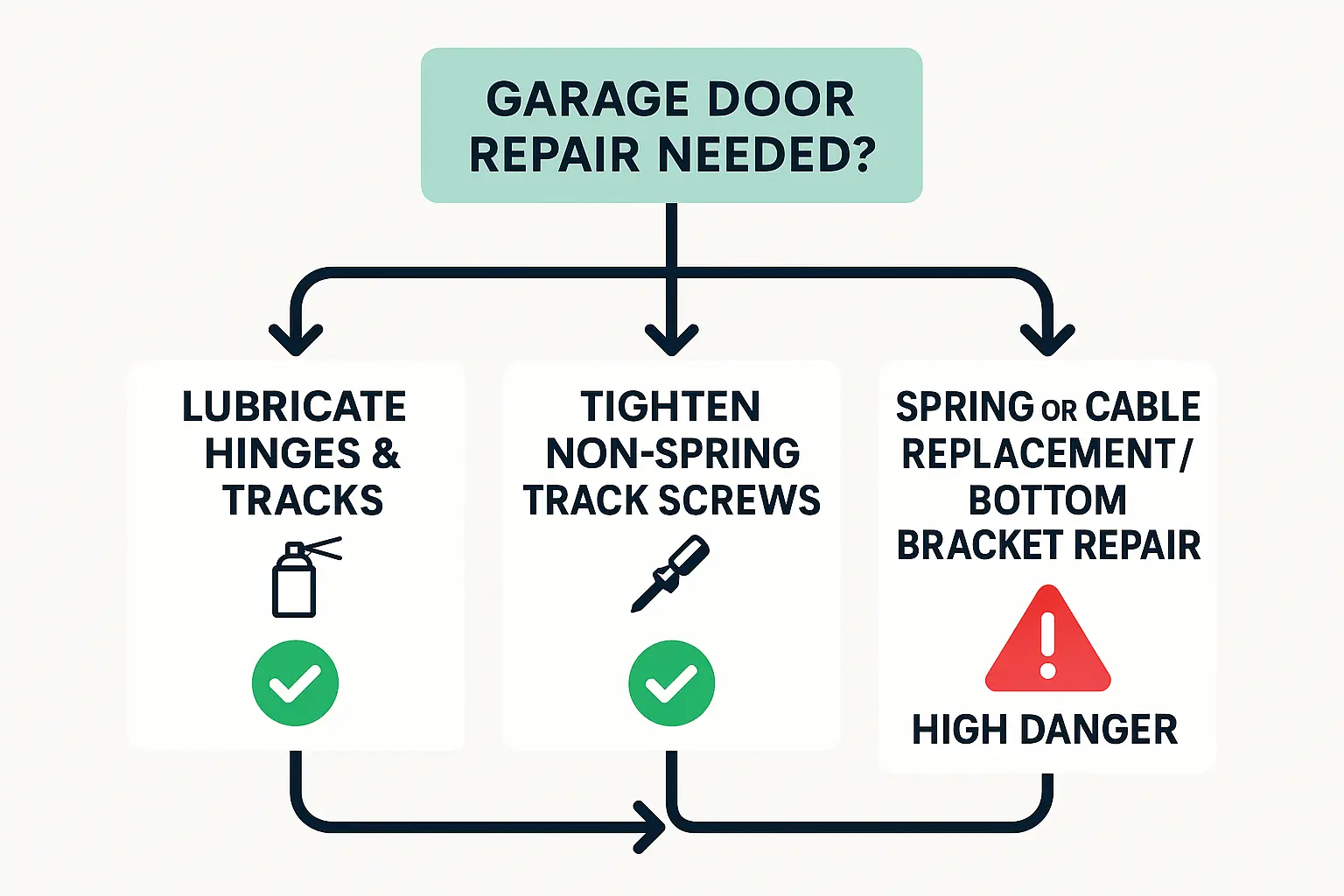
- Lubrication (Safe for DIY): Applying a high-quality silicone spray to rollers, hinges, and metal tracks keeps the system operating smoothly.
- Visual Inspections (Safe for DIY): Checking cables for fraying, tracking rollers for wear, and looking for loose screws on brackets (that are not under spring tension).
- Torsion Spring Replacement (Requires a Tech): Winding springs, replacing snapped lift cables, or adjusting track alignment should always be left to a trained professional with tech-grade tools.
Frequently Asked Questions
Why can’t I use a standard screwdriver to wind a garage door spring?
A standard screwdriver is not manufactured with the metallurgy or exact diameter required to fit securely into a torsion spring’s winding cone. If you attempt to use one, it can easily slip or bend under the extreme rotational force (often exceeding 500 pounds of pressure), launching the tool like a projectile and causing severe physical injury.
Will DIY garage door repairs void my home insurance policy?
Yes, many insurance policies contain clauses that deny coverage for damages resulting from uncertified, non-professional workmanship. If a DIY repair fails and causes structural damage to your home or vehicle, your provider may deny the claim. Additionally, DIY work can void the warranty of your garage door opener and components.
How do local weather shifts impact the life of my garage door springs?
Rapid temperature fluctuations (such as Calgary’s Chinooks) cause steel springs to rapidly expand and contract. This temperature movement traps condensation within the spring coils, leading to micro-rust pits. Over time, these small cracks fatigue the metal, causing the spring to break suddenly under tension during operation.
You May Also Like