





Tempered vs Laminated vs Polycarbonate Glass for Full-View Doors: Engineering & Selection Guide
Published: Nov 12, 2026
Full-view door systems transform spaces with natural light and expansive sightlines. However, selecting the wrong glazing material creates serious long-term issues—from premature torsion spring failure to severe thermal efficiency loss.
When specifying full-view doors for residential garages, patio conversions, or commercial storefronts, buyers must evaluate three primary materials: Tempered Glass, Laminated Glass, and Polycarbonate. Each offers a distinct balance of structural weight, impact resistance, thermal insulation, and optical longevity.
Quick Decision Summary Matrix
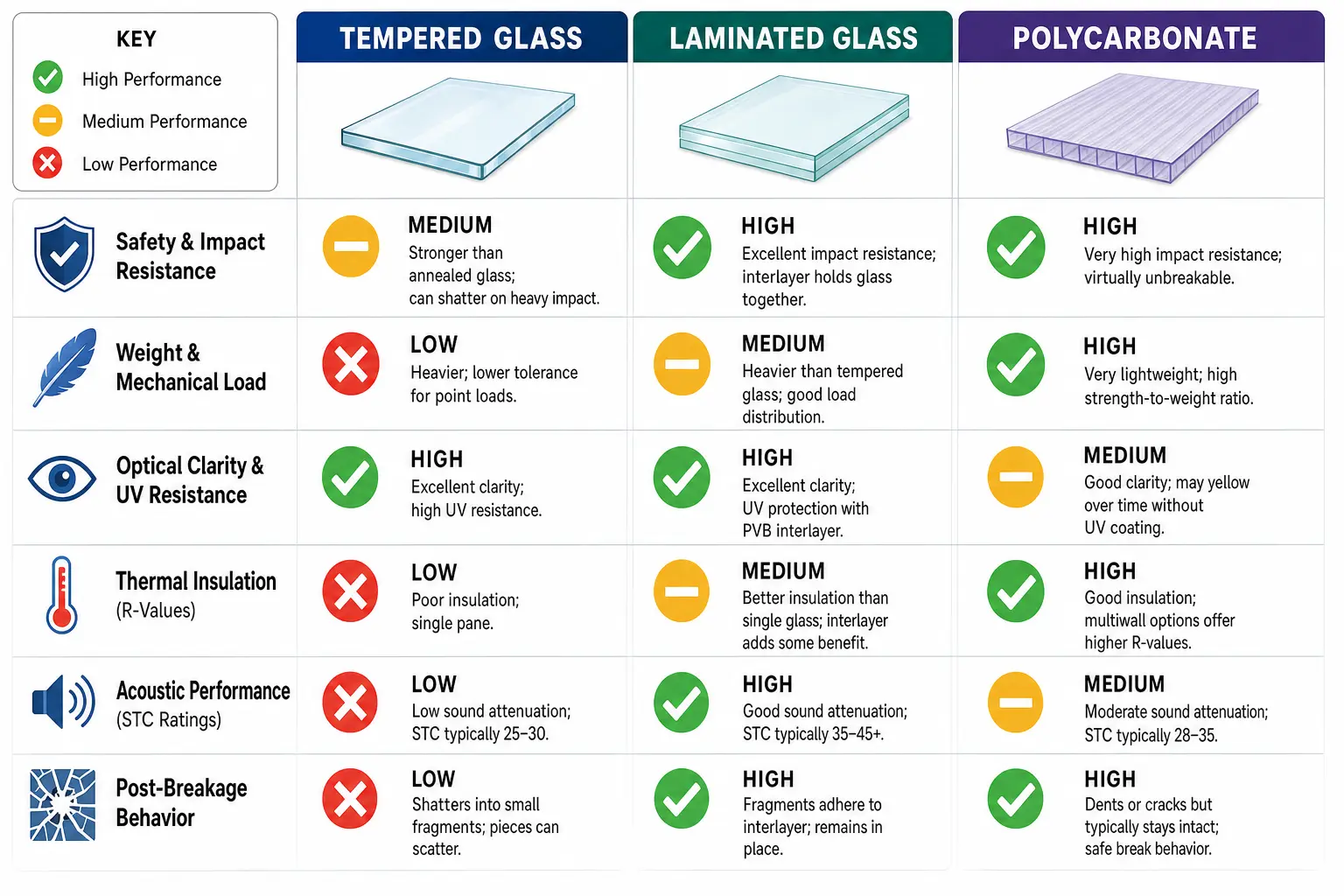
| Feature / Metric | Tempered Glass | Laminated Glass | Monolithic / Multiwall Polycarbonate |
|---|---|---|---|
| Impact Strength | 4–5x annealed glass | High (holds frame upon breach) | 250x glass strength |
| Weight (1/4″ monolithic) | ~3.27 lbs/sq.ft | ~3.35–3.50 lbs/sq.ft | ~1.56 lbs/sq.ft (53% lighter) |
| Post-Breakage State | Granular fallout (open hole) | Fractured spiderweb (retained) | Deflects / No breakage |
| Sound Insulation (STC) | STC 28–30 | STC 35–40 | STC 22–26 |
| UV & Optical Lifespan | Permanent clarity (100%) | High clarity (PVB protected) | Requires UV2 hard-coat protection |
Critical Evaluation Vectors for Full-View Doors
Structural Weight & Mechanical Hardware Impact
Glazing density directly impacts mechanical hardware longevity. Standard 1/4” tempered glass weighs ~3.27 lbs/sq.ft, bringing a standard 16×7 ft full-view door panel assembly to roughly 366 lbs. Laminated double-pane insulated glass units (IGUs) push structural loads up to 7.2 lbs/sq.ft.
Before committing to heavy glass assemblies, consult a garage door weight chart to ensure your opener horsepower and track hardware can support the mass. High-density glass requires high-cycle torsion springs (25,000+ cycles) to avoid premature fatigue. If your door operates sluggishly under excessive load, seek professional garage door spring adjustment near me to balance counterweights properly.
Conversely, 1/4” polycarbonate weighs just ~1.56 lbs/sq.ft—a 53% weight reduction that drastically lowers opener strain, track roller wear, and overall mechanical stress.
Forced Entry Security & Post-Breakage Behavior
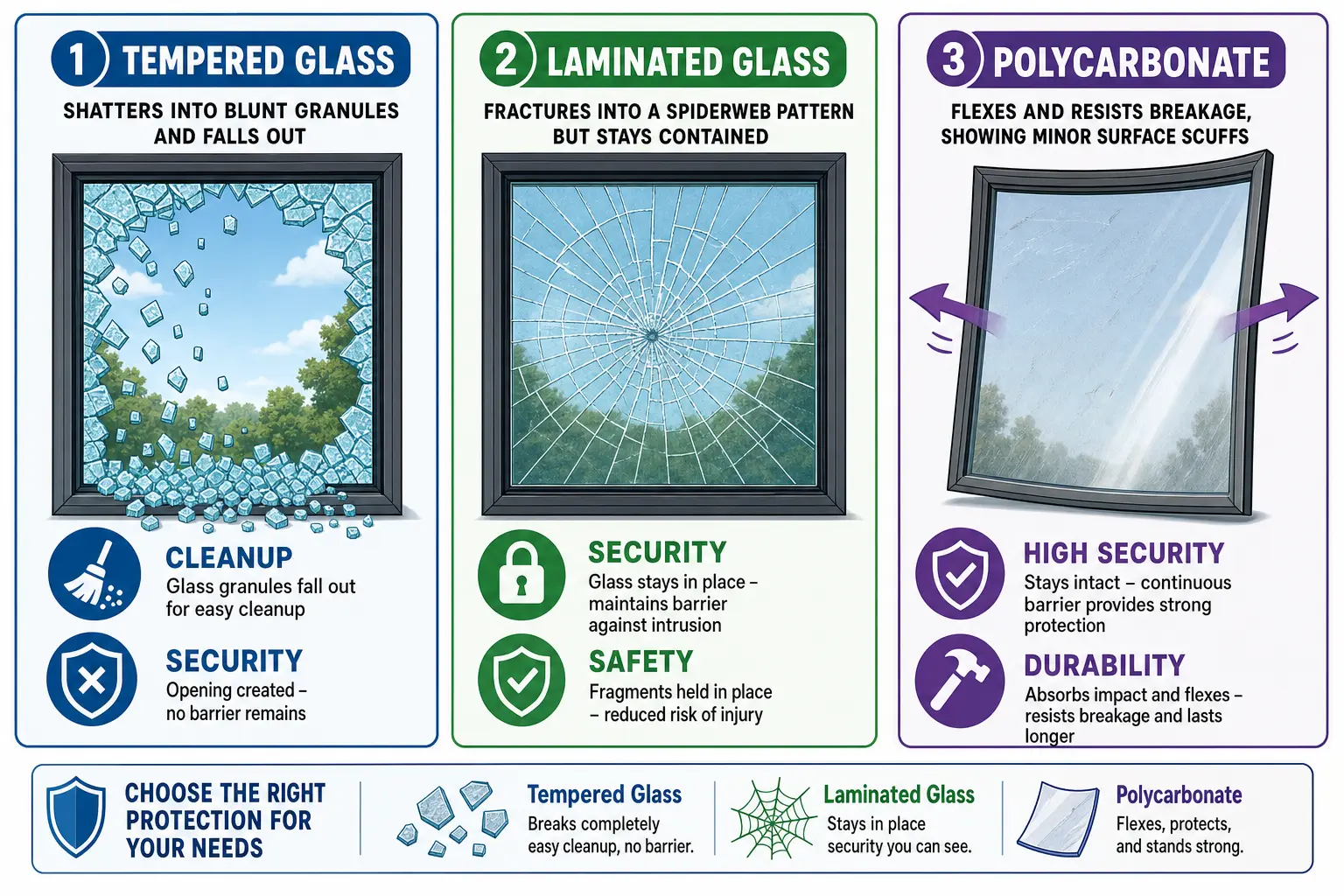
Post-impact behavior defines safety performance:
- Tempered Glass (ANSI Z97.1): Under severe localized force, tempered glass fractures into small ~1/4” blunt granules that immediately evacuate the door frame, leaving an open security vulnerability.
- Laminated Glass (ASTM E1996 / TAS 201): Constructed with a PVB or SGP interlayer, laminated panels fracture into a spiderweb pattern while remaining bonded to the frame, maintaining a weather-tight barrier and deterring forced entry. Review our guide on how to secure garage door installations for complete perimeter protection.
- Polycarbonate: With an Izod impact rating of ~16 ft-lb/in, polycarbonate flexes and absorbs kinetic energy without shattering, making it virtually unbreakable.
For installations in high-wind regions requiring certified wind load garage doors, laminated glass or heavy-gauge polycarbonate is necessary to meet missile-impact building codes.
Thermal Performance, Acoustic STC & Condensation Control
Uninsulated single-pane glazing exhibits poor thermal resistance (R-Value ~0.9 to 1.0). For climate-controlled living conversions, double-pane IGUs or 16mm 5-wall polycarbonate deliver R-values between 2.5 and 3.8. To compare thermal ratings across panel configurations, explore our deep dive on garage door r value.
Indoor moisture management is equally critical. Temperature differentials between indoor conditioned air and cold aluminum door frames can trigger moisture buildup. Review proven garage door condensation solutions to avoid interior frame dripping.
If noise reduction is a priority for converted living spaces or workshops, laminated glass is the clear winner. Its acoustic PVB interlayer delivers an STC rating of 35–40, dampening external street noise by up to 50%. Read our complete guide on how to soundproof a garage for comprehensive acoustic sealing.
For commercial facility managers oversight, selecting high-durability glazing and routine schedule planning via commercial garage door maintenance ensures long-term operational uptime.
Long-Term Cost of Ownership & Longevity Analysis
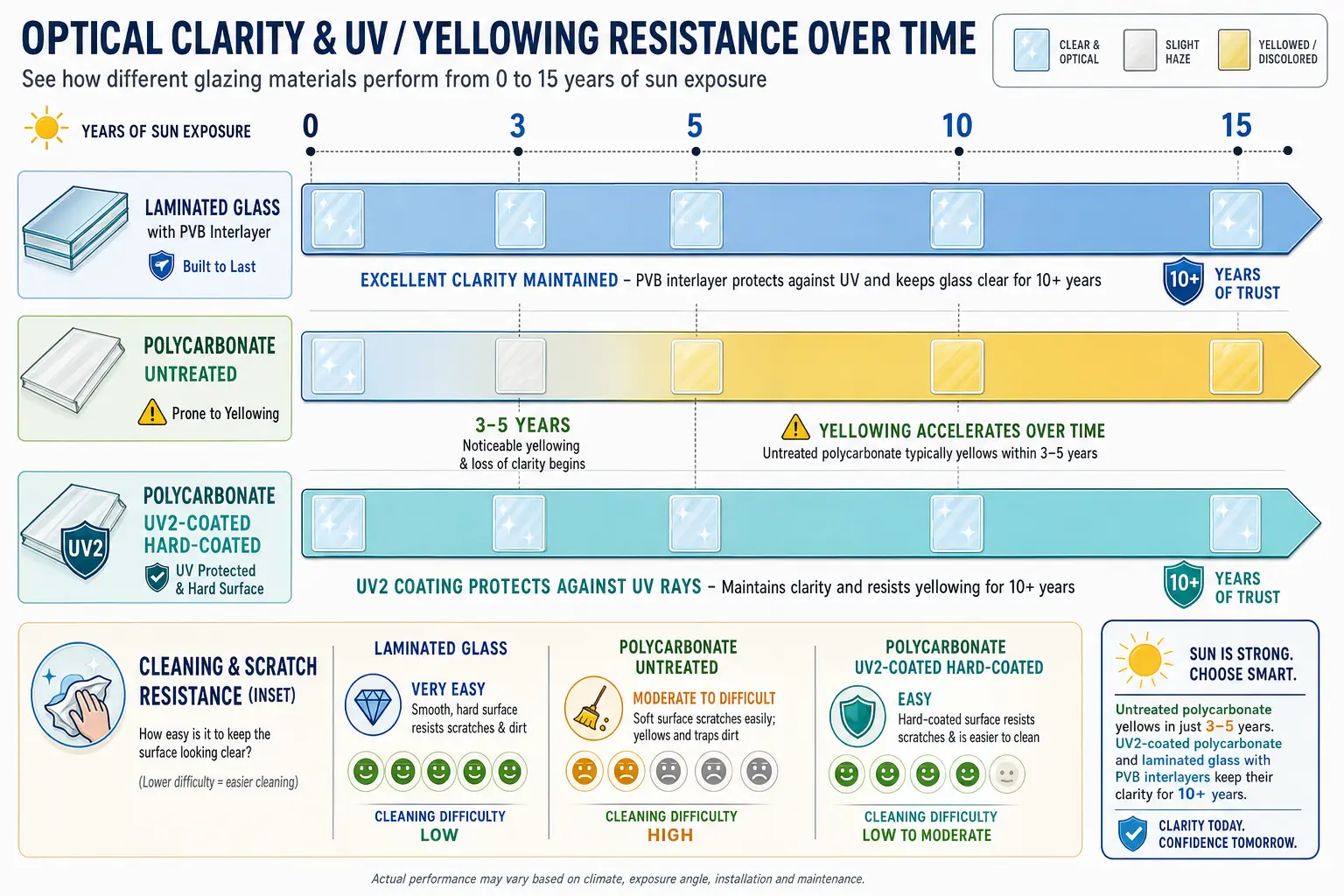
While glass maintains 100% optical clarity over its lifespan, standard polycarbonate is susceptible to surface hazing and UV yellowing within 3 to 5 years if untreated. Selecting UV2 Marine-Grade or Hard-Coated Polycarbonate provides up to 45x higher scratch resistance and protects optical clarity for 10 to 15 years.
Frequently Asked Questions
Which glazing material is best for high-wind or hurricane-prone areas?
Laminated glass rated for Large Missile Impact testing (ASTM E1996) and heavy-duty polycarbonate are the preferred options. Both materials retain their structural integrity within the door frame even after direct impact from wind-borne debris, preventing catastrophic pressure envelope breaches.
Will heavy laminated glass damage my garage door opener?
Laminated glass increases total door panel weight significantly. To prevent premature opener motor burnout and track binding, the door assembly must be counterbalanced using correctly sized, high-cycle torsion springs designed for the specific door weight.
How do I prevent polycarbonate panels from yellowing or scratching?
Specify factory-applied UV2 protective coatings and anti-scratch hard coats. For cleaning, avoid abrasive chemical cleaners, ammonia, or dry cloths; use gentle soap, soft microfiber towels, and generous water rinses to preserve panel clarity.
Next Steps for Your Full-View Door Project
Choosing the right full-view door glazing requires balancing aesthetic goals with mechanical realities like torsion weight, security needs, and thermal efficiency. The expert team at Up & Down Garage Doors brings over 15 years of hands-on installation experience across Connecticut, Texas, New York, Illinois, and Arizona. Contact our team today for a transparent, professional consultation tailored to your exact architectural specifications.
You May Also Like
Garage Door Top Seal and Header Weatherstrip: Sealing the Gap Above the Door
Published Date: Oct 7, 2026
Navigating Specialty and Full-View Garage Doors: An Engineering and Aesthetic Evaluation Guide
Published Date: Sep 16, 2026
Fiberglass Batt vs. Foam: The Ultimate Garage Door Panel Insulation Guide
If you have ever stepped into your garage during a mid-July afternoon, you know it can feel less like a home utility space and more like an oven. Under direct sunlight, uninsulated steel garage door panels act as…
Published Date: Aug 18, 2026