




The Future of Mobile Access Control: Aliro 1.0, Next-Gen Hardware, and Regulatory Compliance
Published: Aug 6, 2026
For years, facility managers and property developers have tolerated a flawed physical security paradigm. Traditional access cards and physical brass keys are liability vectors. In fact, research indicates that nearly 50% of users lose physical keys annually. At the same time, the global access control market is scaling rapidly—valued at USD 10.76 billion in 2024, it is projected to hit USD 17.30 billion by 2030 at an 8.4% CAGR.
As decision-makers look to modernize, the industry is shifting decisively away from physical credentials toward seamless, secure mobile solutions. A landmark 2026 HID State of the Market Report revealed that 75% of organizations have deployed or are actively planning to deploy mobile credentials—a 14-percentage-point increase over preceding periods.
Clear Distinction: Mobile Access Control vs. Phone Screen Locks
When evaluating these modern solutions, search terms can be highly confusing. If you are asking can i open my garage door with my smartphone, you are assessing physical entry access control. Do not confuse this with Android’s built-in “Extend Unlock” features (formerly “Smart Lock”), which simply keep a mobile device screen unlocked in certain locations.
Our focus here is solely on physical security—the ability to safely grant, revoke, and track access to residential garages, commercial doors, and secure facilities using encrypted digital wallets.
Technical Breakdown: NFC vs. BLE vs. Ultra-Wideband (UWB)
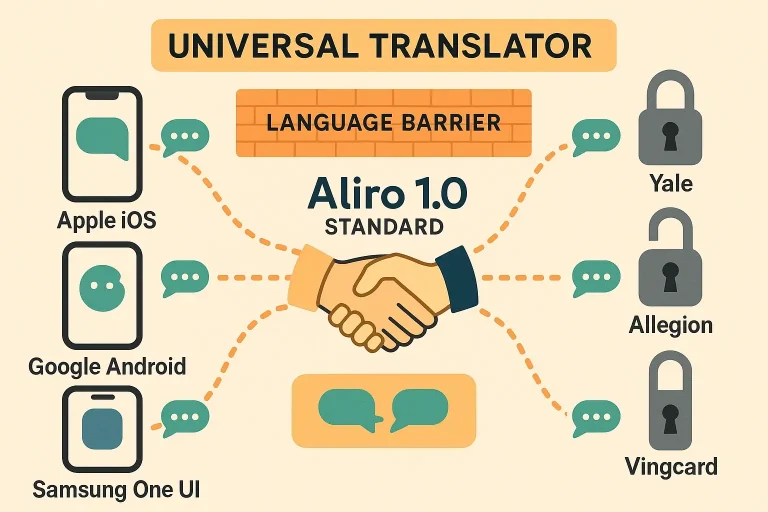
With the specialized mobile access control market expanding at an impressive CAGR of 13.5% to 22.4%, choosing the right physical transmission protocol is critical for long-term viability. Today’s hardware ecosystems utilize three primary wireless technologies:
- Near Field Communication (NFC): Requires a deliberate “tap” within centimeters of the reader. It is incredibly secure, preventing remote code grabbing attempts. Furthermore, native platforms like Apple Wallet utilize “Express Mode” and Power Reserve functionalities, allowing the digital key to work even when the phone’s battery is dead.
- Ultra-Wideband (UWB): Provides high-precision spatial awareness. It allows for true hands-free entry—the door unlocks automatically as you walk up with your phone in your pocket.
- Bluetooth Low Energy (BLE): Offers a cost-effective range for retrofitting legacy systems, though it remains prone to signal drift compared to UWB.
If you are planning a smart garage door opener installation or upgrading commercial bay doors, selecting the correct protocol will dictate your wiring requirements and reader choices.
For residential security, ensuring homekit garage door opener compatibility is often top of mind, but commercial enterprises require a deeper, standardized approach.
The Aliro 1.0 Era: Solving the Fragmentation Crisis
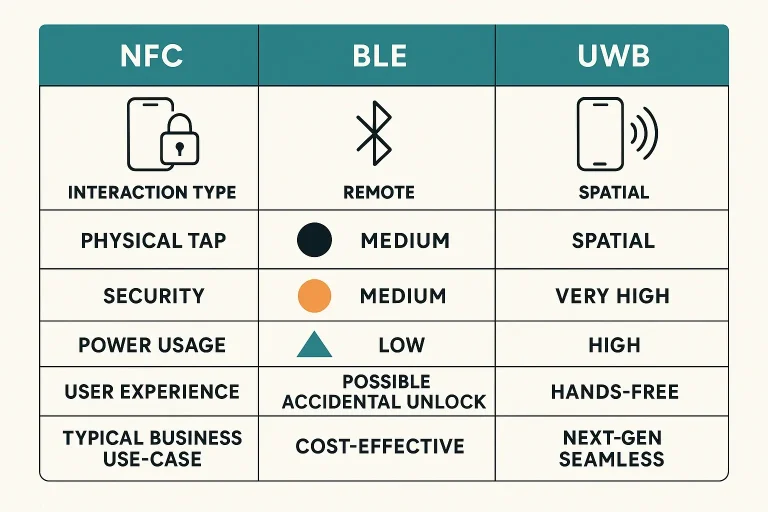
Historically, the primary obstacle to deploying mobile keys was platform fragmentation. A business had to force users into proprietary, clunky third-party apps to bridge the gap between Apple, Google, and Samsung ecosystems.
That fragmentation era officially ended in Q1 2026, when the Connectivity Standards Alliance (CSA) officially released the Aliro 1.0 specification. Backed by over 675 leading technology companies—including Apple, Google, Samsung, and top hardware manufacturers—Aliro establishes a unified communication standard.
With Aliro 1.0, your smart credentials reside natively in the user’s mobile wallet. A single, standardized digital key can securely actuate everything from a residential gate to a commercial entry system using a liftmaster garage door opener remote backup or an encrypted smartphone key.
Data Privacy and Compliance: Navigating GDPR, CCPA, and CPRA in Access Telemetry
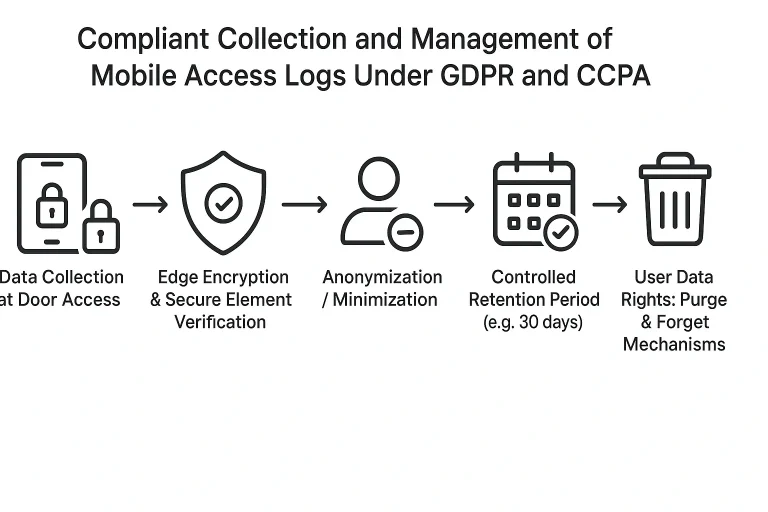
As physical access transitions to digital, access logs generate highly detailed telemetry data. Knowing exactly when a specific employee, tenant, or contractor unlocks a door transforms physical security logs into Personally Identifiable Information (PII) under strict regulatory frameworks like GDPR and CCPA/CPRA.
To remain compliant and eliminate liability anxiety, facility managers must implement a secure logging framework:
- Data Minimization: Retain entry logs only as long as legally or operationally required (e.g., a rolling 30-day purge).
- Edge Verification & Secure Enclave Protection: Verify user identity via local cryptographic handshakes within the device’s secure element rather than storing sensitive biometric data on a central database.
- Automated De-provisioning: Programmatically remove access rights and personal records when a tenant moves out or an employee departs.
When building a robust system, answering are garage door keypads safe or identifying the most secure garage door hardware is only half the battle—protecting the digital trail left behind is equally critical.
Frequently Asked Questions
How secure are mobile wallet keys compared to traditional RFID cards?
Mobile wallet keys are infinitely more secure. Older 125kHz RFID access badges can be cloned in seconds using inexpensive tools. Mobile credentials use modern public-private key cryptography, localized secure elements, and biometric verification (FaceID/Fingerprint), making them virtually un-clonable.
Will Aliro 1.0 require us to replace all our existing door readers?
Not necessarily. Many modern, IP-connected smart readers can receive over-the-air firmware upgrades to support Aliro 1.0. Older, legacy-only systems may require simple reader retrofits, though your existing backend software can often remain intact.
How do mobile keys work if a user’s phone battery dies?
Devices utilizing NFC-based mobile credentials in native wallets can leverage Power Reserve functionalities. This allows the cryptographic chip inside the phone to transact with the door reader for up to several hours after the main device screen has shut down due to low battery.
The Path Forward for Secure Facilities
Transitioning to mobile-wallet access control is no longer a luxury—it is a critical evolution in physical and digital security. For over 15 years, Up & Down Garage Doors has guided residential and commercial clients across CT, TX, NY, IL, and AZ through complex security transitions. Ready to integrate certified LiftMaster or Clopay smart access infrastructure into your property? Contact our expert technicians today for a professional consultation.
You May Also Like
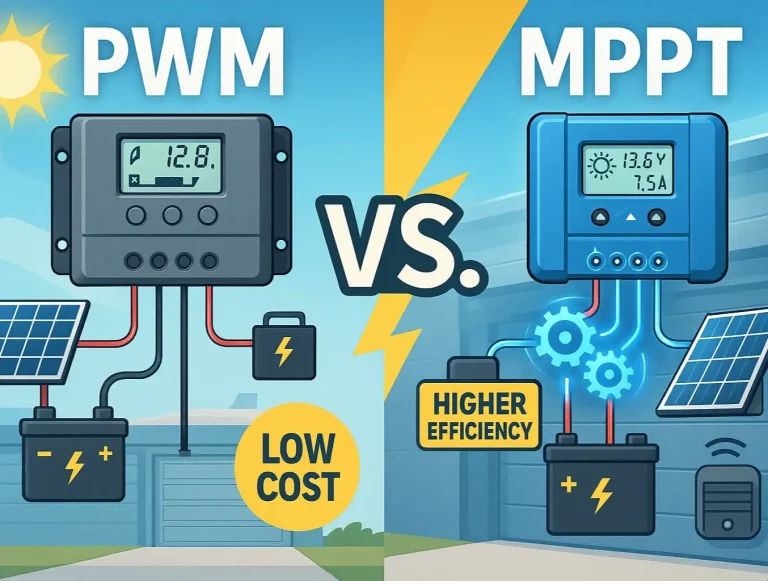
MPPT vs. PWM: Choosing the Right Solar Charge Controller for Your Garage Door
Imagine this: a storm rolls through, the power goes out, and your neighborhood is dark. But you get home, press your remote, and your garage door opens flawlessly, powered by the sun it soaked up earlier. This isn't…
Published Date: Jul 30, 2026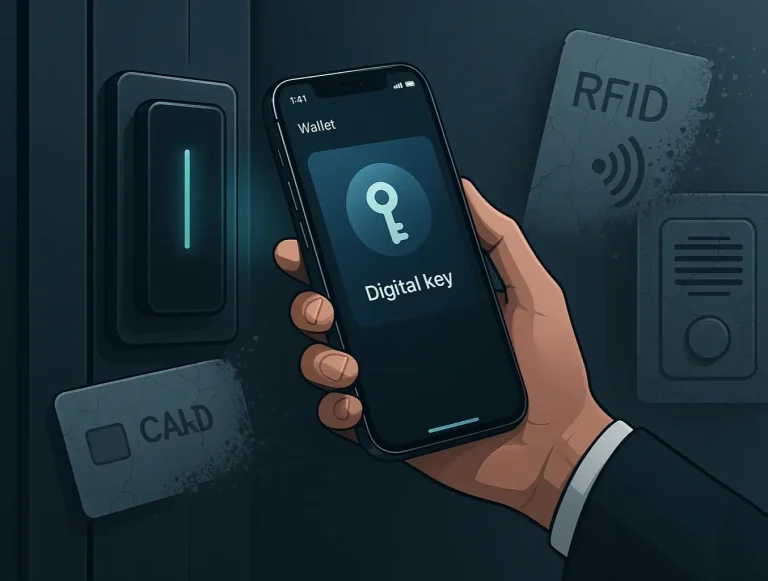
Security Protocols for Mobile Wallet Door Keys: The Enterprise Migration Guide
Physical security is experiencing a silent, structural paradigm shift. As telecommunications carriers aggressively dismantle legacy copper Plain Old Telephone Service (POTS) infrastructure—aiming for full retirement…
Published Date: Aug 4, 2026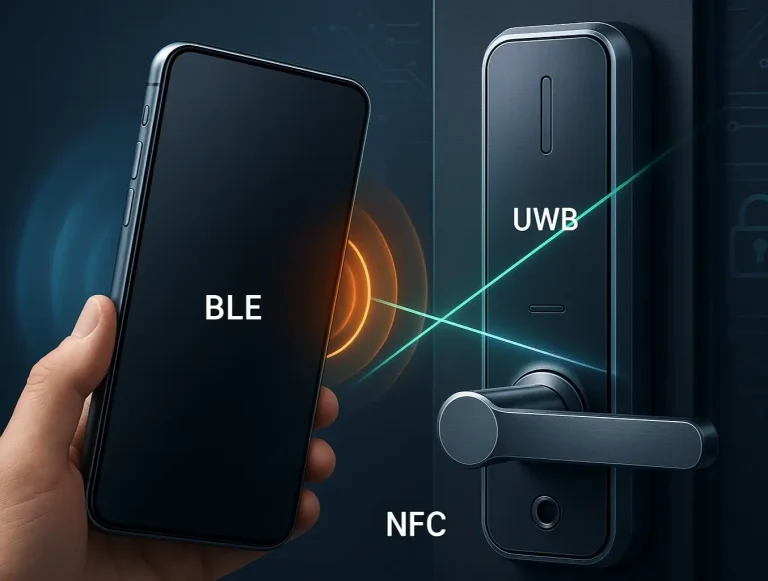
Demystifying Mobile Key Access: The Cryptography and Hardware Behind Smart Entry Systems
If you are looking to secure your home or business, you have likely run into a confusing sea of search terms. There is a wide gap between basic smartphone troubleshooting (like Android's "Extend Unlock") and physical…
Published Date: Jul 31, 2026