





The Garage Door Permit Application Process: A Step-by-Step Guide
Published: Aug 7, 2026
For homeowners and commercial property owners alike, upgrading a garage door is one of the most high-impact investments you can make. However, many find themselves caught in a complex regulatory maze: Does a replacement require a permit? What are the liabilities of unpermitted installations?
Failing to secure the proper municipal approvals can lead to double-fee penalties, home sale delays, and denied homeowners’ insurance claims. Understanding how to navigate local building codes ensures your home remains safe, compliant, and fully covered.
Do I Need a Permit? The Regulatory Landscape
The permitting process is highly regionalized. Currently, 38 states and the District of Columbia require a specialized state or local license to install or repair garage doors. Because a garage door is the largest moving object in your home, building departments treat its installation with strict oversight.
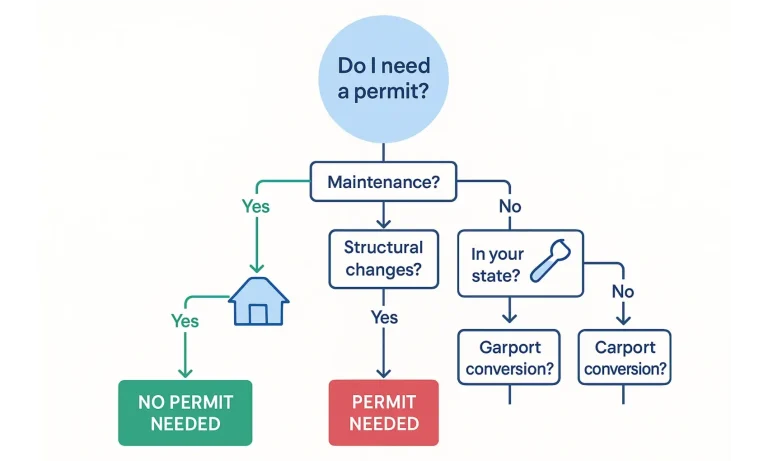
For simple track or spring replacements, most jurisdictions classify the work as “ordinary maintenance” requiring no permit. However, structural modifications, opener additions, or full door replacements generally require formal applications.
Interactive Decision Tree
To determine if your specific project requires municipal clearance, review the criteria below:
When structural alterations are made to the surrounding frame, you must verify the rough opening for garage door requirements to ensure the header can safely carry the load under local code.
Headline Converting a Carport to a Garage: Setbacks and Construction
One of the most complex residential permitting tasks is a carport conversion. If you are planning an enclosed carport conversion to garage, you are legally transitioning an open structure into a finished accessory building.
- Zoning and Setbacks: Municipalities enforce strict boundary limits (setbacks). If your carport was built close to a property line under older codes, enclosing it might violate current lot coverage limits (which frequently cap total structures at 50% of the lot area).
- Structural Engineering: You cannot simply hang a heavy sectional door on lightweight carport posts. A standard installation typically ranges from $8,000 to $10,000, with permit and site-planning fees comprising 3% to 7% of that budget.
Always secure a professional review before submitting site plans to prevent structural failure or costly structural code violations.
High-Velocity Wind-Code & Regional Permit Portals
In coastal or high-wind environments, a garage door is a critical structural defense. During severe storms, garage door failure is the leading cause of residential roof collapses. When high winds breach an unrated door, internal air pressure spikes up to two to three times, lifting the roof from the inside out.
For regions subject to stringent wind-load codes—such as Southwest Florida—installing engineered wind load garage doors is mandated by law. Localities like Lee County require rigorous documentation showing compliance with ultimate design wind speeds
The Florida Wind-Code & Lee County eConnect Portal Guide Section
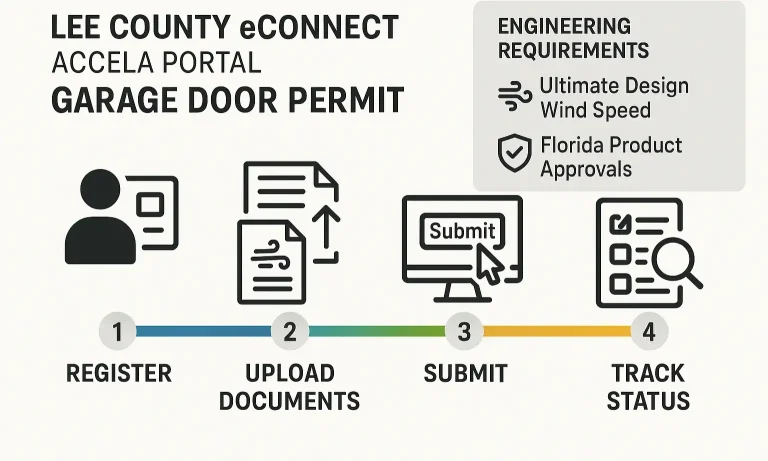
When submitting applications through online municipal portals, such as the Lee County eConnect (Accela) portal, follow this standardized sequence to ensure rapid approval.
Applying online requires uploading precise manufacturer product approvals (such as Florida Product Approvals or Miami-Dade NOAs) detailing structural pressure capabilities (design pressure or DP ratings).
Licensing, Safety Codes, and Industry Classifications
Working with an unlicensed or unbonded installer is a significant liability risk. Contractor state licensing boards protect property owners by requiring specialized examinations.
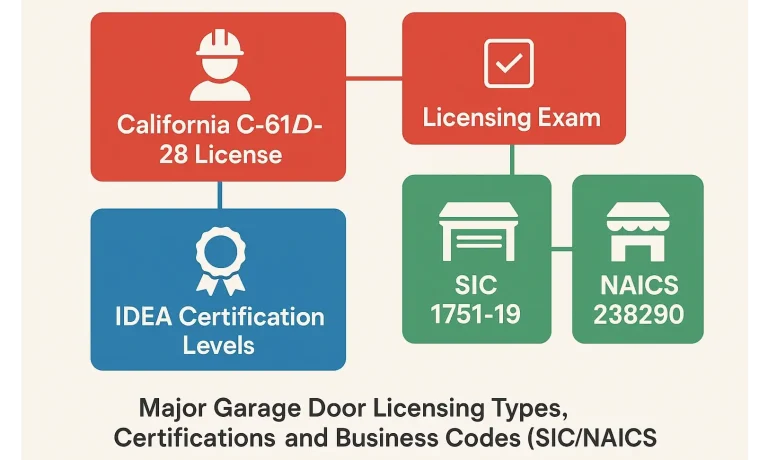
- State Licensing Benchmarks: State-level fees for residential door repair contractors range from $0 in Nebraska to $1,040 in Nevada. For example, California requires a C-61 / D-28 Limited Specialty License for door and gate installations.
- Official Classifications: Industrial standards dictate how these services are categorized for commercial insurance, building codes, and municipal trade registrations:
- Safety & Fire Codes: Under laws like New York’s General Business Law Section 391-K and Residential Code R302.5.1, any automatic residential installation must utilize UL 325 compliant entrapment protection. If your sensors fail, consult a garage door sensors troubleshooting guide immediately to maintain compliance.
Licensing & SIC Code Directory Summary Section
Navigating these regulations ensures your garage door & opener installation is fully covered by insurance and complies with commercial property requirements, which is especially critical for heavy-duty commercial garage doors.
Common Permitting FAQs
What happens if I install a garage door without a permit?
If code enforcement discovers unpermitted work, they can issue a stop-work order, level double-fee penalties, and require you to tear down the installation to inspect the structural headers. Furthermore, your homeowners’ insurance carrier can deny claims for wind or structural damage if the door was not certified.
Can I pull the permit myself as an “Owner-Builder”?
While most jurisdictions allow this, it is a significant risk. Pulling an owner-builder permit means you assume all legal, structural, and safety liabilities for the project. If an installer asks you to pull the permit for them, it is a major red flag indicating they may lack the necessary licensing or insurance.
How long does the approval process take?
Over the counter, basic replacements can be approved the same day through portals like eConnect. However, complex structural retrofits, carport-to-garage transitions, or commercial installations can take anywhere from two to six weeks for zoning and engineering reviews.
You May Also Like
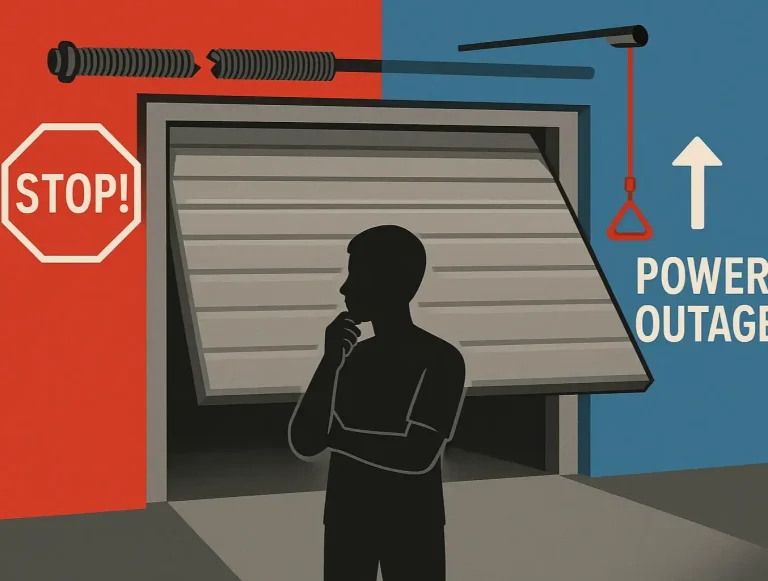
Safety Protocols When Your Garage Door Traps You
It’s a frustrating moment we all dread. You press the button on your garage door remote, hear a noise… but nothing happens. Or worse, you hear a loud bang, and now the door is completely unresponsive. Whether you’re…
Published Date: Jun 2, 2026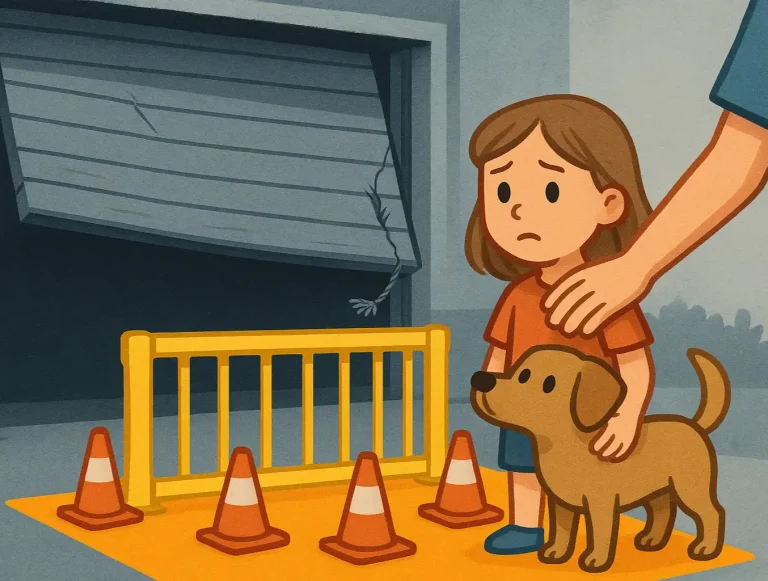
Child and Pet Safety Protocols During a Garage Door Malfunction
That sudden, sickening BANG from the garage stops everyone in their tracks. It’s a sound you can’t ignore. Whether the door is now hanging crooked, stuck halfway, or won’t move at all, your first thought isn’t about…
Published Date: Jun 1, 2026
Security Protocols for Mobile Wallet Door Keys: The Enterprise Migration Guide
Physical security is experiencing a silent, structural paradigm shift. As telecommunications carriers aggressively dismantle legacy copper Plain Old Telephone Service (POTS) infrastructure—aiming for full retirement…
Published Date: Aug 4, 2026