





How to Modernize an Old Garage Door on a DIY Budget
Published: Sep 4, 2026
About 80% of aging garage doors do not need to be scrapped. By investing in targeted,high-impact upgrades, you can dramatically improve your door’s safety, thermal efficiency, and intelligence while bypassing the cost of a brand-new system. This guide breaks down the four strategic, budget-friendly pillars of garage modernization.
Safety First - Upgrading & Troubleshooting Photo-Eye Sensors (UL 325)
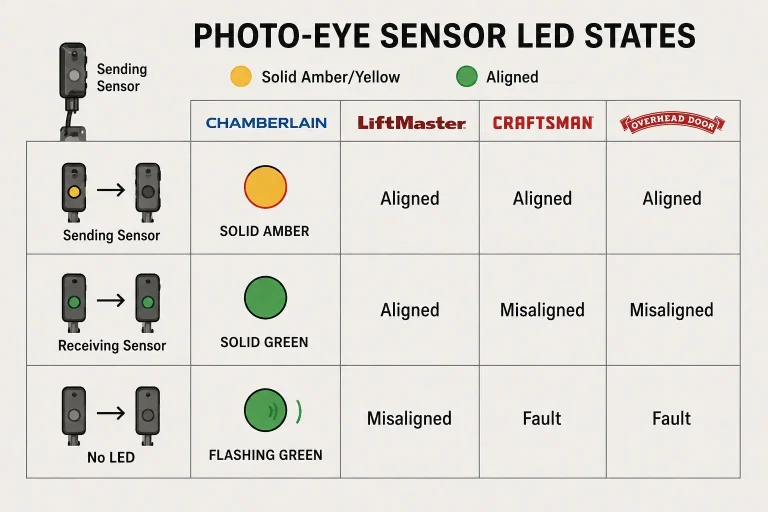
Under Federal Law (UL 325), all garage door openers manufactured since January 1, 1993, must feature primary entrapment protection, such as photoelectric eyes. These sensors project an invisible beam across the opening; if interrupted, they activate the automatic safety reverse garage door mechanism.
If your existing door won’t close and the light bulb flashes, you don’t need a new opener. Often, the sensors are simply misaligned or dirty. You can troubleshoot these issues instantly using this brand-specific LED diagnostic key:
- Chamberlain / LiftMaster / Craftsman: The sending eye shows a Solid Amber/Yellow LED. The receiving eye shows a Solid Green LED. A blinking green light indicates physical misalignment.
- Genie / Overhead Door: The sending eye shows a Solid Red/Orange LED. The receiving eye shows a Solid Green LED.
If the sensors fail completely, you can buy replacement kits (like the Chamberlain 820CB) for around $25. Align them easily by securing a simple laser pointer flush against the sending sensor and aiming it directly at the receiving lens. For temporary emergency bypasses to close a vulnerable garage, hold down the wall console button continuously until the door is completely closed. If the system continues to glitch, you may need to learn how to reset garage door opener limits to restore normal function.
Simple Weekend Projects vs. Professional Enhancements: Choosing the Right Approach
When deciding how to improve your garage door, knowing which tasks to handle yourself and which require professional expertise ensures a smooth result while prioritizing household safety.
Ideal Projects to Handle Yourself
- Visual Refreshes: Painting the door surface, adding decorative magnetic accents, or updating handles instantly enhances your home’s exterior appearance.
- Environmental Sealing: Installing push-in weather seals or pre-cut panel insulation helps eliminate drafts and reduces outside noise.
- Smart Technology Upgrades: Setting up a wireless smart hub or motion-sensing light fixtures adds modern convenience without complex wiring.
Enhancements Best Left to Trained Technicians
- High-Tension Spring and Cable Service: Replacing core lifting components involves extreme physical tension that requires professional tools and safety protocols.
- Track Realignment and Roller Replacement: Ensuring the guides are straight keeps the door operating smoothly and prevents premature mechanical wear.
- Full Opener Replacement: Installing a brand-new motorized drive unit guarantees proper balance, system safety, and reliable daily operation.
Smart Upgrades for Older Motors (No Opener Replacement Required)
Many homeowners think they must replace their entire motor to answer the question: can you open your garage door with your phone? You don’t. Retrofitting a $35 to $70 smart controller (like Meross or Tailwind) to your existing “dumb” motor delivers the same modern convenience.
However, safety standards are strict. A critical pre-flight compatibility check: if your opener was built before 1993, it lacks modern safety sensors. Retrofitting smart capabilities to a pre-1993 motor violates UL 325 standards and poses a severe crushing hazard. Additionally, under the March 2024 UL 325 updates (89 FR 18538), smart systems must feature audio and visual warnings (flashing lights and beeping) for 5 seconds before closing the door remotely.
To install a retrofitted hub, locate the “Dry Contact” or wall button terminals on your motor, wire the receiver, and mount the wireless tilt sensor to your top panel. This allows you to deploy a garage door geofencing setup that opens your door automatically as your car approaches. While DIY kits are popular, weighing diy vs professional smart home integration is essential if you want seamless, secure operation. If you do eventually need a new motor, trusted brands like chamberlain garage door openers offer built-in smart functionality.
Structural Reinforcement — Fixing Sagging and Bending Panels
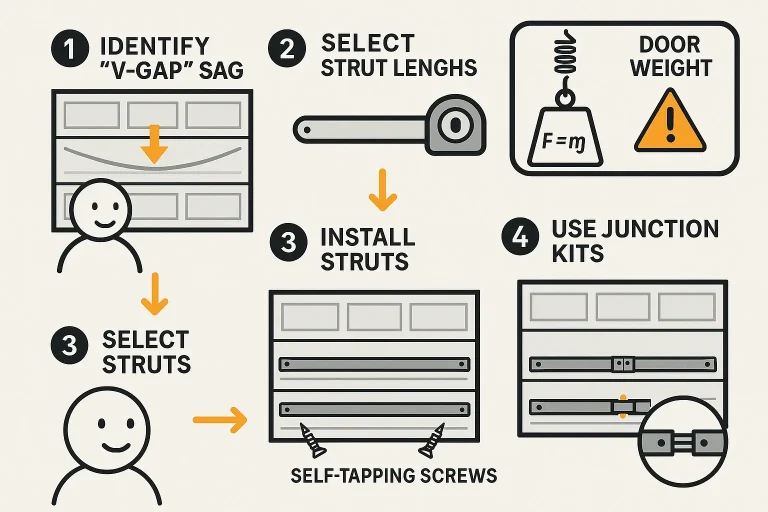
As garage doors age, they can sag under their own weight, forming a visible “V-gap” along the top seam. Rather than replacing the damaged panels, you can install a 2-inch steel U-bar strut to act as a sturdy garage door panel support.
However, you must account for physics. Standard 2-inch steel struts weigh approximately 10 ounces per linear foot. Adding a single 16-foot strut on a double-wide door adds 10 pounds of deadweight. If your door’s weight increases by more than 10 to 15 pounds, the spring balance formula is disrupted.
To test this: disconnect your opener and manually lift the door halfway. If it fails to stay open on its own and crashes down, your high-tension springs must be professionally calibrated to prevent motor burnout.
Frequently Asked Questions
Can I wind garage door springs myself to balance the door?
No. Garage door springs operate under extreme, life-threatening tension. While basic panel, insulation, and sensor upgrades are highly manageable DIY projects, balancing or replacing high-tension springs should always be handled by a certified professional.
Will adding insulation burn out my existing opener motor?
Only if the door is left unbalanced. If you add more than 10 to 15 pounds of total weight (insulation plus steel struts) and do not have your springs re-tensioned to compensate, your motor will experience excessive strain and eventually fail.
What simple enhancement makes the biggest overall difference to a garage door?
Adding decorative hardware accents and applying a fresh layer of durable exterior paint offers the most immediate visual transformation. If your primary goal is comfort and protection from the elements, replacing worn seal strips along the frame creates a tighter seal that keeps out harsh weather and unwanted pests.
Secure Your Upgrades with Professional Guidance
Targeted modernization is a highly effective way to stretch the life of your existing door. However, when dealing with delicate weight balances, spring tension, or complex retrofits, professional backup guarantees your peace of mind. For reliable, family-owned service and expert safety calibrations, contact up and down garage doors for a comprehensive, flat-rate inspection. Whether you need a simple tune-up or a professional garage door repair, we are available 24/7 to keep your home safe and secure.
You May Also Like
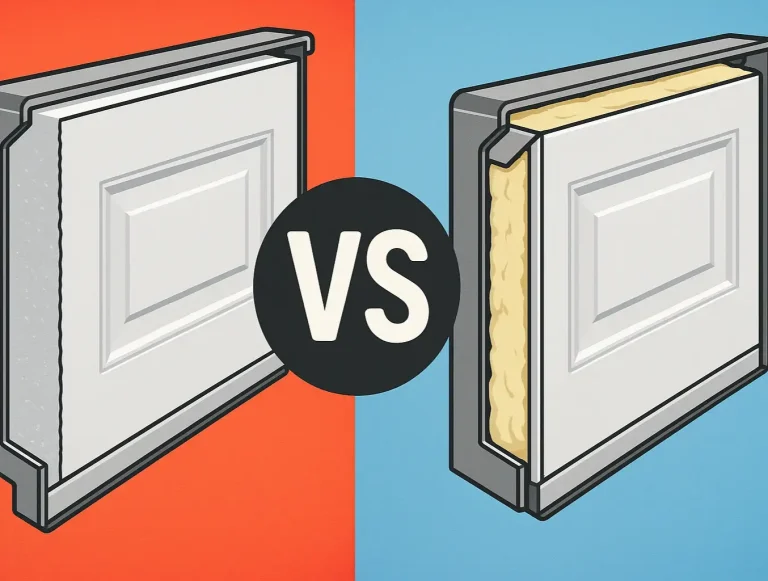
Fiberglass Batt vs. Foam: The Ultimate Garage Door Panel Insulation Guide
If you have ever stepped into your garage during a mid-July afternoon, you know it can feel less like a home utility space and more like an oven. Under direct sunlight, uninsulated steel garage door panels act as…
Published Date: Aug 18, 2026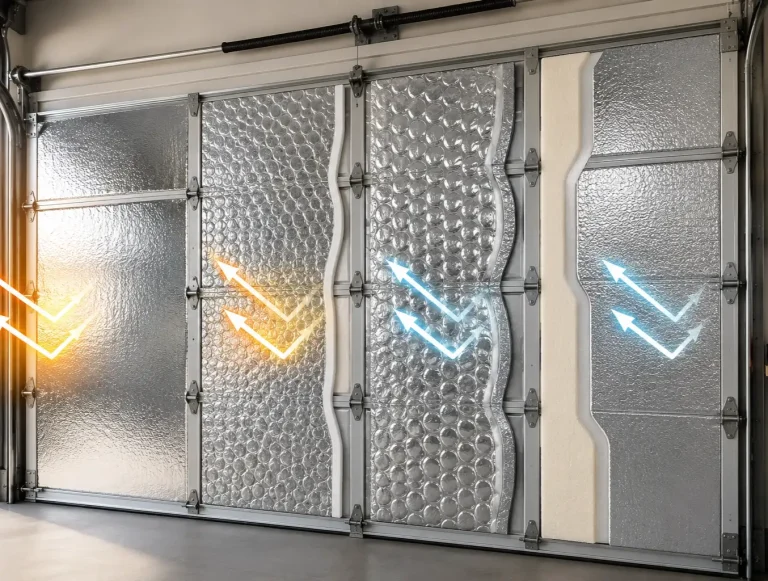
Reflective Foil Insulation for Garage Doors: Beyond the R-Value Myth
Under the intense heat of the summer sun, uninsulated steel garage doors behave exactly like giant radiators. They absorb solar radiation and heat up to 130°F–150°F, turning your garage into a suffocating oven. While…
Published Date: Aug 17, 2026
Fiberglass Garage Door Insulation Safety Guide: Protecting Lungs, Skin And Springs
When evaluating your options for home energy efficiency, choosing to insulate your garage door is a highly cost-effective decision. Many homeowners turn to DIY fiberglass batt kits because they offer excellent…
Published Date: Aug 14, 2026